-

Free Samples!



Combed vs. Carded Cotton: What the Spinning Process Changes and Whether You Should Pay for It

Table of Contents
Combing is an extra mill step that strips out the short fibers carding leaves behind, so combed cotton pills and fuzzes less and spins into a smoother, stronger yarn, while carded cotton keeps those short fibers and costs less. Whether the premium is worth paying depends on the surface of the fabric and how hard the garment will be washed, not on the word combed. A brushed flannel back and a next-to-skin jersey sit at opposite ends of that decision, and the yarn spec you write should follow the fabric rather than the other way round.
Key takeaways
- Combing is a second mechanical pass on yarn, not a different fiber: every combed yarn was carded first, and a 60/40 cotton-poly can sit on a combed base as easily as a 100% cotton interlock can.
- Short fibers cause the pilling, shedding and thin spots buyers complain about. Combing removes them, which lowers pilling rather than eliminating it, because abrasion and heat still drive the mechanism.
- Fiber preparation and spinning are independent dials: combed describes the sliver, while ring-spun and open-end describe how the yarn was twisted, so those two premiums stack instead of competing.
- Carded cotton is the correct purchase for flannel, canvas, denim, terry, slub knits and every hidden component, because the irregularity and surface tooth are the product being sold.
- Ask the spinner for yarn count, twist, staple length and comber noil percentage. A spec sheet that says combed with no yarn data is a marketing word, not a specification.
What Carding and Combing Actually Do (and Why Combed Cotton Is Still Just Cotton)
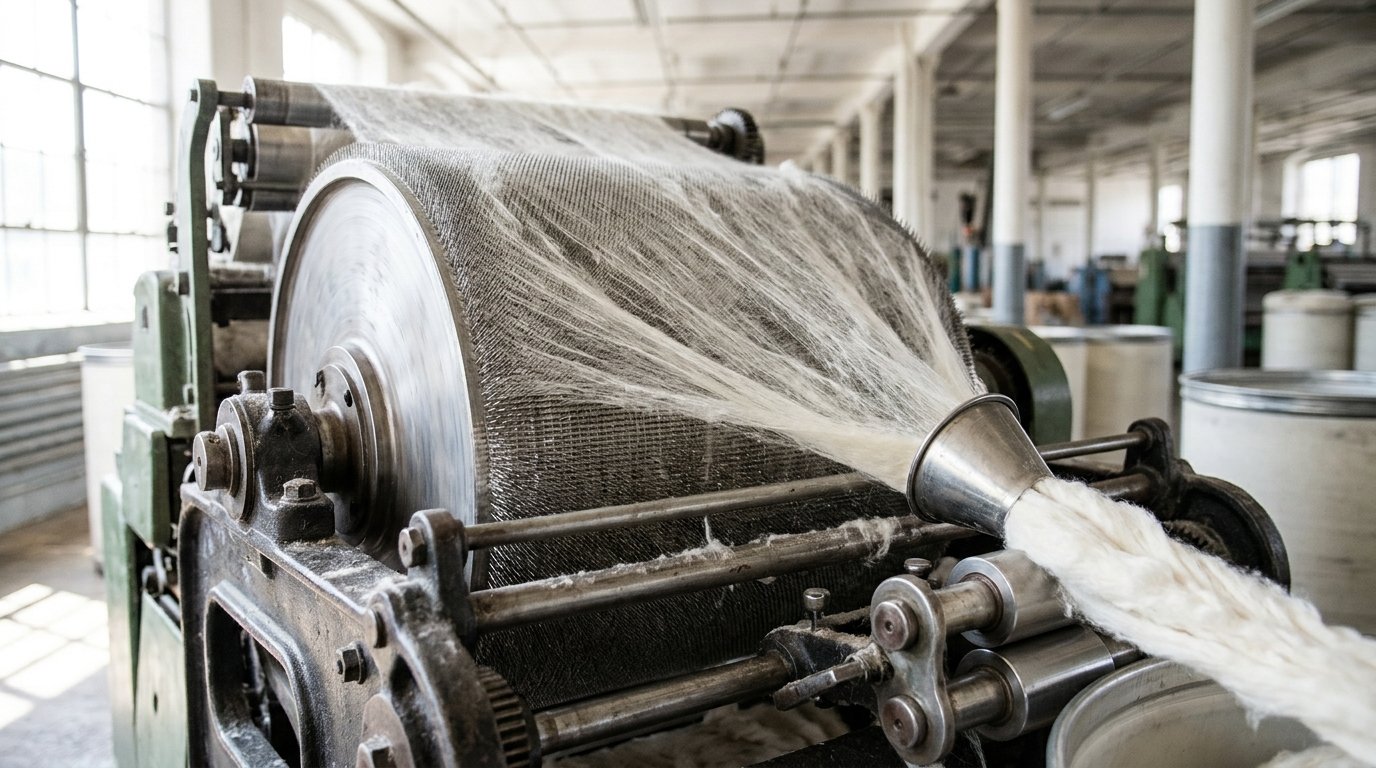
Carding happens after ginning and cleaning. Wire-covered cylinders open the matted cotton mass, roughly parallelize the fibers, and pull out leaf, seed fragments and neps, delivering a loose rope called a sliver. That sliver is not yet a yarn, and it still carries every short fiber the field and the gin handed over.
Combing runs that carded sliver through a nipper and comber rolls that strip out fibers below a set length, known as the comber noil, along with the remaining trash and neps. What survives gets re-laid into a longer, more uniform sliver that can be drafted into a finer, stronger yarn.
Every combed yarn was carded first. So combed versus carded is really shorthand for combed versus carded-only, and the mill's own term for the difference is simply whether the sliver went through the comber. That single fact dissolves most of the confusion in this category.
Nothing about the plant changes
Combed cotton is cotton. The is cotton combed 100% cotton question has a yes answer for a pure cotton yarn and a no answer for a blend built on a combed base, because combing says nothing about what else is in the mix. It also says nothing about origin or chemistry: the process is entirely mechanical with no chemical input, so it has no bearing on whether the raw fiber was grown organically or conventionally. A 60/40 cotton-poly can sit on combed yarn just as easily as a 100% cotton interlock can.
The removed short fiber is not waste in the strict sense. Comber noil is a saleable by-product, and its share of the input is part of why combed yarn costs more per kilo. Name the mechanism when you talk to a mill: fiber was taken out, and that loss has a price.
Why Short Fibers Are the Whole Story Behind Pilling and Fuzz
Pilling is a three-stage event. Abrasion pulls short fiber ends out of the yarn, those ends roll into a knot, and a longer anchoring fiber keeps the knot pinned to the surface. Combing cuts the supply of loose ends while leaving the anchors in place, which lowers pilling rather than eliminating it. The mechanism still runs; it just starts with less raw material to work with.
Surface hairiness in a carded yarn is that same protruding fiber population. It is what sheds onto dark garments, what clogs lint filters in the cutting room, and what makes a black tee look dusty by lunchtime. Nobody sells a garment on hairiness, but everyone pays for it somewhere.
Uneven yarn creates thin spots, and thin spots are expensive. They are where yarn breaks on the knitting machine and where dye uptake shifts, producing shade bands and barré instead of a clean surface. A carded yarn can be perfectly serviceable and still carry that variation into a piece-dyed lot.
Neps behave differently from loose hairs. They are small tangled knots that dye darker than the surrounding yarn and read as specks on a piece-dyed fabric. In slub or bouclé knits, those specks and lumps are the texture the buyer is paying for, so a nep is only a defect in the eyes of a brief that asked for a clean surface.
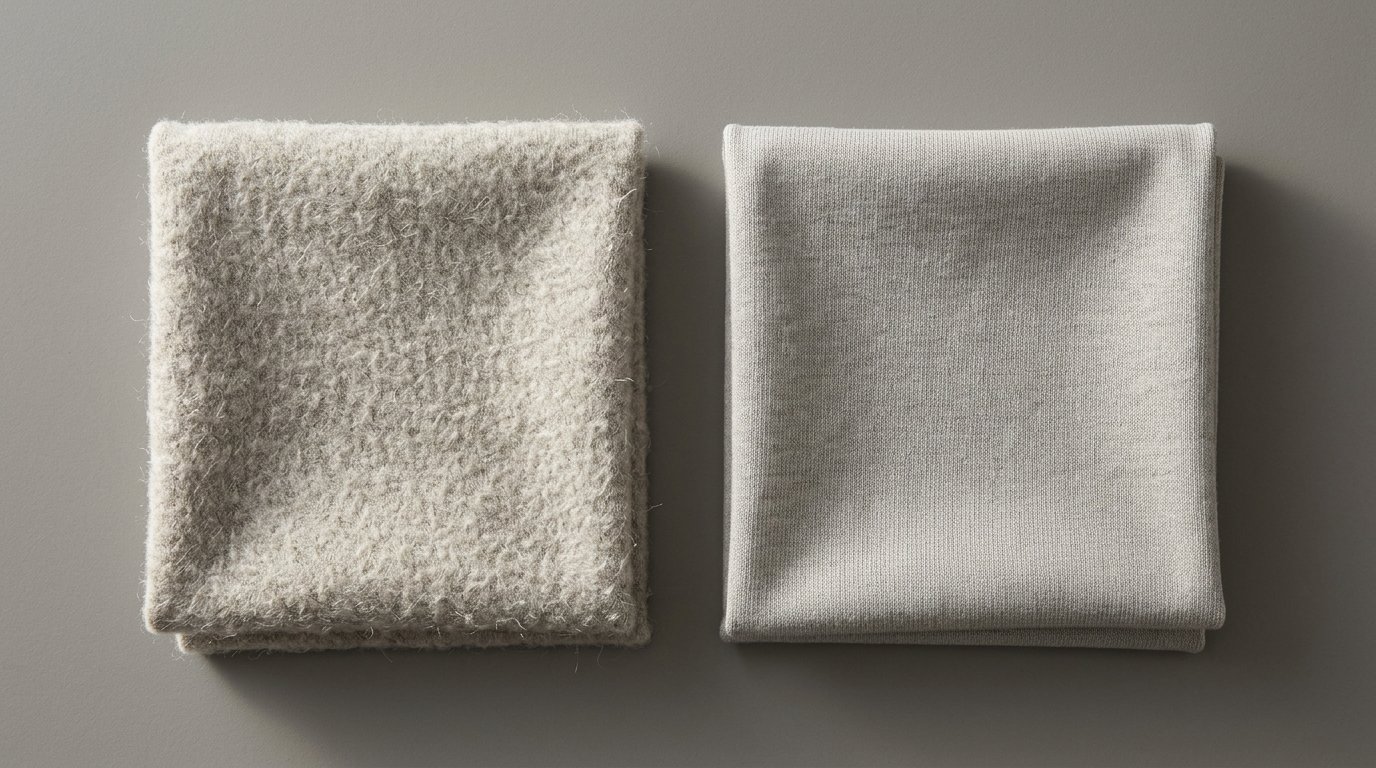
Consider two white cotton jersey tees of identical weight and construction, one knitted from carded yarn and one from combed, washed and tumble-dried twenty times. The fiber content is the same on both labels. The difference shows up at the surface: one is fuzzy, the other is still smooth.
And drop the cleanliness myth before it reaches a product page. Both carded and combed cotton are clean cotton. Combing is about fiber length distribution.
Combed vs. Ring-Spun vs. Open-End: Three Labels Buyers Keep Swapping
Combed describes fiber preparation. Ring-spun and open-end, also called rotor, describe how that prepared fiber was twisted into yarn. All four combinations exist in the market, so a mill can legitimately sell you carded ring-spun or combed open-end. Treat them as two independent dials and the yarn description suddenly makes sense.
Ring spinning drafts a roving between rollers and twists it with a traveler, so fibers migrate toward the core and wrap helically. At the same yarn count you get a denser, stronger, smoother yarn with better abrasion behavior. Open-end spinning opens the sliver back into individual fibers and twists them from the outside in at high rotor speed. It is faster, cheaper, and entirely adequate for fleece backing, coarse knits and hidden components, though it produces a weaker, hairier, harsher yarn.
Twist per inch is the number that changes hand feel most, and it is the number buyers ask for least. More twist gives strength and a leaner hand; less twist gives softness and more surface fuzz. Request it in turns per metre or per inch and you will stop guessing why two 180gsm jerseys feel different.
Yarn count matters as much as the combed claim. Finer yarns need longer fiber to hold together, which is why combing and high yarn counts travel together. A heavy yarn in a coarse gauge gains very little from combing, because the structure is chunky by design.
Is 100% ringspun cotton the same as 100% cotton?
Same fiber, different information. Ringspun tells you the spinning method; plain 100% cotton tells you nothing about it. That silence is exactly why the ringspun word carries marketing weight, and why it shows up on polo shirt fabric specs where surface smoothness sells.
One practical caution: combed earns its keep on a fine-gauge, next-to-skin surface and loses it on a brushed fleece back, where the surface is napped into fuzz on purpose.
Carded vs. Combed Cotton, Side by Side
Here is the comparison most articles promise and then abandon halfway. Every cell is qualitative and directional on purpose, because the real numbers move with cotton grade, yarn count and mill.
| Criterion | Carded cotton | Combed cotton | Combed ring-spun |
|---|---|---|---|
| Fiber length retained | Long and short mixed | Long fibers only | Long fibers only |
| Neps and surface hairiness | High, sheds lint | Low, clean surface | Lowest, dense surface |
| Pilling under abrasion | Fast | Slower | Slowest |
| Yarn strength at equal count | Baseline | Higher | Highest |
| Hand feel | Coarse, dry, toothy | Smooth and softer | Smooth, lean, dense |
| Dye consistency | More shade variation | More even uptake | Most even uptake |
| Cost tier (per kilo of yarn) | $ | $$ | $$$ |
| Best end uses | Flannel, canvas, denim, terry, slub knits | Jersey, poplin, fine knits | Premium tees, underwear, fine-gauge jersey |
Read the table with one correction in mind. The cost tier applies per kilo of yarn, and yarn is only part of a fabric's price. A combed yarn inside a heavy 370gsm terry barely moves the yard price, while the same upgrade inside a 150gsm jersey is a visible share of it.
The fourth column exists to kill a false rivalry. Combed and ring-spun are not competing upgrades; they stack. A carded ring-spun yarn is one premium, a combed open-end yarn is a different one, and a combed ring-spun yarn is both.
Where Carded Cotton Is the Better Buy (Flannel, Canvas, Denim, Terry, Slub Knits)
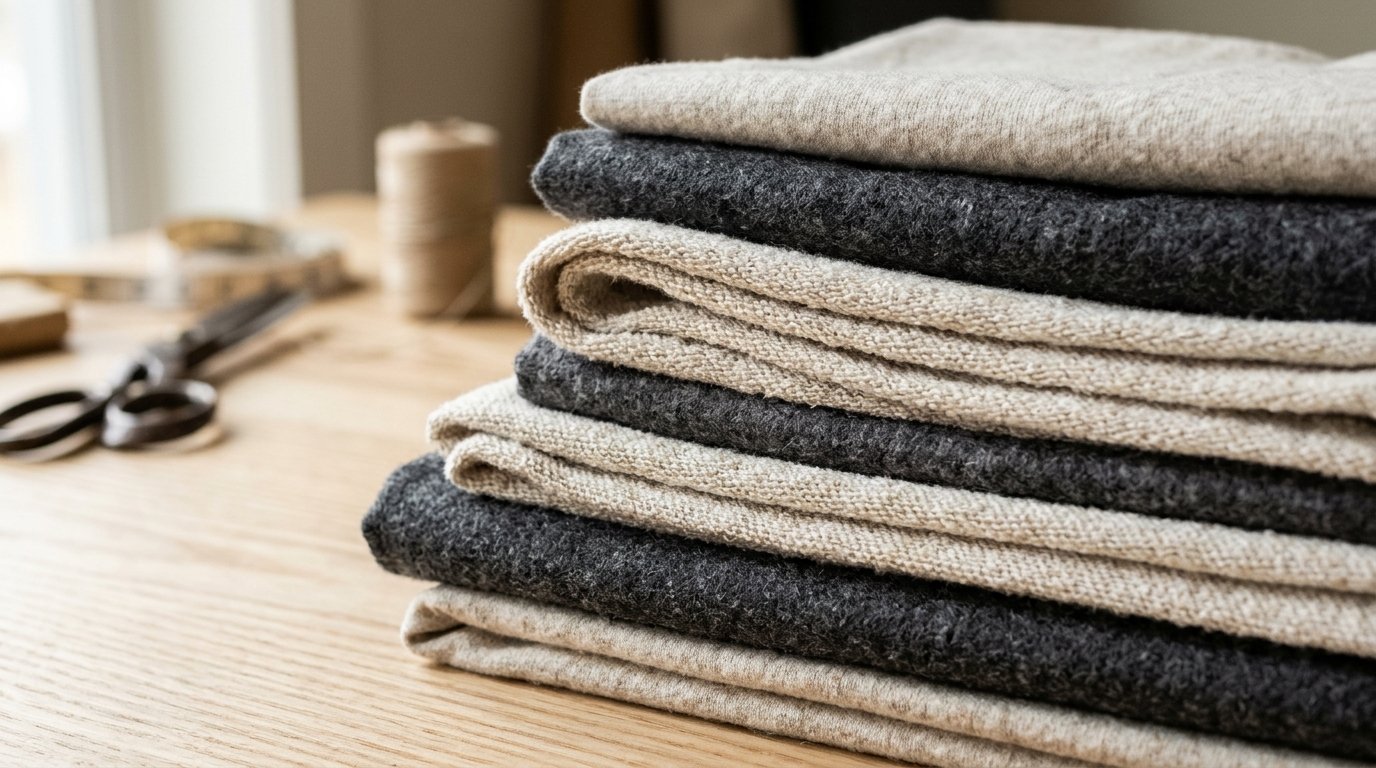
In several fabric families the short fibers and irregularity that combing removes are the product being sold. Paying for combed there is paying to strip out character.
Flannel. The brushed nap is the value. Combing reduces the protruding fiber ends that give flannel its loft and warmth, and you absorb a higher yarn cost for less of what the customer wanted.
Canvas and duck. Strength comes from heavy plied yarns, a high cover factor and a tight weave, not from fiber length distribution. Coarser carded yarn builds the beefier hand at a lower cost, and the fabric still takes a beating.
Denim. Slub and irregularity are engineered into the yarn. The vintage look depends on that unevenness, and combing away the variation flattens the character the whole product is built around.
Terry and French terry. The loop pile and napped back define the hand, and the surface gets abraded and brushed during finishing regardless of how the yarn was prepared. Weight and construction move hand feel far more than a combed label. Compare a 180gsm (6.3 oz) 65% Cotton 35% Polyester French Terry at 19.99 per yard against a 370gsm (11.3 oz) 100% Cotton French Terry at 25.99 per yard, or a 250gsm (8.8 oz) 83% Cotton 17% Polyester Terry at 19.99 per yard. Those are three different fabrics before yarn preparation enters the conversation, and the fleece fabric construction behind them explains most of the difference.
Textured and fancy structures. Bouclé, slub jersey, tweed-effect plaid, and wool-blend coatings rely on fiber length variation and nep. A 450gsm (15.9 oz) 20% Wool 80% Polyester Tweed Plaid mentioned in a customer review is a good example, and plaid fabric generally runs 120 to 450gsm in cotton, polyester or cotton-poly blends. Combed yarn works against the design intent in all of them.
Hidden components. Pocketing, lining, interlining, fleece backing and bag linings. Nobody touches them, nobody sees them, and carded is the correct purchase.
Blends deserve their own answer. A cotton-poly fleece or terry is chosen for cost, durability and stability, and the combed premium is usually wasted on it because the surface is not where the customer judges the garment. If you are weighing fiber mixes, this piece on cotton, polyester and blends in bulk goes deeper.
Imagine a buyer who pays a combed premium on a heavyweight brushed-back fleece and then funds a napping finish that creates the fuzz the combing removed. That is a real pattern, and it costs money twice.
How to Verify a Combed Claim Before You Sign the PO
Combed is a yarn-level claim, so the artifact to request is the spinner's yarn report, not the fabric spec sheet. Suppliers who buy yarn on the open market often cannot produce one, and that silence is information worth having before you commit yardage.
- Read the right fields. Look for comber noil percentage, fiber staple length and length uniformity, neps count per gram in the sliver, yarn count in Ne or Nm, twist per inch or per metre, and yarn tenacity if the mill reports it. A report missing half of these is a partial answer.
- Match the yarn to the fabric. Fabric GSM, knit structure or weave, gauge or pick count, and finished width belong in the same document. For reference, interlock typically runs 155 to 310gsm with a full range of 145 to 380gsm, and standard weights sit at 180, 220, 270 and 310gsm, with widths from 160cm to 185cm depending on the roll. A combed yarn in a slack, low-gauge knit still gives you a weak, pilling fabric.
- Run four bench checks. Hold the sample against a light to see thick and thin bands. Backlight it to spot nep specks. Rub it against a dark cloth to see how much fiber sheds. Examine the surface with a loupe, and compare two samples side by side rather than judging one in isolation.
- Wash one sample before the bulk order. Look at the surface, the seams and the shade after drying. This is the only test that reflects what the end customer will see.
- Name the red flag. A spec sheet that says combed with no yarn count, no twist and no fiber data is a marketing word, not a specification. Ask what the yarn was and who spun it.
Then plan for the commercial consequence you will hit next. Combed yarn narrows the color and weight range a mill can offer off the shelf, and it can push a stock program into a custom minimum. Spec it early in development, not after the color card is signed.
What Combing Does Not Fix: Breathability, Shrinkage, and Pilling After Ten Washes
Combing is not a general quality upgrade, and treating it as one is how buyers overpay for the wrong fix.
Breathability. Combing does not make cotton breathe. Airflow is set by knit structure, fabric weight and yarn twist. A dense, tightly constructed combed cotton can be hotter against the skin than an open, loosely knitted carded one. If the brief says cool, adjust the structure.
Shrinkage. Length and width stability come from knit construction, yarn twist and finishing, especially compacting and tumbling. Combing does not stabilize a fabric, so a combed jersey can still shrink more than a well-compacted carded one. Fabrics engineered for shape retention get there through construction, not through the comber.
Pilling after repeated washing. Combing lowers the rate at which pills form. Abrasion, heat and agitation drive the process, so low twist plus a loose knit plus a hot dryer will pill any cotton, combed or not.
Raw fiber quality. Combing redistributes the fiber length it is given; it does not create length. A short-staple, immature cotton produces a weaker combed yarn than a long-staple cotton that was only carded. That is why origin and staple belong on the spec sheet next to the process claim.
Softness. Combing removes coarse hairs and helps the hand, but yarn count, knit gauge and finishing do more for the touch. If the brief says soft, the answer is usually a finer yarn and a softer finish first. Compare that with a chemical route in mercerized versus non-mercerized cotton, where the finish itself is the variable.
Dye consistency. Shade control comes from fiber maturity and the dyeing method, whether piece, yarn or garment. A combed claim is not a substitute for a dye lot control process.
Care guidance should follow the mechanism. Wash inside out with moderate agitation, avoid overdrying, and trim pills rather than pulling them, because pulling drags new fiber ends to the surface and restarts the cycle.
The Cost-Per-Wear Math That Decides Whether the Premium Pays
Build the calculation yourself: the premium is the fabric price delta per garment, and the payback is the change in expected wears plus the change in complaint and return rate. There is no single industry figure for that, and any article quoting one is guessing at your business.
The variables that actually move the math are short and unglamorous. Retail price. Return rate on the garment. Expected visible lifespan before pilling shows. How often the customer launders it. And in rental or retail settings, the labor cost of de-pilling, which most spreadsheets forget entirely.
The premium pays back most reliably on next-to-skin, high-abrasion, frequently washed garments where the surface is visible: premium basics, underwear, babywear, and uniform tees that survive many industrial wash cycles. It pays back least on concealed components, napped surfaces, heavily textured fabrics, and short-cycle fashion where the garment leaves the wardrobe long before pilling would ever show.
Be fair to the carded side, though. Pilling complaints, returns, and the customer who writes a review about fuzz on a dark shirt are real costs. They just sit outside the fabric invoice, which is exactly why buyers underprice them. A premium you can see on the PO gets argued about; a return you cannot see on the PO gets ignored.
So here is the decision rule. If the customer will see and touch the surface more than twenty times, spec combed. If the surface is napped, hidden, or designed to be irregular, spec carded and spend the difference on a better construction or a better finish. That is where the money buys something the customer can actually feel.
A Pre-Order Checklist for Your Next Cotton Knit or Woven Order
Run this before the purchase order, not after the color card is approved.
- Locate the claim. Confirm whether combed appears in the yarn spec or only in the marketing line, and ask who spun the yarn.
- Record the numbers together. Yarn count and twist belong beside fabric GSM, structure and finished width, so combed is judged against construction rather than in isolation.
- Decide what the surface does. If it is napped, brushed, slubbed or hidden, carded is the specification and the premium is misallocated.
- Check the commercial envelope. Color range, weight range and minimum quantity at the chosen yarn tier, because combed yarn narrows what is available off the shelf.
- Order a swatch or a single yard. Wash it twice, then inspect the surface and shade before writing the bulk PO.
- Write the care label early. Laundering instructions are part of what protects the pilling performance you paid for.
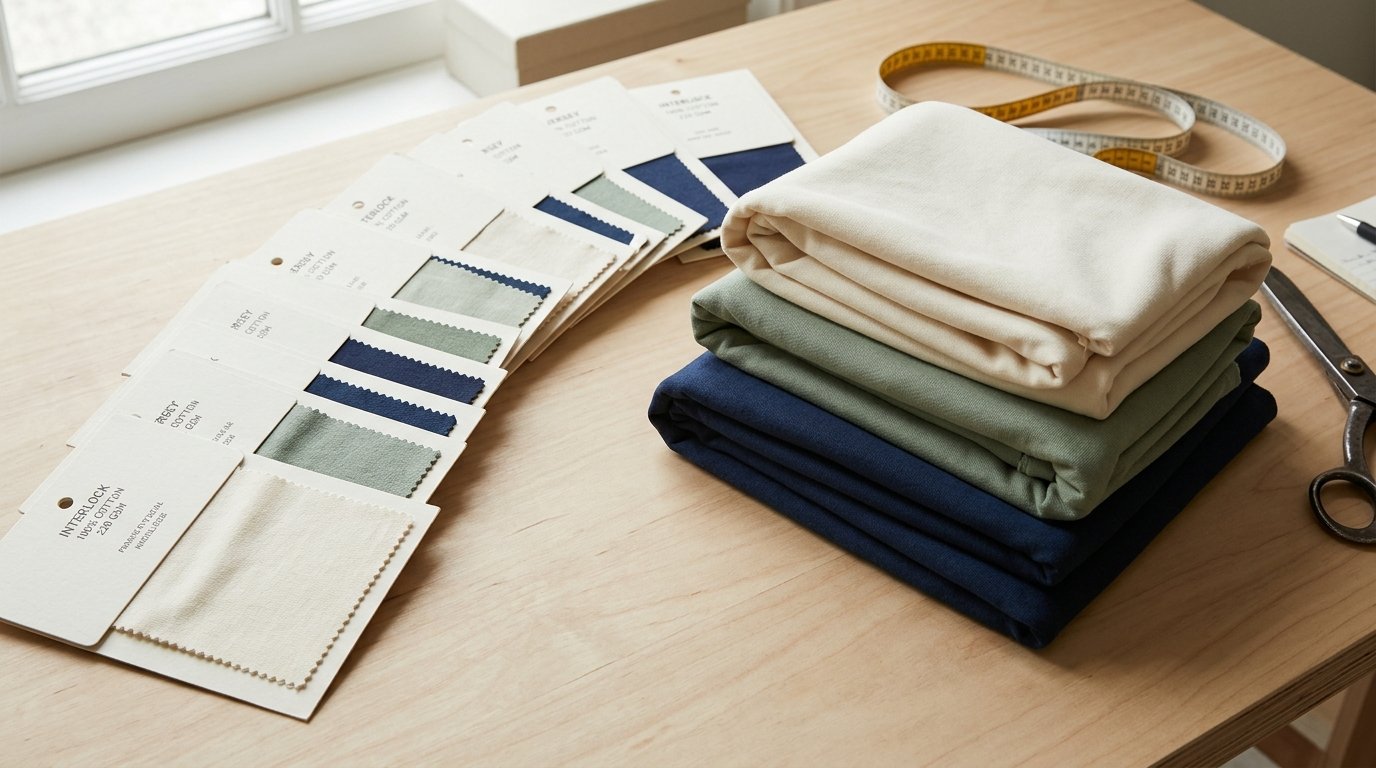
Global Fabric Whole Sale lists over 10,000 fabrics sold by the yard, so a buyer can pull swatches across the soft knitted fabric range and compare construction, weight and price before locking a yarn specification. On the interlock range there is no minimum order, so you can start with a single yard, swatch cards are available for a small fee, prices run from 19.99 to 39.99 per yard with volume discounts of 5% at 22 to 42 yards, 10% at 43 to 70 yards and 30% above 70 yards. Orders above 300 kg of interlock move to quote-based pricing, and fabric ships to more than 130 countries from the Foshan, Guangdong warehouse.
Frequently asked questions
What is the difference between combed cotton and cotton?
Nothing at the fiber level: combed cotton is cotton. The difference is an extra mechanical pass at the spinning mill that strips short fibers out of the sliver before spinning. That leaves a longer, more uniform yarn which pills and fuzzes less. Plain cotton on a label tells you the fiber; the word combed tells you how the yarn was prepared.
Is a 50% cotton 50% polyester blend good?
It can be excellent for fleece, terry and workwear, where durability, cost and shape stability matter more than a premium surface. The blend resists shrinkage and holds color well, but it cannot be labeled 100% cotton and it pills through a different mechanism. Judge the blend on construction and weight before judging the fiber split.
Is combed cotton natural?
Yes. Combing is a purely mechanical process in which metal comber rolls strip short fibers out of the sliver, and no chemical is added at that step. Combed cotton remains a natural fiber. Whether it is also organic depends on how the raw cotton was grown and certified, which is a separate question entirely.
Is combed cotton breathable?
Breathability comes from fabric structure, not yarn preparation. A light, loosely knitted combed cotton jersey breathes well, while a dense, tightly constructed combed cotton can trap heat. Knit gauge, fabric weight and yarn twist decide airflow. Combing only makes the yarn smoother and stronger, which is a different performance claim.


 Login with Google