-

Free Samples!



Viscose Dress Designs: Which Styles Work Best and Why
Table of Contents
Viscose's fluid drape makes it one of the more naturally dress-friendly fabrics you can work with — but not every dress style takes equal advantage of it. Some designs lean into everything viscose does well; others fight against it.
This guide covers the styles that work best in viscose, what to look for in terms of fabric weight and print, and a few practical things worth knowing before you start cutting.
Quick Summary
Viscose works best in dress styles that rely on drape, movement, and softness rather than sharp structure. The most suitable designs are wrap dresses, flowy midi and maxi dresses, slip dresses, bias-cut styles, and simple sundresses made with single jersey viscose. For most projects, 140 to 160 GSM is the safest and most versatile choice. If a dress needs to hold a stiff shape or strong structure, viscose is usually not the best fit. The key is to match the fabric weight, print, and construction to the amount of fluidity you want in the finished dress.
What Makes Viscose Work So Well for Dresses
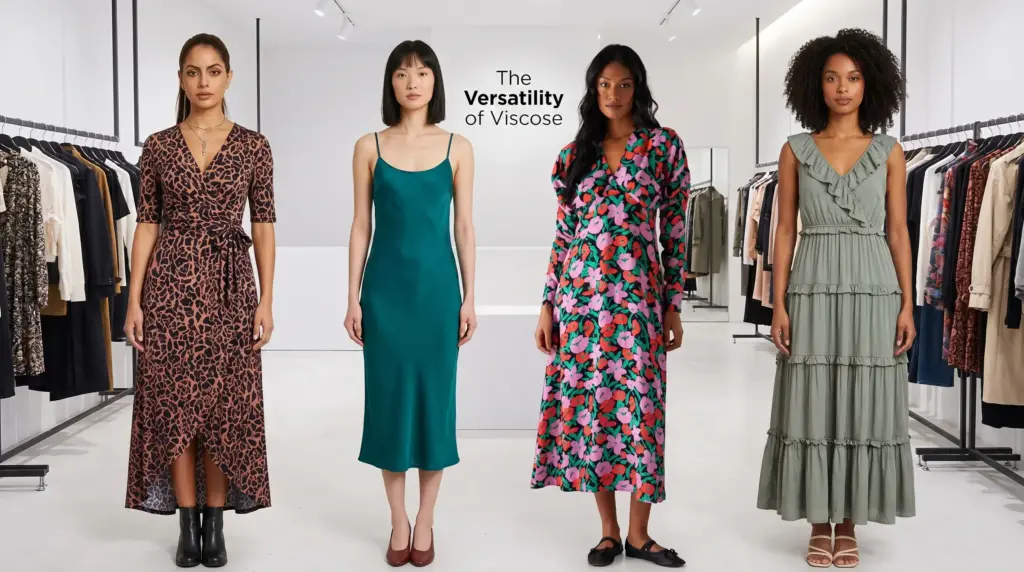
Three things: drape, weight, and print. Viscose falls in soft, fluid lines that follow the body without clinging — which is exactly what most dress silhouettes need. It is lightweight enough to layer and move freely, smooth enough to feel comfortable against the skin, and takes dye and print exceptionally well, so colors stay vivid and patterns stay sharp. The dress styles that take most advantage of these qualities are those built around movement and softness rather than structure.
One thing viscose is not: forgiving of stiff or structured construction. If a dress needs to hold a sharp shape — a tailored A-line with boning, a stiff skirt that stands on its own — viscose will fight you. The styles below are ones where its natural tendencies work in your favor. Browse our viscose fabric collection to see the full range of weights and prints available by the yard.
The Best Viscose Dress Styles to Sew or Shop
Wrap Dresses
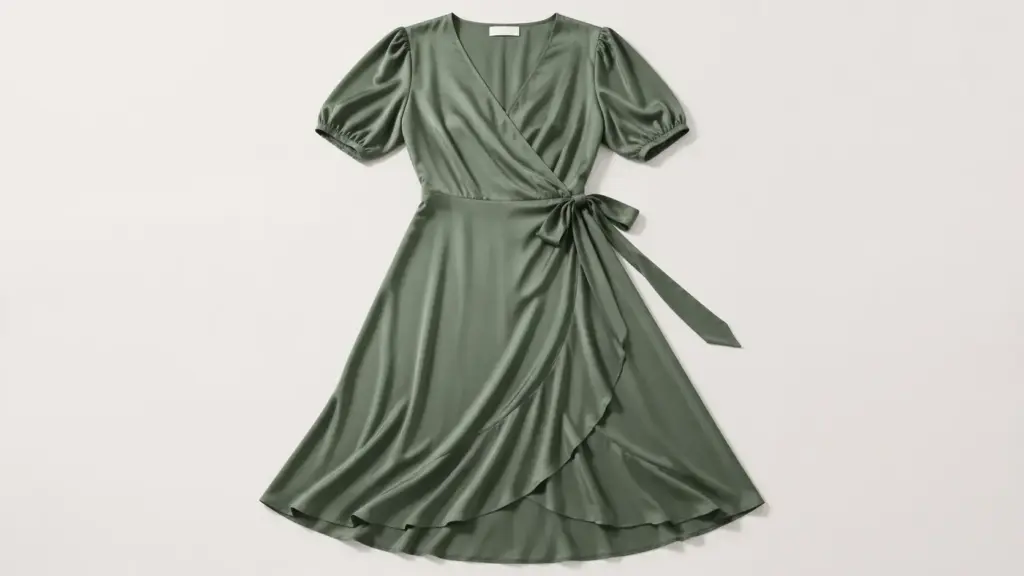
The wrap dress is arguably the best match for viscose of any dress style. The design depends entirely on drape — the fabric needs to fall naturally at the wrap point, flow across the body, and move when you walk. Viscose does all of this without needing to be coaxed.
A fabric weight between 140 and 170 GSM works best here. Light enough to drape well at the ties and front opening, substantial enough to hang evenly without pulling. Printed viscose — florals, abstract patterns, small geometrics — tends to look particularly strong in a wrap silhouette because the movement of the fabric animates the print.
For sewists: wrap dresses are moderately beginner-friendly in terms of construction, but viscose's slippery surface means you will need sharp scissors, fine pins, and patience when cutting. The payoff is worth it.
Flowy Midi and Maxi Dresses
Long, relaxed silhouettes give viscose the most room to do what it does best. A flowy midi or maxi dress in viscose moves with every step — the fabric catches air, falls back into place, and drapes in a way that stiffer materials simply cannot replicate.
For this style, viscose crepe is worth considering alongside standard woven viscose. Crepe has a slightly textured surface that adds body without sacrificing drape, which helps longer skirts hang evenly rather than clinging.
Printed viscose — particularly large florals and abstract designs — looks exceptional in long silhouettes. The scale of the print has room to read clearly, and the movement of the fabric adds life to the pattern in a way that does not happen in stiffer materials.
Slip Dresses and Bias-Cut Styles
Slip dresses and bias-cut designs are the most technically demanding viscose dress styles, and also the most rewarding. Both rely on the fabric following the body's contours through gravity and drape rather than through construction — which means the fabric does most of the design work.
For bias-cut styles in particular, you want viscose at the lighter end of the weight range: 110 to 140 GSM gives you the fluidity the cut needs. Heavier viscose will resist the bias pull and lose the characteristic liquid quality that makes this silhouette work.
Solid colors and subtle prints tend to work better for slip and bias-cut styles than large or complex patterns, which can distort unpredictably across a bias grain. This is also the most challenging style to cut and sew in viscose — it shifts, stretches on the bias, and requires careful handling throughout.
Casual Shift Dresses and Sundresses
Not every viscose dress needs to be a statement piece. Lightweight viscose single jersey — a knit construction rather than a woven one — works well for relaxed shift dresses and sundresses where comfort and ease of wear matter more than dramatic drape.
Single jersey viscose has a small amount of stretch, which makes it more forgiving to sew and more comfortable to wear in a simple silhouette. It is also one of the easier viscose constructions for less experienced sewists to work with, since the stretch helps compensate for minor fit imprecisions.
This is the style to reach for when you want something easy to throw on, easy to wash, and easy to make. Keep the construction simple — a straight or slightly A-line silhouette — and let the fabric and color do the work.
Printed Viscose Dresses
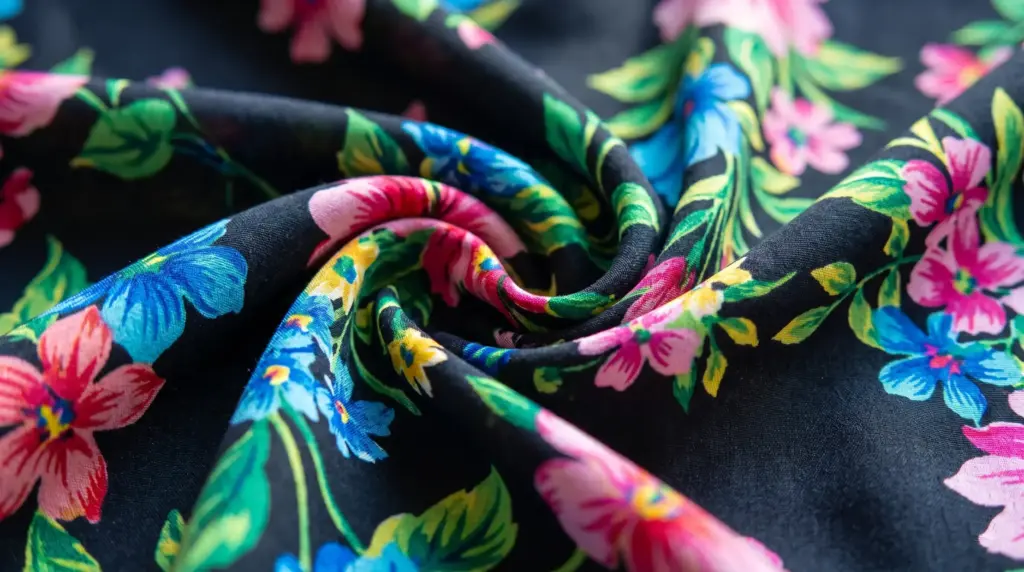
Viscose takes dye more vividly and evenly than many natural and synthetic fabrics, which is why printed viscose looks so good in dress applications. Colors stay saturated, fine details stay sharp, and the print moves naturally with the fabric rather than sitting stiffly on top of it.
Florals are the most common viscose dress print for good reason — the softness of the fabric complements the organic quality of floral patterns in a way that stiffer fabrics do not. Browse our floral fabric collection for options across different scales and colorways.
Abstract and geometric prints also work well, particularly in longer silhouettes where the full scale of the print can be read. If you are choosing a print for a wrap or midi dress, consider how the pattern will move — some prints look better in motion than others.
Choosing the Right Viscose Weight for Your Dress Style
The GSM (grams per square metre) of your viscose will have more impact on the finished result than almost any other factor. Here is a quick guide:
| Weight (GSM) | Too heavy for a drape; consider a different fabric | Notes |
|---|---|---|
| 100–140 GSM | Slip dresses, sundresses, bias-cut styles | Maximum drape and fluidity; delicate to handle |
| 140–180 GSM | Wrap dresses, midi dresses, relaxed shirt dresses | Most versatile range; easier to cut and sew |
| 180 GSM+ | Not recommended for fluid dress styles | Too heavy for drape; consider a different fabric |
If you are unsure which weight to choose, 140 to 160 GSM is the most versatile range for dress sewing — fluid enough for most styles, substantial enough to handle without too much frustration.
A Few Things to Know Before You Sew
Viscose rewards preparation. A few things that will make a significant difference to your finished result:
- Pre-wash before cutting: Viscose can shrink significantly on the first wash, sometimes by 5 to 10 percent. Pre-washing and drying the fabric before you cut prevents your finished dress from shrinking out of shape after the first laundering.
- Use a sharp blade: A rotary cutter on a cutting mat gives you the cleanest results with viscose. Sharp dressmaking scissors work too — but dull blades will drag and distort the fabric as you cut.
- Go slow with your machine: Viscose feeds unevenly at high speed. A smaller stitch length (2 to 2.5mm) and a fine needle (70/10 or 75/11) reduce skipped stitches and puckering.
- Finish your seams: Viscose frays readily. French seams, serged edges, or Hong Kong seam finishes will keep the inside of your dress looking clean and prevent fraying over time.
For a deeper look at how viscose fiber behaves during production and finishing, the plant-based origin of the fiber explains some of its care requirements — it is sensitive to heat and water in ways that synthetic fabrics are not.
Frequently Asked Questions About Viscose Dress Fabric
What is the best viscose fabric weight for a wrap dress?
140 to 170 GSM is the sweet spot for most wrap dresses. Light enough to drape naturally at the wrap point and ties, substantial enough to hang evenly without pulling or shifting. If you go lighter than 120 GSM, the fabric may feel too delicate and difficult to control during construction.
Can viscose be used for formal dresses?
Yes, depending on the silhouette. Viscose works well for formal styles that rely on drape rather than structure — a fluid evening dress, a bias-cut gown, or a slip-style formal dress. It is less suited to highly structured formal wear like strapless gowns or dresses with boning, where the fabric needs to hold a shape on its own.
Is viscose easy to sew for beginners?
It is manageable with the right preparation, but it is not the easiest fabric to start with. Viscose shifts during cutting, feeds unevenly through a machine, and frays readily at the edges. If you are new to sewing, starting with a simple silhouette — a straight shift dress or a basic sundress in single jersey viscose — will give you a better experience than attempting a bias-cut or fully lined style.
Find Your Viscose Fabric by the Yard
The right viscose for your dress is out there — it comes down to weight, print, and how much drape your chosen style needs. Once you know what you are making, finding the right fabric is the straightforward part.
Browse our full dress fabric collection by the yard — including viscose in a range of weights, prints, and solid colors. Order only what you need, in the color you actually want.



 Login with Google