


Chiffon vs. Georgette vs. Organza: A Sheer Fabric Showdown for Bridal and Eveningwear Buyers

If you need fluid movement, choose chiffon. If you need texture and grip that still moves, choose georgette. If you need a fabric that holds its own shape and adds volume, choose organza. All three are sheer, all three show up constantly on bridal and eveningwear racks, but they behave nothing alike once you get them under a needle or on a body.
Why 'Sheer' Doesn't Mean 'Same'
Here's a mistake buyers make constantly: treating sheer fabrics as interchangeable because they're all thin and light-transmitting. That's like saying all metals are the same because they're shiny. Chiffon, georgette, and organza differ in twist, yarn type, and finishing — and those differences dictate everything from how a skirt falls to how much fabric you'll need to order.
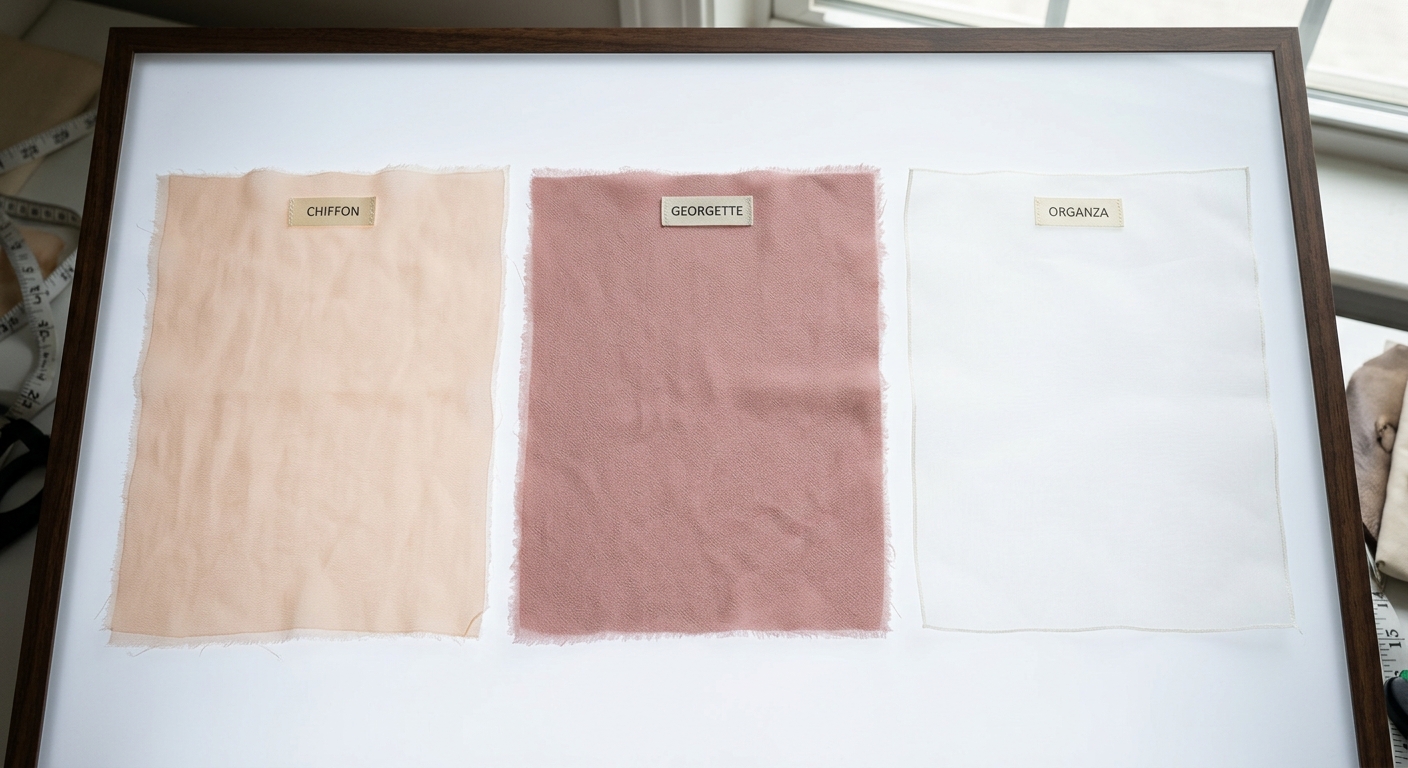
Chiffon uses alternating S-twist and Z-twist yarns woven in a plain weave, which is what gives it that slightly puckered, crepe-like hand and fluid drape. Georgette uses a similar twisted-yarn structure but with tighter, heavier yarns — the result is a fabric with more body and texture, but still sheer. Organza, on the other hand, is typically woven from tightly twisted filament yarns (often silk or synthetic) with minimal texture, producing a crisp, glassy hand that holds structure rather than falling with the body.
If you're new to reading fabric specs before ordering, it's worth reviewing how to read a fabric spec sheet so you can spot twist and weave details before a bulk order lands on your floor looking nothing like the swatch.
Chiffon: The Fabric That Moves With the Body
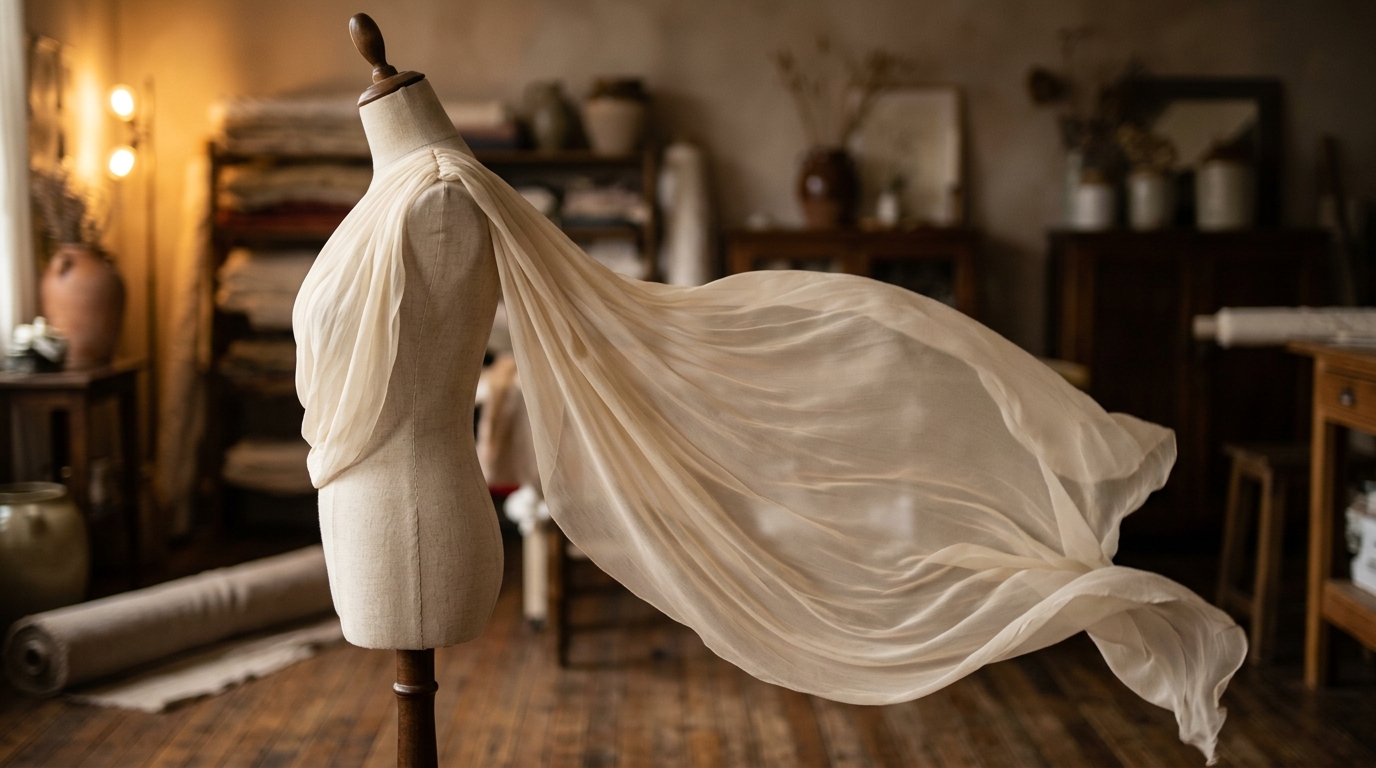
Chiffon is the go-to for anything that needs to flow — think layered bridal overlays, flutter sleeves, and soft eveningwear skirts that skim rather than cling. Its lightweight, airy drape is unmatched for movement, but that same quality makes it notoriously slippery to cut and sew. Pattern pieces shift, seams pucker, and hems fray if you're not using French seams or a rolled hem finish.
Silk vs. Polyester Chiffon
Silk chiffon has a warmer luster and slightly better drape, but it's fragile and expensive — expect $18-$35 per yard wholesale depending on quality. Polyester chiffon is more forgiving for high-volume bridal lines, holds color well, and typically runs $4-$9 per yard. For example, a bridal boutique producing 200 units of a layered ball gown might use polyester chiffon for the underlayers (cost control) and silk chiffon for the visible outer layer (drape and hand-feel where it matters most to the customer).
Georgette: The Underrated Middle Ground
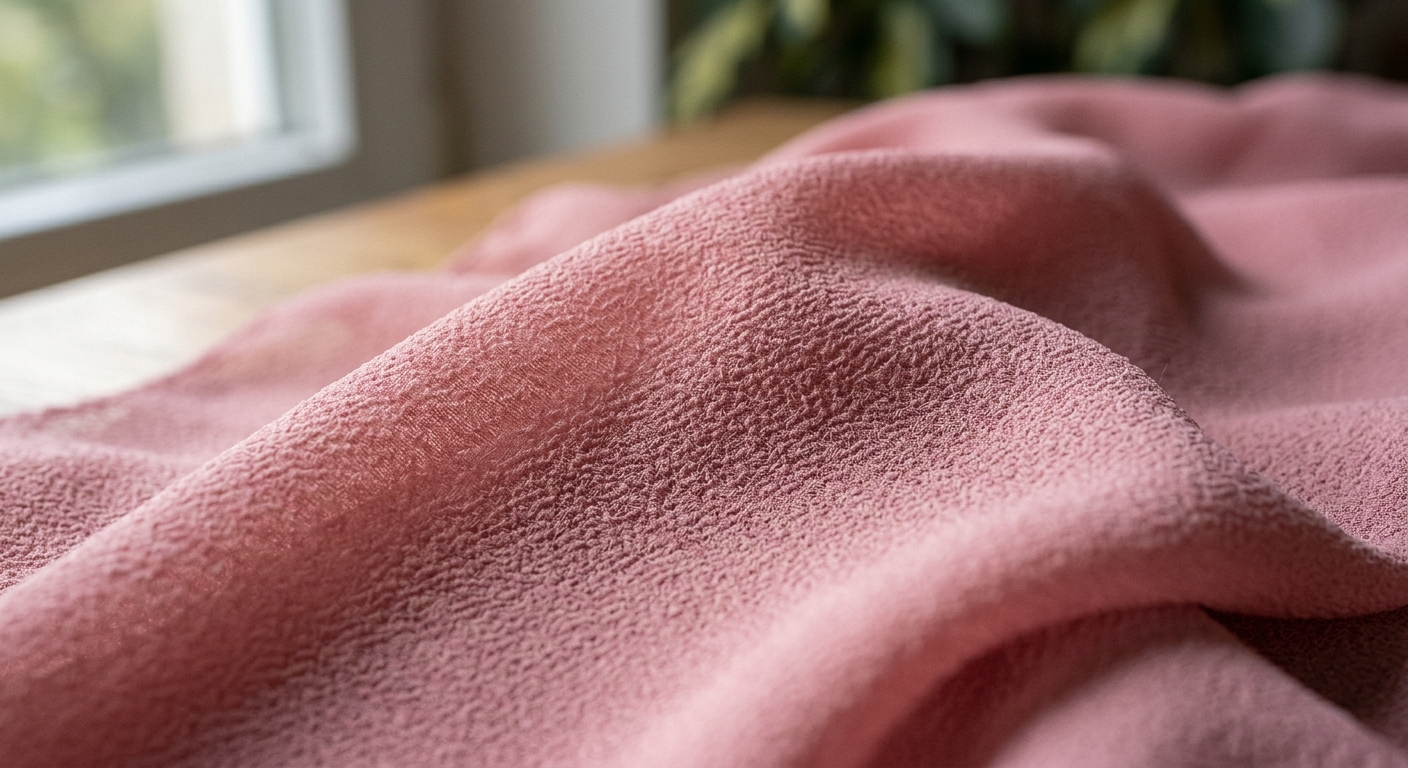
Georgette gets overlooked, and that's a mistake. It has more texture and grip than chiffon, which actually makes it easier to sew — the crepe-like surface resists slipping under the presser foot. That texture also diffuses light differently, giving it a slightly matte, softer sheen compared to chiffon's smoother shine.
Where georgette wins: ruched bodices, wrap dresses, and any design where you need sheer fabric to hold gathers without collapsing flat. It's also more forgiving for beginner sewists working bridal alterations, since it doesn't shift as much during cutting.
One buyer takeaway worth remembering: georgette's tighter twist yarns mean it resists wrinkling better than chiffon during shipping and storage — a real advantage if you're storing wholesale fabric rolls for extended periods before a production run.
Organza: Built for Structure, Not Softness
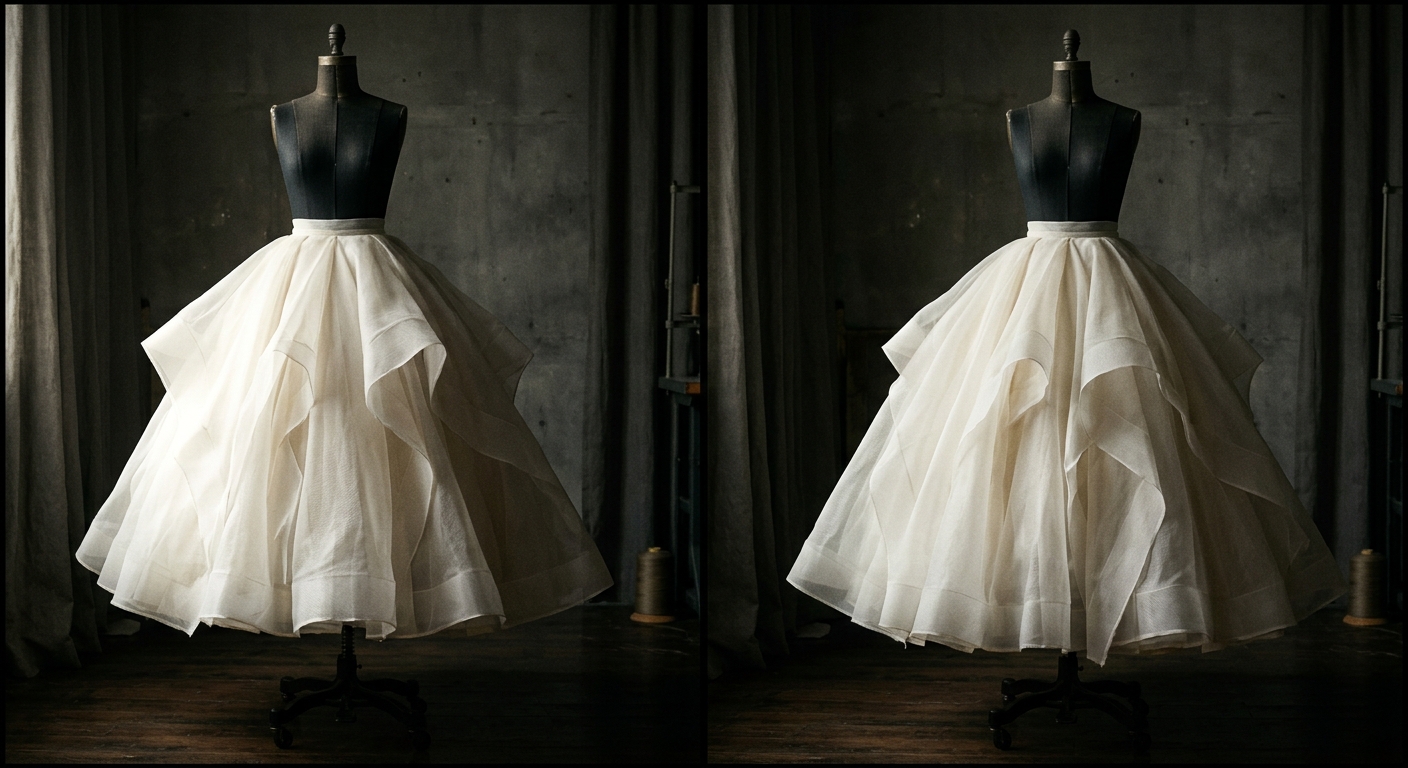
Organza is the one you reach for when you need a fabric to hold a shape on its own — think full ball gown skirts, oversized bows, or structured collars. It's crisp almost to the point of being stiff, and that stiffness is exactly the point. A chiffon skirt collapses into soft folds; an organza skirt holds its bell shape without a crinoline underneath.
The Fraying Problem
Organza's biggest downside is fray-prone edges. Because the yarns are tightly twisted but the weave is open, cut edges shed threads fast. Serge every seam, or use pinking shears at minimum, or you'll be picking loose threads out of a $2,000 gown two weeks after delivery. Many bridal houses now specify a coated or crystal organza specifically because the light resin finish reduces fraying and adds extra body.
For buyers comparing sheer structured fabrics against other translucent options for a collection, it's worth browsing translucent fabric by the yard to see how organza stacks up against tulle and voile for structure-heavy designs.
Matching Fabric to Silhouette: A Buyer's Decision Framework
Stop picking sheer fabric by hand-feel alone — match it to the silhouette first, then confirm the hand-feel works for your price point. Here's the logic most experienced pattern makers use:
- Bias-cut, body-hugging gowns: chiffon, because it needs to move with curves rather than fight them.
- Ruched or wrapped bodices: georgette, because the texture holds gathers cleanly.
- Full-volume skirts, bows, structured necklines: organza, because it needs zero internal support to hold shape.
A real-world example: a mid-size eveningwear label building a 2026 collection around dramatic ball skirts paired with soft, draped bodices ended up ordering all three fabrics in the same colorway — georgette for the bodice, chiffon for a soft cape overlay, and organza for the skirt structure. That combination let them hit three different visual effects with a single dye lot, which also avoided the dye lot variance headaches that come from sourcing sheers from three separate mills.
Cost and MOQ Realities for Bulk Buyers
Sheer fabrics are deceptively expensive to buy in bulk because you need more yardage than the weight suggests — sheers are often layered two or three times to achieve enough opacity, which means your actual yardage need can be 1.5x-2x what a solid fabric project would require. Factor that into your fabric yardage calculations before you commit to an MOQ.
Polyester versions of all three fabrics typically carry lower MOQs (50-100 yards) than silk versions (200+ yards is common for silk chiffon and organza from overseas mills). If your buying volume doesn't justify silk minimums yet, it's worth reading the MOQ negotiation playbook before your first PO — mills are often more flexible on sheer fabrics than buyers assume, especially on repeat orders.
Care, Shrinkage, and the Mistakes That Ruin Finished Garments
Sheer fabrics punish sloppy handling more than almost any other category. A pressing iron set too hot will melt polyester organza instantly — you'll see it pucker and warp before you even smell it burning. Silk chiffon shrinks noticeably in the wash (sometimes 3-5%), which matters if a bridal client requests a wash-and-wear veil rather than dry-clean-only.
Always pre-treat and test-shrink a swatch before cutting a full production run. If you're unsure how much shrinkage to expect across fiber types, the fabric shrinkage cheat sheet breaks this down by fiber, and it will save you from cutting a gown short after the first wash.




 Login with Google