


Why Narrow-Width Fabric Rolls Cost You More Than You Think (And How to Calculate True Price Per Yard)

A low price per yard on a narrow roll can cost you more than a higher price per yard on a wide roll, because a yard is a length measurement, not an area measurement. Width determines how much usable fabric you actually get per yard, so the only fair way to compare two quotes is to convert both to price per square yard. Skip that step and you could end up buying more linear yardage, paying more shipping, and generating more cutting waste, all while thinking you got the better deal.
Key takeaways
- Price per yard measures length only; width determines the actual usable area, so two fabrics at the same price per yard can differ in area by 50% or more.
- Convert any quote using price per sq yd = (price per yard x 36) / width in inches before comparing two suppliers.
- A wider roll with a slightly higher price per yard, like Global Fabric Whole Sale's Interlock range at 160cm-185cm, often works out cheaper per square yard than a narrow 36"-45" bolt.
- Narrow rolls add hidden costs through cutting waste, higher shipping per usable yard, and slower progress toward volume discount tiers.
- Interlock fabric has no minimum order, so you can buy a single yard and test the per-square-yard math before placing a bulk order.
Why Two Fabrics at the Same Price Per Yard Aren't the Same Deal
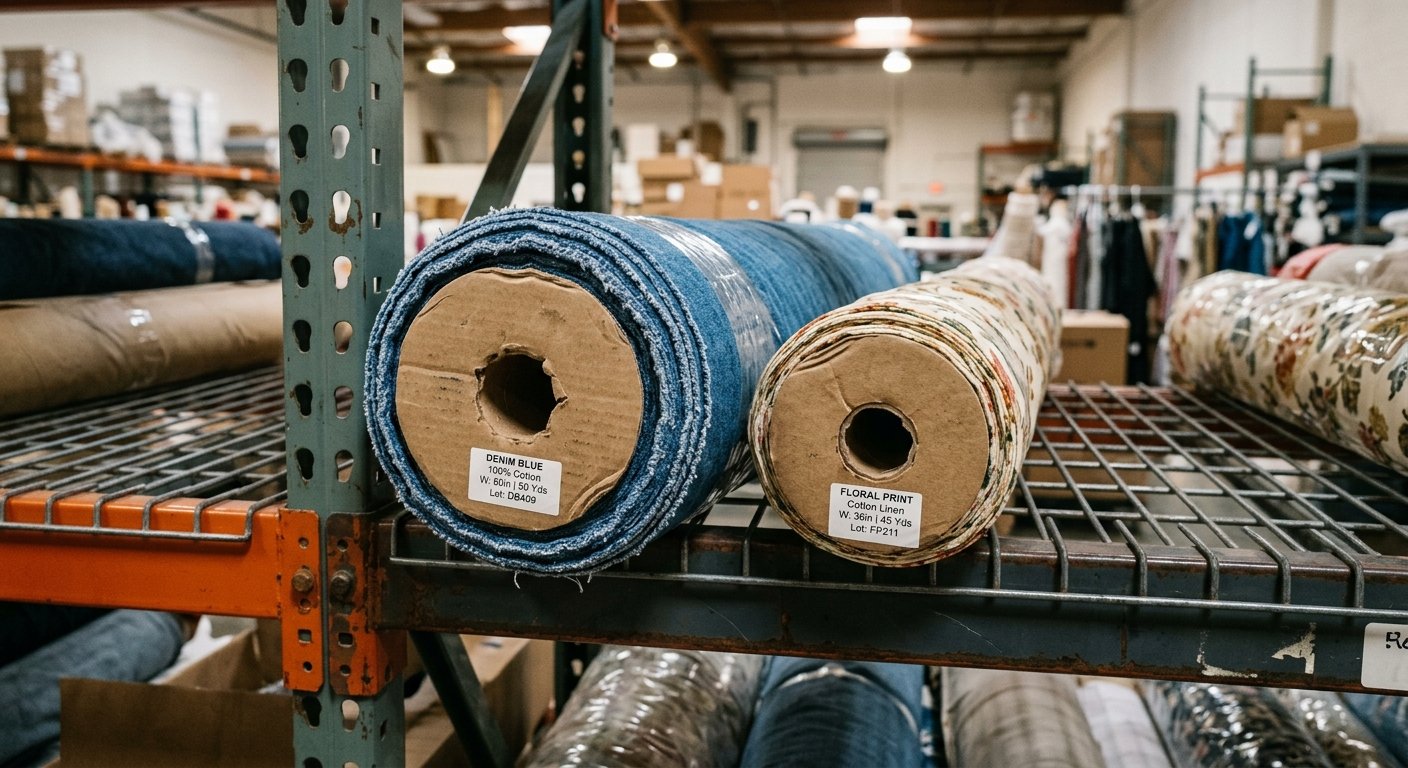
A yard of fabric is always 36 inches long. That part never changes. What does change is width: a roll can come at 36", 45", 54", 60", or even 108" depending on the loom and the mill. Price per yard says nothing about any of that.
This is exactly why price per yard is misleading when used on its own. Two suppliers can quote the identical $19.99/yard and hand you fabric that differs in actual usable area by 50% or more, simply because one roll is twice as wide as the other.
That gap is invisible on a quote sheet. It only shows up once you start cutting pattern pieces and realize you needed far more linear yardage than you budgeted for. Narrow rolls look like a bargain right up until that moment.
How Much Is Fabric on Average Per Yard, and Why That Number Is Incomplete
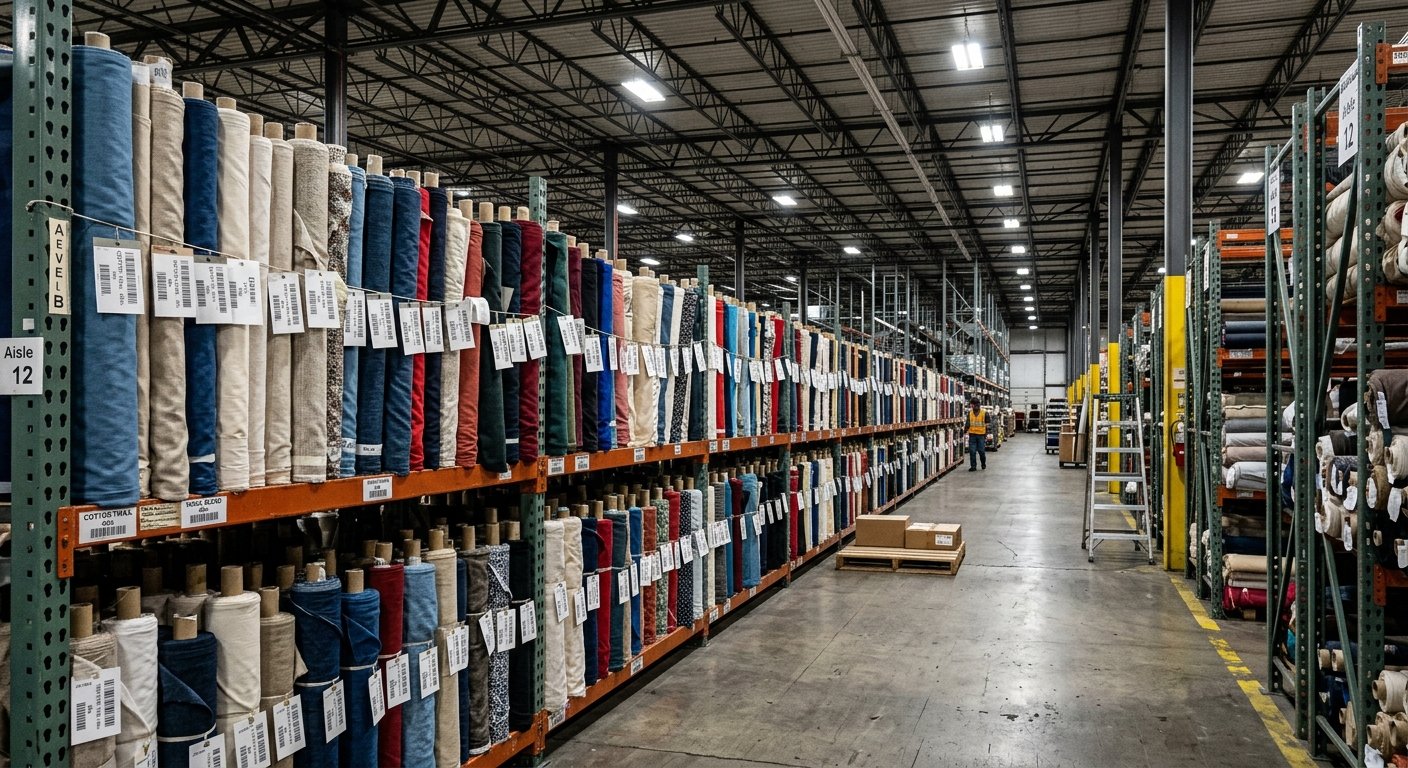
Wholesale price-per-yard figures swing widely because width, weight (GSM), and fiber content all move the price independently of each other. An average number without those details tells you almost nothing useful.
Look at Global Fabric Whole Sale's own catalog for proof. Product KF620 is a 230gsm cotton-polyester French Terry priced at 19.99/yard, while KF1195 is a heavier 320gsm cotton-spandex French Terry priced at 25.99/yard. The jump in price tracks fiber content and weight, not just width. Meanwhile, the Interlock fabric category spans $19.99-$39.99/yard across GSM weights from roughly 155 to 310.
Quoting an “average price per yard” without stating width and weight is like quoting a car price without naming the model. Before you compare two numbers, always ask for width. It's the missing variable that makes every other comparison meaningless.
Is 1 Yard of Fabric 3 Ft by 3 Ft? Clearing Up the Width Confusion
No. One yard refers only to length, 36 inches of it. Width is a completely separate, independent measurement set by the loom and the roll, not by the unit “yard” itself. There's no rule that says a yard has to be square.
A 1-yard cut of 36" wide fabric gives you 9 square feet. The same 1-yard cut of 60" wide fabric gives you 15 square feet. Same price tag unit, 67% more material.
Confusing length with total area is an easy mistake to make, especially when switching between suppliers that quote different widths for a similar-looking fabric. The fix is simple: stop thinking in one dimension. Always calculate length you're buying multiplied by width of the roll, not length alone.
The Formula: How to Calculate True Price Per Yard Across Different Widths
Converting any two quotes to a single comparable number takes one simple calculation.
Step-by-step conversion
- Step 1: Price per square yard = (price per yard x 36) / width in inches.
- Step 2: Compare the resulting price-per-square-yard figures directly. Ignore the sticker price per yard entirely at this stage.
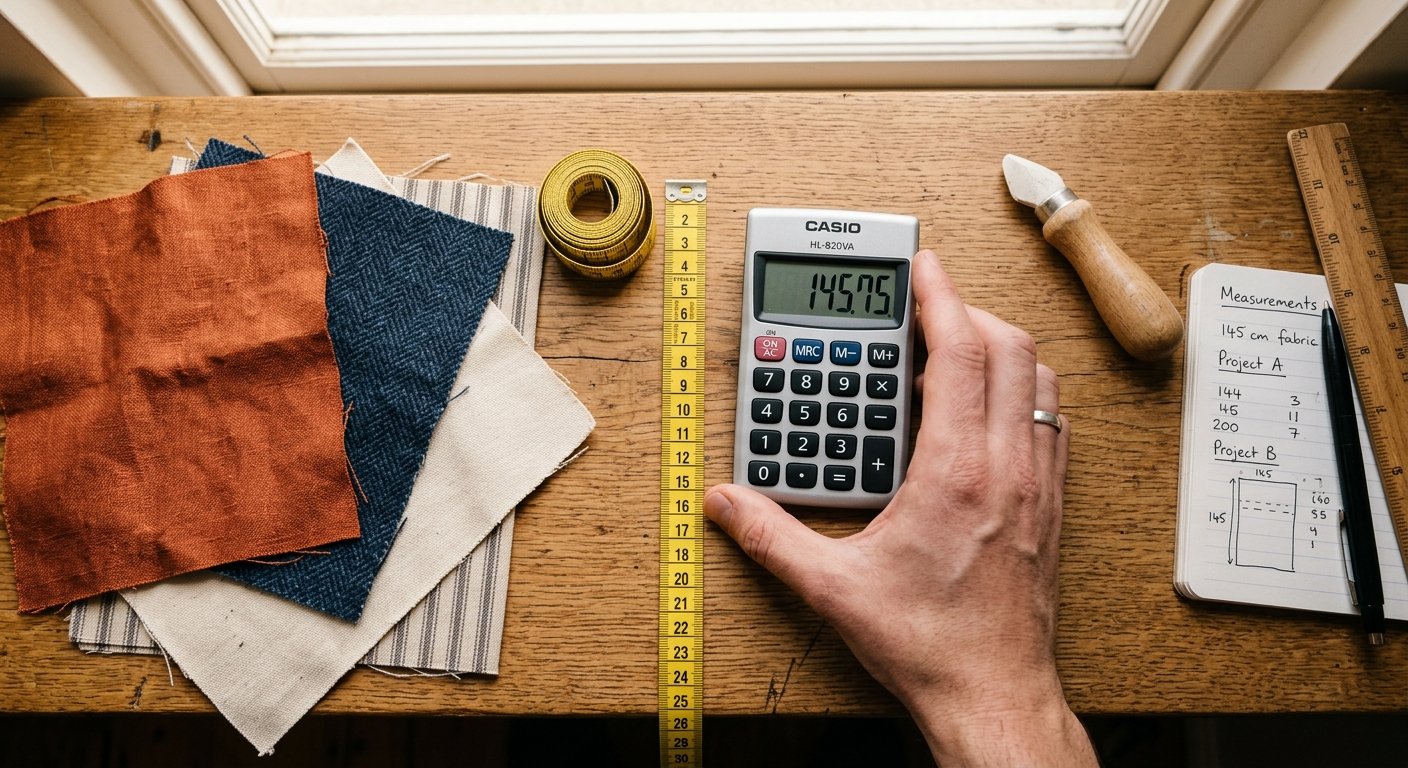
Worked example: a 45" wide roll quoted at $12/yard works out to (12 x 36) / 45 = $9.60 per square yard. A 60" wide roll quoted at $15/yard works out to (15 x 36) / 60 = $9.00 per square yard. The 60" roll has the higher sticker price per yard but is actually the cheaper fabric once you account for width.
Keep this rule of thumb in mind: a wider roll with a modestly higher price per yard is often the cheaper real cost. This matters most for quilting and cotton apparel buyers specifically, since narrow bolts in the 36"-45" range are the norm in those categories, making this conversion especially relevant before you place a bulk order. For a related calculation on quantities rather than width, see how to calculate fabric yardage without over-ordering.
Standard Fabric Widths Compared: What You Actually Get at 36", 45", 54", 60", and 108"
Once you know the formula, the width table becomes the fastest way to sanity-check a quote. Here's what each common width actually delivers per linear yard, and where it typically shows up.
36" rolls are the narrowest common option and dominate quilting cotton. They deliver the least area per yard and generate the most cutting waste on large pattern pieces like coat backs or quilt tops. 45" is the standard for dress and shirting cotton, a modest step up in area. 54"-60" rolls hit the sweet spot for apparel and activewear cutting, balancing fabric efficiency with manageable bolt size.
Global Fabric Whole Sale's Interlock fabric range runs 160cm to 185cm, which converts to roughly 63"-73". That's wider than most quilting cotton and gives apparel cutters more usable area per linear yard than the standard 45" bolt. At the far end, 108" wide-goods fabric, common in quilt backing and drapery, delivers the most area per yard and the least waste on large flat pieces, though the bulkier rolls do add shipping weight per roll.
Where Narrow Rolls Quietly Add Cost Beyond the Price Tag
The per-square-yard math is only half the story. Narrow rolls add cost in three other places that never show up on the initial quote.
First, cutting waste: narrow rolls force more seams, more piecing, and more remnant loss on large pattern pieces. Second, shipping cost per usable yard runs higher on narrow rolls, because you need more linear yards and more roll length and weight to cover the same finished area. Third, bulk pricing tiers are usually set on linear yardage or kilograms, not square yardage, so a project that needs more linear yards to cover the same area reaches a lower discount tier more slowly.
Look at Interlock fabric's actual volume discounts: 5% off 22-42 yards, 10% off 43-70 yards, and 30% off 70+ yards. A buyer working with wider rolls needs fewer linear yards to finish the same project, which means they reach those discount thresholds faster relative to their actual output. There's no minimum order on Interlock fabric either, so you can start with a single yard and test the math before committing. And orders above 300kg move to quote-based pricing, so area efficiency also affects how fast a bulk apparel order crosses that threshold. For a broader look at hidden cost traps, see the hidden costs of cheap wholesale fabric.
A Hypothetical Buying Scenario: Narrow vs. Wide Fabric for the Same Finished Project
Imagine a brand that needs enough fabric for 50 zip-up hoodies cut from a standard pattern, a category with 769 fabrics and 486 colors to choose from on Global Fabric Whole Sale's catalog. Two sourcing options come in.
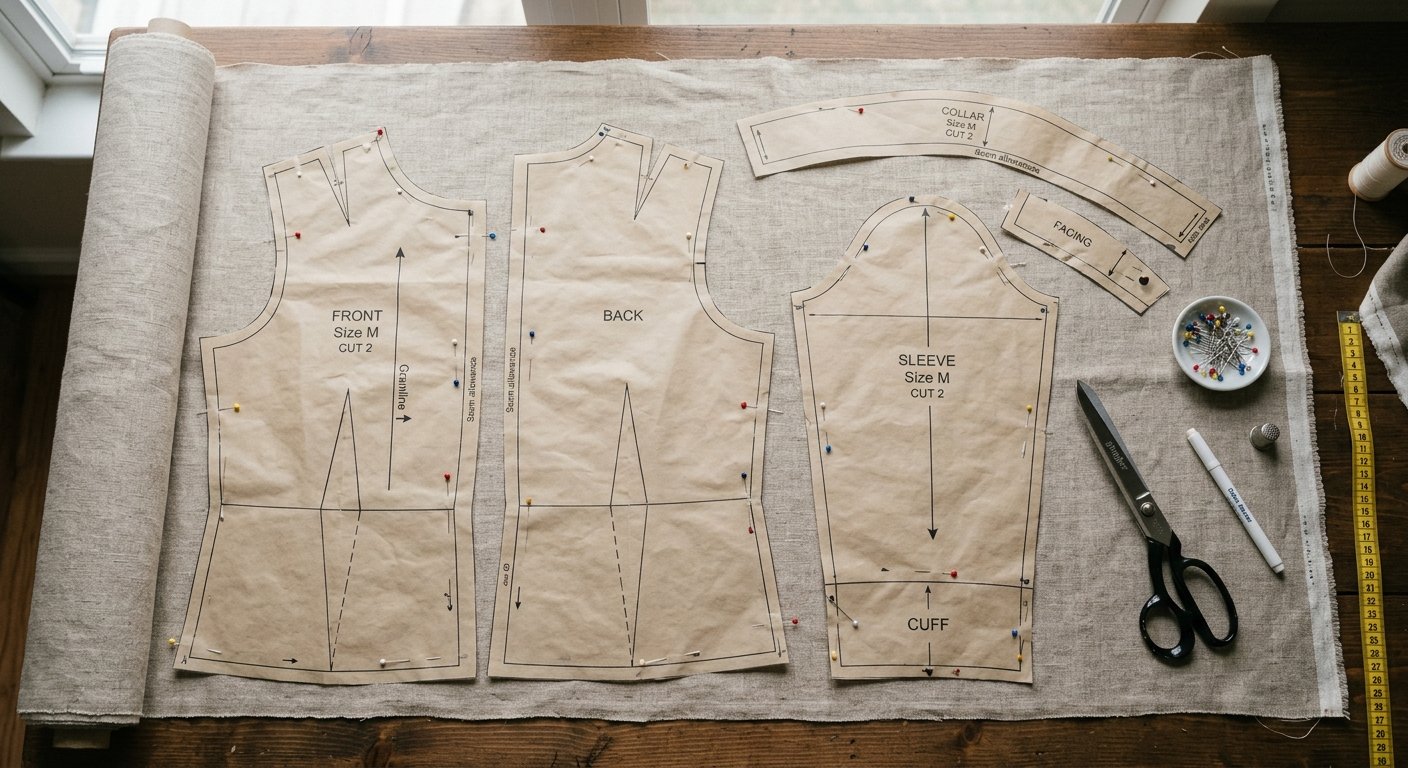
Scenario A: a 45" wide roll quoted at a lower sticker price per yard. Because the pattern pieces are wide, more linear yards are needed to fit them across the narrower roll, pushing total linear yardage up. Scenario B: a 60"+ wide roll, similar to Global Fabric Whole Sale's Interlock range at 160cm-185cm, quoted at a higher sticker price per yard but needing fewer linear yards overall because more pattern pieces fit across each cut.
Run both through the square-yard formula from earlier and Scenario B frequently comes out ahead on total spend, even with the higher per-yard sticker price, because the real driver of cost is area, not the number printed on the quote. This is illustrative math only, not a quoted order. Real numbers will shift depending on pattern efficiency and how much is lost to seam allowances and layout.
How to Compare Quotes Apples-to-Apples Before You Place an Order
Run through this checklist every time you're weighing two supplier quotes, especially when the sticker prices per yard look close.
- Always request width alongside price per yard. A quote without width isn't a complete quote.
- Convert every quote to price per square yard before comparing anything else.
- Factor in volume discount tiers and whether your order is approaching a quote-based threshold.
- Account for pattern-piece efficiency on wider versus narrower rolls, since layout waste changes the real yardage needed.
Composition and weight (GSM) matter too, so width is one variable among several, not the only one. A heavier, narrower fabric can still be the right call for a given project.
Global Fabric Whole Sale carries over 10,000 fabrics sold by the yard, including an Interlock range running 160cm-185cm wide with no minimum order. That means you can buy a single yard, run the per-square-yard math yourself, and confirm the real cost before committing to a bulk purchase.
Frequently asked questions
How much is fabric on average per yard?
There's no single meaningful average, because price per yard depends on width, weight (GSM), and fiber content independently. For example, Global Fabric Whole Sale's French Terry fabrics range from $19.99 to $25.99/yard depending on weight and composition, and Interlock fabric spans $19.99-$39.99/yard. Always check width and GSM alongside the price.
What is the cost of fabric per meter?
Cost per meter follows the same logic as cost per yard: it's a length-based price that ignores width. To compare fairly, convert to cost per square meter (or square yard) using the roll's actual width, the same way you would for a yard-based quote.
Is 1 yard of fabric 3 ft by 3 ft?
No. One yard is 36 inches of length only; width is a separate measurement set by the roll, not by the yard unit. A 1-yard cut can be 9 square feet at 36" width or 15 square feet at 60" width, depending entirely on the fabric's actual width.




 Login with Google