


The Hidden Costs of Cheap Wholesale Fabric (And How to Spot Them Before You Buy)

Cheap wholesale fabric almost always costs more than it saves. Once you factor in shrinkage waste, color bleeding, inconsistent weight, high defect rates, and the labor hours spent dealing with all of it, that rock-bottom price per yard quietly balloons into something far more expensive than a quality roll would have been. The real question isn’t “how cheap can I buy?” — it’s “how much usable, sellable, reliable fabric am I actually getting per dollar?” Here’s exactly how to calculate and spot those hidden costs before you commit to a bulk order.
The Shrinkage Tax: When 500 Yards Becomes 425
Shrinkage is the single most expensive hidden cost in cheap wholesale fabric, and it’s the one most buyers underestimate. Quality fabric from reputable mills is typically pre-shrunk or finished to hold within 2–4% shrinkage. Budget fabric? You’re often looking at 8–15% shrinkage after the first wash — sometimes more with loosely woven cotton or rayon blends.
Do the math. If you order 500 yards of a $2.00/yard fabric and it shrinks 12%, you’ve lost 60 yards. That’s $120 in raw material gone, plus the cutting waste from pieces that no longer match your patterns. Your effective price per usable yard just jumped from $2.00 to $2.27 — and that’s before you account for the time your team spent re-cutting.
How to Test Before You Commit
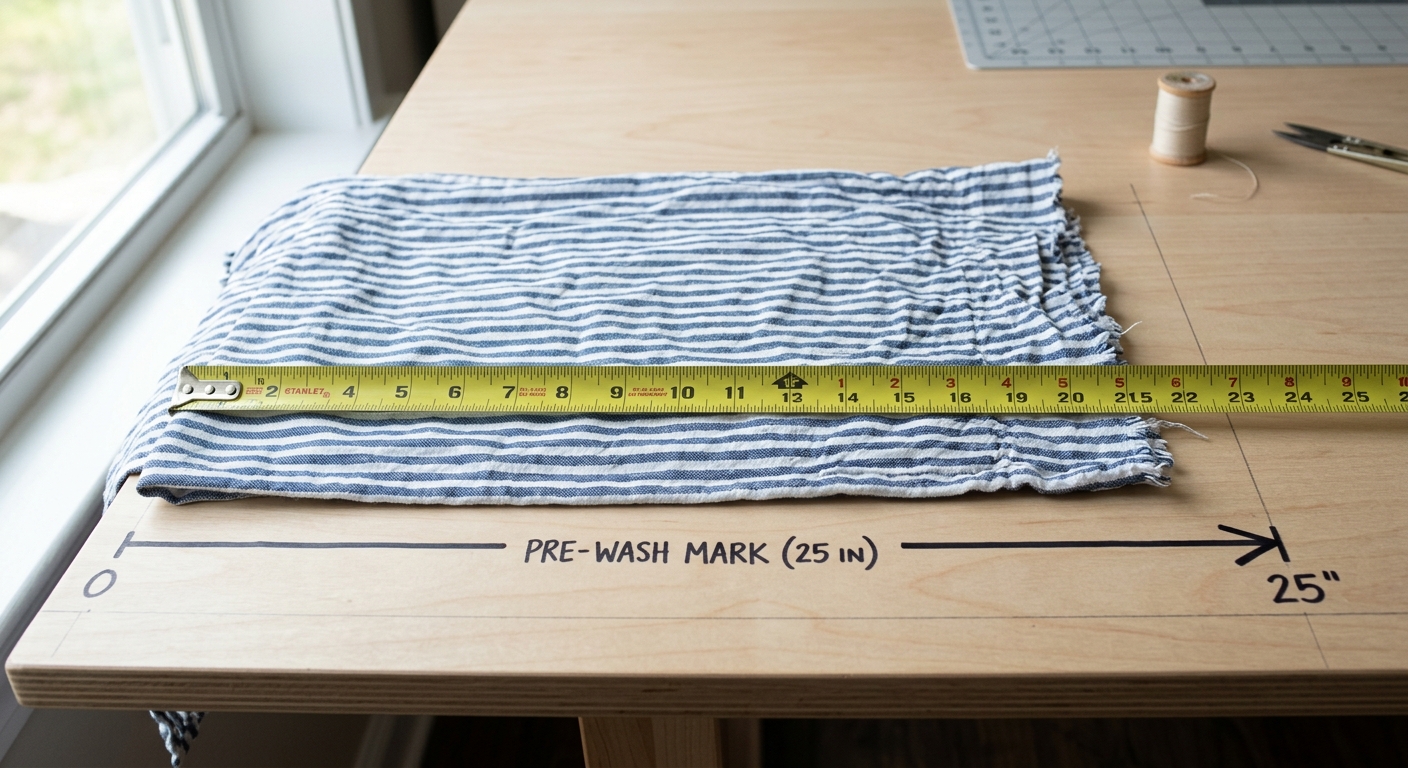
Always request sample yardage — not just a swatch — before placing a bulk order. Cut a precise 12” x 12” square, wash it at the temperature your end product will be washed at, tumble dry, then re-measure. If it’s shrinking more than 3–4% in either direction, you need to factor that loss into your per-yard cost calculation or walk away. For applications like sheeting fabric where dimensional stability is critical, even 5% shrinkage can make an entire production run unusable.
Color Bleeding and Fading: The Customer-Killer You Can't Undo
Nothing destroys customer trust faster than fabric that bleeds dye onto other garments or fades after three washes. And nothing screams “cheap fabric” louder than poor colorfastness. Budget suppliers often cut costs by using fewer dye fixation steps, lower-grade dyes, or skipping post-dye washing entirely. The result? Colors that look vibrant on the bolt but turn muddy, streaky, or pale once they hit water.
The Real-World Damage
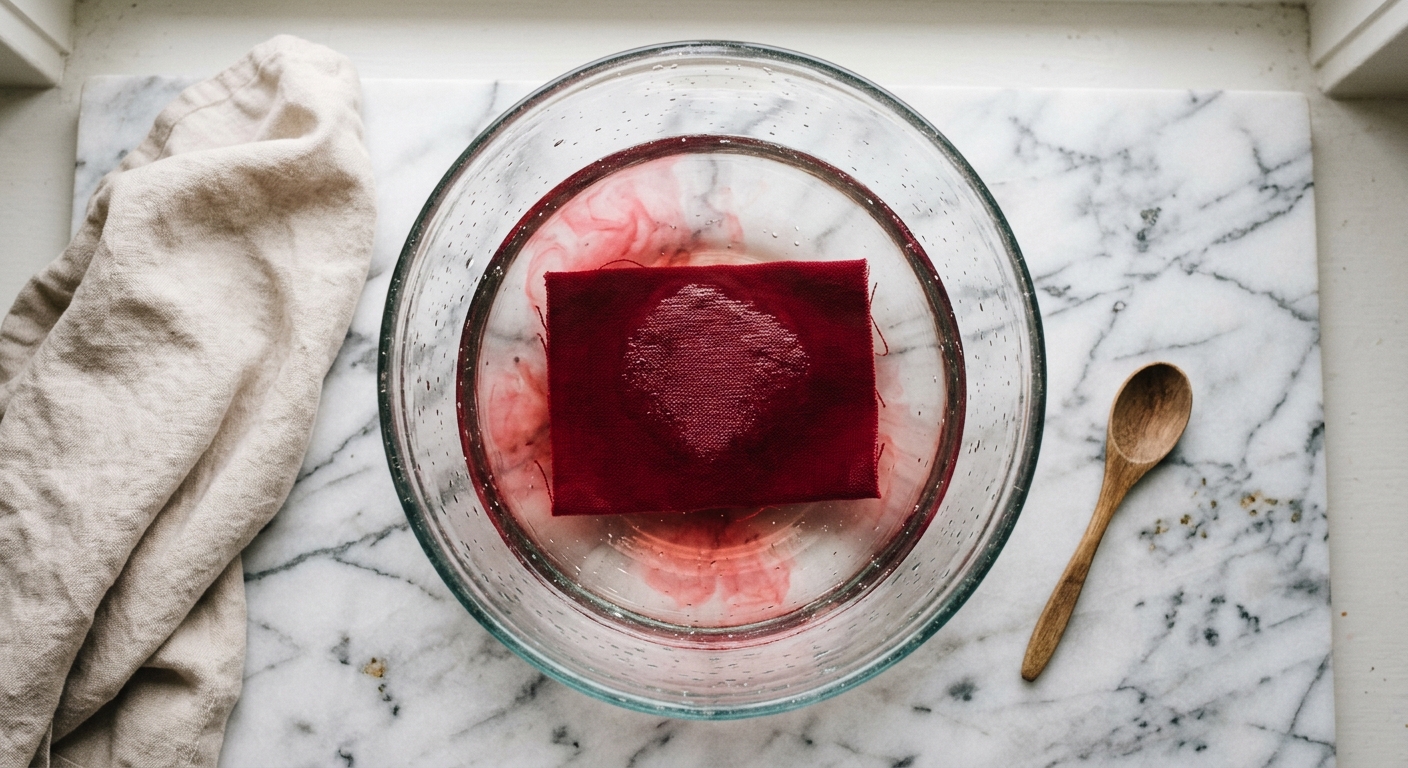
Consider a small apparel brand that ordered 300 yards of a deep burgundy fabric at a price that seemed too good to pass up. The first production run looked gorgeous. Then the returns started. Customers reported red dye bleeding onto white undershirts. The brand had to issue refunds, replace garments, and — worst of all — deal with a wave of one-star reviews that took months to recover from. The “savings” on that cheap fabric ended up costing roughly $4,000 in returns, replacements, and lost future sales.
The Crocking and Wash Test
Before buying in bulk, perform two simple tests. First, rub a damp white cloth firmly against the fabric (a crocking test). If color transfers, the dye is poorly fixed. Second, soak a swatch in warm water for 30 minutes and check if the water changes color. For dark or saturated colors like black or deep jewel tones, some initial dye release is normal — but it should be minimal, not dramatic. If the water looks like tea, that fabric will bleed on your customers.
Inconsistent Weight and Hand Feel Across Rolls
Here’s a sneaky one. You receive your sample and it feels great — nice weight, good drape, smooth hand. Then the bulk order arrives and half the rolls feel thinner, stiffer, or just... different. This happens constantly with budget suppliers because they source from multiple mills or accept B-grade rolls to hit their price point.
Fabric weight inconsistency is measured in GSM (grams per square meter), and reputable suppliers hold their tolerances tight — typically within ±5% of the stated weight. Cheap fabric can swing 10–20% between rolls in the same order. That means your medium-weight blouse fabric might arrive as a lightweight that drapes differently, or a stiff heavy roll that won’t gather properly.
Why This Wrecks Production
If you’re sewing garments, inconsistent weight means inconsistent fit. Your size chart becomes unreliable. Seam allowances behave differently. Press settings that worked on Roll 1 scorch Roll 3. For home décor applications like curtains or pillow covers, the visual difference between a 150 GSM and a 180 GSM panel is immediately obvious when they hang side by side. Your customers will notice, even if they can’t articulate why something looks “off.”
Defect Rates: The Yards You Pay for But Can't Use
Every roll of fabric has some defects. That’s normal. The difference is how many. Industry-standard first-quality fabric typically runs a 1–3% defect rate — a small hole here, a weaving flaw there, usually flagged with a sticker or tag by the mill. Cheap wholesale fabric routinely hits 10–20% defect rates, and those defects are rarely marked.
Common defects in budget fabric include:
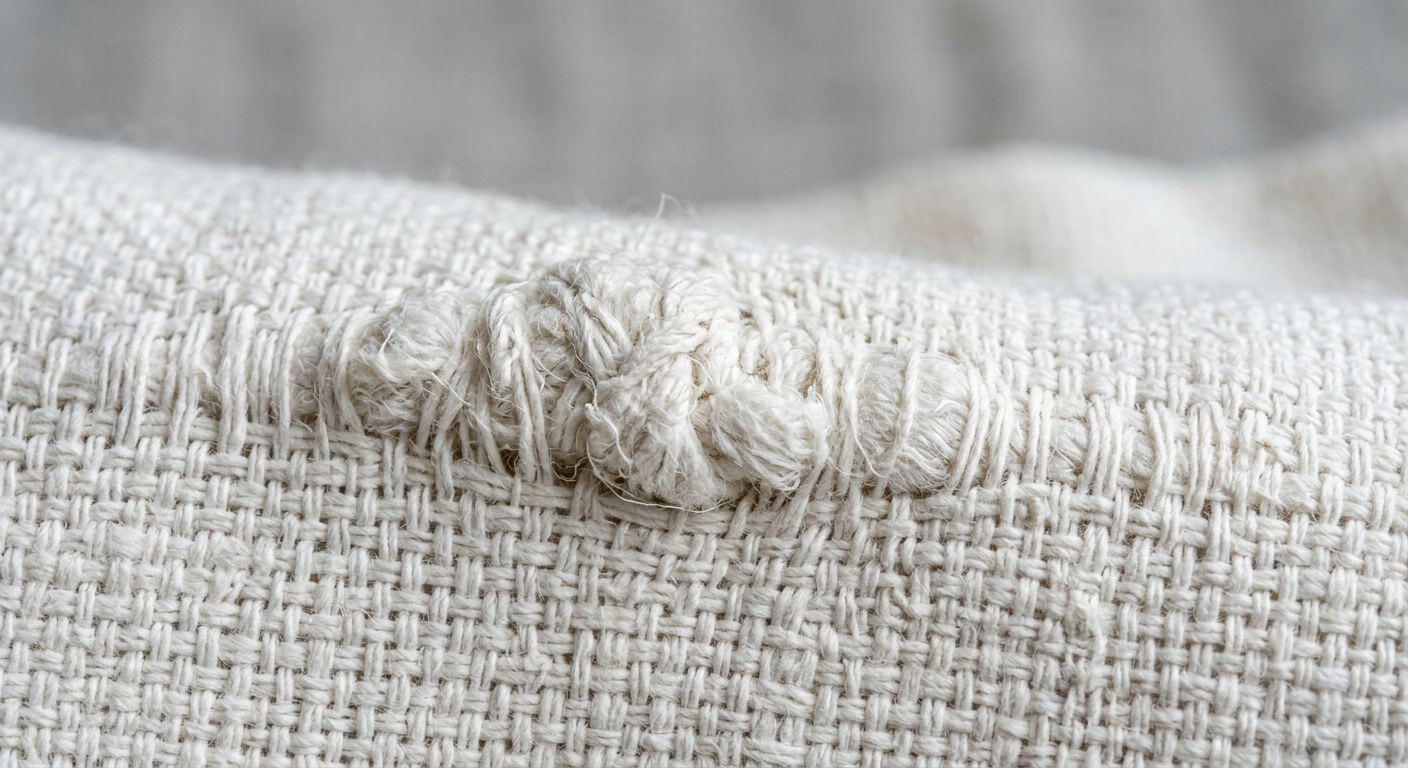
- Slubs and thick spots — uneven yarn that creates bumps in the weave
- Barre lines — horizontal streaks from tension inconsistencies during knitting
- Holes and tears — often at the fold line from poor handling
- Dye spots and uneven color — splotchy areas where dye didn’t penetrate evenly
- Selvage damage — frayed or torn edges that reduce usable width
If you’re buying 200 yards and 15% is unusable, you’re paying for 200 but only getting 170. That’s 30 yards of waste — plus the labor time your team spends inspecting, marking, and cutting around defects. For structured fabrics like jacquard where pattern alignment matters, even a small defect can make an entire panel unusable.
The Labor Cost Nobody Calculates
This is the hidden cost that rarely shows up in any spreadsheet: the time your team spends dealing with bad fabric. Inspecting every roll. Cutting around defects. Re-pressing pieces that puckered because the fabric reacted unpredictably to heat. Re-cutting patterns because shrinkage threw off measurements. Answering customer complaints. Processing returns.
Let’s put rough numbers on it. Say your cutter earns $18/hour and spends an extra 20 minutes per roll inspecting and working around defects on cheap fabric. On a 50-roll order, that’s roughly 16.5 extra hours — about $300 in labor. Add in the time your customer service team spends handling complaints from the finished products that still slipped through, and you’re easily looking at another $200–500 depending on volume.
The Opportunity Cost
Those hours your team spent fixing cheap-fabric problems? They could have been spent producing more units, developing new products, or fulfilling additional orders. Time is the one resource you can’t buy more of, and cheap fabric is a relentless time thief.
Fiber Content Lies: When Polyester Pretends to Be Something Else
Mislabeled fiber content is more common than most buyers realize, especially at the lowest price tiers. A fabric listed as “100% cotton” might actually be a 70/30 cotton-poly blend. A “silk blend” might contain zero silk. This isn’t just an ethical problem — it’s a legal one. In the United States, the Textile Fiber Products Identification Act requires accurate fiber content labeling, and selling mislabeled products can result in FTC enforcement action.
How to Verify
The simplest at-home test is a burn test. Pull a few threads from the fabric and hold them to a flame. Cotton burns steadily with a yellow flame and smells like burning paper, leaving soft gray ash. Polyester melts, curls away from the flame, and leaves a hard plastic bead. Nylon behaves similarly to polyester but smells more chemical. If your “100% cotton” muslin fabric melts instead of burning, you’ve got a blend — or worse, straight synthetic being sold as natural fiber.
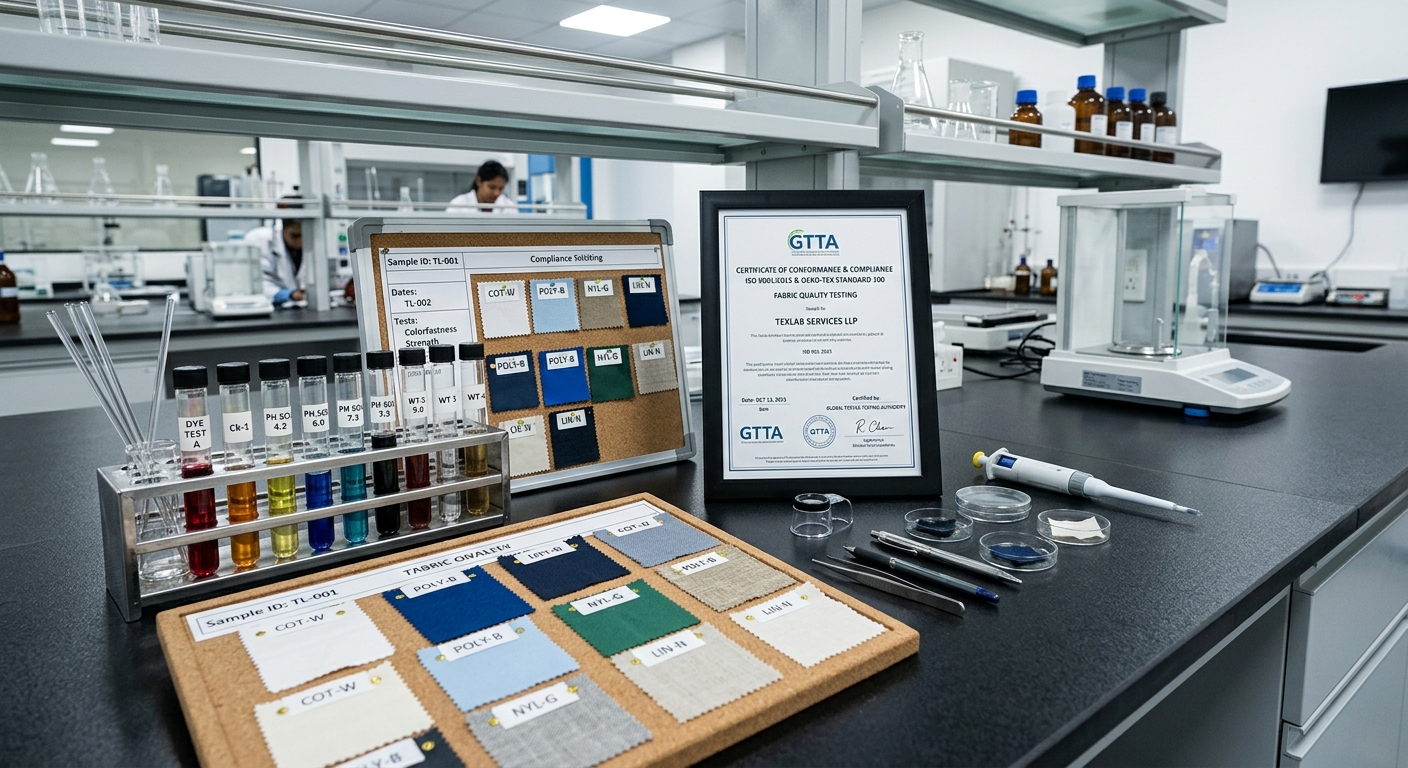
For larger orders, it’s worth sending a sample to a textile testing lab. A basic fiber identification test costs $50–100 and can save you from a labeling lawsuit or a product recall.
Minimum Order Traps and Return Policy Fine Print
Budget wholesale suppliers often compensate for their low margins with aggressive minimum order quantities and restrictive return policies. You might see a fantastic per-yard price, but the minimum is 1,000 yards — far more than you need. Now you’re tying up capital in inventory that might take months to use, assuming the quality is even acceptable.
The Return Policy Gotcha
Read the return policy before you order, not after. Many cheap fabric suppliers offer “no returns on cut fabric” and since wholesale fabric is almost always cut to your order length, this effectively means no returns at all. Others charge restocking fees of 15–25%, or require you to pay return shipping on heavy fabric rolls, which can easily cost $50–100 per roll.
The best wholesale suppliers — the ones worth building a long-term relationship with — offer reasonable sample programs, transparent return policies, and the flexibility to start with smaller test orders before you scale up.
Chemical Treatments and Safety Compliance Risks
Cheap fabric is cheap for a reason, and sometimes that reason involves cutting corners on chemical safety. Fabric finishing involves numerous chemical treatments — softeners, anti-wrinkle agents, dye fixatives, flame retardants, and anti-microbial coatings. Reputable mills use chemicals that comply with standards like OEKO-TEX Standard 100 or REACH (the EU chemical safety regulation). Budget mills may not.
For instance, formaldehyde-based resins are sometimes used as cheap anti-wrinkle finishes. They’re effective and inexpensive, but they can cause skin irritation and allergic reactions in end users. If you’re producing children’s clothing, baby products, or anything that contacts skin for extended periods, using fabric with undisclosed chemical treatments is a serious liability risk.
What to Ask Your Supplier
Request a material safety data sheet (MSDS) or chemical compliance certificate. Ask specifically about formaldehyde content, AZO dye usage (banned in the EU for textiles), and heavy metal content in dyes. If the supplier can’t provide documentation, that’s a red flag the size of a billboard. For applications like scarf fabric that sits directly against skin, chemical compliance isn’t optional — it’s essential.
A Simple Framework for Calculating True Cost Per Yard
Stop comparing fabrics by sticker price. Start comparing them on true cost per usable yard. Here’s a straightforward formula:
True Cost = (Price per Yard) ÷ (1 − Shrinkage Rate − Defect Rate) + (Labor Overhead per Yard)
Example Calculation
Fabric A: $2.00/yard, 12% shrinkage, 15% defect rate, $0.30 estimated extra labor per yard
True cost = $2.00 ÷ (1 − 0.12 − 0.15) + $0.30 = $2.00 ÷ 0.73 + $0.30 = $3.04/yard
Fabric B: $4.50/yard, 3% shrinkage, 2% defect rate, $0.05 estimated extra labor per yard
True cost = $4.50 ÷ (1 − 0.03 − 0.02) + $0.05 = $4.50 ÷ 0.95 + $0.05 = $4.79/yard
Fabric A is still cheaper in this example — but the gap shrank from $2.50 to $1.75. And this calculation doesn’t include the customer complaint costs, return processing, or brand reputation damage that Fabric A is far more likely to cause. When you factor in those downstream costs, the “cheap” option often ends up being the most expensive choice you could make.
Buy Smarter, Not Just Cheaper
The fabric industry rewards buyers who think in terms of total value, not just unit price. The smartest wholesale buyers we work with follow a consistent pattern: they sample before committing, they test for shrinkage and colorfastness, they calculate true cost per usable yard, and they build relationships with suppliers who prioritize consistency over rock-bottom pricing.
Here are the non-negotiable steps before any bulk fabric purchase:
- Order sample yardage (not just swatches) and test it under real production conditions
- Perform shrinkage, crocking, and burn tests
- Request fiber content documentation and chemical compliance certificates
- Read the return policy and understand restocking fees before ordering
- Calculate the true cost per usable yard using the formula above
- Start with a smaller test order before scaling to full production quantities
At Global Fabric Wholesale, we believe the best deal is the one that performs exactly as expected — roll after roll, wash after wash. Browse our wholesale fabric collections to find materials backed by consistent quality, transparent specifications, and a team that actually answers your questions before you buy.


 Login with Google