


Designing a Capsule Collection? Here’s How to Pick 5 Fabrics That Actually Work Together
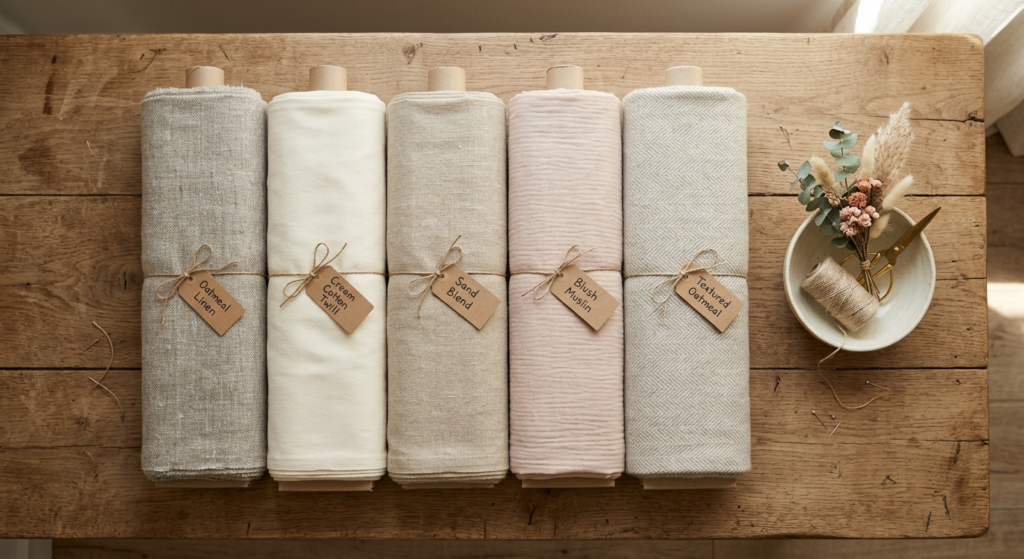
To pick five fabrics that genuinely work together in a capsule collection, start with one anchor fabric in a neutral mid-weight, then build outward: a secondary woven for tops, a textured statement fabric, a lightweight layering option, and a stretch component for fitted pieces. Every fabric must share either a fiber family, a color undertone, or a finish — and ideally two of the three. That's the rule that separates a tight, sellable capsule from a closet of mismatched samples.
The mistake most new designers make? They pick five fabrics they love individually, not five that love each other. Below is the framework used by production designers who ship capsules on time and on budget.
Start with the Anchor: Your Workhorse Mid-Weight
The anchor fabric is the one you'll cut the most yardage of — usually 30 to 40 percent of your total order. It should land between 220 and 280 GSM, drape with structure but not stiffness, and come in your collection's dominant neutral.
Why mid-weight? It survives jackets, trousers, structured dresses, and skirts. A cotton twill, a brushed canvas, or a substantial woven fabric in oatmeal, charcoal, or bone gives you the most silhouette flexibility per yard.
For instance, a small womenswear label launching a 12-piece autumn capsule built their entire collection around a 260 GSM brushed cotton twill in oatmeal. That single fabric became blazers, wide-leg trousers, and an A-line midi skirt — three hero pieces from one bolt order.
Before committing, verify the GSM on the spec sheet matches the hand-feel of your sample. If you're unsure how to interpret those numbers, our guide on reading GSM like a pro walks through it.
Pick a Secondary Fabric That Shares DNA with the Anchor
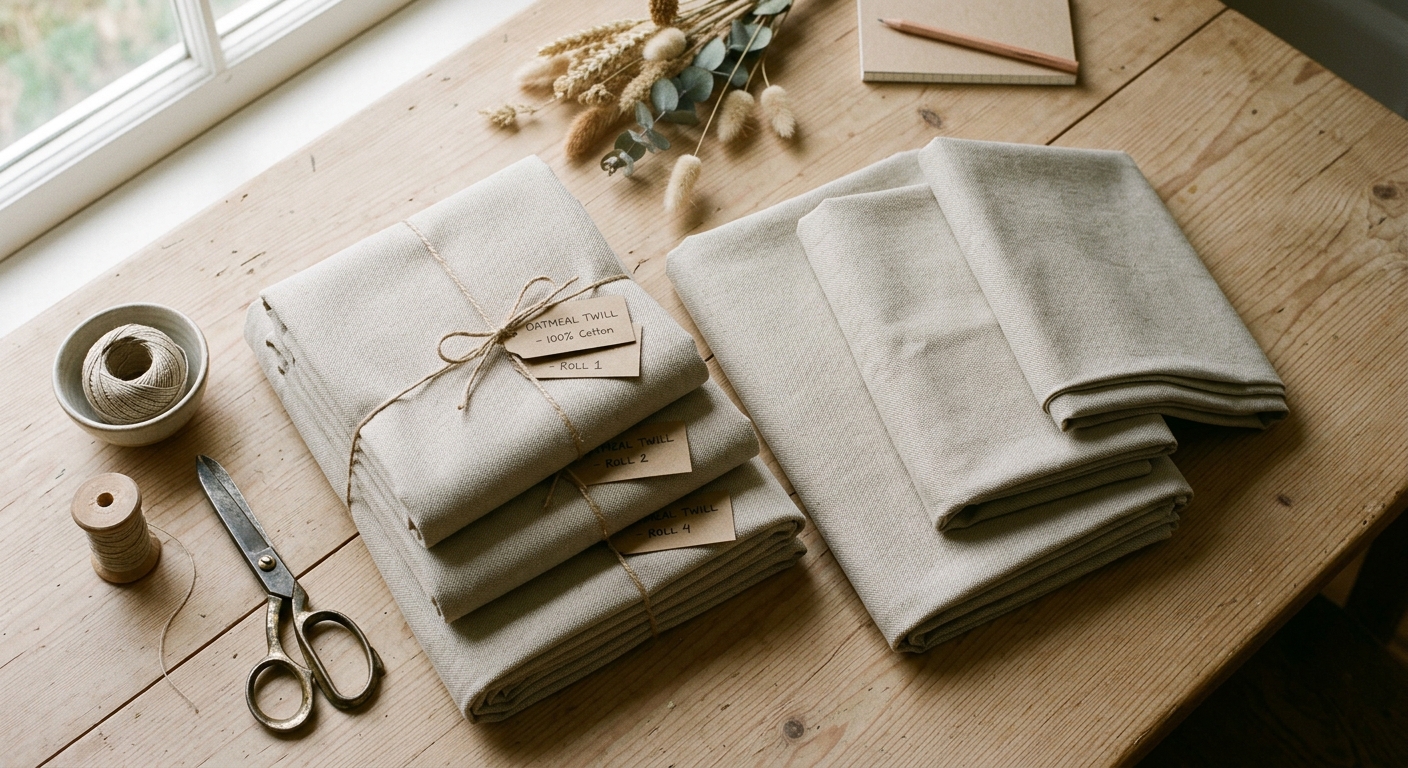
The second fabric should feel like a cousin, not a stranger. Same color family, lighter weight (180–220 GSM), different drape. This is where tops, soft dresses, and unstructured pieces come from.
The trick is to match either fiber or finish. If your anchor is a matte cotton twill, your secondary could be a matte cotton-Tencel woven in the same oatmeal — different hand, same visual temperature. What you don't want: a shiny polyester next to a matte cotton. The light bounces differently and your collection of photos will look incoherent.
Quick test
- Drape both fabrics over the same dress form under the same light.
- Photograph them together at 6 feet away.
- If one looks “off” in the photo, it's off in real life too.
Add One Texture Fabric — The Statement Maker
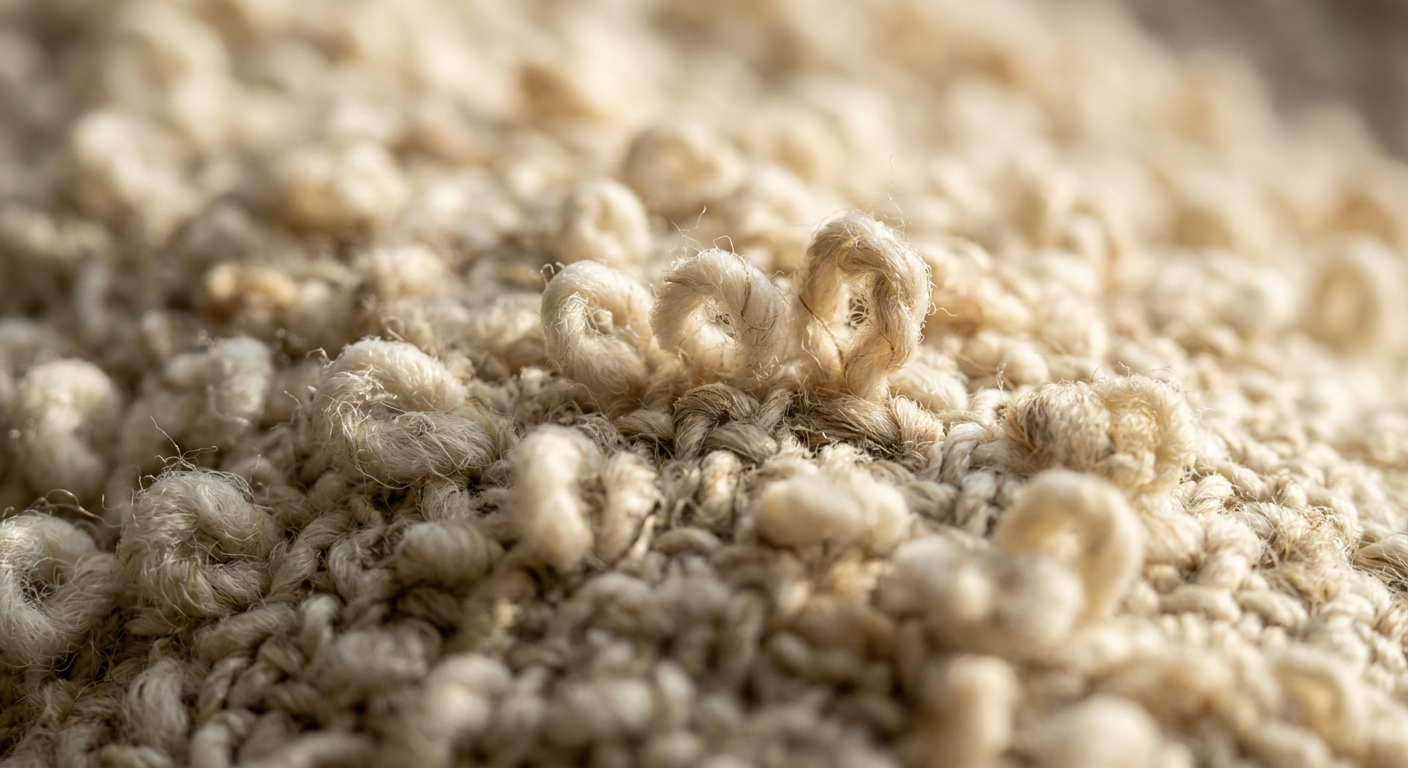
Every capsule needs one fabric that does the visual heavy lifting. This is the piece customers point to on the rack. Bouclé, chenille, corduroy, a heavy slub linen, or a textured jacquard all qualify.
Cap it at 15 percent of your total yardage. This fabric becomes one or two pieces — a coat, a statement skirt, a textured cardigan — not a whole line. Overuse a textured fabric and the collection starts to feel like a costume.
The texture of the fabric should pull a color from your anchor but can shift tone slightly darker or richer. If your anchor is oatmeal, your bouclé might be a deeper sand with cream flecks. The eye reads them as related because the undertone matches.
Layer in a Lightweight Fabric for Movement
Lightweight fabrics (90–140 GSM) handle the pieces that breathe — blouses, slip dresses, scarves, linings. Cotton voile, silk-cotton, lightweight rayon challis, or a fine chambray all work.
Here's where designers slip up: they pick a lightweight fabric in a completely different color story because “it'll add a pop.” Don't. The lightweight piece should sit in the same palette but can shift saturation — a soft blush against oatmeal neutrals, or a muted sage against earth tones. Save the bold accent for buttons, lining, or one accessory.
Also: factor shrinkage. Lightweight wovens often shrink 5–8 percent on the first wash, which can wreck a fitted blouse pattern. Our shrinkage cheat sheet has the numbers by fiber type.
The Stretch Component: Where Most Capsules Fail
If your capsule has any fitted silhouette — a pencil skirt, a body-skimming dress, a ribbed top — you need a stretch fabric. Most designers either skip it (and the fitted pieces fit terribly after one wear) or pick the wrong stretch percentage.
For a capsule, a cotton-spandex jersey at 200–260 GSM with 4–6 percent spandex is the sweet spot. Enough recovery for shape retention, not so much that it screams athletic wear.
Match the color to your anchor as closely as possible. Stretch knits dye differently than wovens, so order a swatch from the same dye lot you plan to bulk order from. If you don't, you'll get a charcoal jersey next to a charcoal twill that reads as two different grays under store lighting. (More on that pain in our dye lot variance guide.)
Confused about spandex versus elastane versus Lycra? Same molecule, different branding — we break it down in our stretch fabrics 101.
The Color Rule: One Anchor, Two Neutrals, One Accent
Here's where capsules sink or swim. Across your five fabrics, you should have:
- One anchor neutral (oatmeal, charcoal, ivory, navy)
- Two supporting neutrals in the same temperature family
- One accent color on no more than one or two fabrics
- One tonal variation — a slightly darker or lighter shade of the anchor
Temperature consistency matters more than exact color matching. Warm neutrals (oatmeal, camel, cream) clash with cool neutrals (dove gray, icy white, taupe with blue undertone) even when both look “beige” on a screen.
If you do want a bold accent — say, a deep red or magenta — limit it to one fabric and ideally one silhouette. A single red blouse against five neutrals reads as intentional. Red on three pieces reads as a different collection entirely.
Mind the Care Labels — All Five Should Be Compatible
This is the boring detail that destroys capsules in production. If four of your fabrics are machine-washable cotton and one is dry-clean-only silk, your customer experience fractures. Worse: during sampling and pre-production, your team will wash test garments and ruin pieces.
Aim for five fabrics that share at least one care method. Cold machine wash, gentle cycle, hang dry covers most natural fibers and stable blends. If you must include a dry-clean piece (a heavily textured wool, a delicate lace), make it the statement piece — customers expect special care for special garments.
Cross-check shrinkage rates too. If your anchor shrinks 3 percent and your lining shrinks 8 percent, your finished garment puckers after the first wash. Pre-shrink everything before cutting.
Real-World Example: A 5-Fabric Capsule That Sold Out
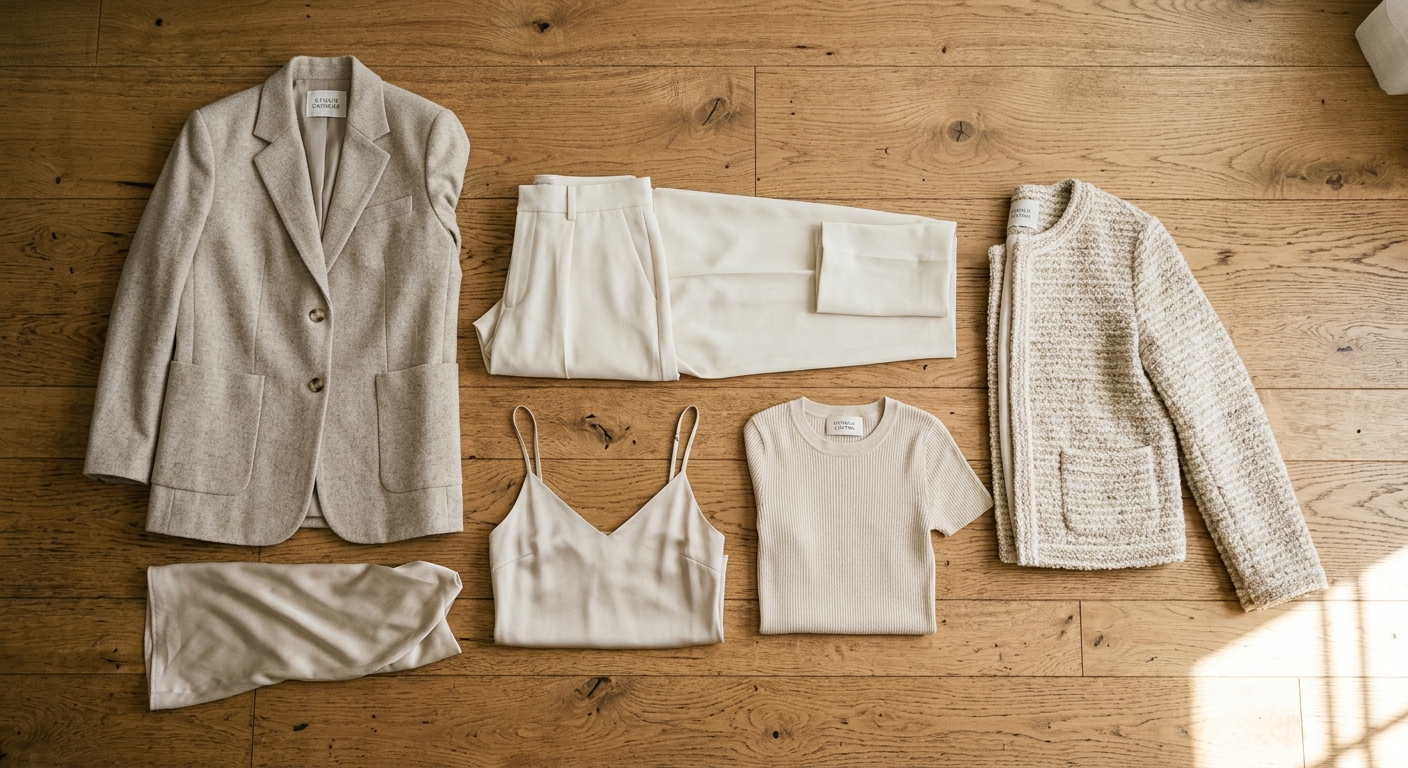
A small contemporary brand launching its spring 2026 capsule used this exact framework. Here's what they picked:
- Anchor: 250 GSM cotton-linen twill in oatmeal — became blazer, trousers, wide-leg shorts
- Secondary: 190 GSM Tencel woven in soft cream — shirt dress, button-up blouse
- Texture: 290 GSM cotton bouclé in sand — cropped jacket only
- Lightweight: 110 GSM cotton voile in pale blush — slip dress, scarf
- Stretch: 220 GSM cotton-spandex jersey in oatmeal — fitted tee, ribbed midi skirt
Twelve SKUs total. Every piece is mixed with every other piece. They photographed the lookbook in 90 minutes because every combination already worked. The capsule sold out in six weeks.
The lesson: discipline in fabric selection compresses the entire production timeline. Less indecision, fewer reorders, cleaner photography.
Sample Before You Bulk — Always
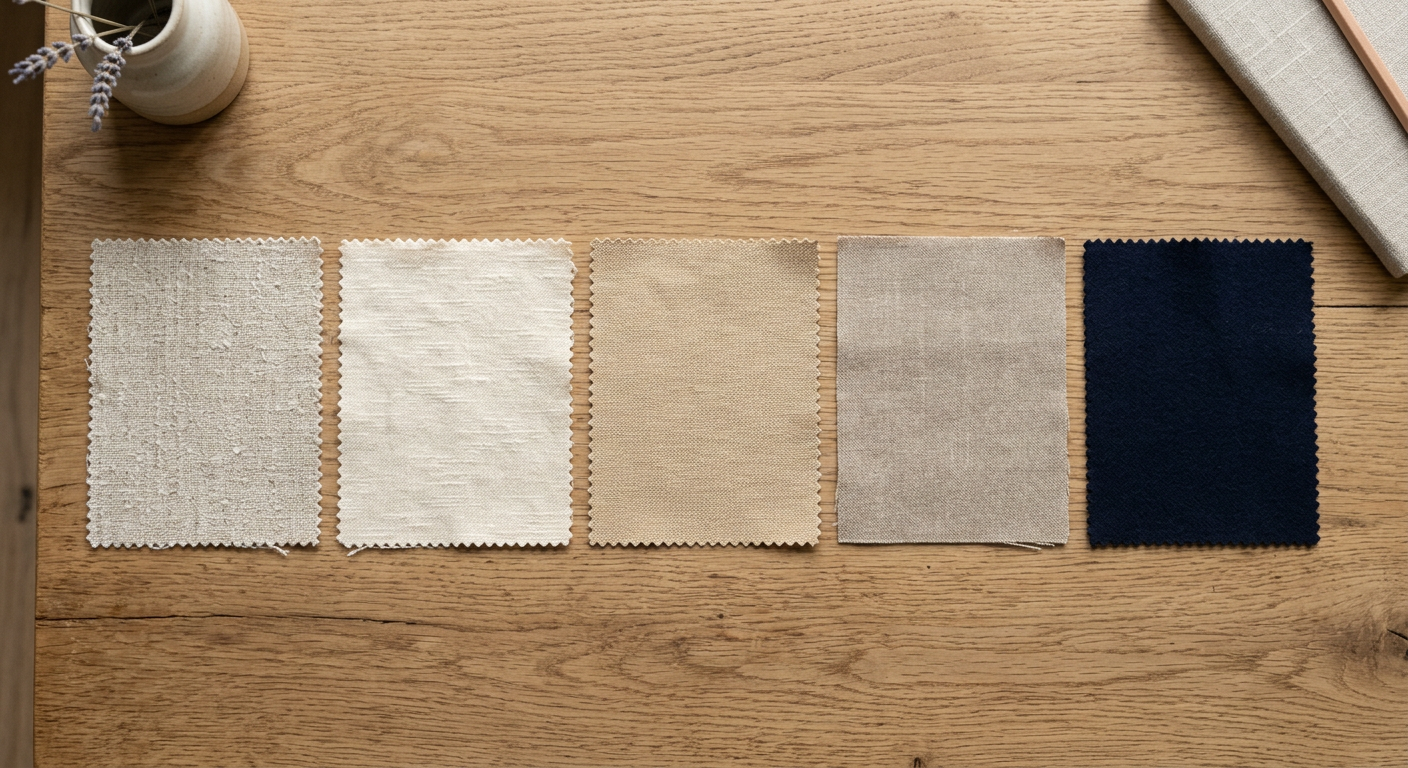
No matter how confident you are in your five picks, order swatches and small sample yardage before placing the bulk order. Drape all five together. Photograph them. Wash them. Then commit.
The cost of a swatch round is maybe 50 dollars and two weeks. The cost of bulk-ordering five fabrics that don't actually coordinate is your entire season. If you're sourcing from multiple mills, also build extra lead time — our overseas sourcing guide covers the landed-cost math.
And when you do order: lock in dye lots, get spec sheets, and never assume two “ivory” fabrics from two suppliers will match.
Build the Capsule, Then Stop
Five fabrics. Not six. Not seven “just in case.” The discipline of capping yourself at five forces every fabric to earn its place — and forces every garment to use fabric you've already committed to. That's how capsules stay profitable and cohesive.
If you're ready to start sampling, browse our curated woven fabrics, chenille and textured options, and color-matched neutrals like oatmeal. Order swatches first, build your five, and let the capsule come together the way it's supposed to — like it was designed, not assembled.





 Login with Google