


Moisture-Wicking Fabrics Decoded: What Actually Works for Activewear Bulk Orders

Here's the short answer: the best moisture-wicking fabrics for activewear bulk orders are engineered polyester knits (often with 8–20% spandex), nylon-spandex tricot blends, and — at the premium end — fine-gauge merino wool. What makes them work isn't the fiber alone but the combination of yarn construction, knit structure, and a durable hydrophilic finish. Cheap “dry-fit” polyester that relies on a topical spray will wick beautifully for 10 washes and then behave like a plastic bag.
How Moisture-Wicking Actually Works (And Why Fiber Choice Matters)
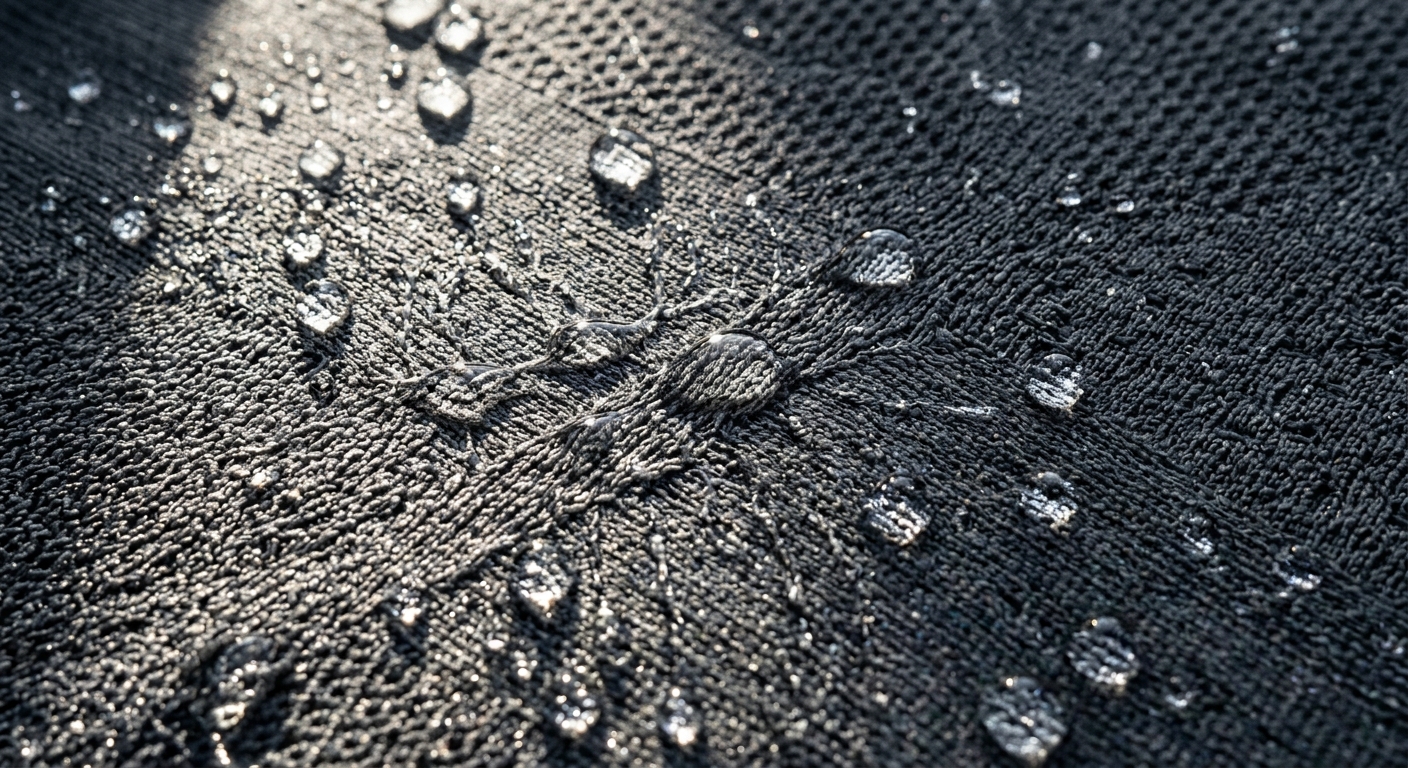
Moisture-wicking is capillary action — nothing magical. Tight channels between fibers pull sweat from the skin to the outer fabric surface, where it evaporates. Hydrophobic fibers like polyester and nylon don't absorb water into the fiber itself; they push it along the surface. That's why they dry fast.
Cotton does the opposite. It soaks water into the fiber core, swells, holds 25x more moisture, and stays clammy for an hour. That's a disaster in a spin class.
But here's the nuance bulk buyers miss: raw polyester is naturally hydrophobic, which means it repels water rather than wicks it. To actually wick, the fabric needs either (1) a micro-grooved fiber profile (like 4-channel or cross-section polyester) or (2) a hydrophilic finish that creates a wicking gradient. The best activewear fabrics use both.
The Fiber Hierarchy: What to Spec for Different Activewear Categories
Not every garment needs the same fabric. Over-specifying kills your margin; under-specifying kills your reviews.
Polyester-Spandex Jersey (180–240 GSM)
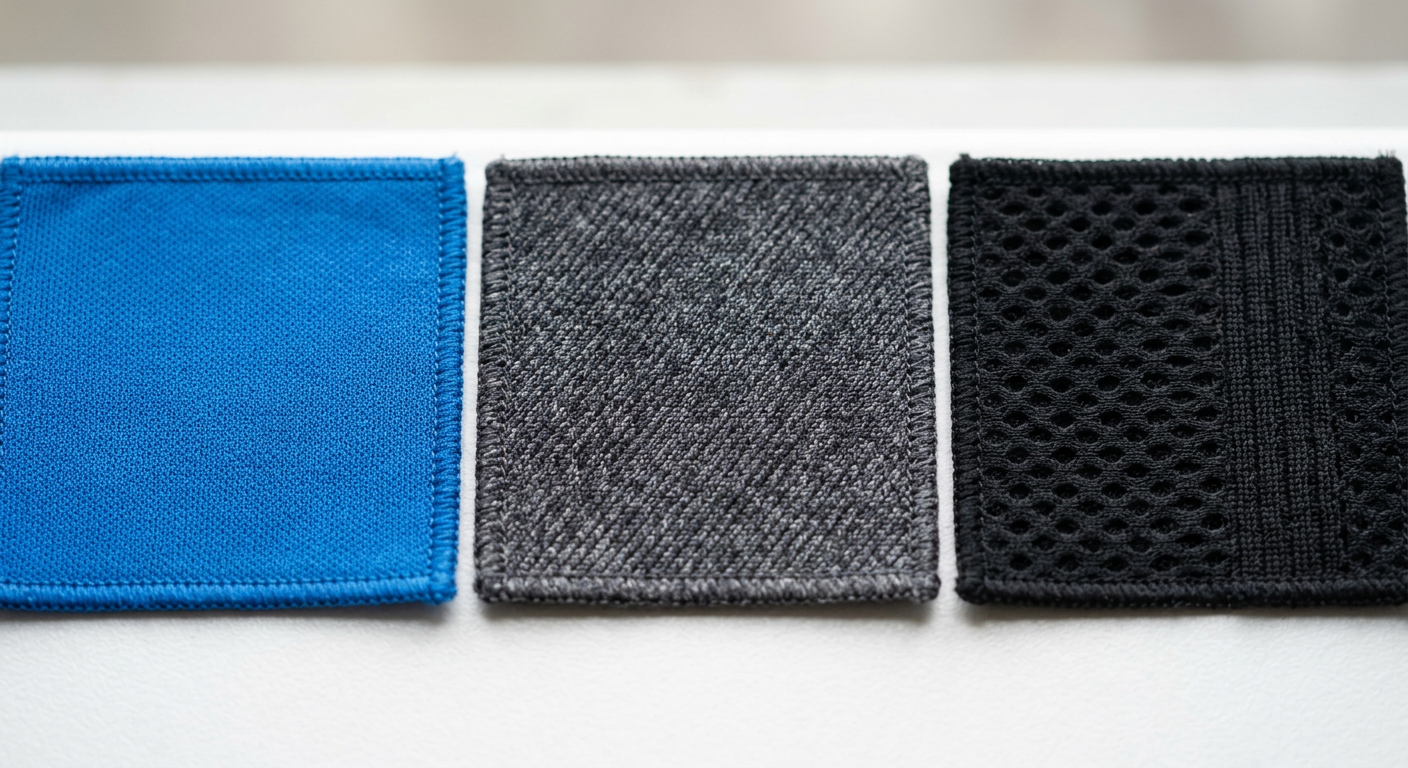
The workhorse. Use for leggings, sports bras, and fitted tops. Look for 85–92% polyester with 8–15% spandex for 4-way stretch. Interlock construction gives a smoother hand than single jersey and hides seams better.
Nylon-Spandex Tricot (160–220 GSM)
Silkier, stronger, and chlorine-resistant. Essential for swimwear and compression gear. Nylon is about 20% stronger than polyester wet, which matters for swim liners under tension.
Polyester Piqué or Mesh (120–170 GSM)
For running tees and jersey shirts where airflow beats compression. The honeycomb structure creates larger capillary channels — faster evaporation, less cling.
Merino Wool Jersey (150–200 GSM)
Premium tier. Wool absorbs up to 30% of its weight in moisture without feeling wet, and it resists odor naturally. Expensive, but it's why a merino base layer can be worn three days straight without stinking.
If you're torn between synthetic blends, our breakdown of cotton vs polyester vs blends for bulk buyers covers the cost-performance math in more detail.
Why GSM and Knit Structure Matter More Than the Fiber Label
A 140 GSM polyester tee and a 220 GSM polyester leggings behave like completely different fabrics. Weight dictates drape, opacity, and compression — and it's the number most buyers overlook on the spec sheet.
For context: under 150 GSM is airy and near-sheer (running singlets), 180–220 GSM is the sweet spot for most tops and leggings, and 240+ GSM is squat-proof compression territory. If you're not already fluent in this, our guide to reading GSM like a pro is worth five minutes.
Knit structure is equally decisive:
- Single jersey — lightweight, curls at edges, cheapest to produce
- Interlock — double-knit, stable, smoother surface, ~30% heavier than jersey at the same yarn count
- Piqué/mesh — structured holes, maximum breathability
- Rib — high recovery, used for cuffs and fitted bodies
A poly/spandex t-shirt fabric in single jersey at 160 GSM costs roughly 35% less than the same blend in interlock at 210 GSM. That's a real margin lever — if the end use supports it.
The Finish Is Where Cheap Fabric Gets Exposed
This is the dirty secret of the activewear supply chain. Two rolls of 92/8 polyester-spandex jersey can look identical on the table and perform wildly differently in wash testing. The difference is the finish.
Durable moisture management finishes are chemically bonded during dyeing or heat-set after. Cheap finishes are sprayed on at the end — they smell fresh, feel silky, and wash out by cycle 15. AATCC 195 (Liquid Moisture Management) and AATCC 201 (Drying Rate) are the standard tests. Ask your supplier for both, before and after 20 home launderings. If they only have “before” numbers, that's your answer.
Real-world example: a mid-size boutique activewear brand we worked with ordered 4,000 yards of “premium performance jersey” from a new mill at $4.20/yard — about 18% under their usual cost. Initial samples wicked like a dream. Six months into retail, returns spiked. Independent lab testing showed wicking performance dropped 62% after 25 washes. They ate the inventory. The savings evaporated along with the finish.
For more on spotting this kind of thing early, see our rundown of hidden costs in cheap wholesale fabric.
Stretch, Recovery, and Why Spandex Percentage Isn't the Whole Story
Spandex gives fabric stretch. Recovery — the snap-back after stretching — depends on how the spandex is knitted in and what grade it is. Cheap spandex loses 30% of its recovery after 50 washes. Premium grades (Lycra, Creora HighClo, Roica) keep their snap past 200 cycles.
For bulk orders: 5–8% spandex is enough for soft stretch (yoga tops, loose joggers). 12–20% is compression territory (leggings, cycling shorts, shapewear-adjacent). Above 20%, you're in medical-grade compression and need specialized knitting equipment.
If spandex terminology confuses you, we unpack the differences between spandex, Lycra, and elastane — they're the same base polymer, but the brand name tells you about quality control.
Odor Control: The Feature Customers Don't Know They Want Until They Don't Have It
Polyester has an image problem: it traps odor-causing bacteria in a way cotton doesn't. The molecular structure gives bacteria more surface area to cling to, and sebum (skin oil) bonds more stubbornly with synthetic fibers. This is why your two-year-old gym shirt smells even fresh out of the wash.
There are three real solutions for bulk buyers:
- Silver-ion treatments (X-Static, PurThread) — highly effective, durable through 50+ washes, adds $0.40–$0.80/yard
- Zinc-based antimicrobials — cheaper, slightly less durable, no skin-sensitivity issues
- Merino wool blends — natural keratin structure inhibits bacterial growth without chemistry
For instance, a CrossFit apparel brand targeting the 5 AM training crowd spec'd silver-ion treated poly-spandex jersey for their tee line and marketed it as “no-stink guarantee.” Their repeat purchase rate climbed 28% in the first year. The $0.60/yard upcharge paid for itself many times over.
What to Put on Your Spec Sheet When Ordering in Bulk
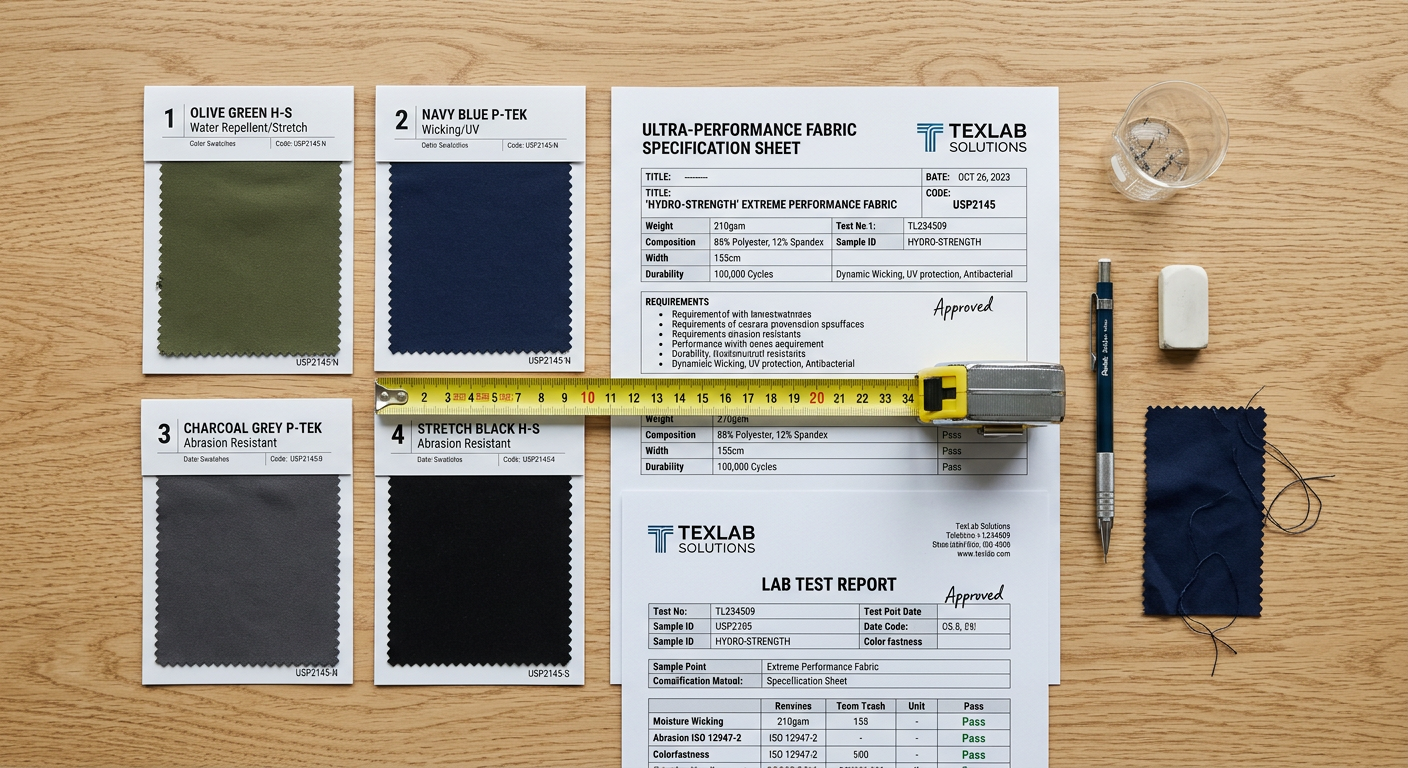
When you're ordering 2,000+ yards, the quote request is where you win or lose. Here's what a complete moisture-wicking fabric spec should include:
- Fiber content (e.g., 88% recycled polyester / 12% spandex) with exact percentages, not “approximately.”
- GSM with tolerance (e.g., 210 GSM ± 5%)
- Width (usable, not total)
- Knit structure (single jersey, interlock, piqué, etc.)
- Stretch percentage in both directions
- Wicking performance — AATCC 195 score before AND after 20 washes
- Drying time — AATCC 201
- Colorfastness to perspiration, chlorine (if swimming), and rubbing
- Shrinkage after 3 home launderings
- Pilling resistance (Martindale, min. 4 on the 1–5 scale)
If a mill can't answer all ten, walk. For the full deep-dive, our breakdown of the 8 spec sheet numbers that actually matter expands on the testing methods.
Sustainability Angle: Recycled Polyester Without the Greenwashing
Recycled polyester (rPET) made from post-consumer bottles now performs nearly identically to virgin poly, at a 10–15% price premium. GRS (Global Recycled Standard) certification is the only claim worth trusting — anything else is marketing.
The catch: rPET is slightly less consistent in dye uptake, which can mean 2–4% more off-spec yardage in large dye lots. Build that into your yardage buffer. Our fabric yardage calculation guide has the math for bulk production waste factors.
Biodegradable polyester additives (like CiCLO) are emerging but haven't hit full-scale price parity yet. If you're planning a 2027 launch with sustainability as core positioning, start sampling now.
Common Mistakes Bulk Buyers Make (And How to Avoid Them)
Three mistakes I see over and over:
Ordering based on hand-feel alone
A silky hand often means excess softener that washes out. Always request a pre-washed sample alongside the as-shipped sample.
Ignoring lot-to-lot consistency
Your first 500 yards looked perfect. The next 2,000 came in 8 GSM lighter and a half-shade off. Negotiate lot variance tolerances in the contract. Standard acceptable variance: ±5% GSM, Delta-E under 1.5 for color.
Not stress-testing in real conditions
Lab tests are a floor, not a ceiling. Before committing to a large order, send finished samples to 10–20 actual athletes for a month. Real sweat, real deodorant, real sunscreen — they interact with fabric chemistry in ways no AATCC test captures.
Putting It All Together
Here's the playbook: choose polyester-spandex jersey at 180–240 GSM for most fitted activewear, nylon-spandex for swim and compression, and merino only if your price point supports it. Demand AATCC 195 and 201 results both before and after 20 washes. Spec durable finishes, not sprayed-on ones. Get lot-variance tolerances in writing. Build a 4–6% buffer into your yardage for rPET consistency.
Do those things and your next activewear run will perform the way your marketing promises — through hundreds of wash cycles, not just the try-on.
Ready to source? Browse our t-shirt and performance knit inventory or reach out with your spec sheet — our team can match you to mills with verified test data and transparent lot consistency. No surprises six months into your season.





 Login with Google