


Why Your Fabric Keeps Arriving Off-Color: Dye Lot Variance and How to Prevent Costly Mismatches

Your fabric keeps arriving off-color because every new dye batch is a brand-new chemical reaction — different water, different temperature, different mill conditions — and unless you specifically lock the dye lot, the mill has no obligation to match it. The fix isn't luck; it's requesting lab dips, approving a physical standard, specifying a ΔE tolerance in writing, and ordering enough yardage in one lot to finish the entire project. Do those four things and dye lot chaos mostly disappears.
What a Dye Lot Actually Is (and Why It Shifts)
A dye lot is the specific batch of fabric dyed together in one machine, on one day, using one mixed solution of dyestuff. Reorder the same SKU three weeks later and you get a different lot — mixed fresh, run under slightly different conditions. Even the best mills accept tiny variations as normal.
What drives the shift? More than you'd think:
- Water chemistry — mineral content and pH change seasonally, even in the same factory.
- Temperature curves — a 2°C difference during the exhaust phase can visibly shift the depth of shade.
- Dye bath exhaustion — the first 200 meters off a roll absorb more dye than the last 200.
- Fiber variability — cotton from a new harvest takes dye differently than last season's.
- Operator technique — yes, the human factor. Different shift, different result.
Here's the uncomfortable truth: a ΔE (color difference) of 1.0 is considered commercially acceptable by most mills. To a trained eye — and to your customer holding two panels side by side — that's visible.
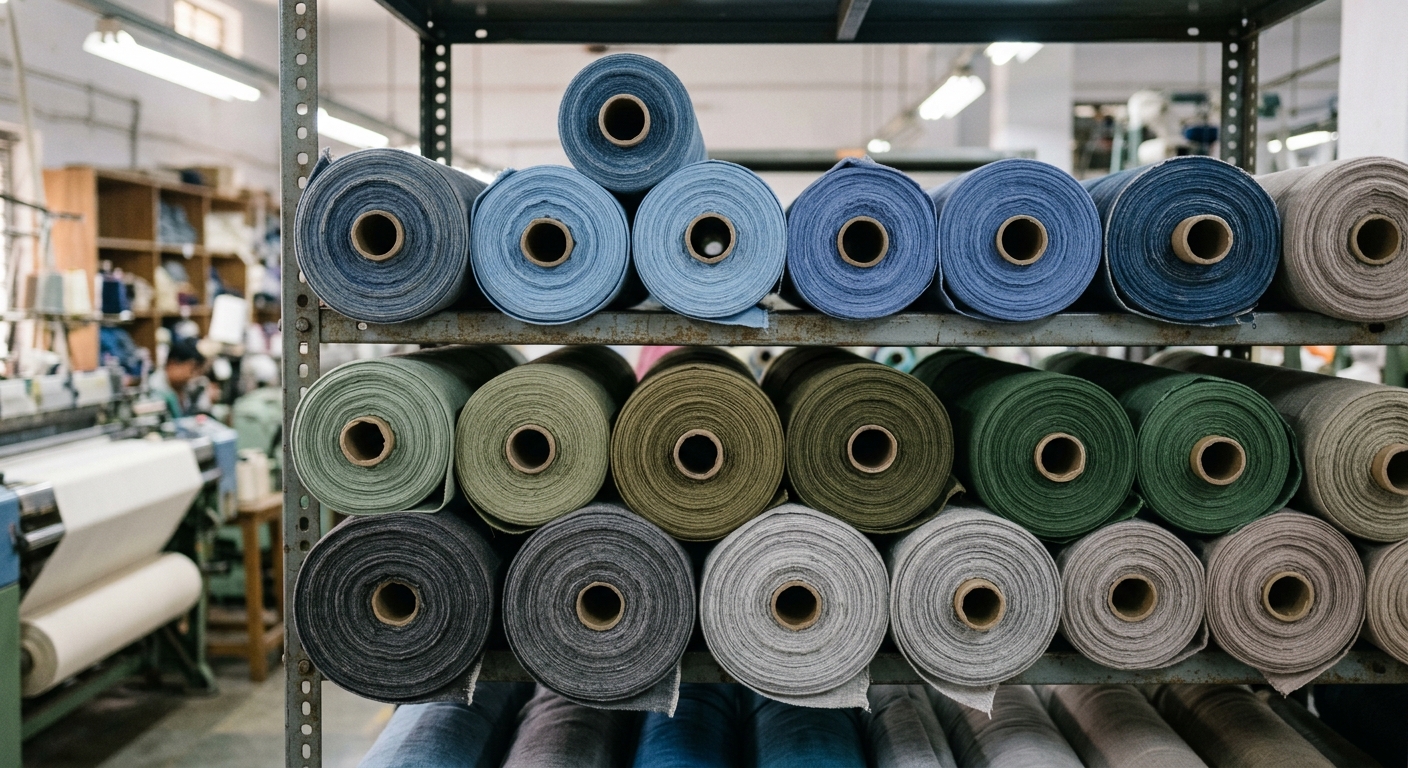
The Four Hidden Triggers of Color Mismatch
Most buyers blame the mill. Often it's actually the supply chain. Let's name the four real culprits most people miss.
Split Shipments from Different Lots
Your 500-yard order gets fulfilled from two partial rolls because no single lot had enough stock. The invoice says one SKU. The box contains two dye lots. Always ask: Is this a single-lot order?
Finishing Variations
Dye is only half the story. Calendering, sanforizing, and optical brighteners all alter perceived color. Two identical dye lots finished on different lines can look like cousins, not twins.
Storage and Light Exposure
Fabric stored near a warehouse window for six months fades at the selvage. Compared against a fresh roll, it reads as a dye mismatch — but it's actually UV damage. For similar reasons, check out our notes on how dye chemistry affects fading.
Monitor-to-Reality Gap
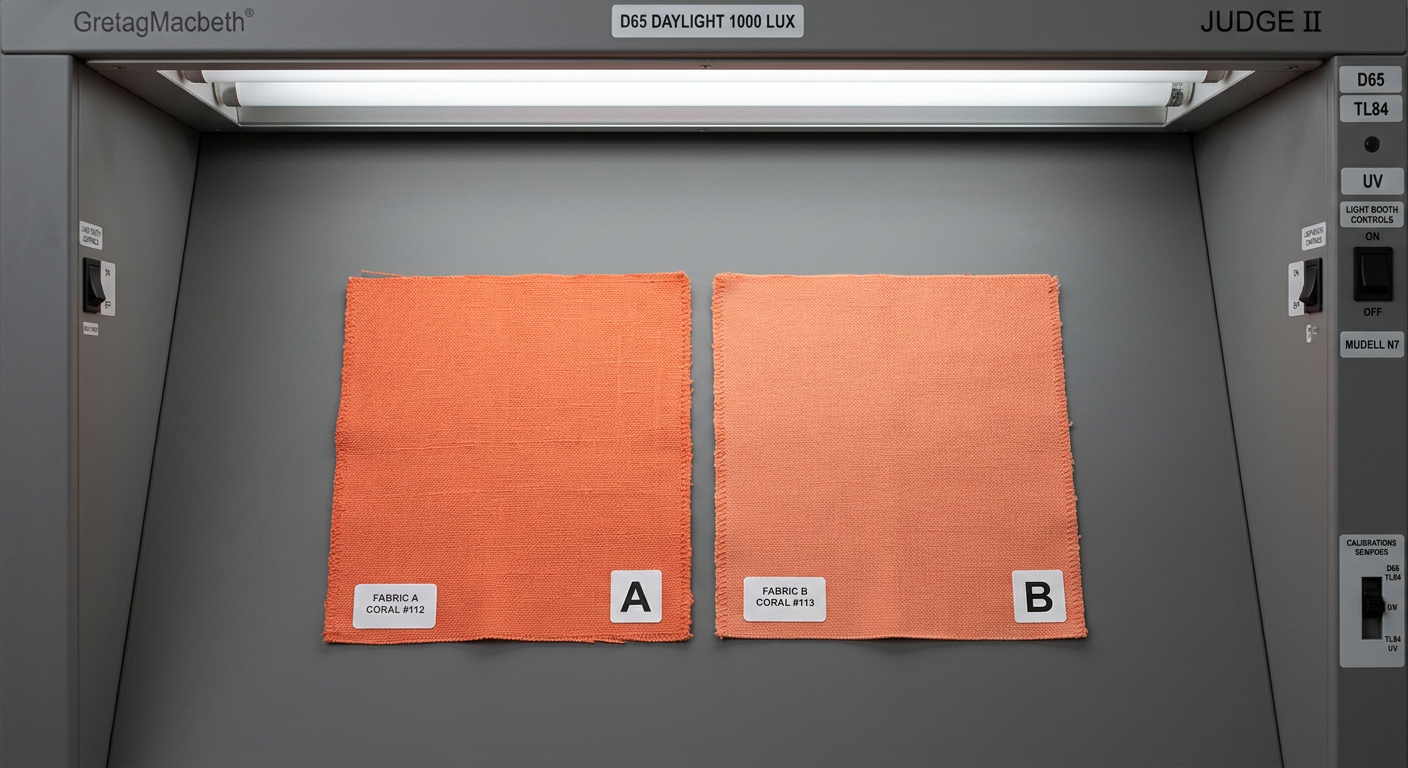
You approved a color from a JPEG. The mill matched a Pantone. These don't always agree — especially with tricky hues like peach, coral, and lilac, which shift dramatically under different light sources.
How Mills Measure Color — and Why ΔE Matters
Professionals don't eyeball color. They measure it with a spectrophotometer, which outputs CIELAB values (L*, a*, b*) and a single ΔE number representing total difference from the standard.
- ΔE < 1.0 — difference invisible to most untrained eyes
- ΔE 1.0–2.0 — visible on close inspection, commercially acceptable for many applications
- ΔE 2.0–3.0 — obvious mismatch, rejected for fashion and premium upholstery
- ΔE > 3.0 — different color, full stop
When you place an order, specify a ΔE tolerance in writing. For most wholesale contracts, ΔE ≤ 1.0 under D65 daylight is the gold standard. Don't accept “visually matching” as the spec — that's an argument waiting to happen.
A real example: a private-label loungewear brand ordering heavyweight French terry for a seasonal drop specified ΔE ≤ 0.8 in their PO. When the second production run came back at ΔE 1.4, they had contractual grounds to reject the shipment — no negotiation required.
The Lab Dip Process: Your Best Defense
A lab dip is a small fabric sample dyed to your target color before bulk production begins. Skipping this step is the single most expensive mistake bulk buyers make.
How to run lab dips properly
- Provide a physical standard — a Pantone TCX chip or an actual fabric swatch. Never rely on digital files alone.
- Request 2–3 submissions — mills rarely hit the target on the first try, and iterating is normal.
- Evaluate under multiple light sources — D65 (daylight), CWF (office fluorescent), and incandescent. A match in one may fail in another. This is called metamerism, and it's the reason browns and grays get rejected at retail.
- Sign and retain the approved dip — physically. Keep one, send one to the mill. This becomes your bulk production reference.
Budget 7–14 days for lab dip cycles. Rushing this phase is how you end up with 2,000 yards of the wrong pink.
Order Math: How Much Extra Should You Buy?
The cheapest insurance against mid-project dye lot disaster is overbuying from a single lot. Not by a ton — by enough.
Rule of thumb for continuous projects (apparel lines, upholstery runs, drapery sets):
- Small runs under 100 yards: add 15–20% buffer
- Medium runs 100–500 yards: add 10–12%
- Large runs 500+ yards: add 7–10% plus 20–30 yards reserved for repairs
Why? Because reordering mid-run almost guarantees a new lot. A new lot almost guarantees a visible variation. For big sofa fabric orders where one piece needs to match across cushions, arms, and back panels, a 10% buffer is cheap compared to reupholstering.
Need help with the math before you order? We walked through it step-by-step in our fabric yardage calculation guide.
Fabrics That Are Especially Prone to Lot Variance
Not all fabrics misbehave equally. Some are notorious for lot-to-lot drift.
High-risk fabrics
- Deep saturated colors — blacks, navies, and rich reds show tiny variations dramatically. Our indigo fabric collection is a good example of why we batch-lock these.
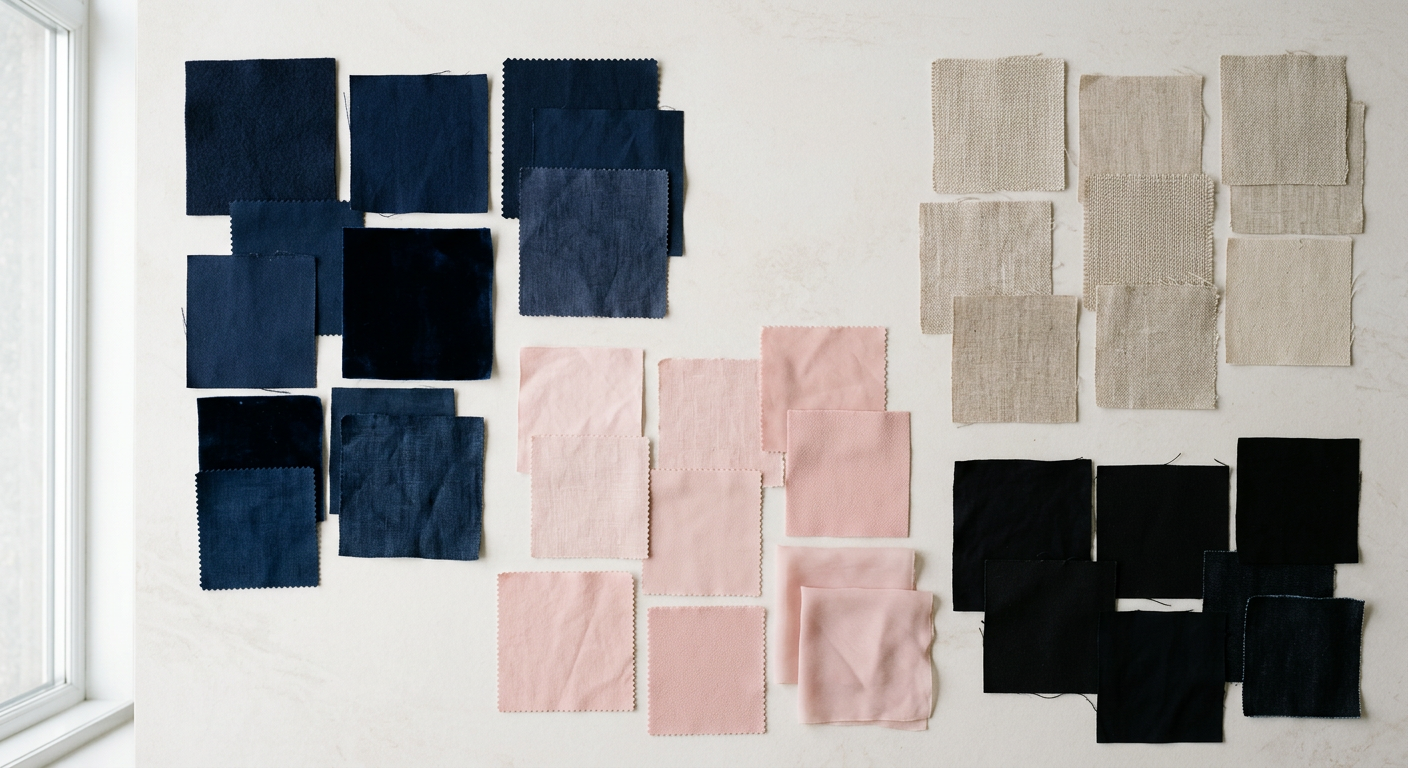
- Pastels and neutrals — beiges, taupes, and blush pinks fall victim to metamerism.
- Natural fibers with variable base color — linen, raw cotton, and hemp all start with different undertones batch to batch.
- Printed fabrics — patterns like animal prints and ikat multiply color registration issues across multiple screens.
Lower-risk fabrics
- Solution-dyed synthetics — color is baked into the fiber before extrusion, so lot variance is minimal.
- Yarn-dyed wovens — dyed before weaving, more predictable.
- Piece-dyed polyester with disperse dyes — generally tighter tolerances than reactive-dyed cotton.
What to Do When a Shipment Arrives Off-Color
It happens. Here's the playbook — in order.
- Don't cut anything. Once you cut, most mills consider the fabric accepted.
- Photograph under controlled light — place the received fabric next to your approved lab dip under a daylight bulb. Shoot without flash.
- Measure if possible — if you have access to a spectrophotometer (many local textile labs rent time for $30–50), get a ΔE reading against your approved standard.
- Document the shipment details — lot number, roll number, invoice. Don't mix rolls before inspection.
- Contact the supplier within the inspection window — typically 7–14 days from delivery. After that, claims get harder.
For instance, a boutique drapery workroom received 280 yards of toile fabric split across two lots without being told. They caught it at intake by comparing roll headers under a daylight lamp, flagged it immediately, and the supplier replaced the mismatched roll before a single panel was cut. Total rework avoided: roughly $1,800 in labor.
Want to get ahead of supplier issues before they happen? Our guide on online fabric red flags covers what to screen for up front.
Writing a PO That Protects You
Most dye lot disputes come down to what was — or wasn't — written in the purchase order. A five-line addendum saves months of headaches.
Include these clauses:
- Single-lot clause: “All yardage to be dyed in one continuous lot. Split-lot fulfillment requires written approval.”
- Color tolerance: “Bulk production must match approved lab dip dated [X] within ΔE ≤ 1.0 under D65 illuminant.”
- Inspection window: “Buyer retains 14 calendar days from delivery to inspect and claim color variance.”
- Reference retention: “Supplier to retain signed lab dip reference for the duration of the contract plus 12 months.”
- Remedy: Specify replacement, credit, or refund — not “to be discussed.”
This isn't adversarial. Good suppliers appreciate clear terms because it eliminates vague disputes later. If a vendor pushes back on any of these, that's a data point in itself.
Locking It In for the Long Term
Dye lot variance isn't a flaw in the industry — it's a feature of how textile dyeing works. You don't fix it by hoping for better luck. You fix it with process: approved physical standards, written ΔE tolerances, single-lot purchasing, generous buffers, and documented inspection at intake. Brands that nail this once stop worrying about it forever.
At Global Fabric Wholesale, we lab-dip every bulk color order, batch-lock on request, and retain references for reorders — because we've seen what happens when mills don't. Browse our fine fabric collection or reach out with your Pantone and yardage, and we'll walk you through exactly what a single-lot production run looks like for your project.




 Login with Google