-

Free Samples!



Yarn-Dyed vs. Piece-Dyed Fabric: Why the Dyeing Method Changes Everything Downstream

Table of Contents
Yarn-dyed fabric is dyed as yarn before weaving or knitting, so the color sits inside the fiber and can be placed stripe by stripe; piece-dyed fabric is woven or knitted first and then dyed as one solid piece. That single difference in timing decides what your design can be, how the order is priced, how long it takes, and how much shade variation you will be managing later. Treat every gap you see between two quotes as a symptom of that ordering rather than a negotiating position, because the price gap, the MOQ and the calendar all fall out of the same mechanical cause.
Key takeaways
- Yarn-dyed puts color in the yarn before weaving, so true multicolor stripes, checks, plaids and jacquards have no cheaper route; a printed look-alike is a different product with different fastness and a different reverse side.
- Piece-dyed shade variation between rolls is manageable in your own cutting room through shade-sorting and roll sequencing; yarn-dyed streaks from mixed yarn lots are structural and must be prevented in writing before weaving.
- Write the dye method, color standard, matching illuminant, fastness test methods, lot clause and pattern-matching allowance into the purchase order, and approve a swatch woven from production yarn before bulk releases.
- Decide the method at the design stage, because it sets MOQ, lead time and yield. Global Fabric Whole Sale offers free samples so you can compare hand and shade on real cloth first.
Yarn-Dyed vs. Piece-Dyed: The Difference Is Where the Color Enters the Process
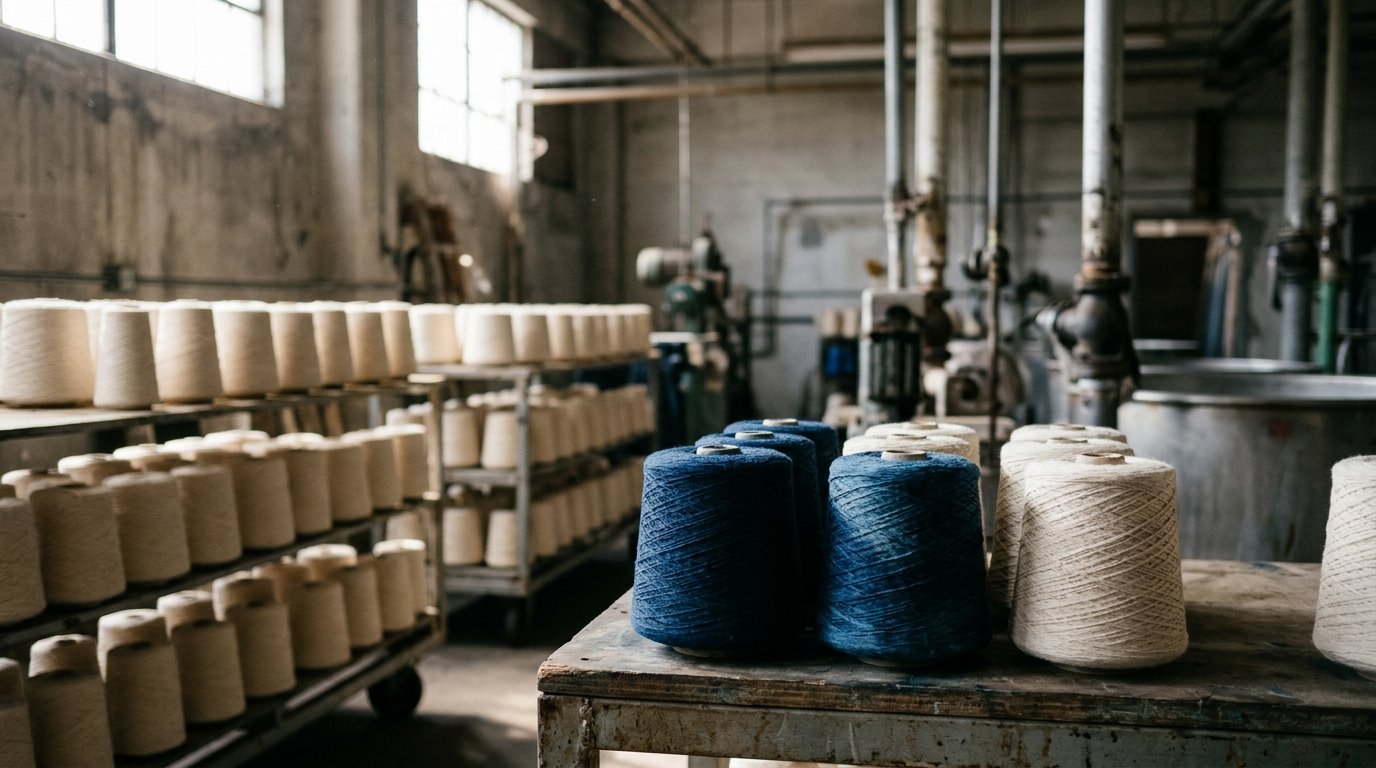
Yarn-dyed fabric, also written YD, starts with undyed yarn wound onto cones, cheeses or hanks. Those packages go into a dye bath, come out at a specified shade, and only then get woven or knitted. The color exists before the cloth does, which is why a weaver can lay a navy yarn beside a cream yarn in the warp, set another pair in the weft, and build a stripe, a check or a plaid out of the structure itself.
Piece-dyed fabric inverts the order. The mill weaves or knits greige, loom-state cloth first, then dyes the whole length as one continuous piece in a jet, a beck or a pad range. Every square inch takes the same shade at the same moment, because there is only one shade in the bath.
Commitment timing is the real dividing line
Yarn-dyed locks the color in weeks before you can hold a metre of fabric: the dye lot is your color, and it is already committed to a beam. Piece-dyed locks the color in after the cloth already exists, so the fabric is real and the shade is still a decision. That asymmetry explains why one route forgives a late change of mind and the other charges for it.
Piece dyeing cannot place two colors side by side
If your design needs a repeating pattern on a piece-dyed base, the pattern arrives later as a print, a coating or embroidery. That is a different product: different fastness behavior, different hand, and a reverse side that usually tells the truth about how it was made.
Name the adjacent routes before you accept a quote
Heathers and melanges come from fiber dyeing or stock dyeing, done before spinning, so the color variation is trapped inside the yarn. Cross-dyeing exploits the different dye affinity of two fibers in a blend to pull two tones out of a single bath. Neither is piece dyeing, and neither is yarn dyeing in the striped sense.
Trade words also get used loosely: solid-dyed, stock-dyed, garment-dyed, YD. Ask which stage the color enters rather than which word the mill prefers. Garment dyeing, for instance, is cloth dyed after cutting and sewing, and it behaves nothing like yarn-dyed goods.
Which Designs Each Method Can Physically Produce (Decide This Before You Talk Price)
Classify the design first. If you price a print as though it were a dye job, you will spend the next three months discovering that the cheap quote described a different product.
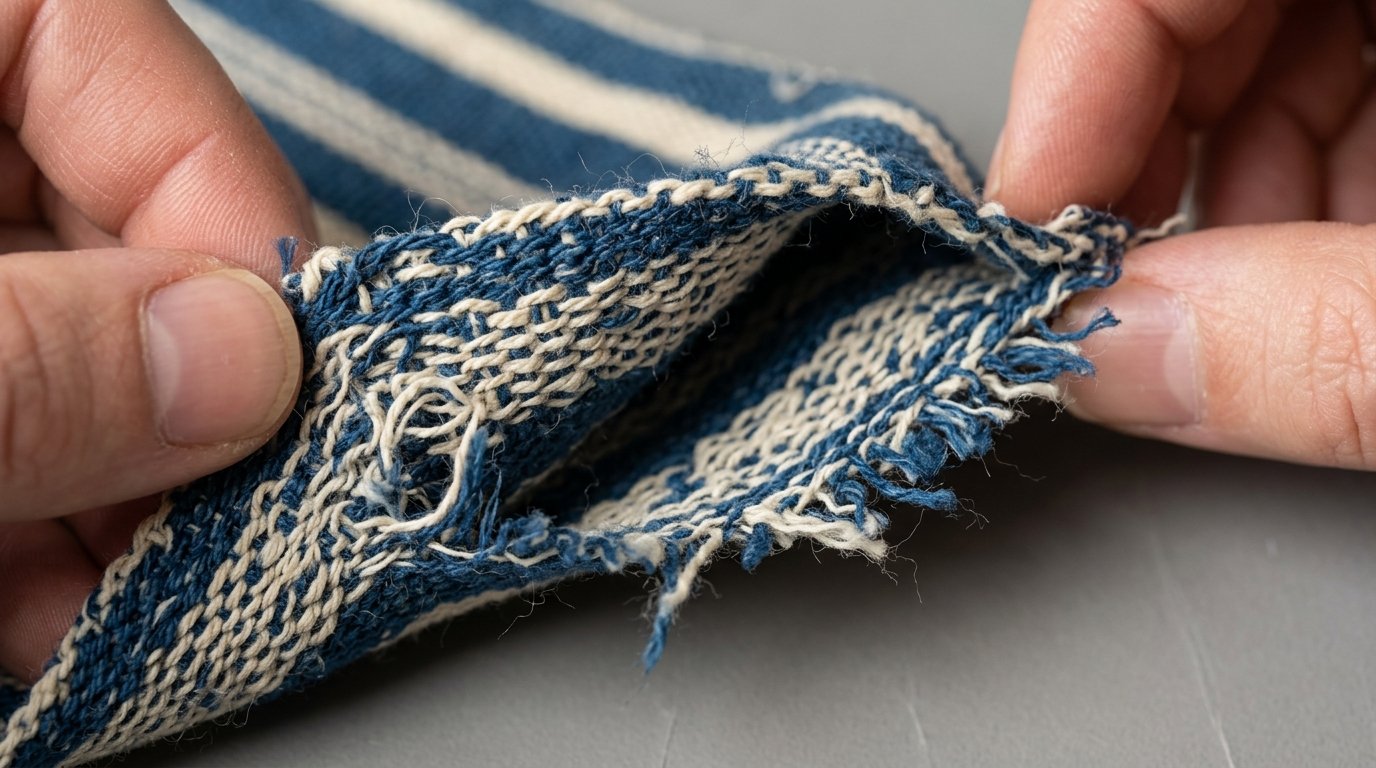
- Structural patterns are yarn-dyed by definition. True multicolor stripes, checks, gingham, plaids, dobby figures and woven jacquards are built from separate colored yarns. There is no cheaper route to the same object.
- The reverse-side tell on a sample. If the color runs through to the back and you can unpick colored yarn from the pattern, it was dyed before weaving. A printed pattern sits on the surface and often shows a pale or white back.
- Piece dyeing owns solids. Owning solids well means deep shade ranges on one base cloth, including custom shades on heavy canvas where nobody is going to print a 400gsm base.
- The stripe range shows the split in practice. Yarn-Dyed Stripe Cotton is listed as its own type alongside Stripe Poplin, Stripe Jersey Knit, Stripe Polyester Crepe and Stripe Chambray, across a 110gsm to 250gsm span and cotton, polyester, rayon or blends. The category holds three products across those listed types, so read the construction stated on the individual listing rather than assuming it from the category name.
- A printed multicolor stripe is not a cheaper yarn-dyed stripe. It is a different surface with different crocking, bleeding and wash behavior, and it reads differently at three meters.
- The solid-shade question is the common one. The Long Sleeve Shirts category alone carries 618 products across twill, oxford, poplin, woven, linen, jacquard and cotton blend types, and most buyers arrive with one color to match rather than a stripe to place.
- Canvas is the piece-dyed workhorse. The Sailcloth/Canvas category runs 200gsm to 500gsm in cotton, polyester or cotton-polyester blends, across 50 products in Natural, White, Khaki, Black, Olive, Navy, Sand and Custom Dyed Shades. That is a solids and custom-shade business, not a pattern business.
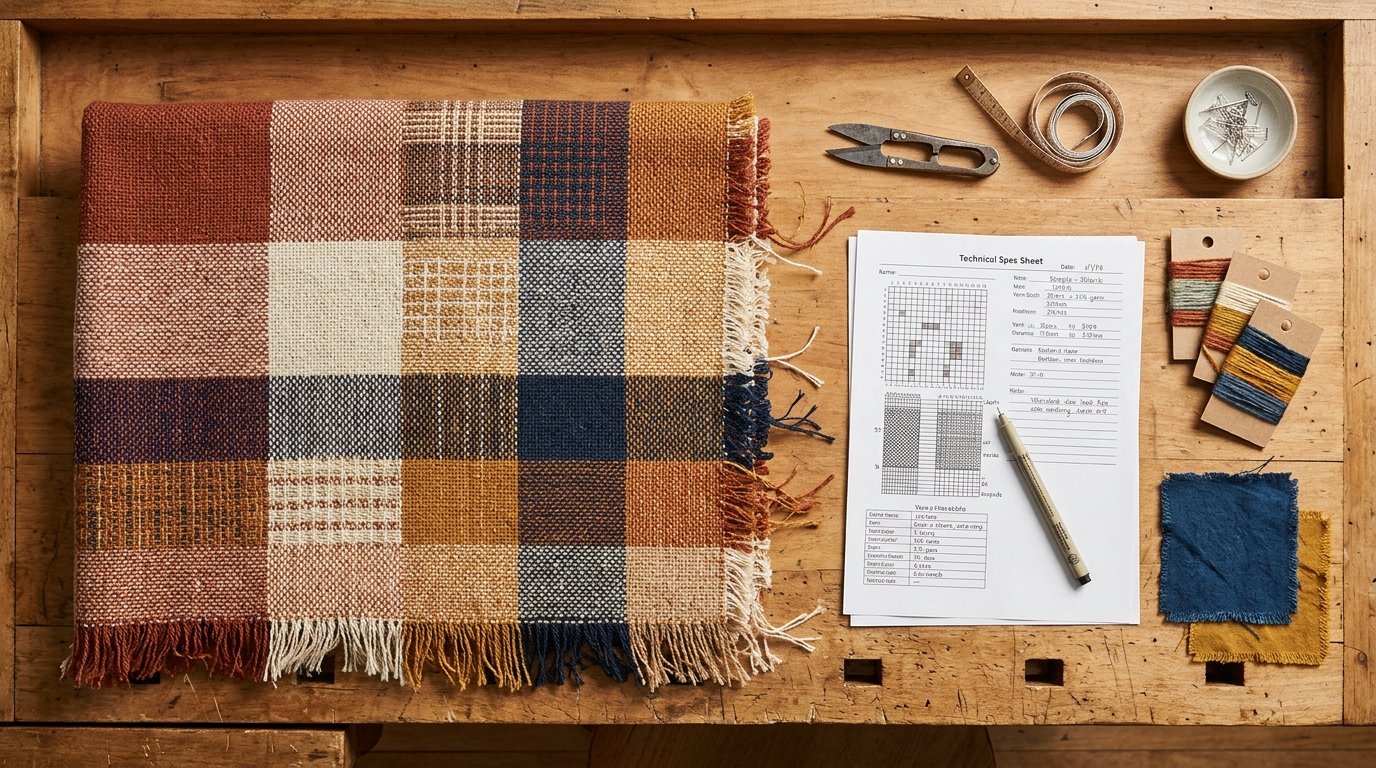
Working rule for artwork: photographic or high-color-count artwork belongs to printing, two to six flat colors in a repeating geometric belongs to yarn dyeing, and a single flat color belongs to piece dyeing. When the pattern is a structural weave rather than a surface print, the weave itself governs how the cloth behaves once it is on the table, which is exactly what pattern weaving does to fabric on the cutting table. A houndstooth is a two-color yarn-dyed weave for that reason: you cannot piece-dye it into existence.
Where the Yarn-Dyed Premium Actually Comes From
The premium is mechanical, not mystical. Open it up and you find a list of costs you can argue with line by line, which is more useful than arguing about the total.
- An entire manufacturing stage sits ahead of the loom. Yarn must be wound into dye packages, dyed, dried, rewound and color-sorted into lots before a single metre is woven. None of that labor exists on a piece-dyed order at the same stage.
- Color count multiplies loom handling, not just dyehouse handling. Every warp color is a separate yarn package and a separate position in the beam. More colors means slower warping, more loom stops and fewer metres per machine hour.
- Waste lands on the yarn-dyed order. Dyeing losses, sampling yarn and leftover part-lots of colors you may never reorder are all yours to absorb somewhere in the price.
- Setup amortizes over the run. A warp beam is built for the whole length of the order, so the same beam building, threading and loom time gets spread across fewer yards on a short run. That is why short yarn-dyed runs never get cheap, however hard you negotiate.
- Piece-dyed cost moves with the shade as well as the cloth. Deeper shades, and dye classes that need longer cycles or more dye, cost more per yard than a pale shade on the same base. A black and a pastel on identical greige are not the same price.
- Compare like with like, or don't compare. Set a yarn-dyed stripe against a printed stripe only if you are also willing to compare fastness, hand and the reverse side. Otherwise the cheaper one wins for the wrong reason and you find out at the first customer complaint.
MOQ Is Set by Color Count, Not Yardage
A five-color stripe needs five dyed yarns, and every dyed yarn carries its own minimum lot at the dyehouse. That is the whole mechanism. The constraint multiplies by color count, so it is the number of colors, not the number of yards, that decides whether your order is viable, and no amount of persuasion moves a dyed yarn lot minimum that exists because the machine has a physical capacity.
Take a hypothetical small brand with a four-color gingham for its first season, quoted at 600 yards. The quote comes back penalized, and the way back under the minimum is to change the design: drop to two colors, move one color to a shade the mill already runs, or keep the palette to colors that also appear elsewhere in the line so the dyed yarn lots get shared across styles instead of dedicated to one SKU.
Piece dyeing inverts the problem. Greige is bought by the roll and dyed to order, so a range of solid shades at modest yardage per shade is normal business. One tiny order of an unusual shade still occupies a full dye machine, though, and gets priced like the batch it is rather than like the yardage it contains.
Custom dyed shades on heavy canvas belong to that piece-dyed conversation, since the base cloth is already a standard article. Ask two separate questions: what is the minimum per shade, and is the base cloth already on the shelf? Those produce very different answers, and the coarse fabric range is a good place to see how wide a standard heavy-base palette already runs before you ask for a custom shade at all.
Get the minimum defined in writing as per color, per dye lot, or per order. Those three answers produce very different totals, and suppliers quote whichever one flatters the number. And remember that adding a color after the first run means a fresh yarn dye lot, which can sit visibly apart from the original even with the same recipe. Fix the color list at design freeze, before the first yarn purchase order goes out, while every color is still an open decision instead of a paid amendment.
Lead Time and Approvals: You're Approving Yarn, Not Fabric
The calendar is built from a different critical path on each route, and the approval chain follows it. Get this wrong and the first time you see your color in cloth is the first bulk delivery.
- On yarn-dyed work, yarn dyeing sits in the critical path before weaving. Yarn has to be dyed, approved and delivered to the weaver. A color change late in the program restarts a stage that had already finished, so it costs days, not hours.
- On piece-dyed work the clock can start from greige already on the mill shelf, so the schedule is dyeing plus finishing rather than yarn plus weaving plus dyeing plus finishing. That is where most of the quoted difference in lead time comes from.
- The approval object is different. Piece-dyed gives you a lab dip, then a bulk swatch cut from the actual dyed cloth. Yarn-dyed may give you color on yarn plus a sample-woven blanket, and you need both before bulk is released.
- Insist on a sample made from production yarn in the production structure. A yarn card tells you the color of the yarn, not the color of the cloth. Sett, pick density and the ratio of colored to ground yarns all change how a shade reads.
- Approve the combination, not the single color. A shade that looks right on its own can look wrong beside the color it gets woven next to, because neighboring colors shift how each one is perceived.
- Treat the warp as frozen. Once the beam is made, changing a stripe color means re-beaming, which is a schedule reset and usually a cost.
- Put a named shade-approval milestone in the timetable with its own sign-off date. A slow approval otherwise eats the buffer you built for production, silently, and nobody notices until the ship date moves.
Shade Variation: Two Different Failure Modes on the Cutting Table
The two routes fail in different directions, and that difference tells you where to spend your own effort. One failure is largely fixable in your cutting room. The other is not.
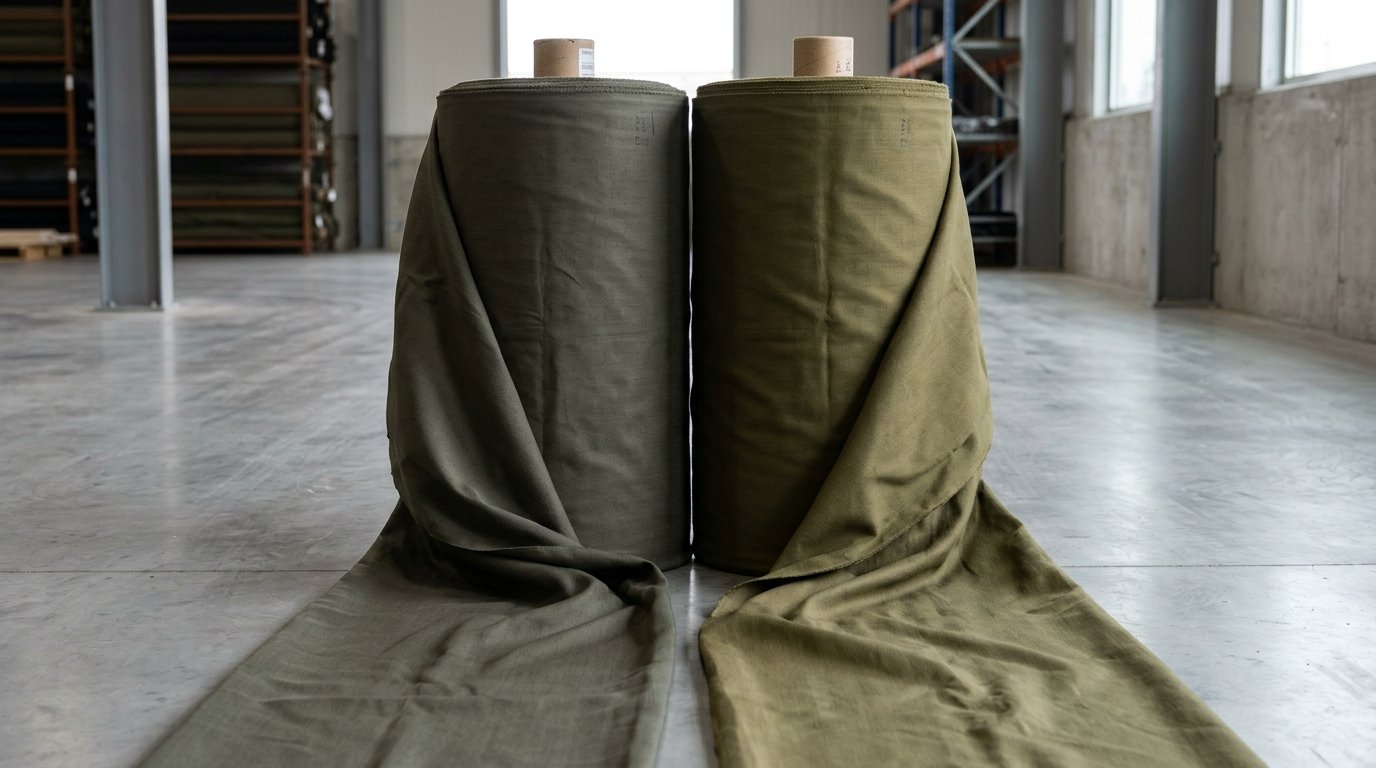
Piece-dyed variation lives between dye lots and, more dangerously, between rolls inside a single lot. A garment cut from two rolls can show a two-tone body and sleeve, which is the complaint a customer notices before any other. It is also the one you can engineer out: shade-sort the rolls on arrival, cut a whole garment from one roll, and sequence rolls across the lay so any gradient falls at a seam rather than down the middle of a panel.
Yarn-dyed cloth is uniform across width and length because the color is in the yarn, so panel-to-panel mismatch inside a single garment largely disappears. The risk moves upstream instead. Mixing yarn lots inside one weaving run can produce lengthwise bands or streaks that no amount of cutting-room sorting will remove, because the streak is structural. You stipulate lot control before weaving, in writing, or you live with it.
Inspect differently on each route
On yarn-dyed goods, sight down the length at a low angle to catch warp streaks; they hide from a straight-on look. On piece-dyed goods, compare roll heads and tails against the control swatch instead of judging from the middle of the roll, where everything looks fine.
Check shade under more than one light source as well. Metamerism is why a match approved under factory lighting can clash in daylight or under shop lighting, and it applies to both methods without discrimination.
What the Dye Stage Leaves Behind: Fastness, Shrinkage, and Hand Feel
Where the color sits in the fiber decides how it ages. Yarn-dyed puts color through the yarn, so abrasion at cuffs, hems and seams keeps exposing more of the same color instead of a paler core. A piece-dyed cloth that was ring-dyed, with dye concentrated near the surface and the core left pale, can show a light edge where it has worn, which is precisely where a customer looks first.
Piece dyeing is also a wet process applied to finished cloth. It relaxes tensions built in at the loom, so the mill usually follows with compacting, stentering or another finishing step to bring residual shrinkage back into spec. Yarn-dyed cloth has not been through that wet stage as a fabric and needs its own stabilization, so ask what finishing is applied rather than assuming it matches. Two cloths of identical weight and fiber content can carry very different residual shrinkage for this reason alone.
Wet processing changes hand too. Jet dyeing tumbles the cloth and can soften and bulk knits, so a yarn-dyed knit can read flatter or drier at the same weight. Judge hand on dyed bulk, never on greige, and be specific about what you mean when you say a fabric feels wrong, since hand-feel complaints usually trace back to vocabulary rather than to a defective fabric.
Wet processing also stacks with other wet finishes. Mercerization is a caustic soda treatment applied to cotton under tension, and it appears on a spec sheet as its own process alongside the dye method, never as a substitute for it. Global Fabric Whole Sale lists mercerized fabric in a 160–200gsm range, and the difference mercerization makes is a separate variable from how the cloth got its color.
Loose dye, finally, is a wash-off problem rather than a dye-method problem. Insufficient rinsing after dyeing shows up as bleeding or crocking in the customer's first wash on either route. Name the test method and the acceptance level for laundering, crocking, light and perspiration in the purchase order. A supplier saying fastness is good is not a specification.
How to Write the Spec and Prove It Before You Commit
Most dye-method disputes are avoidable at the spec sheet. These are the lines to write, in order.
- Write the method explicitly (yarn-dyed, piece-dyed, fiber-dyed) instead of a look-alike word like striped or solid. The same look can often be produced more than one way, and the cheapest way is rarely the one you actually wanted.
- Pin the color to one standard and one light source: a physical control swatch or a Pantone TCX reference, plus the illuminant you are matching under. Without the illuminant, the reference is only half a specification.
- Write fastness by test method and acceptance level for laundering, crocking, light and perspiration, and state which one is the pass-fail gate. Everything else is informational.
- Add a lot clause: how much shade variation is acceptable between lots, and that every roll in one shipment comes from a single dye lot unless agreed in writing.
- Add a pattern-matching allowance to the order quantity for yarn-dyed stripes and plaids. Matching the repeat at the cut consumes yardage, and running short on a yarn-dyed lot is far worse than over-ordering, because the replacement arrives as a new lot with a new color.
- Seal the approval and keep it: the production swatch taken from the yarn lot or dye lot reserved for your order gets sealed, labelled with its lot numbers and held for the life of the order. That sealed swatch is the reference every later shade dispute is settled against.
- Wash the qualification swatch the way your customer will wash the garment and compare it against the sealed control. That one test exposes bleeding, shrinkage and surface change together, and it costs you a load of laundry.
Global Fabric Whole Sale offers free samples, which makes the cheap half of this sequence easy to run on real cloth rather than on photographs. If you want the full shortlist of bench checks worth doing before money moves, the five tests you can run at home before a bulk order cover the rest.
The Decision Rule: Match the Dye Method to Your Order Profile
| Criteria | Yarn-Dyed | Piece-Dyed |
|---|---|---|
| Process order | Yarn dyed first, then woven or knitted | Cloth woven or knitted first, then dyed |
| Designs it can make | Stripes, checks, plaids, jacquards | Solid shades, deep shade ranges |
| MOQ driver | Per color, per dyed yarn lot | Per shade, per dye machine batch |
| Lead time | Longer: yarn dyeing sits before the loom | Shorter: starts from greige on the shelf |
| Approval object | Dyed yarn plus sample-woven blanket | Lab dip plus bulk dyed swatch |
| Main shade risk | Lengthwise streaks from mixed yarn lots | Roll-to-roll and lot-to-lot variation |
| Cutting room control | Limited: stipulate lot control upstream | Strong: shade-sort rolls, sequence the lay |
| Best use case | Repeating multicolor pattern, carryover stripes | Solids, many shades, modest yardage each |
- Two or more flat colors sitting side by side in the cloth: yarn-dyed. Expect a higher price, a color-count MOQ and a longer calendar.
- One color, many shades, modest yardage per shade, fast turnaround: piece-dyed, with the shade and the finishing specified rather than assumed.
- Heather, melange or a two-tone effect on a blend: fiber dyeing or cross-dyeing. Do not push piece dyeing into a job it cannot do.
- High color count, gradients or photographic detail: printing, with the fastness conversation moved to the front instead of the end.
Decide the method at the design stage. It sets the MOQ, the lead time and the yield, so a method chosen after the design is finished is a method chosen too late.
Then go look at cloth. Global Fabric Whole Sale sells fabric by the yard through an online store carrying over 10,000 fabrics, and the site offers free samples, so you can compare hand and shade across the base fabrics you are actually considering before committing to a lot. A sample tells you about hand and shade; it says nothing about which lot will ship, so name the dye lot in the purchase order and have the supplier confirm it in writing before production starts.
Frequently asked questions
Is yarn-dyed fabric more expensive than piece-dyed fabric?
Usually yes, but not because of the dye recipe. Yarn dyeing adds winding, dyeing, drying, rewinding and color sorting before the loom, and each extra color adds warp handling and loom time. On a short run of a multicolor pattern the gap widens sharply, since beam setup is spread over fewer yards.
Does yarn-dyed mean the color will not fade?
No. Yarn dyeing changes where the color sits, not how well it was fixed. Light and wash fastness depend on the dye class, recipe and wash-off, so specify test methods and acceptance levels in the purchase order. What yarn dyeing does buy you is color that survives abrasion, because a worn cuff keeps exposing more of the same dyed yarn.
Can you piece-dye a fabric to look like a yarn-dyed stripe?
Not in the cloth itself. A piece-dyed base can be printed with a stripe, but that pattern sits on the surface rather than running through the structure, so the reverse side looks different, crocking and bleeding behave differently, and the cloth reads differently at a distance. Treat printed stripes as a separate product, not a cheaper version.



 Login with Google