


Why Your Fabric Order Passed Inspection But Still Failed on the Sewing Floor

Fabric passes inspection based on static checks — weight, width, color, and visible defects — but the sewing floor tests dynamic behavior: how the material responds to needle penetration, tension, heat, and friction over hours of continuous stitching. A roll can be flawless on the table and still skip stitches, pucker seams, or gum up needles because standard QC never simulates actual machine conditions. The fix isn't better inspectors — it's testing fabric the way it's actually going to be used before it hits your cutting tables.
Inspection Tests: What's Sitting Still; Sewing Tests: What's Moving
Here's the uncomfortable truth: most incoming fabric inspection is a static audit. Someone unrolls the bolt, checks for slubs, holes, and stains, measures width, and maybe runs a quick GSM check with a cutting die and a scale. None of that tells you how the fabric handles 4,000 stitches per minute at a lockstitch machine, or what happens when a walking foot drags a slippery synthetic through a curved seam.
Static checks answer “Is this the fabric we ordered?” Sewing floor performance answers “Can this fabric survive being made into a garment?” Those are two different questions, and a passing grade on one says almost nothing about the other.
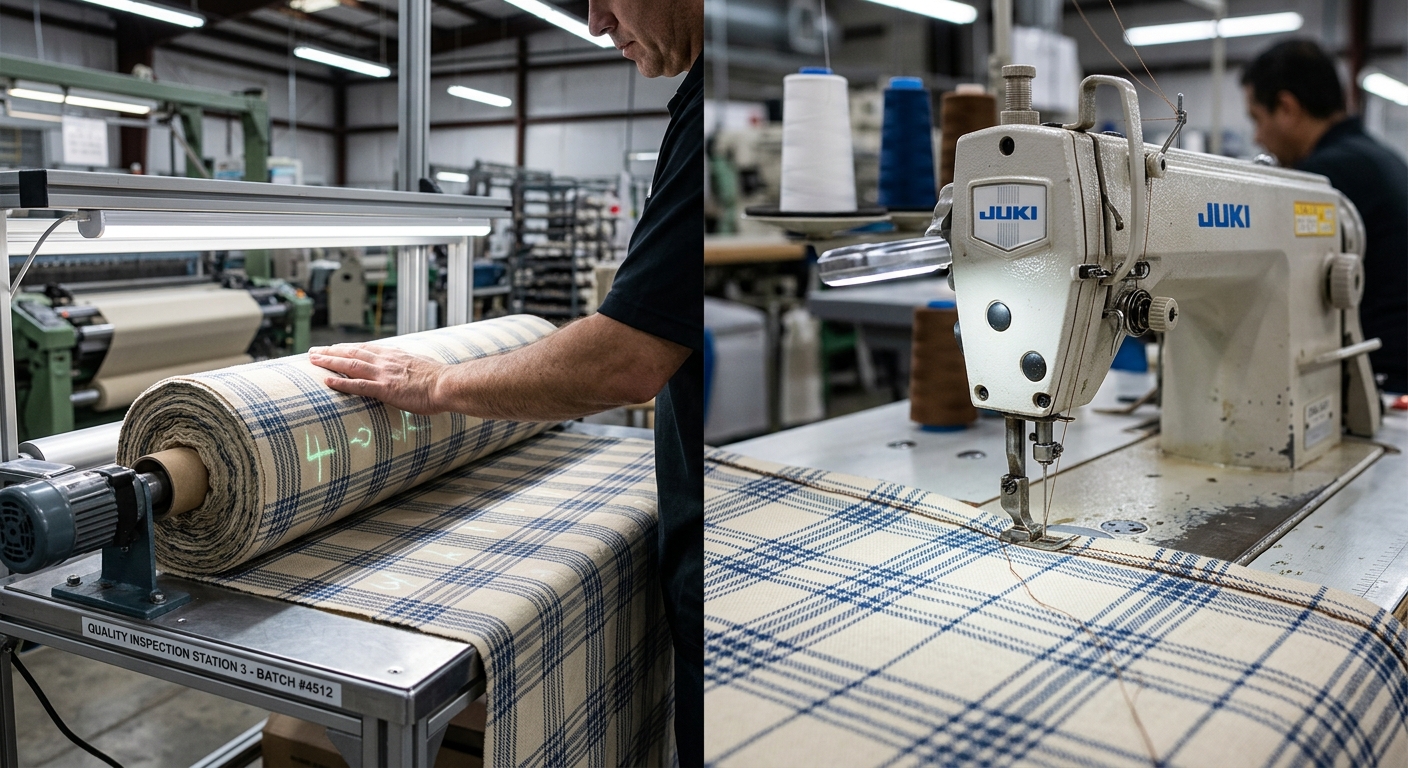
The Coating Residue Problem Nobody Checks For
A shipment can pass every visual and weight check and still leave a gummy film on your needles by lunchtime. Finishing agents — softeners, anti-static treatments, water-repellent coatings — are applied at the mill to make fabric feel better and photograph better. They don't show up on an inspection report because inspectors aren't testing for needle friction or thread heat buildup.
What actually happens
As the needle punches through treated fabric at high speed, friction generates heat. Some finishing chemicals soften at that temperature and stick to the needle shaft. The result: skipped stitches, thread shredding, and burn marks on synthetic fibers around the needle hole — defects that only appear after 200 or 300 pieces, long after the fabric “passed.”
This is especially common with glossy or coated fabrics. If you're working with glossy fabric by the yard, request a needle-heat test sample before committing to a bulk run — a 30-minute machine test will tell you more than any spec sheet.
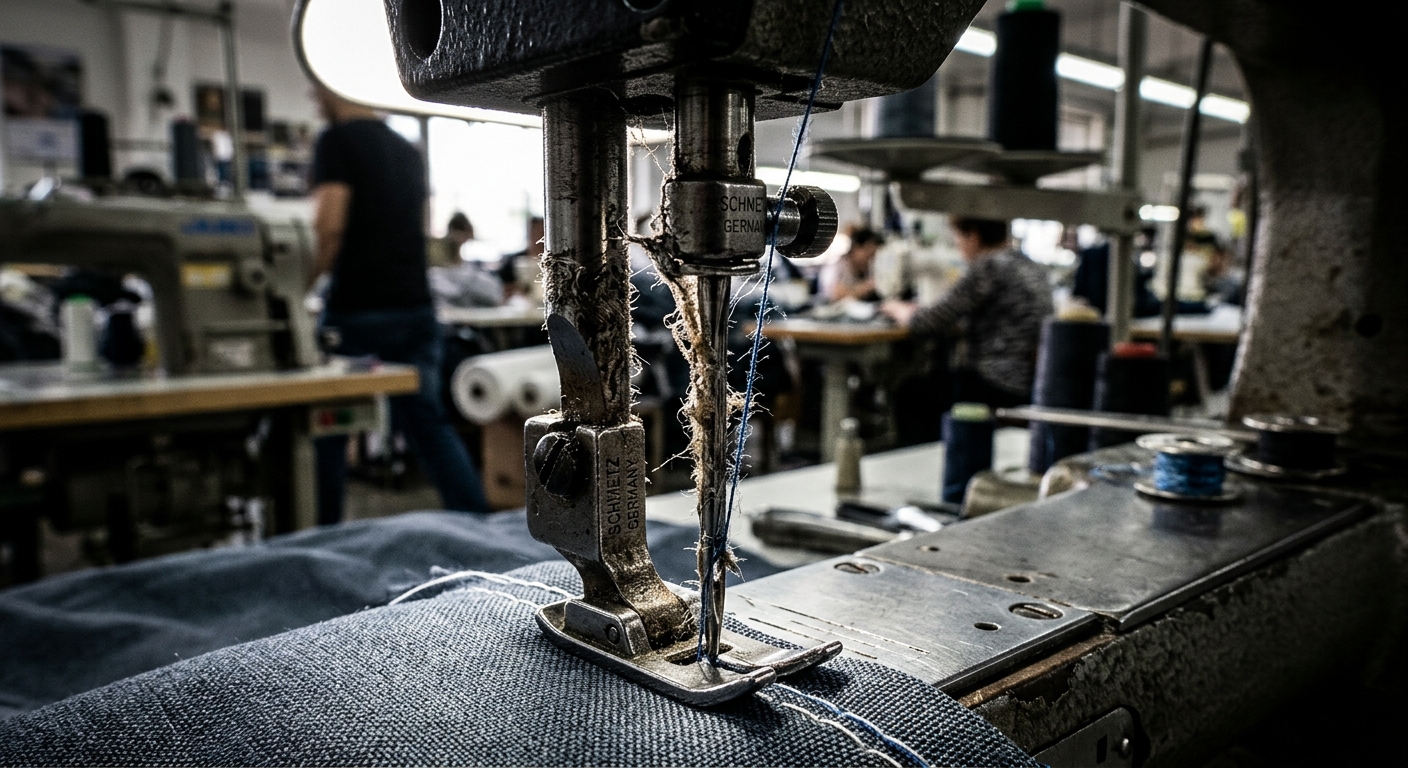
Weave Density and GSM Don't Tell You About Needle Drag
Two fabrics can have identical GSM and pass the same weight inspection, yet behave completely differently under a needle. GSM measures mass per square meter — it says nothing about how tightly the yarns are packed or how much resistance the needle meets going through them.
A loosely woven fabric at 200 GSM might sew like butter. A densely packed fabric at the exact same 200 GSM can cause needle deflection, broken threads, and seam puckering because the needle has to force its way between tightly packed yarns instead of sliding through gaps. This is a weave density issue, not a weight issue, and standard inspection almost never measures it.
For a deeper look at how weight numbers can mislead you, see our guide on reading GSM like a pro — it covers why two fabrics with the same number on paper can require completely different needle sizes.
Stretch Recovery Fails Under Repeated Machine Tension
Stretch fabrics are the most common victims of the pass-inspection-fail-on-floor problem. A knit can meet its stated stretch percentage in a single pull test and still lose recovery after being fed through a machine under constant tension for an entire seam run.
For example, a hoodie manufacturer sourcing zip up hoodie fabric might test a swatch by hand-stretching it once — it snaps back fine. But run that same fabric through a coverstitch machine at production tension for 18 inches of hem, and marginal spandex content shows up as wavy, rippled seams that a single-pull test never revealed. The fix: always test stretch recovery after machine tension, not just hand tension. Our stretch fabrics breakdown covers which fiber blends hold recovery best under repeated load.
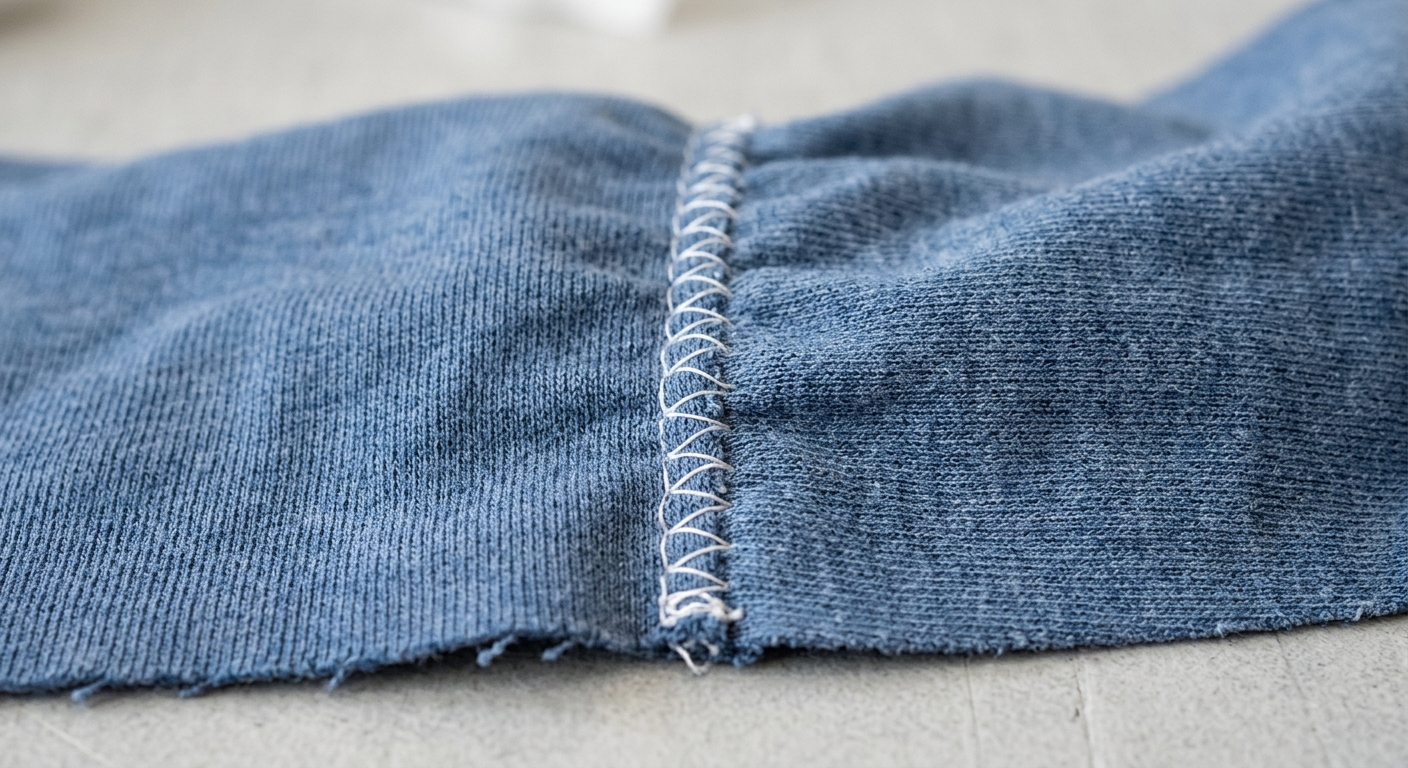
Thread and Needle Mismatch Disguised as a Fabric Defect
Sometimes the fabric isn't the problem at all — it's the pairing. A supplier hands over a perfectly good bolt, but the sewing floor is still running the same universal needle and all-purpose thread it uses for everything else. Heavier or denser fabrics need a heavier ballpoint or wedge-point needle; lighter synthetics need finer needles to avoid visible puncture holes.
When a production manager blames “bad fabric” for skipped stitches, the actual culprit is often a size 80/12 needle trying to punch through a fabric that needed a 90/14. Keep a reference chart on the floor — our needle and thread pairing chart is built exactly for this — so operators aren't guessing fabric by fabric.
Real-World Case: The Velvet Order That Looked Perfect on Paper
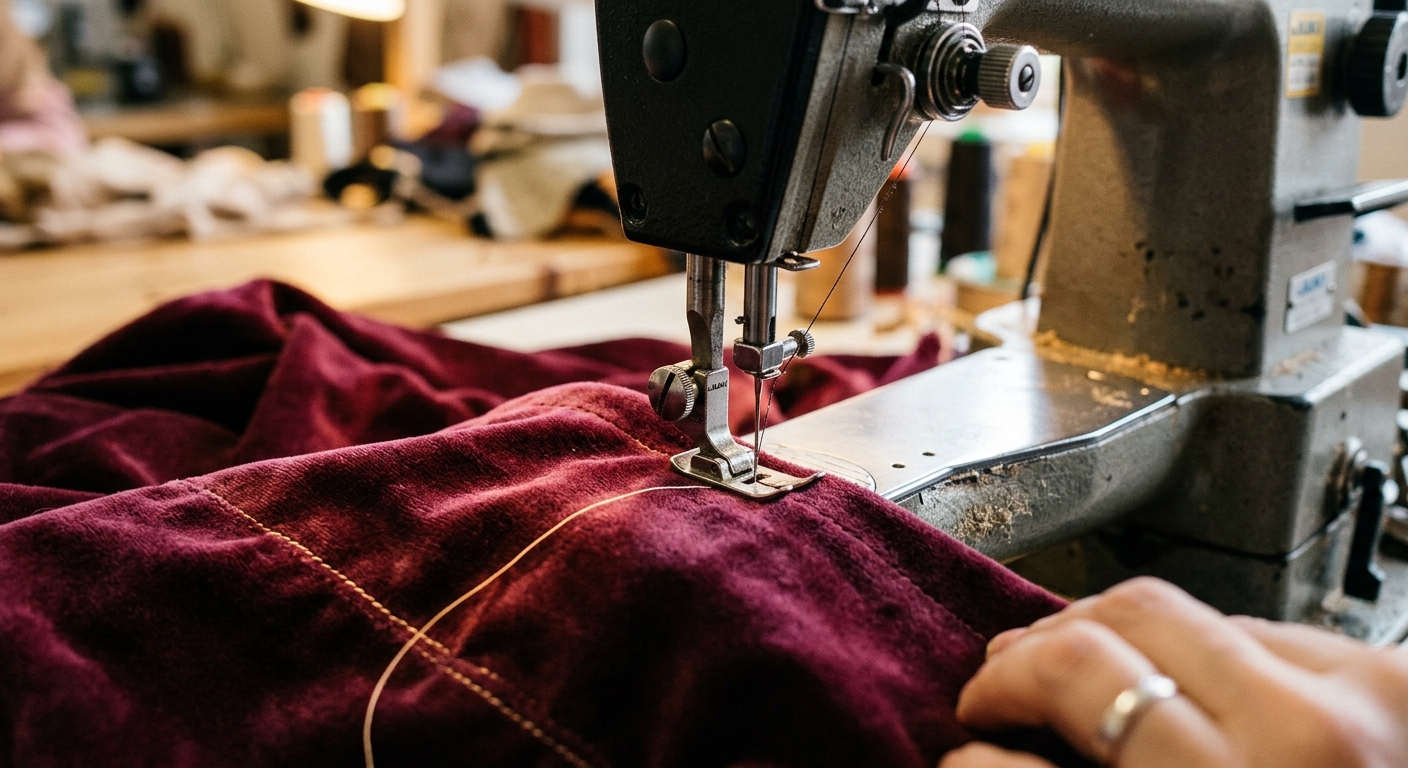
A home décor manufacturer once ordered velvet fabric by the yard for a cushion line. Inspection passed — correct pile height, correct color match, no visible flaws. On the sewing floor, the pile direction caused the fabric to creep under the presser foot, throwing seams off by up to 3mm on longer panels.
Nothing about that issue would show up in a standard inspection because pile creep only happens under continuous machine feed, not on a flat inspection table. The manufacturer solved it by switching to a walking foot and testing directional feed before cutting the full run — a five-minute fix that a pre-production sew test would have caught before 400 yards were already cut.
The Fix: Build a Pre-Production Sew Test Into Your PO Process
The single most effective change you can make is adding a mandatory sew-off before accepting a bulk shipment. Request a 2-yard sample cut from the actual production lot — not a swatch from a different dye lot — and run it through your real machines with your real needles and thread for at least 15 minutes of continuous stitching.
- Check for needle heat buildup and residue after 10 minutes of continuous stitching
- Test seam recovery on stretch or knit fabrics after tension, not just by hand
- Run a curved seam and a straight seam — pile fabrics and directional weaves behave differently on each
- Confirm thread tension settings don't need mid-run adjustment
This step takes under an hour and costs you a small sample yardage. Compare that to the cost of a failed 500-unit run, and it's not a close call. If you're still finalizing supplier terms, this is worth raising during MOQ negotiations — most legitimate mills will provide a lot-matched sample at no extra charge.
When the Problem Isn't the Fabric — It's the Spec Sheet
Sometimes fabric fails on the floor because the spec sheet never captured the property that mattered. A spec sheet might list GSM, width, and fiber content in full detail and still say nothing about crease recovery, needle penetration force, or bias stretch — all of which affect sewability far more than the numbers usually quoted.
Before your next order, revisit what you're actually asking suppliers to disclose. Our guide on reading a fabric spec sheet breaks down which of the eight core numbers genuinely predict sewing performance versus which ones just look reassuring on paper.





 Login with Google