


Sewing Machine Needles and Thread Pairings: The Chart Every Production Manager Should Have on the Wall
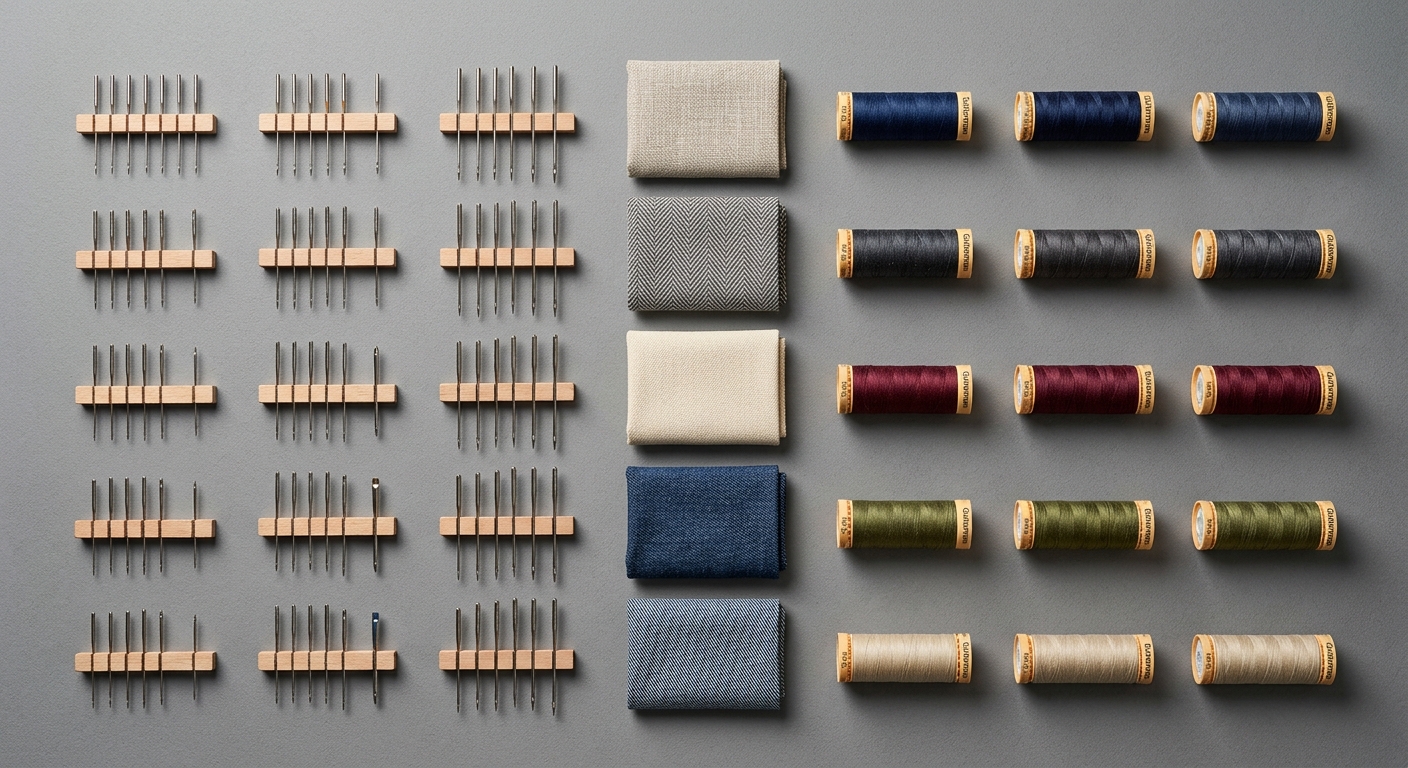
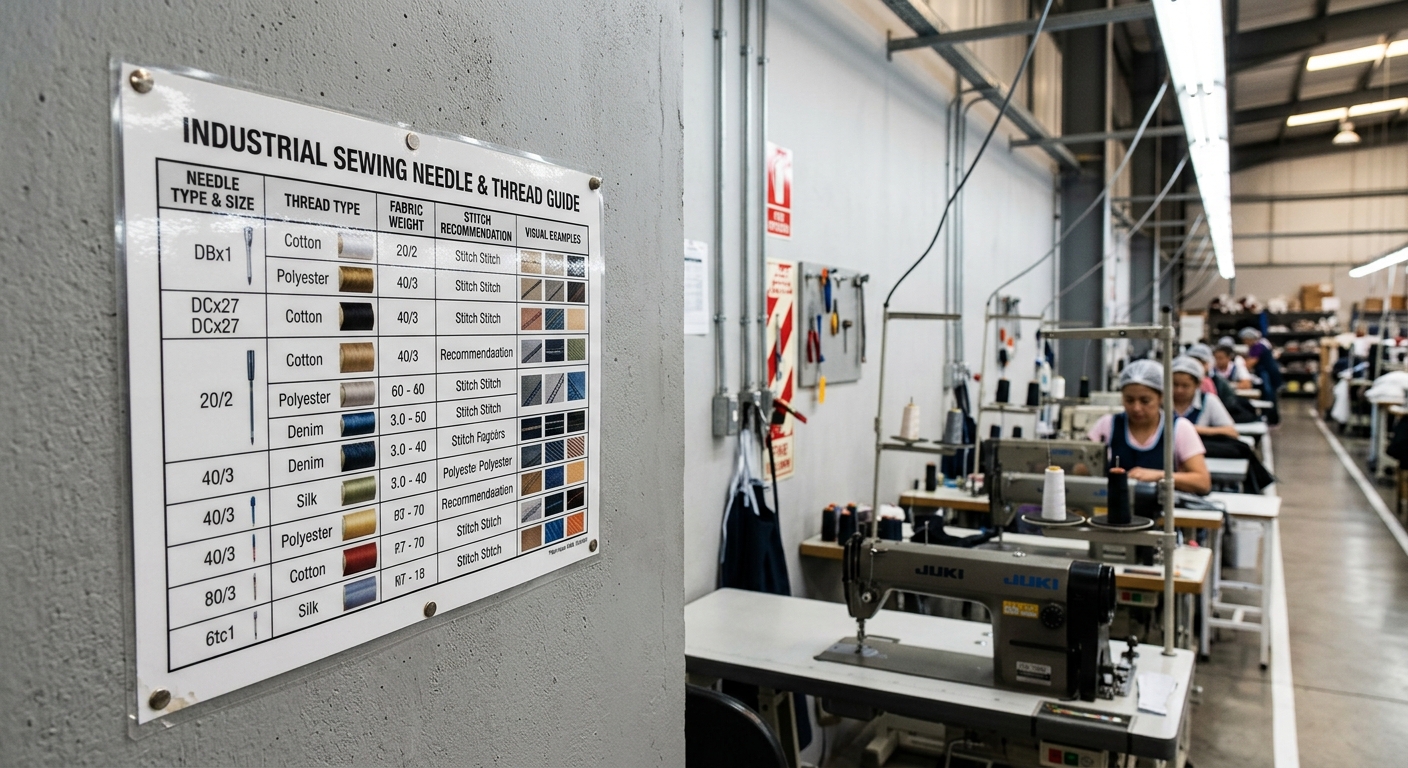
The fastest way to cut skipped stitches, thread breaks, and puckered seams on your production floor is to match needle size, point geometry, and thread weight to the fabric — not to whatever happened to be loaded last shift. As a rule of thumb, lighter fabrics need finer needles (60/8–80/12) with filament threads (Tex 18–35), heavier wovens take 100/16–110/18 with bonded core-spun (Tex 40–60), and knits demand ball-point or stretch needles paired with textured polyester. The chart below makes those pairings explicit so every operator gets it right.
Why This Chart Belongs on the Wall, Not in a Manual
Operators don't read SOP binders mid-shift. They glance up. A laminated chart above the sewing line saves more downtime than any training video — because the moment a thread snaps or a seam puckers, the answer is right there at eye level.
Consider a real scenario: a contract manufacturer running a mixed program of cotton poplin shirts and rayon blouses kept getting needle holes in the rayon. Operators were leaving the 90/14 universal needle in from the poplin run. Swapping to a 70/10 Microtex on rayon eliminated the visible holes overnight. The fix cost nothing — it was a chart problem, not a machine problem.
Charts also flatten skill gaps. New hires can match fabric to needle without flagging down a supervisor, and your most experienced mechanic isn't burning hours retraining the same lesson every quarter.
Reading Needle Sizes: NM vs Singer and Why Both Numbers Matter
Needle packs print two numbers — 80/12, 90/14, 100/16. The first (NM/metric) is the blade diameter in hundredths of a millimeter. The second is the U.S. Singer equivalent. Bigger number, thicker blade, larger hole.
Why does this matter on the floor? Because a 90/14 punches a noticeably larger hole than an 80/12, and on tightly woven fabrics like high-thread-count cotton shirting or coated nylons, that extra 0.10 mm shows up as visible perforations along the seam line. On a 200-thread-count poplin, dropping from 90/14 to 80/12 is often the difference between a finished garment and a reject.
Match the blade to the thread, not the fabric weight alone. The thread should pass through the eye and scarf without friction. If you can hear the thread squeaking through, the needle is too small.
Point Geometry: Sharp, Ball Point, and Everything Between
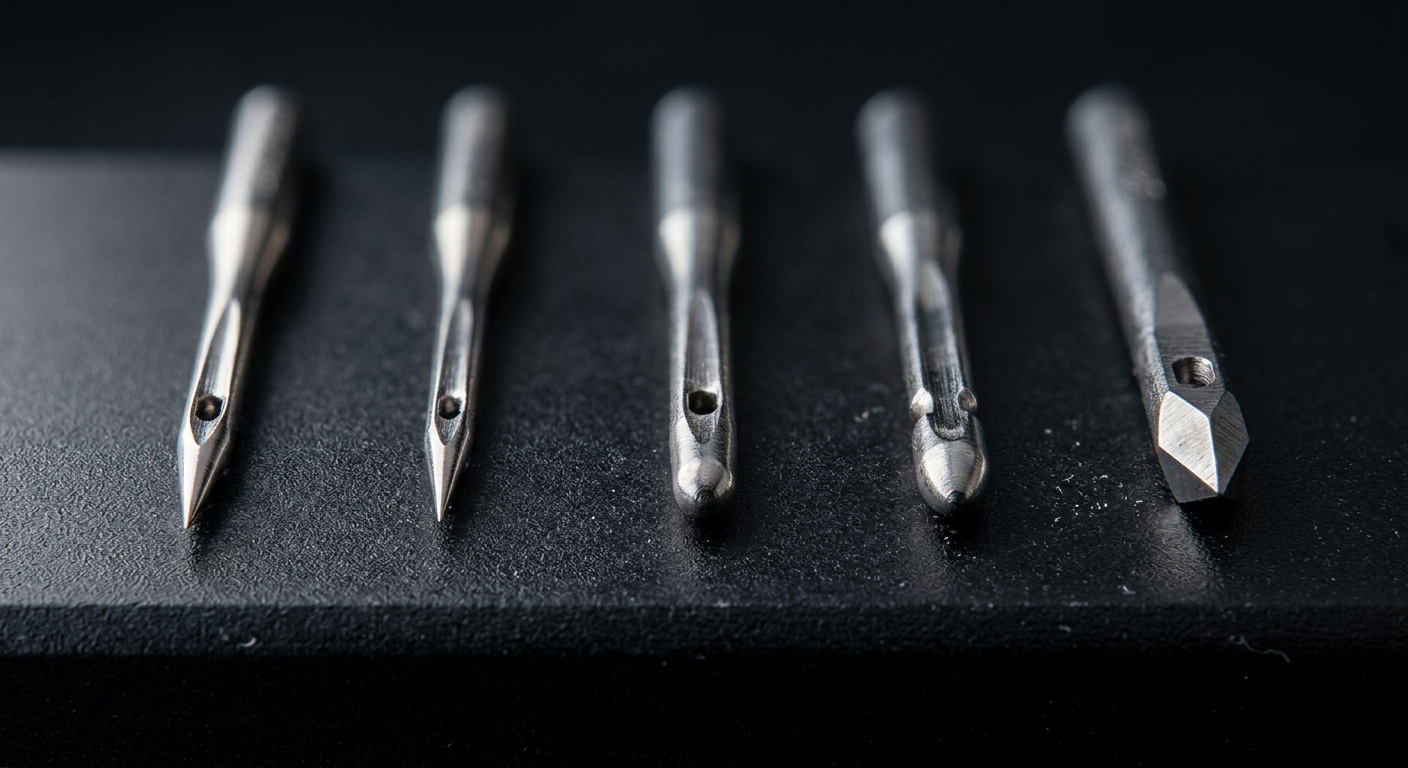
Needle size gets all the attention, but point shape determines whether you cut the fabric or push between its yarns. Get this wrong and no thread choice will save you.
Sharps and Microtex (R, SPI)
Designed for woven fabrics. Pierce yarns cleanly, ideal for silk, microfibers, and tightly woven cottons. Use Microtex on anything with a sheen or tight weave — they're sharper than universals and prevent the “rumpled” look on silk fabric.
Universal (R)
Slightly rounded sharp point. The default for general-purpose sewing on medium wovens. Good on shirting, twill, and calico.
Light Ball Point (SES)
Rounded to slip between knit loops without splitting yarns. Use on fine knits and single jersey. Splitting a yarn in jersey causes a run that travels — a single bad stitch can ruin a panel.
Medium Ball Point (SUK)
For heavier knits, fleece, and rib fabric. The bigger ball pushes through dense loop structures.
Stretch (SKF/SKL)
Specialized scarf prevents skipped stitches on fabrics with elastane. If you're sewing spandex blends or swimwear, this is non-negotiable.
Jeans/Denim (R sharp, reinforced blade)
Heavy blade for dense weaves. Essential for denim seams and bag construction with multiple plies.
Thread Weight in Tex, Denier, and Ticket — Decoded
Three numbering systems exist. Pick one and standardize across your floor — mixing systems is how mistakes happen.
- Tex: weight in grams of 1,000 meters. Higher = thicker. Tex 27 is a common shirting thread; Tex 60 is heavy topstitching.
- Denier: weight in grams of 9,000 meters. Common on filament threads. Tex × 9 ≈ Denier.
- Ticket (Tkt): an inverse system. Higher ticket = finer thread. Tkt 120 is fine, Tkt 40 is heavy.
For practical purposes, a Tex 27 spun polyester paired with an 80/12 universal needle handles 80% of woven garment work. Move to Tex 40 only when seam strength, topstitching visibility, or substrate weight demands it.
One overlooked rule: match bobbin thread weight to needle thread, or go one step lighter in the bobbin to reduce bulk. Mismatched weights cause tension drift over the long run.
The Pairing Chart: Fabric Type to Needle to Thread
Print this section, laminate it, and pin it above each station. The chart at the top of this article gives you the at-a-glance version. Below are the conditional adjustments your supervisors should know.
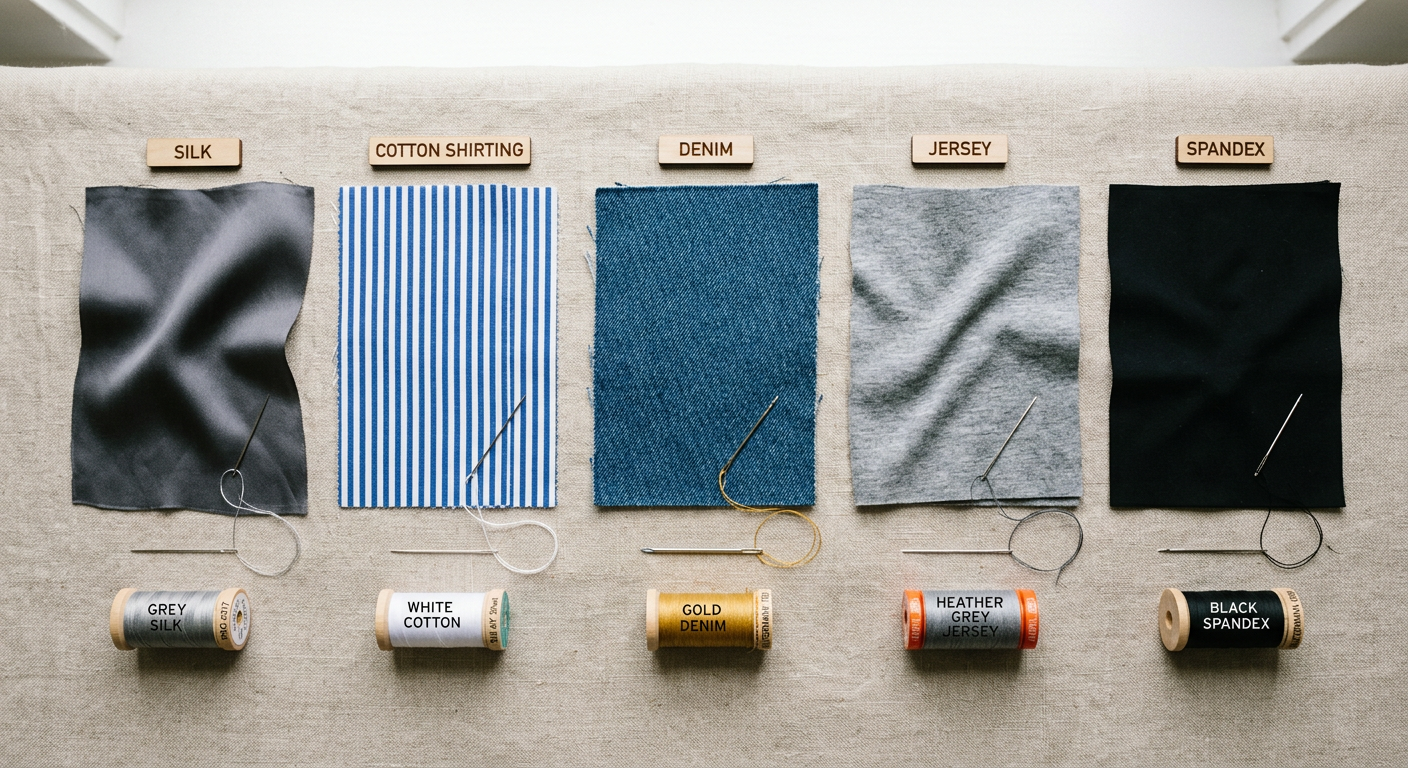
Light Wovens (under 120 GSM)
Silk, voile, organza, fine cotton lawn. Run 60/8–70/10 Microtex with Tex 18–24 filament polyester or silk thread. Tighten SPI to 12–14 to prevent puckering. If you're working with delicate toile or pointelle for womenswear, drop to 65/9 — you'll see the difference in finished hand.
Medium Wovens (120–250 GSM)
Standard shirting, linen, twill, apron-weight cotton. 80/12–90/14 universal, Tex 27–35 spun poly. The workhorse pairing.
Heavy Wovens (250+ GSM)
Denim, canvas, duck, upholstery weights, bag fabrics. 100/16–110/18 jeans needle, Tex 40–60 core-spun or bonded polyester. Slow the machine — 3,500 SPM or below to prevent needle heat damage.
Knits
SES or SUK ball point depending on gauge. Always textured polyester (woolly) in the looper for overlock. Tex 24–35.
Stretch and Performance
SKF stretch needle, textured poly needle thread, woolly nylon or textured poly in loopers. Critical for swimwear, activewear, and shapewear.
When to Override the Chart (and When Not To)
Charts are starting points, not gospel. Three legitimate reasons to deviate:
- Topstitching for visual weight. Use Tex 60 topstitching thread with a 100/16 topstitch needle (longer eye) regardless of fabric weight. The look is the spec.
- Multiple plies stack up. Sewing a four-ply seam on medium-weight fabric? Move up one needle size to handle the combined thickness, even if the chart says 80/12.
- Coated or laminated substrates. Use a non-stick (NTW) or titanium-coated needle one size up to manage adhesive buildup.
What's not a legitimate reason: “That's the needle that was already in the machine.” This is the most common failure mode on multi-product lines. Build a tag-and-change protocol into your style changeover SOP.
For instance, a costume manufacturer running both glitter fabric and stretch velvet on adjacent machines learned this the hard way. The 90/14 universal that worked fine for the glitter base was shredding the velvet's pile. Switching to a 75/11 stretch needle on the velvet line — and color-coding needle tags — cut their reject rate by 22%.
Needle Lifespan and Change Intervals Nobody Talks About
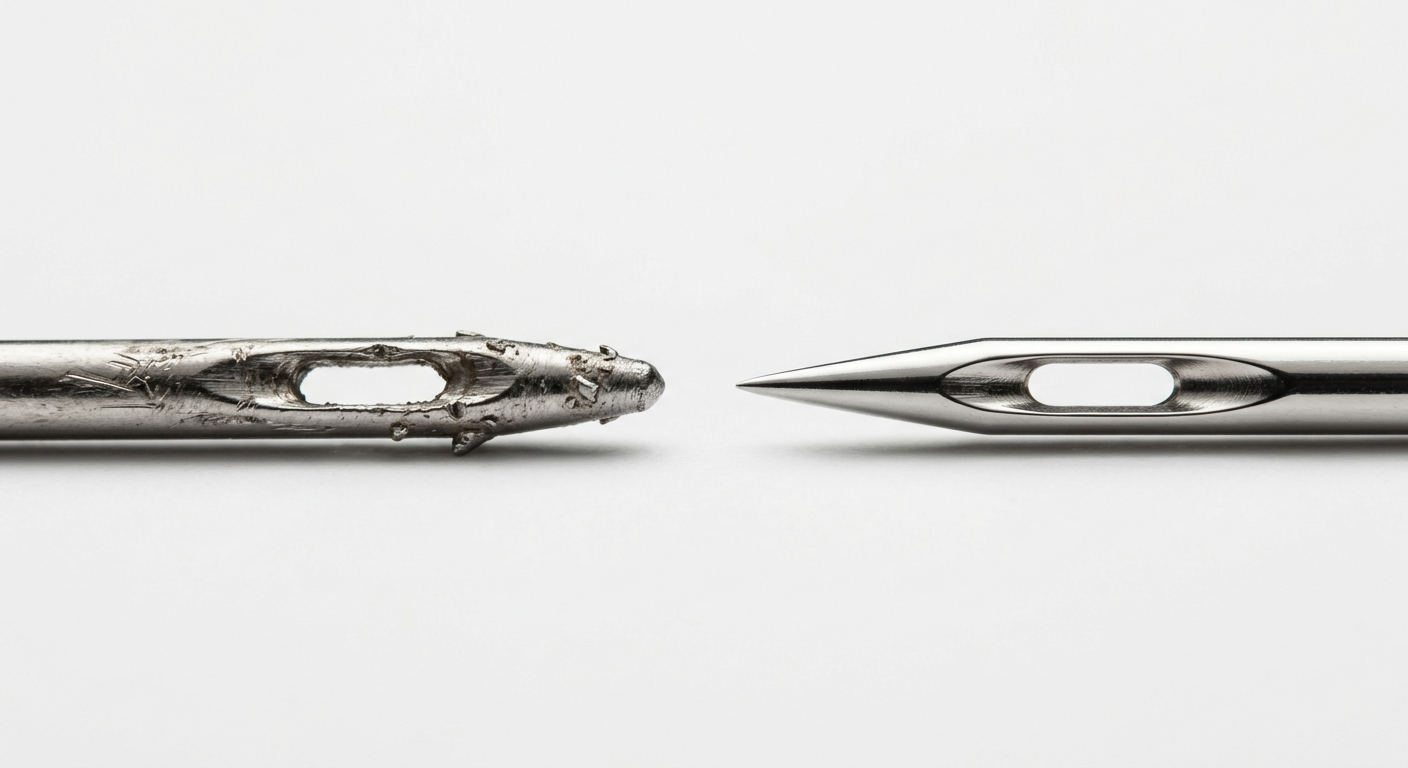
Industrial needles dull faster than most managers realize. Heat from continuous high-speed sewing — a single needle can hit 300°C+ at 5,000 SPM — degrades the chrome plating and rounds the point.
Practical change intervals:
- Light wovens and silks: every 8 hours of run time, or at every shift change.
- Medium wovens: every 16 hours.
- Knits and stretch: every 8 hours — ball points dull fast.
- Denim and heavy bags: every 4–8 hours, or at the first sign of louder operation.
- Always change after a thread break — the impact often burrs the eye.
A scheduled change protocol costs pennies in needles and saves hours in rework. Track it on the same chart. Operators who note their needle change times stop running needles to failure.
Fixing the Three Most Common Stitch Defects
Skipped Stitches
Almost always a needle-thread mismatch. Check: Is the needle at the right point for the fabric? Is it dull? Is the thread too heavy for the eye? On knits, 90% of skipped stitches resolve by switching from universal to ball point.
Puckered Seams
Three suspects: needle too large (punching too much yarn aside), thread tension too tight, or SPI too low. On lightweight linen and cotton, drop to a 70/10 Microtex and increase SPI to 13.
Thread Breakage
Eye too small for thread weight, machine running too fast for the substrate, or low-quality thread with weak spots. Bonded thread on a non-bonded-rated machine will also break — check your tension discs and thread path.
Before swapping the machine, swap the needle. It's the cheapest variable to test, and it's the right answer roughly 60% of the time.
Thread Quality: Why the Chart Assumes You're Buying Decent Thread
Every pairing in the chart assumes name-brand industrial thread with consistent diameter, lubrication, and tensile strength. Cheap thread varies in diameter from spool to spool — sometimes within the same spool — and that variability is what actually causes most “mystery” tension issues.
The same thinking applies to fabric. If you're sourcing inconsistent material, even the right needle won't save the seam. Our guide on the hidden costs of cheap wholesale fabric walks through the downstream production losses we see most often, and the fabric spec sheet guide shows how to verify substrate consistency before it hits your floor.
For the thread itself: buy from one supplier per fiber type, check Tex consistency on a digital micrometer if you're running tight tolerances, and reject any spool with visible diameter variation.
Putting It Into Practice on Monday Morning
Three steps to roll this out without disrupting current production:
- Audit your current pairings. Walk the floor, write down what's loaded on each machine, and compare to the chart. You'll find at least one mismatch within the first ten machines.
- Print and post. One laminated chart per cluster of 4–6 machines, mounted at eye level. Include your specific fabric SKUs, not just generic categories.
- Build a needle change log. One sheet per machine, dated entries. Review weekly. Reject rates drop within two weeks — measurably.
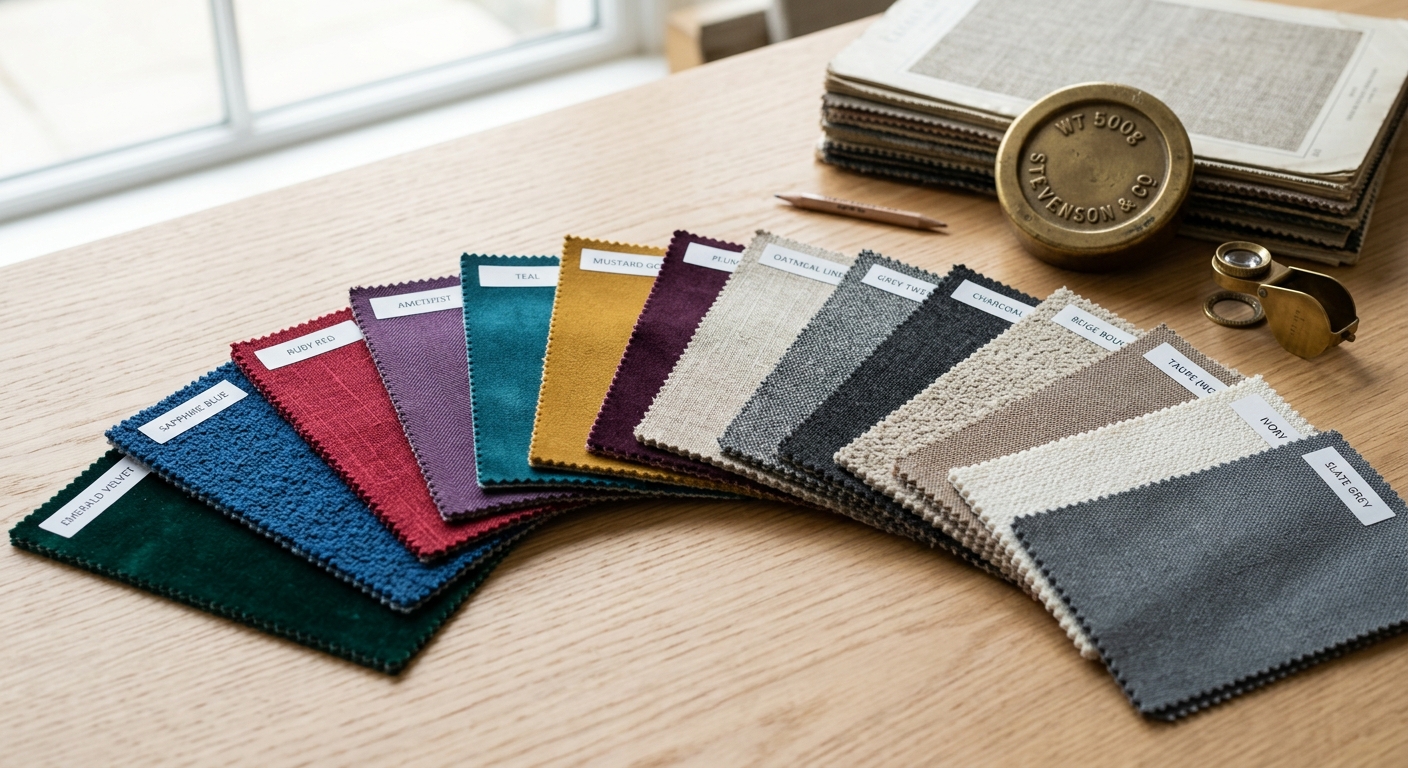
If you're sourcing fabric for a new program and want to spec needles and threads upfront, start with a swatch order. We stock everything from single jersey and rib knits to nylon and costume fabrics — request samples through Global Fabric Wholesale and we'll include the recommended needle/thread starting point with each substrate. Your floor will thank you.





 Login with Google