


Fabric for Children’s Wear: Safety Standards, Softness Tests, and What Parents Actually Notice

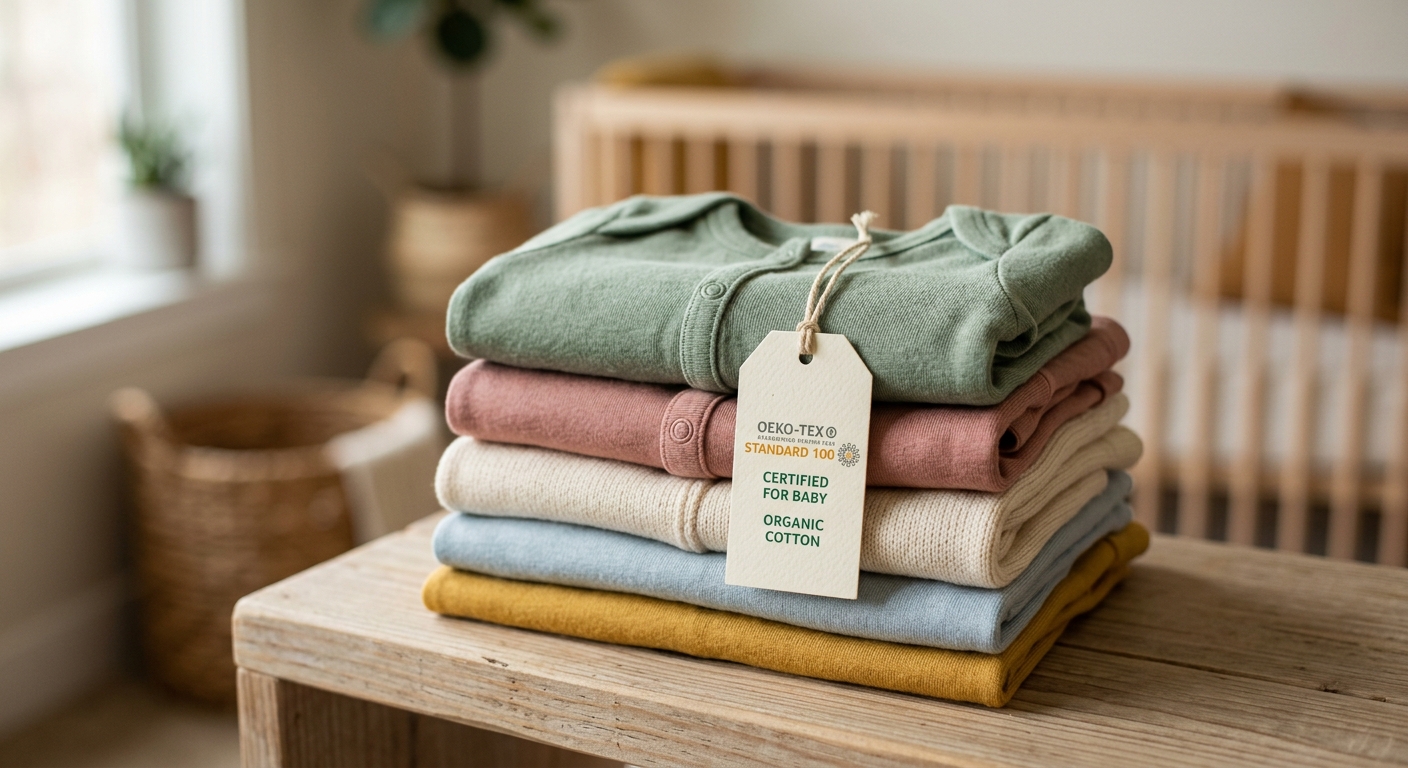
Fabric for children's wear has to pass three tests at once: regulatory safety (CPSIA lead and phthalate limits, flammability rules like 16 CFR 1610, OEKO-TEX Standard 100 Class I for items touching baby skin), measurable softness (low coefficient of friction, fine yarn count, brushed or enzyme-washed finishes), and the five-second parent test in a retail aisle. Get any one of those wrong and the product gets returned, recalled, or quietly avoided. The fabrics that win — usually 100% combed cotton jersey around 180 GSM, certified bamboo viscose, or organic muslin — share three traits: zero chemical aftertaste, no scratchy seams or stiff finish, and a hand-feel that registers softer than the parent's own t-shirt.
The Safety Standards That Actually Get Enforced
If you're selling kids' clothes into the US, EU, or UK, three regulations will eat your margin if you ignore them. Know them by number, not just by name.
CPSIA (US)
Lead content cannot exceed 100 ppm in any accessible substrate. Phthalates in plasticized components (prints, snaps, coatings) capped at 0.1%. Third-party testing at a CPSC-accepted lab is mandatory — no exceptions for “small batches.”
16 CFR 1610 and 1615/1616
General wearing apparel must meet Class 1 flammability. Children's sleepwear sizes 9 months through 14 has its own stricter standard — must be either inherently flame-resistant or tight-fitting per defined measurements. A loose cotton nightgown will fail. A snug cotton-spandex pajama set passes because it's classified as tight-fitting.
OEKO-TEX Standard 100, Product Class I
This is the one parents recognize on a hang tag. Class I covers articles for babies and toddlers up to 36 months and has the strictest limits on formaldehyde (under 16 ppm), pesticide residues, and azo dyes. Most premium European retailers won't even open a sample box without it.
For instance, a US-based startup launching organic baby rompers ran into a wall when their first production run failed CPSIA phthalate testing — not from the fabric, but from a glittery screen print. They had to scrap 4,000 units. Test the print, not just the cloth.
Softness Is Measurable — Stop Guessing
“Soft” sounds subjective, but mills test it with real instruments. If your supplier can't speak this language, that's a red flag.
- Kawabata Evaluation System (KES): measures bending, shearing, compression, and surface friction. Lower friction coefficient = softer hand.
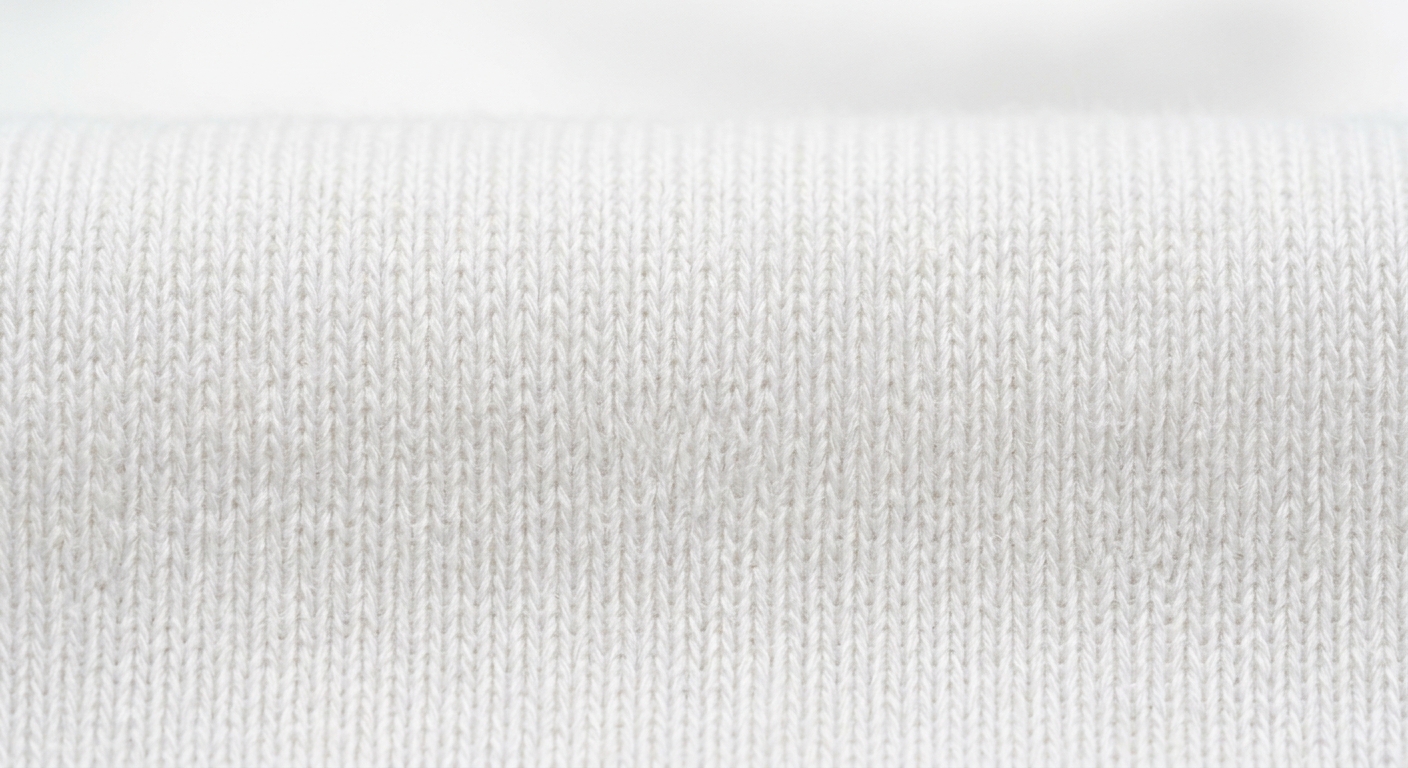
- Yarn count: for children's cotton jersey, look for 30s or finer (40s, 50s combed). Anything coarser than 20s will feel rougher than a parent expects.
- Enzyme washing or peach finishing: removes surface fuzz and breaks down stiff sizing. The difference between a $4/yard jersey and an $8/yard jersey is often this finishing step.
- GSM range: 140–180 GSM for tees and bodysuits, 200–240 for leggings, 60–100 for swaddles. Heavier isn't softer — it's just thicker.
If you want to nerd out on the vocabulary your QC team should be using, our breakdown of fabric hand-feel vocabulary spells out the terms that prevent he-said-she-said arguments with suppliers.
What Parents Actually Notice in the First Five Seconds
Watch a parent shop. They do the same four things, in this order, every time.
- Touch the inside of the garment, not the outside. They want to know what their kid will feel against bare skin.
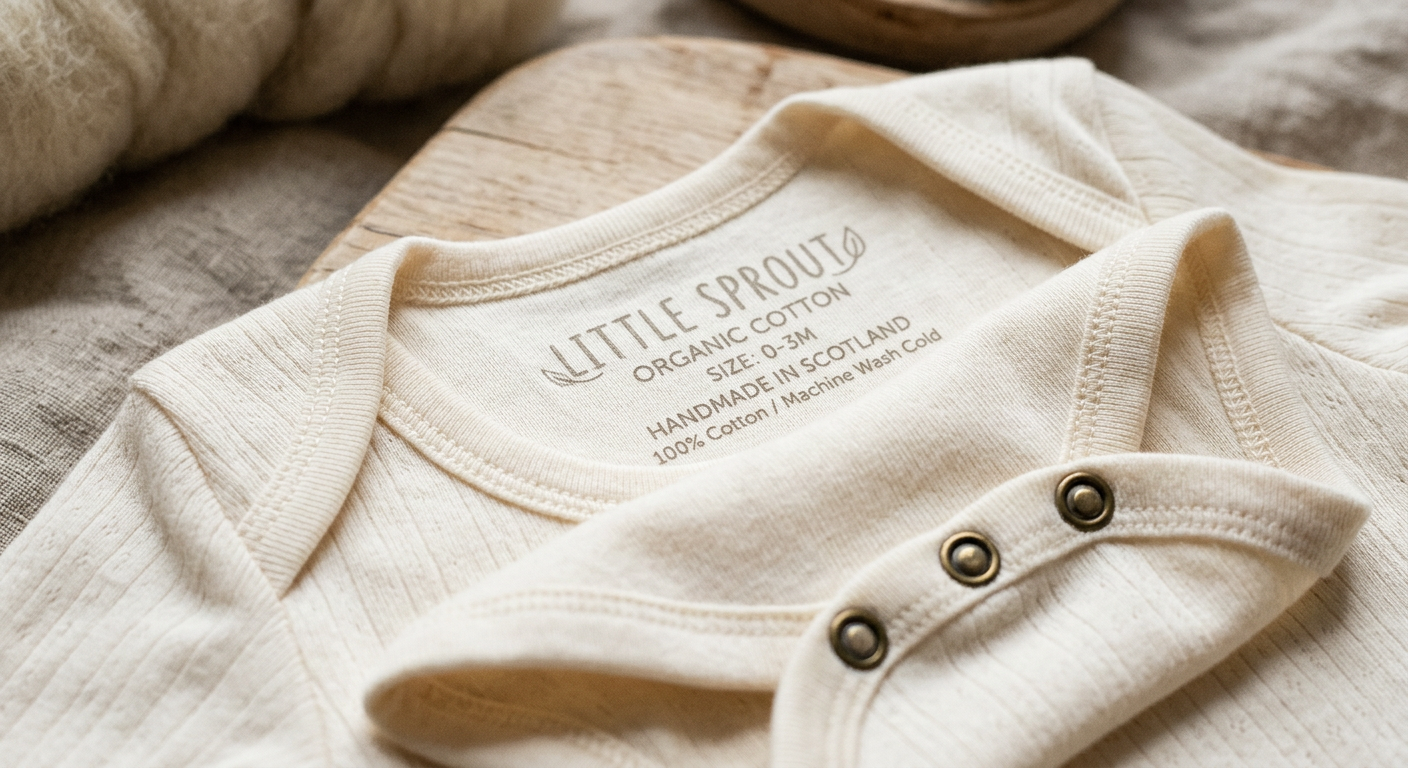
- Check the seams and tag area. Printed neck labels beat sewn-in tags every time. A scratchy tag will get the garment returned even if the fabric is perfect.
- Smell it. Yes, really. Any whiff of chemical, formaldehyde, or musty warehouse and it goes back on the rack.
- Stretch it. They tug the neckline and the hem. If it doesn't snap back, they assume it'll be misshapen after one wash.
None of that requires a lab. All of it is solvable at the spec-sheet stage. A printed neck label costs three cents more than a woven one and reduces returns measurably.
The Five Fabrics That Dominate Kids' Wear (And Why)
Most successful children's lines lean on a tight stable of materials. Here's the honest breakdown.
Combed Cotton Jersey
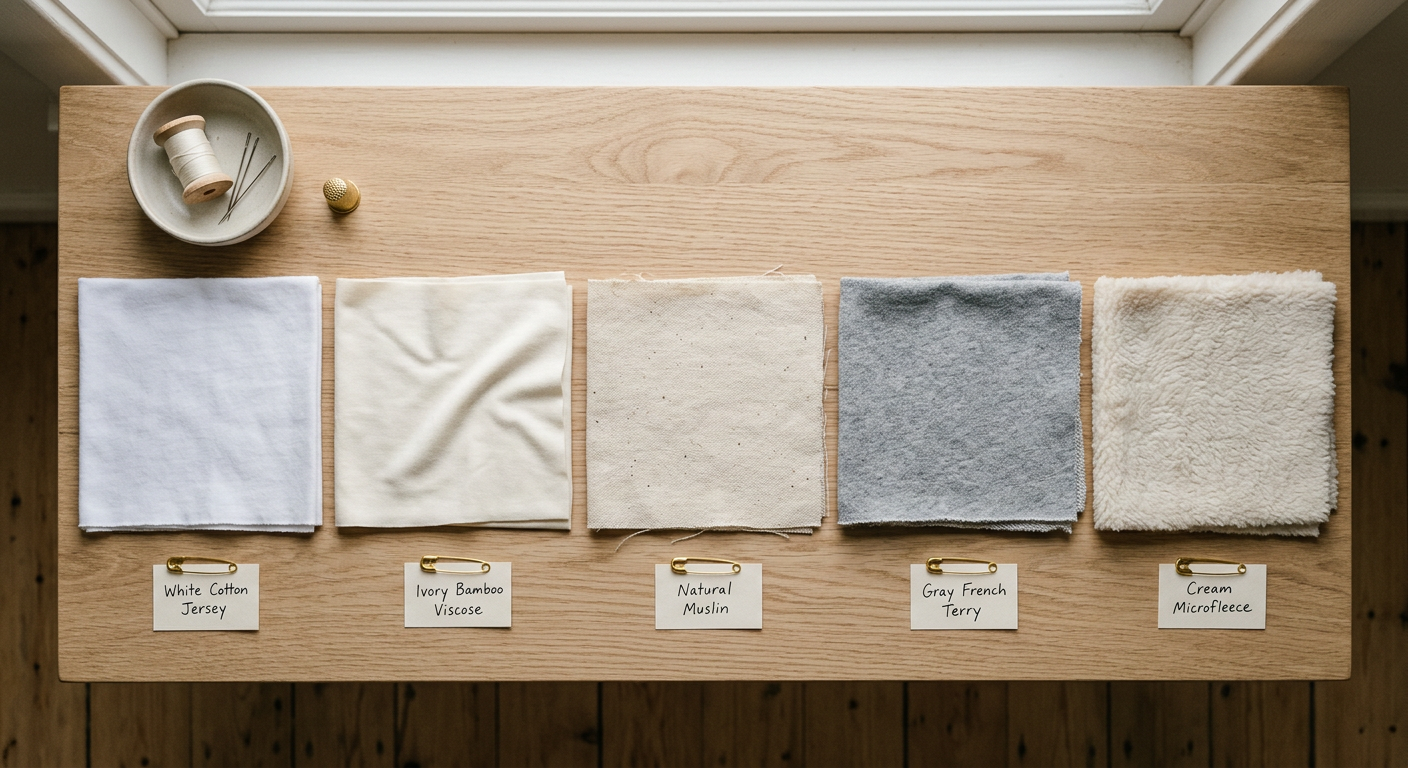
The workhorse. 100% cotton, 160–200 GSM, single jersey or interlock. Used for tees, bodysuits, leggings. Cheap, soft, breathable. Shrinks 5–8% — pre-shrink it or build it into the pattern.
Bamboo Viscose
Silky and cool to the touch. Great for pajamas because it's thermo-regulating. Pricier and weaker when wet, so reinforce stress points. Make sure it's certified — “bamboo” is sometimes just rebranded viscose with no real bamboo content.
Organic Muslin
Loose plain weave, 60–110 GSM, gets softer with every wash. The default for swaddles and summer dresses. Browse our muslin fabric and soft scrim/gauze collections for swaddle-grade weights.
French Terry and Loopback
For sweatshirts and joggers. Looped back is softer than brushed for baby skin because brushing can shed micro-fibers. See our French terry by season guide for weight selection.
Polyester Microfleece
For outerwear linings only — never against bare skin for infants. Melts on contact with flame, which is why it's restricted in sleepwear.
Dyes, Prints, and the Phthalate Trap
The fabric can be perfect and the print can still fail testing. Three rules:
- Reactive dyes over pigment dyes for skin-contact items. Reactive dyes bond chemically with cotton fibers — they don't sit on top, don't crock onto skin, and don't crack after washing.
- Water-based plastisol-free prints. Traditional plastisol contains phthalates as plasticizers. Phthalate-free plastisol exists, but water-based discharge prints are safer and softer.
- No metallic foil prints on infant garments. Almost always fail lead and phthalate limits.
If you're choosing between natural and synthetic colorants, our piece on natural vs synthetic dyes walks through the trade-offs on fading and durability — both critical when a garment gets washed 80+ times in its short life.
Construction Details That Make or Break a Children's Garment
Fabric is half the story. Construction is the other half, and it's where most cheap brands get exposed after the third wash.
Flatlock and Coverstitch Seams
Flatlock seams lay flush against the skin instead of standing up like a ridge. Essential for newborn pieces. Coverstitch hems prevent curling and add stretch recovery.
Snap and Button Pull Tests
CPSC requires snaps and buttons to withstand 17 pounds of pull force for children under 3. Cheap nickel snaps fail this routinely. Spec brass or stainless and test every batch.
No Drawstrings Around the Neck
Federal regulation in the US. Sounds obvious — still gets brands recalled twice a year.
Reinforced Stress Points
Knee patches on toddler pants, double-stitched crotch on bodysuits, bartacks on belt loops. Costs pennies, prevents the “fell apart after two months” review.
Shrinkage, Pilling, and the Wash-Cycle Reality
Children's clothes get washed harder than anything else in a household. Hot water, stain removers, daily cycles. Your fabric needs to survive that.
Pre-shrunk cotton should hold within 3% after 5 industrial washes. Untreated cotton can shrink 10% or more — a 12-month onesie becomes a 9-month onesie. Our shrinkage rates cheat sheet has the numbers by fiber type.
Pilling is the other silent killer. Short-staple cotton and cotton-poly blends pill fast under abrasion. Long-staple combed cotton (Supima, Egyptian, Pima) pills dramatically less. If you've been getting complaints, our breakdown of why fabric pills covers the fiber science.
For example, a UK toddler-brand we know switched from 30s ring-spun to 40s combed cotton for their tees. Cost went up 11%. Return rate dropped from 6% to under 2%, and they raised retail price by 18% on the “upgraded” range. Math worked.
Sourcing Checklist Before You Place a Children's Wear PO
Run every prospective supplier through this list. If they balk at any item, walk away.
- Valid OEKO-TEX Standard 100 Class I certificate — verified, not photocopied
- Recent CPSIA test reports from a CPSC-accepted lab (within 12 months)
- Mill-issued spec sheet with GSM, yarn count, shrinkage, and fiber composition
- Sample lot of at least 3 yards for wash-testing in your own facility
- Written shrinkage and color-fastness warranties
- Traceable dye-lot numbers — critical for avoiding color mismatches across cuts
- Documented social compliance audit (BSCI, SEDEX, or equivalent)
Before signing, walk through our full 12-point supplier audit checklist — children's wear is exactly the category where corners get cut and brands get burned.
Putting It All Together
Great children's wear fabric is boring on paper and exceptional in hand: combed long-staple cotton in the 160–200 GSM range, OEKO-TEX Class I certified, reactive-dyed, enzyme-washed, with printed labels and flatlock seams. Nothing exotic. Just executed properly at every step. The brands that get this right charge 30% more than commodity competitors and have 70% repeat-purchase rates because parents — once they find a fabric their kid doesn't tug at — buy the same brand for three years straight.
If you're sourcing fabric for a kids' line and want vetted, certification-ready options for everything from t-shirt jersey to swaddle muslin, browse the wholesale catalog at Global Fabric Wholesale or reach out for spec sheets and lab reports on any roll before you commit.





 Login with Google