


Knit vs. Woven Fabrics: Why Confusing the Two Ruins Production Timelines

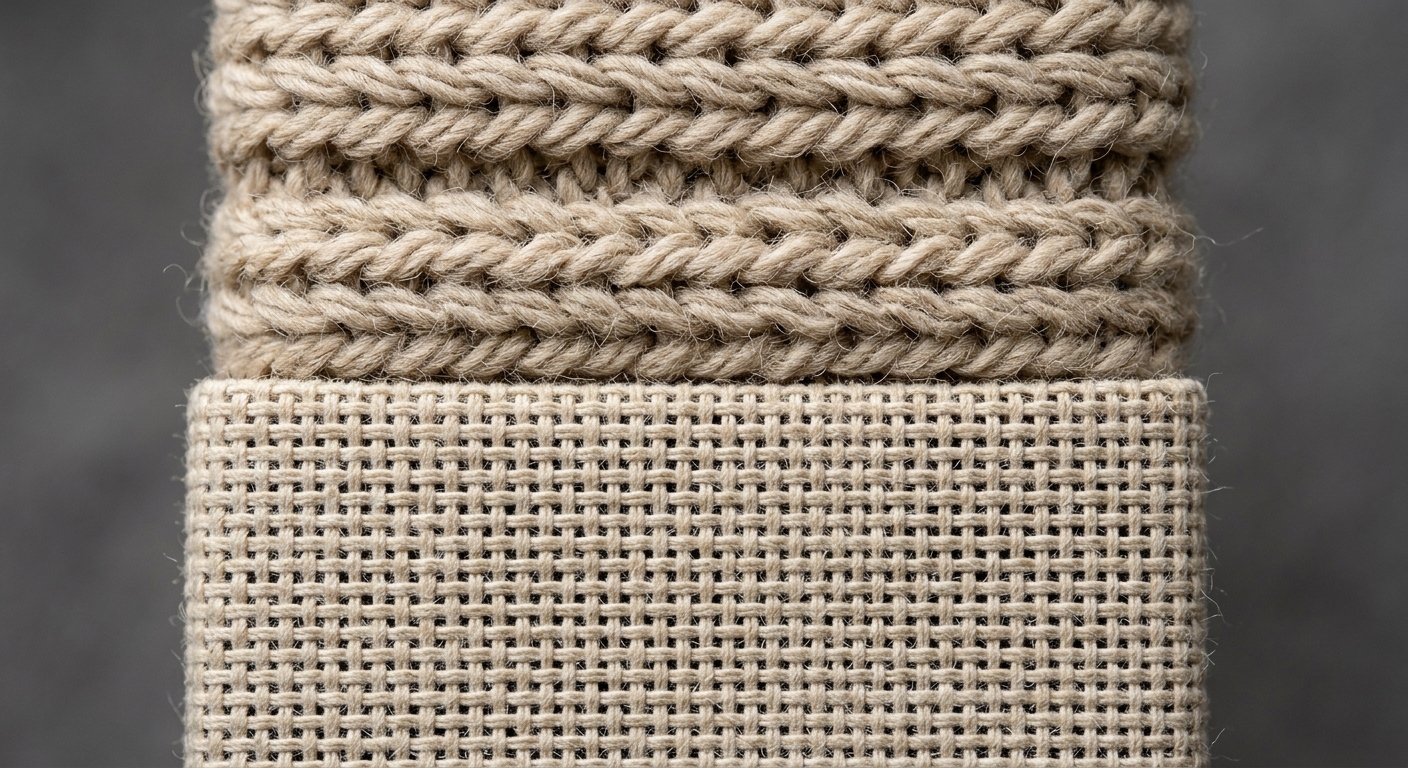
Knit and woven fabrics are built through two completely different mechanical processes — knits are made of interlocking loops, wovens from perpendicular yarns crossing at 90 degrees — and treating them the same on the production floor is the single fastest way to blow a deadline. Wrong needle, wrong stitch type, wrong pattern grading, and suddenly you're re-cutting an entire run three days before a shipment date. This isn't a cosmetic distinction. It's structural, and it dictates nearly every decision downstream from cutting to finishing.
The Construction Difference That Changes Everything
Here's the mistake that trips up even experienced buyers: assuming fabric type is about fiber content. It's not. Cotton can be knit or woven. Polyester can be knit or woven. What actually matters is how the yarns are assembled.
Woven fabric is made by interlacing two sets of yarns — the warp (running lengthwise) and the weft (running crosswise) — at right angles on a loom. This grid structure is why woven fabric has almost no stretch unless you engineer it in with elastane. Knit fabric, on the other hand, is formed by a single continuous yarn looped through itself repeatedly, like a sweater made by hand but on an industrial scale. Those loops can flex and open up, which is exactly why knits stretch and drape the way they do.
If you want the deeper mechanics of weave patterns specifically, our guide on twill, sateen, poplin, and oxford weave structures breaks down how those variations affect drape and durability within the woven category alone.
Why Stretch Is the Root of Most Production Disasters
A pattern cut for woven fabric, sewn in knit, will come out too small — or the reverse, wildly oversized. That's the single most common and expensive error we see in bulk orders. Woven patterns build in ease (extra room) because the fabric can't stretch to fit the body. Knit patterns are drafted tighter because the fabric itself provides the give.
For example, a swimwear brand once ordered what they thought was an interchangeable stretch fabric for a woven-style pattern, assuming any fabric with spandex content would behave the same. The result: garments that gapped at the seams and wouldn't hold shape after one wash. Stretch percentage and stretch recovery are not interchangeable specs — you need to know both before you finalize a pattern. Our breakdown of spandex, Lycra, and elastane differences covers exactly where these specs diverge and why it matters at the cutting stage.
Needles, Thread, and Stitch Types Aren't Interchangeable
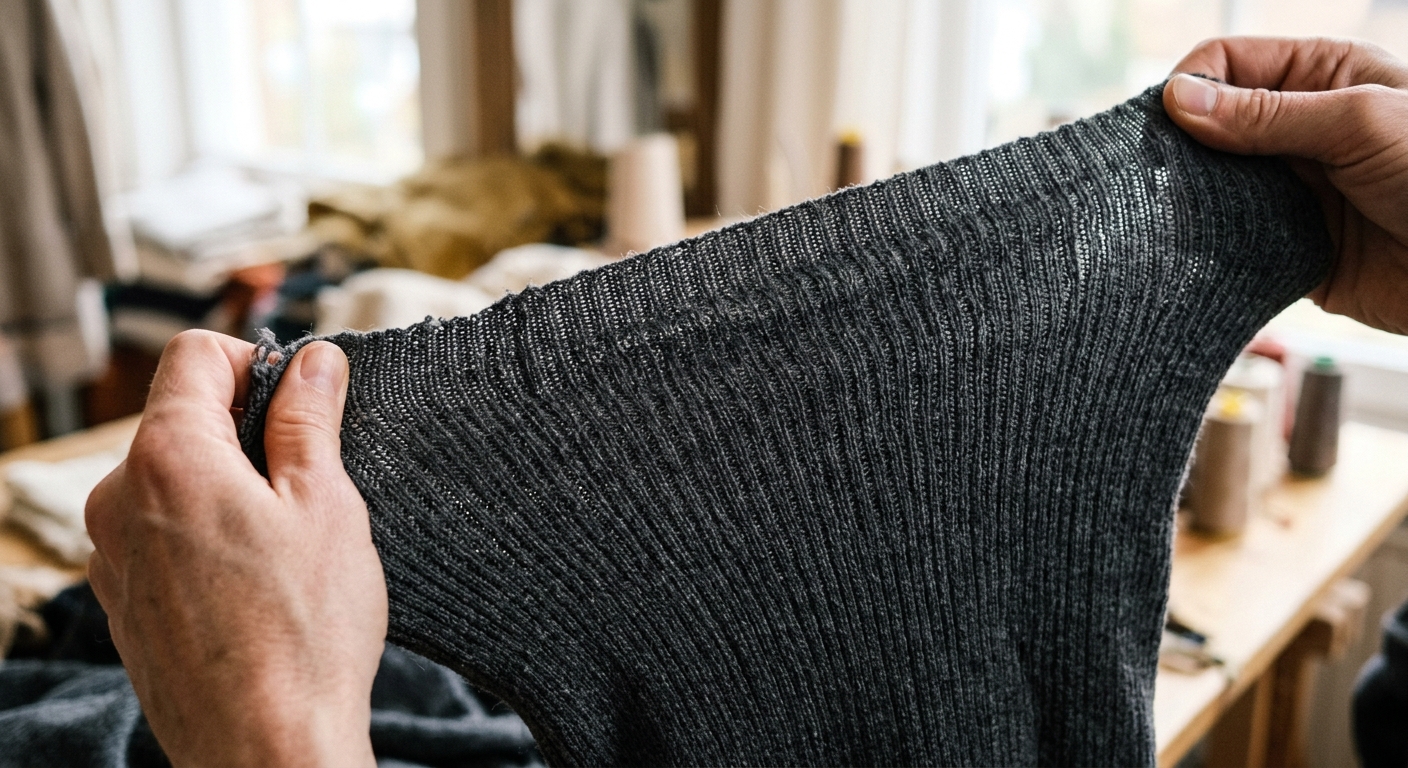
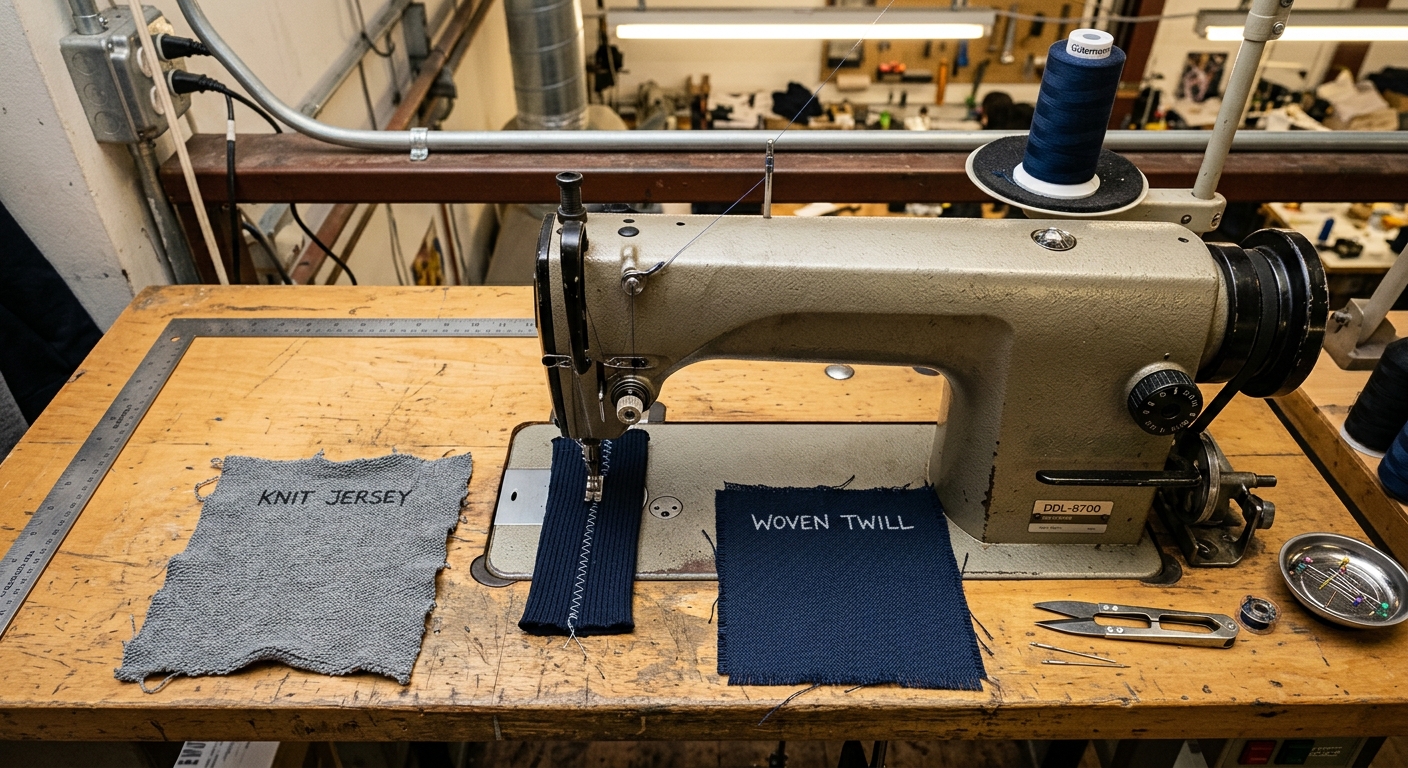
Use a sharp universal needle on a knit fabric and you'll punch holes in the loop structure — literally creating tiny runs that show up after the first wash. Knits need ballpoint or stretch needles, which slide between the loops instead of piercing them. Wovens need sharp needles to cleanly penetrate the tightly interlaced yarns.
Stitch selection matters just as much. A straight lock stitch on knit fabric will pop the first time someone stretches the seam — because the stitch itself doesn't stretch, even if the fabric does. That's why knit garments use overlock or coverstitch machines that build stretch into the seam itself. For a full breakdown of which needle-thread combinations work for which fabric, check our sewing machine needles and thread pairings chart — it's the kind of reference that saves a production manager from guessing on the floor.
Cutting Layouts: Where the Real Time Gets Lost
Grainline errors on woven fabric are unforgiving. Cut a woven panel even five degrees off-grain and the finished garment will twist after washing — no amount of pressing fixes that. Knit fabric is more forgiving here because the loop structure has some built-in flexibility, but it introduces a different problem: rolling and curling edges that make precise cutting harder to control without proper tension.
Production teams that don't separate their cutting protocols by fabric type end up with mismatched batches — some panels slightly twisted, others slightly stretched out of shape. That inconsistency shows up on the sewing floor as puckered seams, and by then you've already lost the labor hours. If a whole batch fails after inspection despite passing spec, it's often exactly this kind of cutting-stage mismatch — we cover more failure patterns like this in why fabric passes inspection but fails on the sewing floor.
Fraying, Finishing, and Edge Treatment
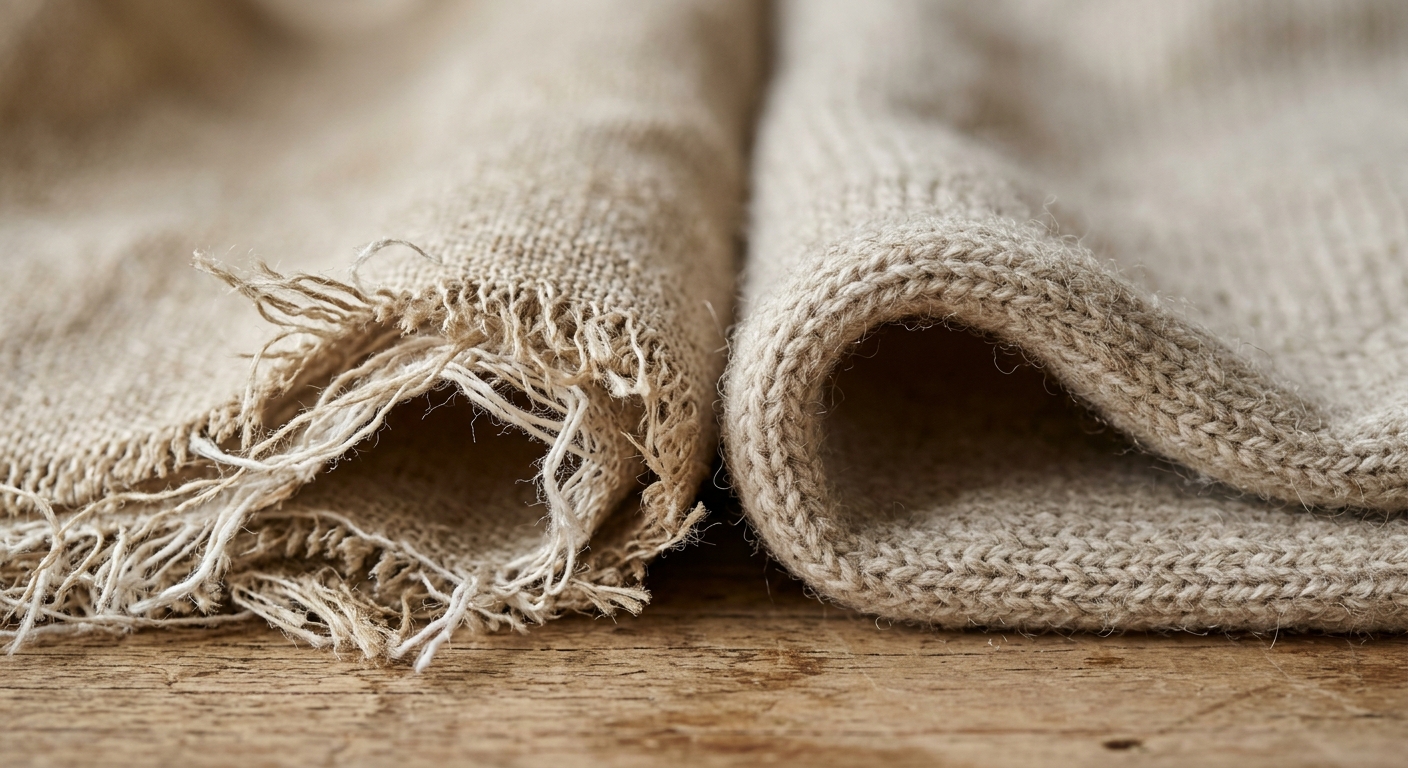
Woven fabric frays. That's just physics — cut the edge, and the perpendicular yarns start working loose immediately unless you finish them with a serge, bound edge, or pinked cut. Knit fabric doesn't fray in the same way because there's no crossing yarn structure to unravel; instead, edges tend to curl, which is its own finishing headache but far less destructive to yardage.
This difference alone changes your fabric consumption math. Woven projects typically need extra seam allowance for finishing, while knit projects need less — but require edge-stabilizing techniques like clear elastic at stress points. If you're calculating yardage for a bulk run, factor construction type into your buffer, not just pattern size. Our guide on calculating exactly how much fabric you need walks through this in more detail.
Weight and Drape: GSM Doesn't Tell the Whole Story
Two fabrics can have the same GSM — say, 200 grams per square meter — and behave completely differently depending on construction. A 200 GSM woven cotton poplin holds a crisp, structured shape. A 200 GSM knit jersey drapes and clings. If you're specifying fabric by weight alone without noting construction, your supplier could technically fulfill the order with something unusable for your pattern.
This is a common gap in spec sheets. Always pair GSM with construction type and stretch percentage when placing a bulk order. For more on reading specs correctly, see fabric weight explained: how to read GSM like a pro and how to read a fabric spec sheet without getting burned.
Quick Reference Table
| Criteria | Knit Fabric | Woven Fabric |
|---|---|---|
| Construction | Interlocking loops | Perpendicular yarns (warp/weft) |
| Stretch | Inherent, multi-directional | Minimal unless spandex added |
| Fraying risk | Low — edges curl, don't fray | High — needs finishing |
| Needle type | Ballpoint/stretch needle | Sharp/universal needle |
| Seam type | Overlock, coverstitch | Straight lock stitch |
| Typical GSM range | 150-280 GSM (apparel) | 100-350 GSM (apparel) |
| Common uses | T-shirts, activewear, hoodies | Shirts, denim, upholstery, formalwear |
| Cutting layout waste | Lower — stretch forgives minor errors | Higher — grainline critical |
Where Each Fabric Type Actually Belongs in Production
Stop thinking of knit and woven as competitors — they're tools for different jobs. Knits dominate anywhere movement and comfort matter: activewear, loungewear, French terry sweatshirts, and pique polos. Wovens dominate anywhere structure and crispness matter: tailored shirting, wedding dress fabric, and upholstery-grade textiles.
A hospitality linen buyer, for instance, almost always wants woven fabric — tablecloths and napkins need to hold a crease and resist stretching out of shape during laundering cycles. A children's apparel brand making onesies, on the other hand, wants knit fabric almost exclusively, since stretch and softness against skin are non-negotiable. Browsing our full fabric type catalog makes it easier to filter by construction before you even get to color or finish.
The Timeline Cost of Getting It Wrong
Let's put a number on this. A mid-size cut-and-sew order of 2,000 units, discovered mid-production to be the wrong construction type for the pattern, doesn't just cost fabric — it costs re-grading time, re-cutting labor, possibly new machine setup, and the days it takes to re-source correct yardage. That's easily a 2-3 week delay, sometimes more if the correct fabric has to be reordered from overseas.
Compare that to the five minutes it takes to confirm construction type on a spec sheet before placing a purchase order. If you're auditing a new supplier relationship, construction type should be one of the non-negotiable checkpoints — it's covered in our 12-point supplier audit checklist.




 Login with Google