


Flame-Retardant Fabrics for Contract Work: What FR Ratings Mean and Which Ones Pass Inspection

Flame-retardant fabrics for contract work must meet specific code-based standards — most commonly NFPA 701 for drapery and Cal TB 117-2013 or BS 5852 for upholstery — and the only fabrics that reliably pass inspection are either inherently FR (Trevira CS, modacrylic, FR polyester, wool) or topically treated with a certified, durable finish backed by a current test report. If you're sourcing hotels, theaters, hospitals, or transit, the fabric itself isn't enough; you need the right test certificate for the right standard, on the right composite assembly.
FR Ratings Decoded: The Four Standards That Actually Matter
Most contract specifiers reference one of four standards, and confusing them is the single biggest reason fabric gets rejected on site. Here's what each one actually tests.
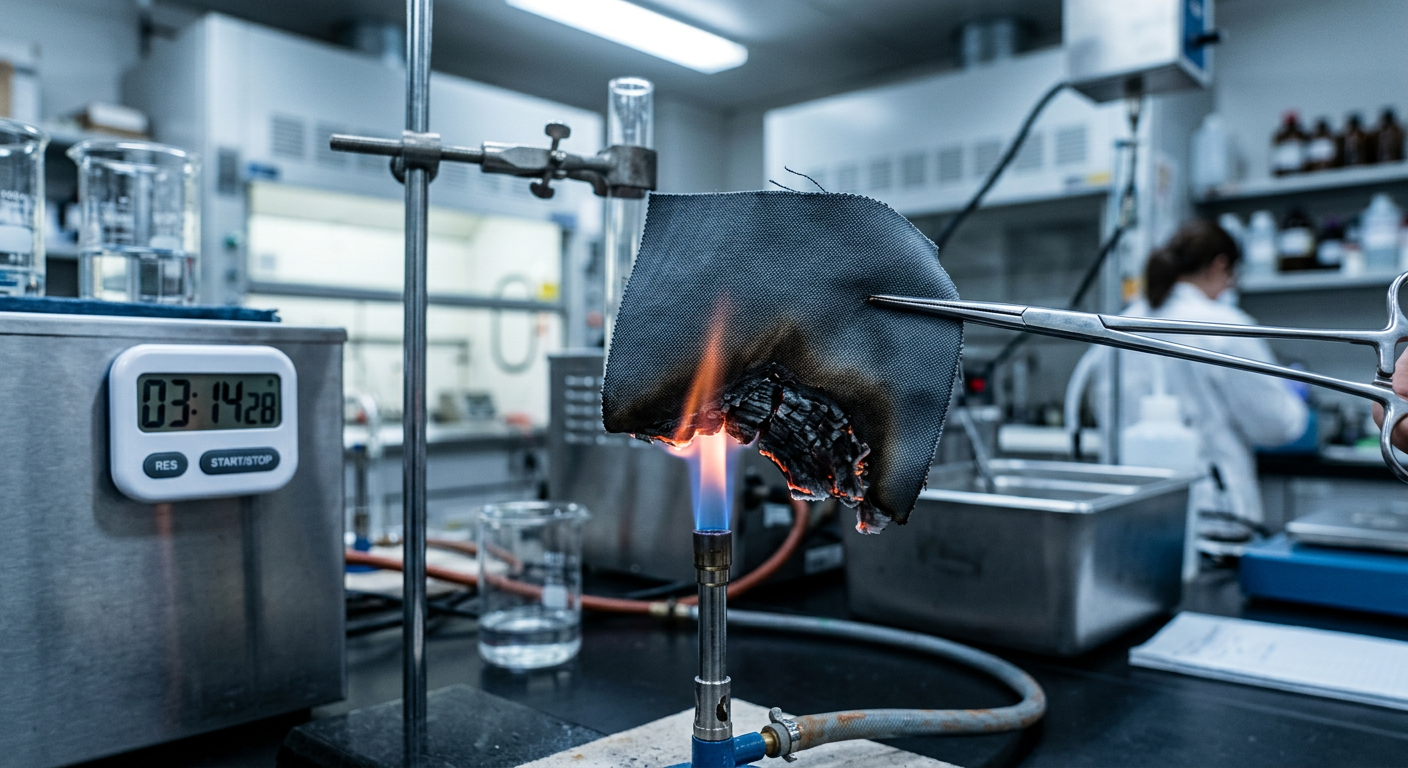
NFPA 701 is the US standard for hanging textiles — drapery, curtains, scenery, banners. It's a vertical flame test measuring char length and afterflame time. If a fire marshal walks into a hotel ballroom and asks for paperwork, this is what they want.
California TB 117-2013 replaced the old open-flame TB 117 in 2013 and now only tests for smolder resistance on the cover fabric. It's the baseline for residential upholstery in the US but is often insufficient for true contract work. Many hotel groups still specify the older TB 133 (a full mockup burn test) for lobby seating.
BS 5852 is the UK/EU equivalent for upholstery, with crib ignition sources rated 0 through 7. Contract hospitality typically requires Crib 5 — that's where the fabric, foam, and barrier all need to work together.
IMO FTPC Part 8 applies to marine and cruise applications and is the strictest of the bunch. If you're selling into shipbuilding, nothing else qualifies.
Inherently FR vs Topically Treated: Why the Difference Determines Your Risk
Here's the bottom line: inherently FR fabrics keep their fire performance for the life of the textile. Topically treated ones can lose it after a few washes or dry-clean cycles. For contract jobs that get cleaned regularly — hotels, hospitals, restaurants — this distinction is everything.
Inherently FR fibers
- Trevira CS — modified polyester with FR built into the polymer chain. Permanent. Passes NFPA 701 and BS 5852 Crib 5 without any post-treatment.
- Modacrylic — common in theater drapes and protective workwear. Self-extinguishing.
- Wool — naturally flame-resistant due to high nitrogen and moisture content. It chars instead of melting. Often passes NFPA 260 and BS 5852 source 0/1 in heavier weights without treatment.
- Aramids (Nomex, Kevlar) — overkill for most contract upholstery but standard for transit seating and firefighter applications.
Topical FR treatments
These are aftermarket chemical applications — typically phosphorus-based or backcoatings — sprayed or padded onto a finished fabric. They work, but with caveats. Cleaning method matters (most treatments are dry-clean only), and the certificate is only valid for the specific treatment batch. If a client washes drapes in a commercial laundry without telling you, the FR performance can drop below code within five cycles.
For example, a boutique hotel group we worked with originally specified a topically treated cotton velvet for guestroom drapes. After 18 months of in-house laundering, a routine fire marshal inspection failed three properties. The remediation — rehanging Trevira CS replacements across 240 rooms — costs more than the entire original drapery package. Lesson learned.
Reading an FR Test Report Without Getting Fooled
A test report is only as good as what's printed on it — and mills know how to make a marginal fabric look bulletproof on paper. Look for these specifics before accepting anything.
- Exact standard and edition year — “NFPA 701” alone isn't enough. The 2019 edition differs from the 2015 one. Edition matters in code disputes.
- Test lab name and accreditation — ISO 17025 accredited labs (Intertek, SGS, Vartest, BTTG) hold up under scrutiny. An in-house mill test does not.
- Specimen description — color, weight, construction. If the report tests a 280 gsm version and you're buying the 240 gsm, the certificate technically doesn't apply.
- Date of test — most specifications require reports issued within the last 12 months, especially for treated goods.
- Composite vs component testing — BS 5852 Crib 5 must be tested with a specified foam and interliner. A “fabric only” pass means nothing for upholstery code compliance.
If you're new to spec sheets in general, our guide on how to read a fabric spec sheet without getting burned walks through the broader anatomy of these documents.
Which Fabrics Actually Pass: A Practical Shortlist by Application
Hotel & restaurant drapery (NFPA 701)
Trevira CS sheers and jacquards dominate this category. Inherent FR polyester blends with FR rayon are the workhorse mid-priced option. Avoid untreated cotton or linen — they'll need topical treatment that won't survive commercial laundering.
Lobby and lounge upholstery (Cal TB 133 or BS 5852 Crib 5)
Solution-dyed FR polyester, wool/nylon blends (typically 80/20), and Trevira CS upholstery weaves. Heavier 100% wool boucle in 450+ gsm often passes BS 5852 with minimal treatment. Look at our wool fabric collection for contract-grade options.
Theater & event venues (NFPA 701)
Inherent FR velour and IFR polyester. Heavy modacrylic blends for blackout drapes. Skip cotton velvet unless you have a permanent FR treatment certified for the venue's cleaning protocol.
Marine and transit (IMO FTPC / FMVSS 302)
This is specialty territory — FR vinyl, FR-treated faux leather, or technical knits from mills that specialize in marine work. Don't improvise here.
Healthcare environments
FR polyester with antimicrobial finish, or solution-dyed olefin. Must also pass bleach cleanability — a fabric that passes NFPA 701 but degrades after a hydrogen peroxide wipedown is useless in a hospital.
Common Inspection Failures (And How to Avoid Them)
After enough contract installs, the same five mistakes show up over and over. Avoid these and you'll dodge most of the reasons fire marshals issue red tags.
- Wrong standard cited. Specifying NFPA 701 for upholstery — it's a drapery standard. Always match the standard to the application.
- Stale certificates. A 2021 test report on a topically treated fabric will fail review on a 2026 project. Request fresh testing.
- Backing changed mid-production. If the mill swaps the acrylic backcoating supplier between sample and bulk, the FR performance can shift. Get written confirmation that bulk production matches the tested specimen.
- Field application of FR spray. Spraying a non-FR fabric on site “to make it pass” rarely holds up. Inspectors know the visual signs (uneven sheen, stiff hand) and will demand documentation.
- Dye lot variation affecting treatment uptake. Darker colors and heavier dyestuffs sometimes absorb FR chemistry differently. Related read: why fabric arrives off-color and how to prevent it.
Cost Reality Check: What FR Fabric Actually Costs in Bulk
Expect to pay a 20–60% premium over comparable non-FR fabric. Here's the rough lay of the land at wholesale volumes (500+ yards):
- Inherent FR polyester upholstery: $9–$18/yd
- Trevira CS drapery: $11–$22/yd
- Topically treated cotton velvet (contract grade): $14–$28/yd
- Wool/nylon contract upholstery (80/20): $24–$45/yd
- FR-treated faux leather: $12–$26/yd
- Specialty modacrylic theater velour: $18–$35/yd
The temptation is always to chase the lower end. Don't — at least not without verifying the full test package. A $7/yd “FR” polyester with a single-page in-house test report will almost certainly come back to bite you. We covered this dynamic in detail in the hidden costs of cheap wholesale fabric, and FR is where those hidden costs hit hardest.
For a real example: a contract workroom in Texas saved roughly $8,400 on a 600-yard drapery order by switching from Trevira CS to a treated polyester. The remediation cost after the project failed inspection — including tear-down, restocking, expedited replacement fabric, and crew time — totaled just over $61,000.
Sampling, Approvals, and Documentation Workflow
The smoothest FR projects follow a clear paper trail. Build this into your sourcing process from day one.
- Confirm code requirements with the AHJ (Authority Having Jurisdiction) before specifying. Local amendments override generic specs.
- Request current test reports at the sample stage — not at delivery. Verify standard, edition, lab, and date.
- Order strike-offs in bulk dye lot and request a fresh micro-test on the production batch when possible.
- Get a Letter of Compliance from the mill stating the bulk shipment matches the tested specimen.
- File documentation by project — fire marshal inspections can occur years after installation. You need to produce the cert on demand.
For contract workrooms also handling complex yardage planning, our breakdown of how to calculate fabric yardage pairs well with this workflow when budgeting FR materials, which carry less forgiveness for over-ordering due to their price.
Sourcing FR Fabric Without Getting Burned
The short version: never accept FR claims without a current, third-party, accredited test report tied to the exact specimen you're buying. Spec the right standard for the application, prefer inherent FR over topical treatments wherever the budget allows, and document everything for the file.
If you're sourcing for a hospitality, healthcare, theater, or transit project and want to see contract-grade options vetted for these standards, browse our contract sofa fabrics, wool collection, and heavyweight canvas range — or reach out to our team at Global Fabric Wholesale for current FR test packages and bulk pricing on inherent FR polyester, Trevira CS, and treated specialty wovens. We'd rather quote you the right fabric the first time than help you remediate the wrong one.



 Login with Google