


Fabric for Tote Bags and Retail Packaging: Canvas, Nonwoven, or Jute?

For tote bags and retail packaging, canvas wins on durability and brand perception, nonwoven polypropylene wins on cost and speed, and jute wins on eco-credibility and texture. There's no single right answer — it depends on whether you're handing out 10,000 giveaway bags at a trade show or selling a $45 branded tote at checkout. Get the match wrong and you'll either overspend on a throwaway item or undersell a bag that should be a premium add-on.
Canvas: The Default for a Reason
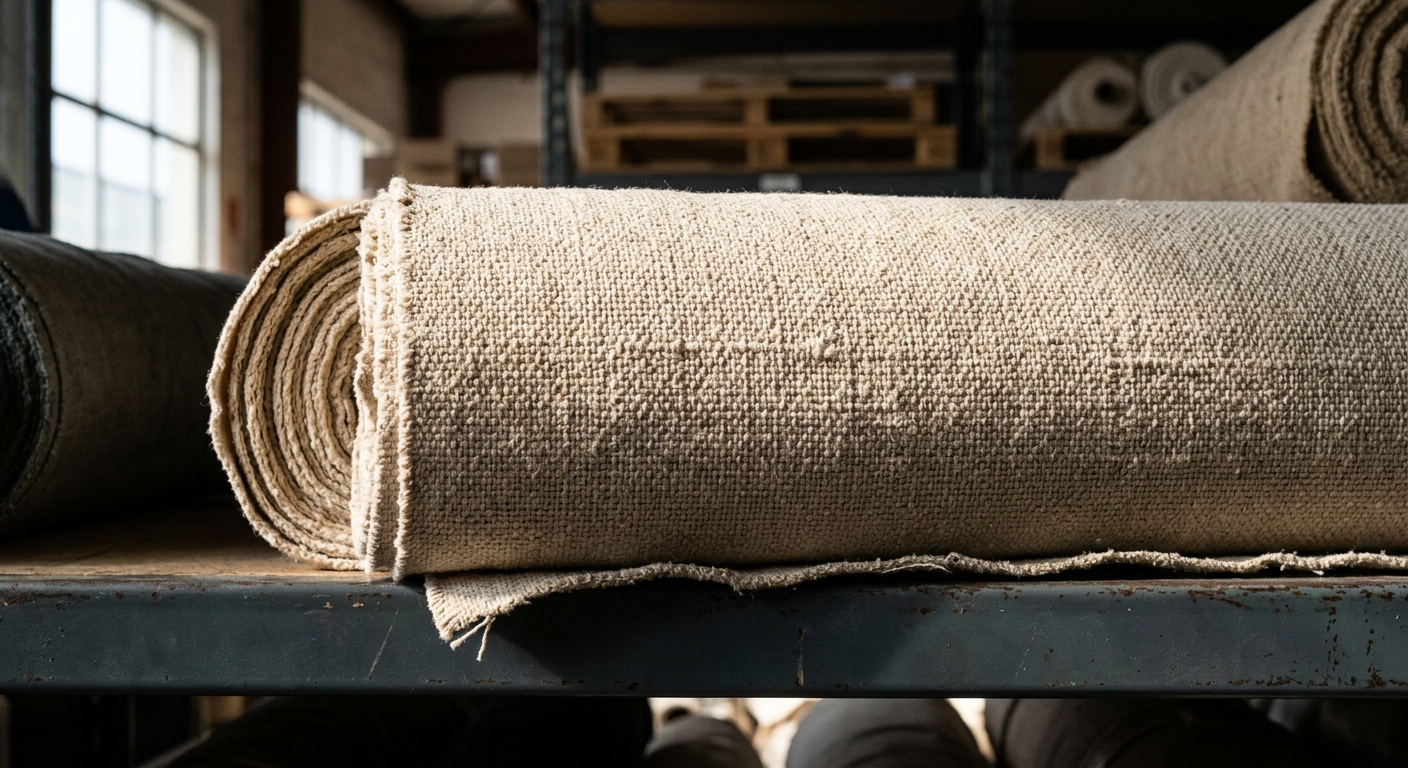
Cotton canvas built its reputation the hard way — decades of use in sailcloth, workwear, and army surplus bags that refused to fall apart. That toughness translates directly to retail. A 10oz or 12oz canvas tote (roughly 280–400 GSM) can carry groceries, laptops, or trade show swag for years without seam failure.
The tradeoff is cost and lead time. Canvas runs $1.20 to $3.50 per unit at bulk pricing depending on weight and finish, and it's heavier to ship than nonwoven alternatives — a real factor if you're importing container loads. But if you're building a retail tote that customers will actually reuse and associate with your brand, canvas is worth the premium.
Where Canvas Falls Short
Raw canvas absorbs moisture and stains easily. If your bag needs to survive rain or spills, you'll want a treated or coated version — similar logic to what we cover in our breakdown of DWR, PU, and PVC coatings for bulk buyers. Untreated canvas is a fair-weather fabric.
Nonwoven Polypropylene: The Volume Play
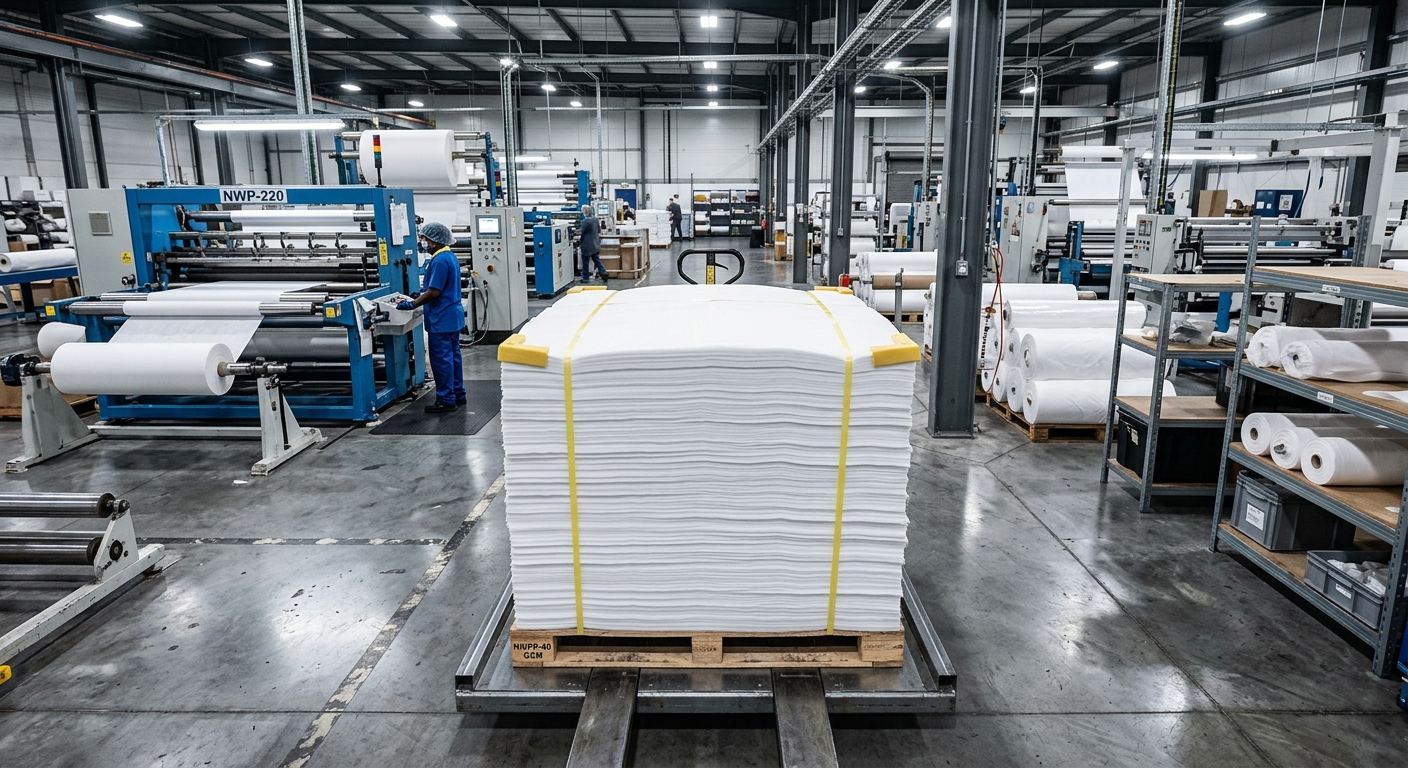
Nonwoven polypropylene (often just called 'nonwoven fabric') isn't woven at all — fibers are bonded through heat, pressure, or chemicals into a flat sheet. That manufacturing shortcut is exactly why it's cheap: no spinning, no weaving, no dyeing step in most cases.
At 70–120 GSM, it's light, fast to produce, and typically costs $0.30–$0.90 per bag wholesale. That math makes sense for conference giveaways, grocery store checkout bags, or promotional events where you're distributing thousands of units and don't expect any single bag to survive more than a handful of uses.
The Durability Ceiling
Nonwoven bags tear at stress points — handles and seams — after repeated heavy loads. A grocery chain handing out 50,000 nonwoven totes a month accepts that tradeoff because the unit economics work. A boutique selling a $30 branded tote should not use this material; customers will notice within a month, and it undercuts the premium positioning you're trying to build.
For buyers weighing nonwoven against woven synthetics more broadly, our comparison of knit vs. woven fabrics and production timelines is a useful primer on why construction method changes everything about how a fabric performs under stress.
Jute: The Eco Story Customers Actually Pay For
Jute has a texture and smell customers immediately associate with 'natural' and 'sustainable' — and for a lot of retail brands right now, that perception alone justifies the higher price point. It's a bast fiber, biodegradable, and requires far less pesticide and water to grow than cotton.
Jute totes run 300–500 GSM and typically last 20–30 uses before fraying, putting durability roughly between nonwoven and canvas. Pricing sits at $1.00–$2.80 per unit depending on weave tightness and whether it's laminated.
Real-World Example: A Farmers Market Retailer
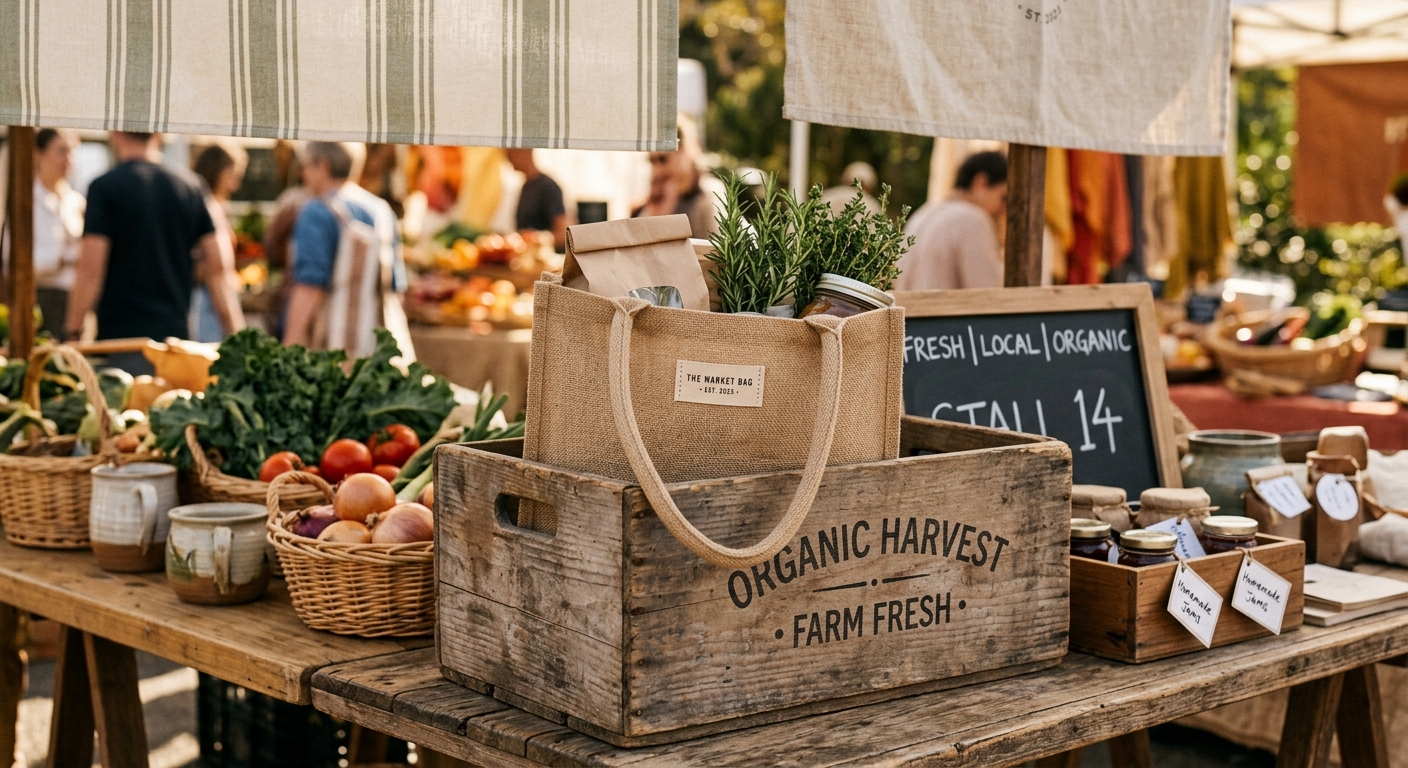
Consider a specialty foods brand selling at farmers markets and through a small retail storefront. They switched from printed nonwoven bags to raw jute totes with a simple stamped logo. Unit cost went up about 40%, but customers started reusing the bags as market totes — free brand exposure every weekend, and a measurable uptick in customers mentioning the bags on social media. The jute wasn't just packaging; it became merchandise.
One caution: jute frays at cut edges if not hemmed properly, and it doesn't print as crisply as canvas. Screen printing works; fine detail or photographic prints generally don't.
GSM and Weight: What the Numbers Actually Tell You
GSM isn't just a spec sheet number — it's the difference between a bag that holds a 15-pound grocery load and one that splits at the bottom on the walk to the car. If you're unfamiliar with how to translate GSM into real-world performance, our guide on reading GSM like a pro breaks down exactly how weight correlates to strength across fiber types.
For totes specifically: anything under 100 GSM should be treated as single-trip or light-duty. 150–250 GSM handles moderate loads for retail shopping. Above 280 GSM, you're in heavy-duty territory suitable for repeated grocery or apparel use. Match the GSM to the actual weight your customers will carry, not to what looks impressive on a spec sheet.
Print and Branding Considerations
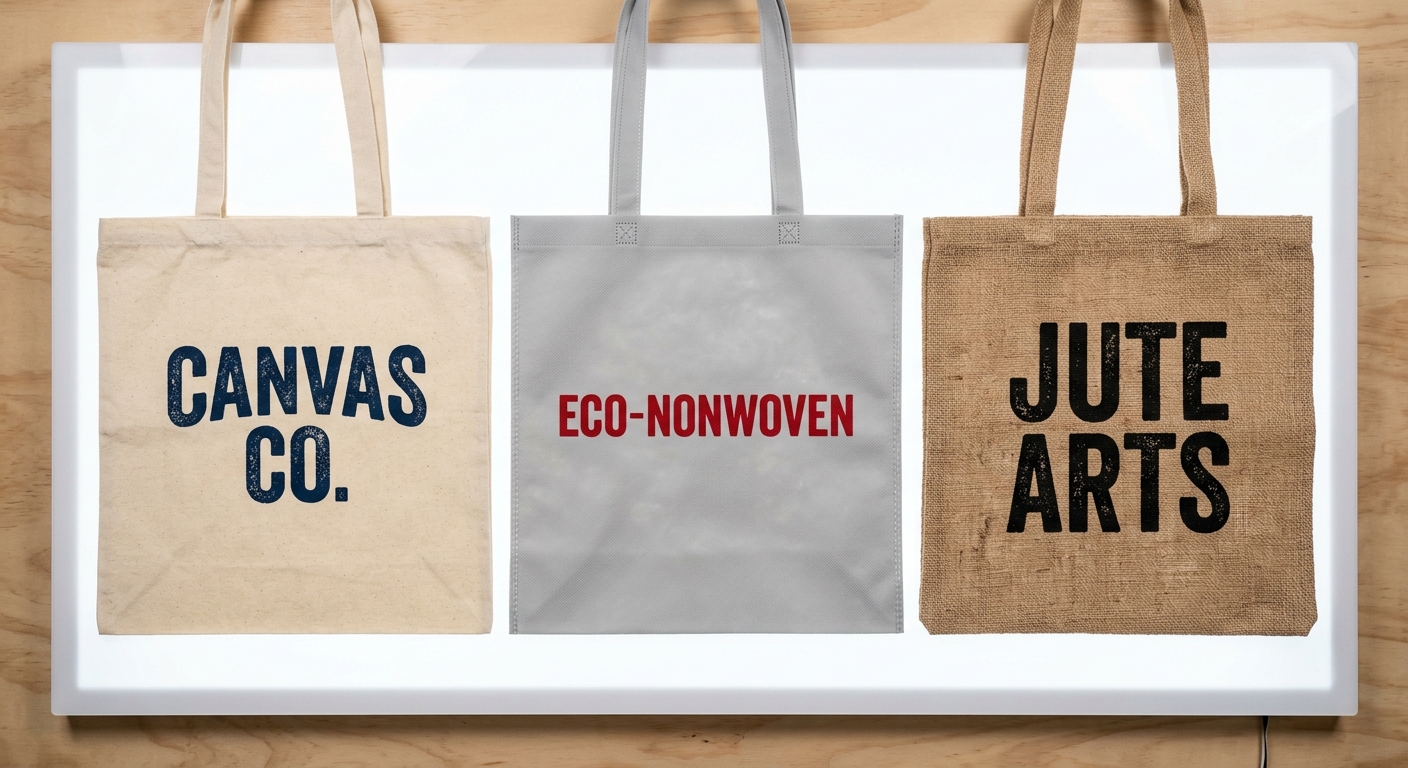
A logo that looks sharp on canvas can look muddy on jute, and heat-transfer prints that work fine on nonwoven will crack on a fabric with more texture. Canvas takes screen printing, digital printing, and embroidery cleanly because of its tight, even weave. Jute's rougher surface limits you to bold, simple screen-printed designs — fine detail gets lost in the fiber texture. Nonwoven takes heat-transfer vinyl well but can melt or discolor under high-heat embroidery processes.
If your brand identity depends on precise color matching or fine typography, canvas is the safer bet. If you're going for a rustic, handmade aesthetic, jute's texture actually works in your favor rather than against it.
Cost Per Impression, Not Just Cost Per Unit
The cheapest bag isn't always the cheapest marketing tool. A $0.50 nonwoven bag used twice before it's thrown out delivers two brand impressions. A $2.50 canvas tote reused fifty times delivers fifty impressions — that's five cents per impression versus twenty-five cents. If brand visibility is the actual goal behind your packaging spend, durability changes the math entirely.
This is where a lot of buyers get burned by chasing the lowest unit price without modeling reuse. It's the same trap covered in the hidden costs of cheap wholesale fabric — the invoice total isn't the real cost.
Sourcing and Lead Time Reality
Canvas and jute are both agricultural-fiber-based, which means pricing and availability can swing with harvest conditions and regional export policy. Nonwoven polypropylene, being petroleum-derived, tracks more closely with oil prices and resin availability. If you're importing any of these in bulk, factor in the landed cost math — duties, freight, and customs delays add up fast, especially on heavier canvas shipments. Our guide on sourcing fabric from overseas mills walks through how to model that real cost before you commit to a PO.
Also worth checking: current import tariff shifts reshaping wholesale fabric pricing in 2026, since jute and cotton canvas often fall under different tariff classifications than synthetic nonwovens.
Which Should You Actually Order?
Choose canvas if you're selling a retail product where the bag itself carries brand value — apparel boutiques, gift shops, or any brand where customers will reuse and photograph the tote.
Choose nonwoven if you need thousands of units fast and cheap for a single event, trade show, or short promotional window where reuse isn't the goal.
Choose jute if sustainability messaging is core to your brand and you're willing to pay a mid-range price for texture and story that customers actually value.
Whichever direction you go, run a small sample order first. Print quality, hand-feel, and seam strength vary more between suppliers than between fiber types — something worth confirming before committing to a full production run.




 Login with Google