-

Free Samples!



Denim Weights, Washes, and Weaves: A Bulk Buyer’s Guide to Picking the Right Jean Fabric

Table of Contents
When you're buying denim in bulk, three specs decide whether your jeans hit shelves or sit in a warehouse: weight (measured in ounces per square yard), weave structure (right-hand twill, left-hand twill, or broken twill), and wash treatment (rinse, stone, enzyme, laser). Match those three to your target customer and price point, and the rest — pocketing, hardware, fit — is downstream detail. This guide breaks down each variable with the actual numbers and trade-offs bulk buyers need to spec confidently.
Denim Weight: The Single Most Important Spec on the Sheet
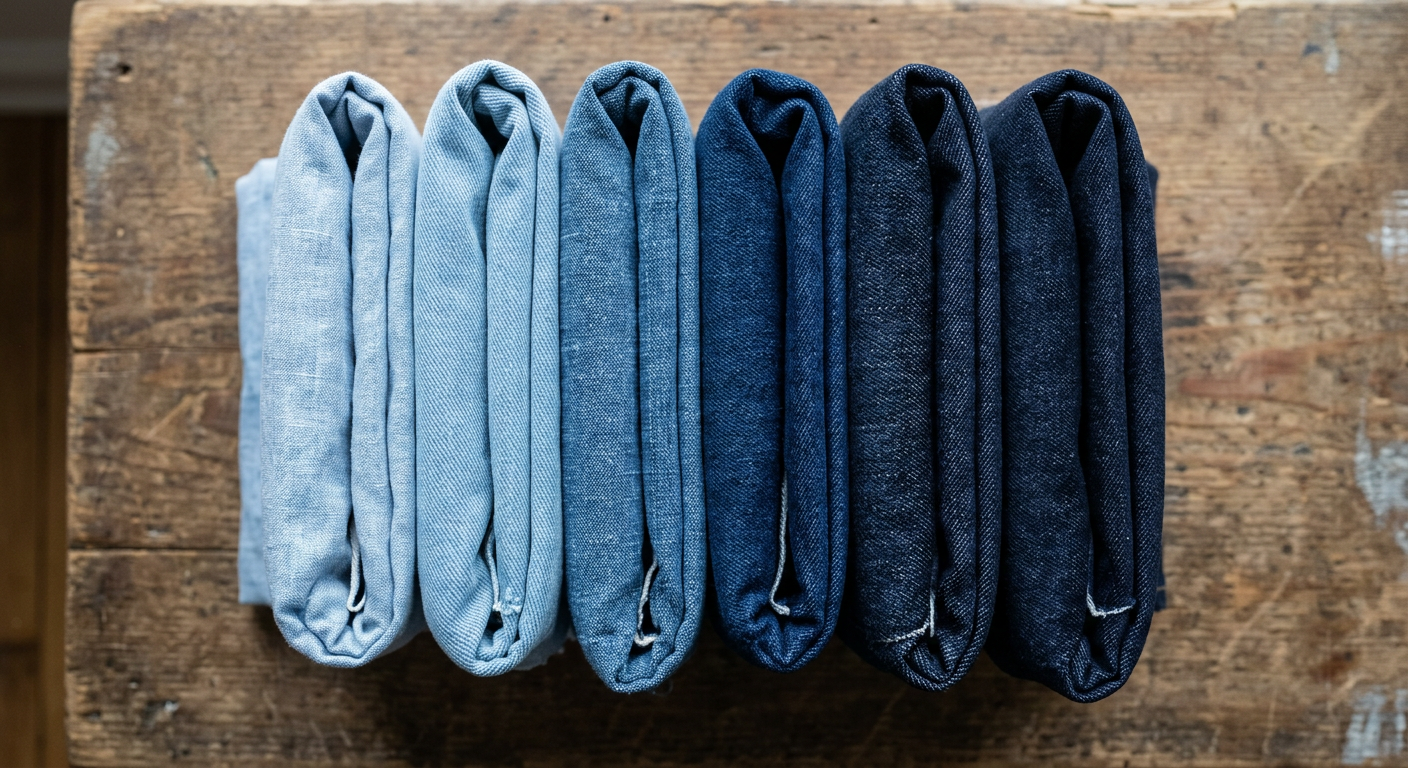
Weight is the first number to lock in because it dictates drape, durability, season, and even sewing cost. Denim is sold by ounces per square yard (oz/yd²), and the range runs from about 6 oz at the airy end to 21+ oz at the rope-stiff heritage end.
Here's the breakdown that actually matters in production:
- 6–9 oz — lightweight, used for shirts, summer jeans, dresses, and chambray. Drapes like a heavy cotton.
- 10–13 oz — the sweet spot for everyday five-pocket jeans. About 80% of mainstream denim lives here.
- 14–16 oz — heavy, structured, and the entry point for raw and selvedge enthusiasts.
- 17–21+ oz — workwear and Japanese heritage territory. These break in slowly and last forever.
A common mistake: bulk buyers ordering 14 oz for a women's skinny program because “heavier feels more premium.” It doesn't — it feels like cardboard on a slim leg. Match weight to silhouette. If you need a deeper primer on weight specs across all fabrics, our GSM guide walks through the conversion math.
Weave Structure: Why Two Jeans That Look Identical Wear So Differently
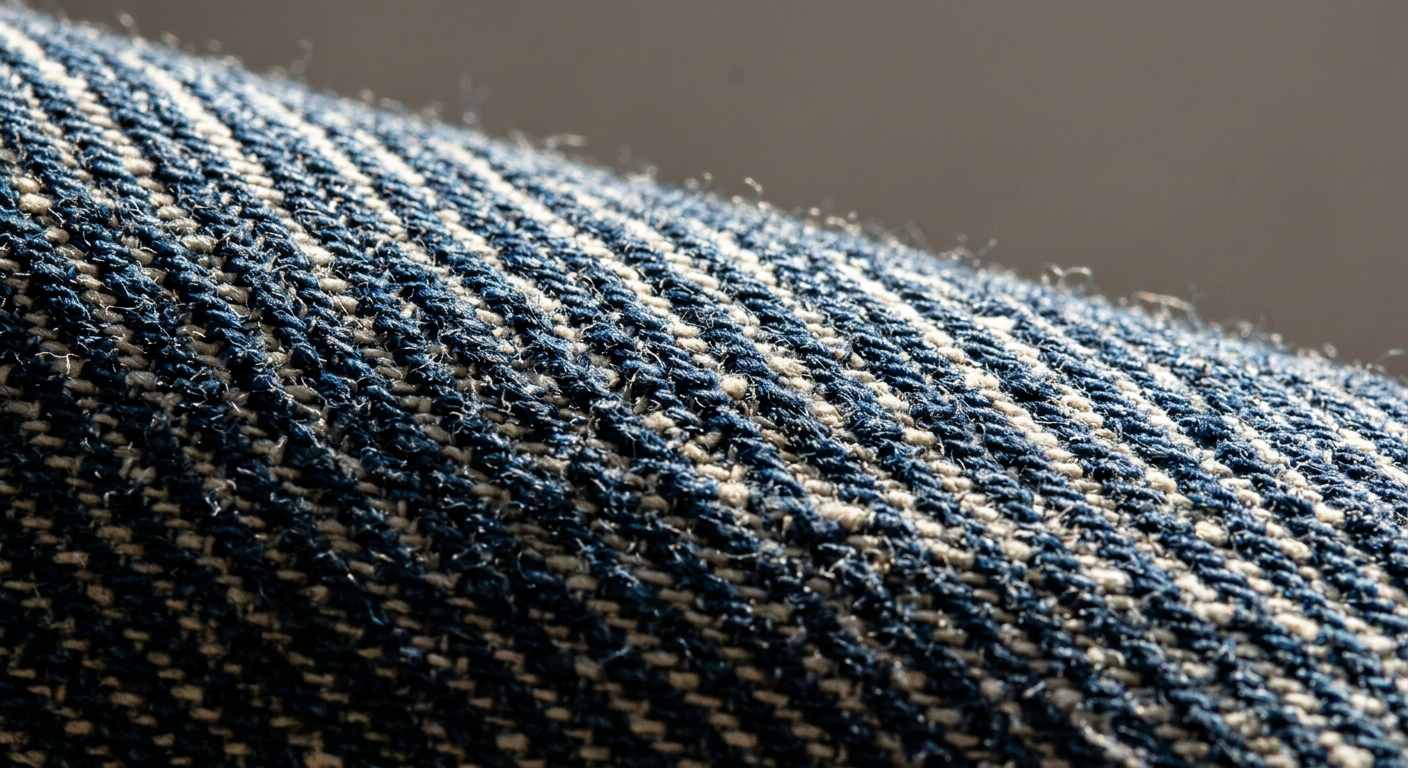
Denim is a warp-faced twill, meaning the indigo-dyed warp yarns dominate the face and the undyed weft sits on the back — that's why your jeans are blue outside and white inside. But within that family, three weave directions create surprisingly different garments.
Right-hand twill (RHT)
The default. Diagonal lines run lower-left to upper-right. Tighter, smoother surface. Levi's classic 501 uses this.
Left-hand twill (LHT)
Softer hand because the yarn twist and weave direction work together rather than against each other. Lee built its reputation on LHT. Fades tend to be cloudier and more vertical.
Broken twill
Wrangler's signature. The diagonal reverses direction at random intervals, eliminating the leg-twist that plagues traditional twills after washing. If you've ever had a customer complain that the side seam “crawls” toward the front, broken twill solves it.
For a broader look at how weave structures translate across fabric types, check our weave structures guide.
Selvedge vs Open-End: What You're Actually Paying Extra For
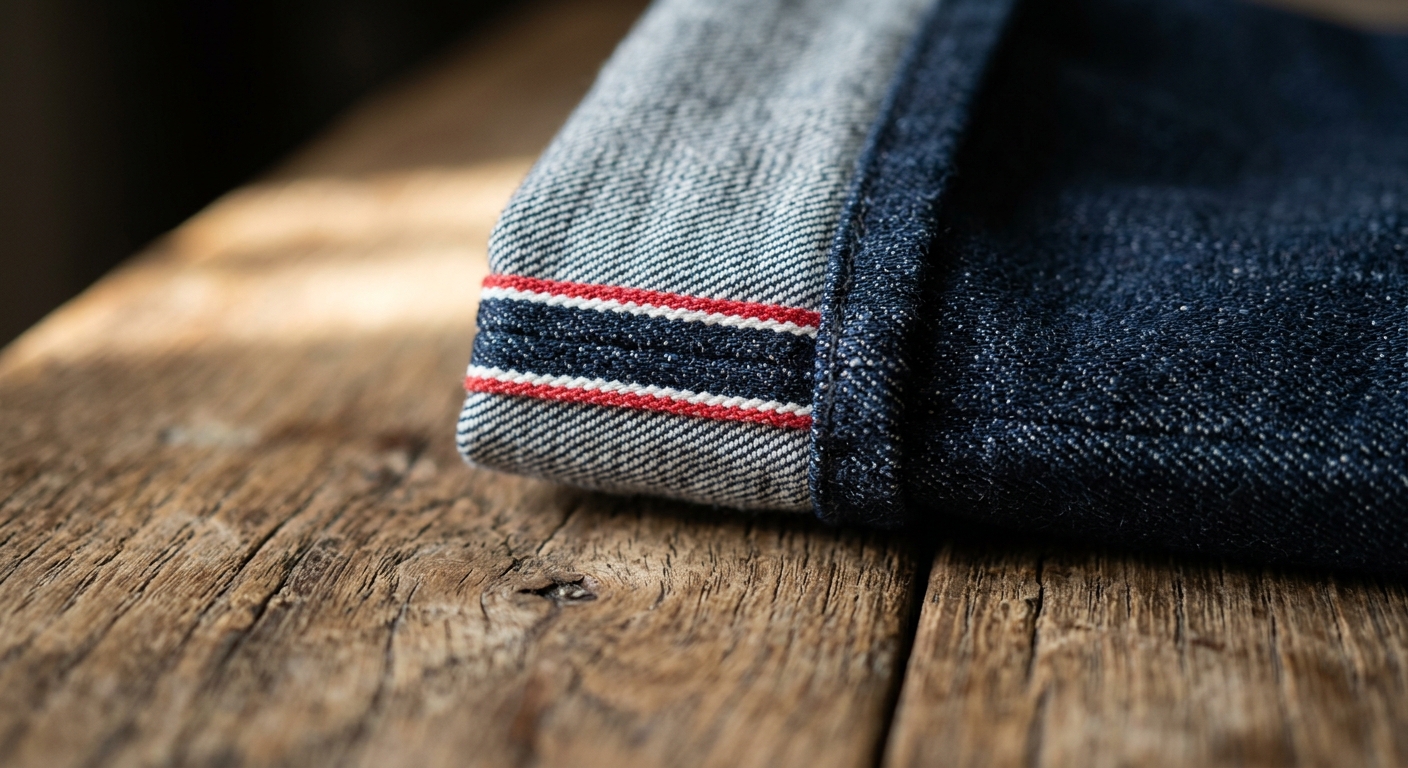
Selvedge denim isn't “better” — it's different, and the price premium only pays off for certain customer segments. Selvedge is woven on narrow shuttle looms (around 30–32 inches wide) that produce a self-finished edge, usually marked with a colored line. Modern projectile looms produce wider, cheaper fabric (60+ inches) with a frayed edge.
The real differences:
- Yardage efficiency: Wide-loom denim yields more pieces per yard. Selvedge wastes fabric but lets you use the clean edge as the outseam.
- Hand and irregularity: Shuttle looms produce slubs and character. Some buyers want it; mass-market doesn't care.
- Price: Selvedge typically runs 2–4x the cost of equivalent-weight open-end denim.
For example, a small-batch heritage brand might order 13.5 oz Japanese selvedge at $18/yd because their customers pay $250 for raw jeans. A mid-tier brand running 8,000 units a month at a $79 retail would burn margin trying to use the same fabric — they should stick with open-end ring-spun at $5–7/yd.
Ring-Spun vs Open-End Yarn: The Detail That Decides Fade Quality
Yarn construction is the spec most bulk buyers overlook — and the one that most affects how denim ages on the customer. Ring-spun yarn is twisted from carded cotton fibers, creating an irregular surface that catches indigo unevenly. That irregularity is exactly what produces the high-contrast fades collectors love.
Open-end (also called rotor-spun) yarn is faster and cheaper to produce but uniform — fades come out flat and washed-out rather than sharp. It's fine for basic five-pockets at value price points, but if your brand promises “fades like vintage,” you need ring-spun warp at minimum, and ideally ring-spun on both warp and weft.
Spec it this way on your tech pack: “100% cotton, 12.5 oz, ring-spun warp and weft, 3x1 RHT, sanforized.” That one line filters out half the suppliers who can't actually deliver what they claim. Our spec sheet guide covers what else to verify before signing the PO.
Stretch Denim: How Much Elastane Is Actually Enough?
Add too little stretch and the jean feels rigid; add too much and it bags out at the knees after a day of wear. The honest number most brands settle on is 1–3% elastane for comfort stretch and 4–8% for power stretch (think jeggings, shaping denim).
A few rules from production:
- 1–2% elastane — best for men's mid-weight jeans where you want a hint of give without losing structure.
- 2–3% elastane + polyester — the modern women's everyday formula. The poly improves recovery so the knees don't blow out.
- T400 or similar PBT fibers instead of standard elastane — better recovery, more expensive, worth it for premium programs.
The trap: cheap stretch denim relies on elastane alone, and elastane degrades with heat. After 20 washes, those jeans sag. If you want to understand the chemistry behind stretch fibers before placing an order, our breakdown on spandex, Lycra, and elastane is required reading.
Washes: From Raw to Bleach, and the Cost of Each Step
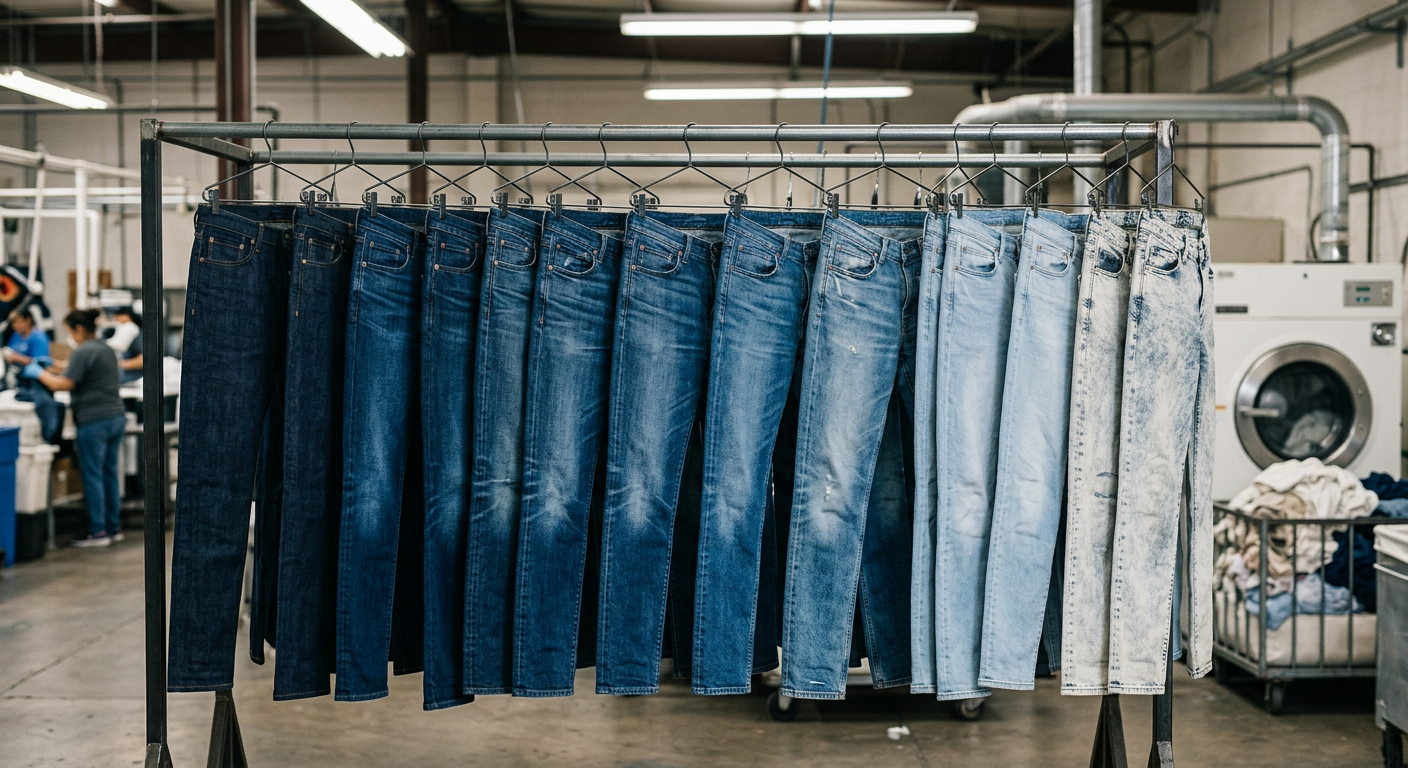
Wash is where denim becomes a finished product — and where bulk margins quietly disappear. Every additional process step adds 30 cents to $2 per garment. Know what each wash actually does before you spec it.
Raw/dry
No wash at all. Stiff, dark, shrinks 5–10% on first soak if not sanforized. Customer breaks it in. Cheapest to produce, hardest to sell to mainstream consumers.
Rinse wash
One hot rinse to remove sizing and stabilize shrinkage. Keeps deep indigo color. The default for “dark wash” programs.
Stone wash
Tumbled with pumice or synthetic abrasives. Creates that classic faded blue. Pumice is harder on machines and garments; synthetic stones are more consistent for production.
Enzyme wash
Cellulase enzymes eat surface fibers instead of abrading them. Softer hand, more uniform fade, gentler on hardware. Modern mid-market standard.
Laser and ozone
The newer story. Laser etches whiskers and fade patterns digitally — no water, no chemicals, repeatable across thousands of units. Higher upfront equipment cost, dramatically lower water and labor cost at scale. If you're sourcing for sustainability-marketed brands, ask suppliers about ozone bleaching specifically.
Sanforization and Shrinkage: The Spec That Saves Returns
If you take one thing from this guide: always order sanforized denim unless you specifically want shrink-to-fit. Sanforization is a mechanical pre-shrinking process that limits residual shrinkage to about 1–3%. Unsanforized denim can shrink 7–10%, which means a 32-waist jean becomes a 29 after the customer's first hot wash.
For example, a workwear startup we've seen ordered 5,000 pairs of unsanforized 14 oz denim because the mill quoted it $0.40/yd cheaper. They didn't size up in the pattern. Return rate hit 23%. The $20K they “saved” on fabric cost them six figures in reverse logistics and brand damage.
For a wider view on shrinkage across fiber types, our shrinkage cheat sheet is worth bookmarking before your next tech pack review.
Indigo Dyeing: Why Color Consistency Is the Hardest Problem in Denim
Indigo is uniquely difficult because it doesn't penetrate cotton — it coats the surface in layers, which is why denim fades the way it does. Rope dyeing (yarn pulled through indigo vats as a rope) and slasher dyeing (yarn dyed as a flat sheet) produce different fade characteristics, and they're rarely interchangeable between dye lots.
Expect lot-to-lot variance of 5–10% in shade depth even from premium mills. If you're running a multi-drop program — say, 10,000 pairs across three production runs — insist on lab dips approved against a master standard and demand dye lot identification on every roll. Our deep dive on dye lot variance covers the contract language that protects you.
If you're sourcing indigo-tone fabrics beyond denim itself for matching trims, jackets, or capsule pieces, our indigo fabric collection is a useful starting point for coordinated programs.
Putting It Together: How to Spec Denim for Three Common Programs
Theory is useful; applied spec sheets are better. Here's how the variables stack up for three typical bulk programs:
Value women's skinny ($29 retail)
9–10 oz, ring-spun warp / open-end weft, 3x1 RHT, 2% elastane + 1% polyester, dark rinse + light whiskers via laser, sanforized. Target FOB fabric cost: $3.50–4.50/yd.
Mainstream men's straight ($79 retail)
12–13 oz, 100% cotton ring-spun both ways, 3x1 RHT, enzyme stone wash, sanforized. Target FOB fabric cost: $5.50–7/yd.
Premium heritage five-pocket ($180+ retail)
14–15 oz selvedge, ring-spun, slub texture spec'd, RHT or LHT depending on brand DNA, raw or one-rinse, unsanforized acceptable if positioning supports it. Target FOB fabric cost: $14–22/yd.
Use these as starting points, not gospel — the right spec depends on your customer, your factory's sewing capability, and your wash house's equipment.
Ready to Spec Your Next Denim Program?
Picking the right jean fabric in bulk isn't about chasing trends — it's about matching weight, weave, yarn, and wash to a customer who will actually pay for the result. Lock in the technical spec first, negotiate price second, and never let a supplier substitute “equivalent” without a side-by-side approval.
If you're sourcing denim or coordinating fabrics for a denim-driven capsule, browse our wholesale catalog at Global Fabric Wholesale for swatches, lab dips, and program-level quoting. We work with bulk buyers from emerging brands to established programs — and we'd rather help you spec it right the first time than fix it after the container lands.




 Login with Google