-

Free Samples!



Deadstock and Overrun Fabric: When the Bargain Is Real and When It Bites Back

Table of Contents
Deadstock is a genuine bargain when the lot is one dye lot, you can use essentially all of it, and you have washed a cut taken from the actual goods on offer. It bites when your product is a repeat program, when a fifth of the lot is too short or too creased to cut, or when the certification paperwork you need to make a claim never existed in the first place. The word on the listing is a forecast of which of those three you are walking into.
Key takeaways
- Overrun, deadstock, closeout, jobber lot, and second are five different purchases with five different failure modes. A listing that names only deadstock, with no mill, year, or reason, is hiding the category.
- If the product will be re-ordered, deadstock fails at any price. If the product is a finite run, it is close to ideal.
- One swatch cannot represent a lot. Sample from more than one position, wash a measured square, and test spandex for recovery rather than stretch.
- Deadstock usually arrives without the mill's test reports, so any flammability, organic, recycled, or origin claim you plan to print has no paper behind it.
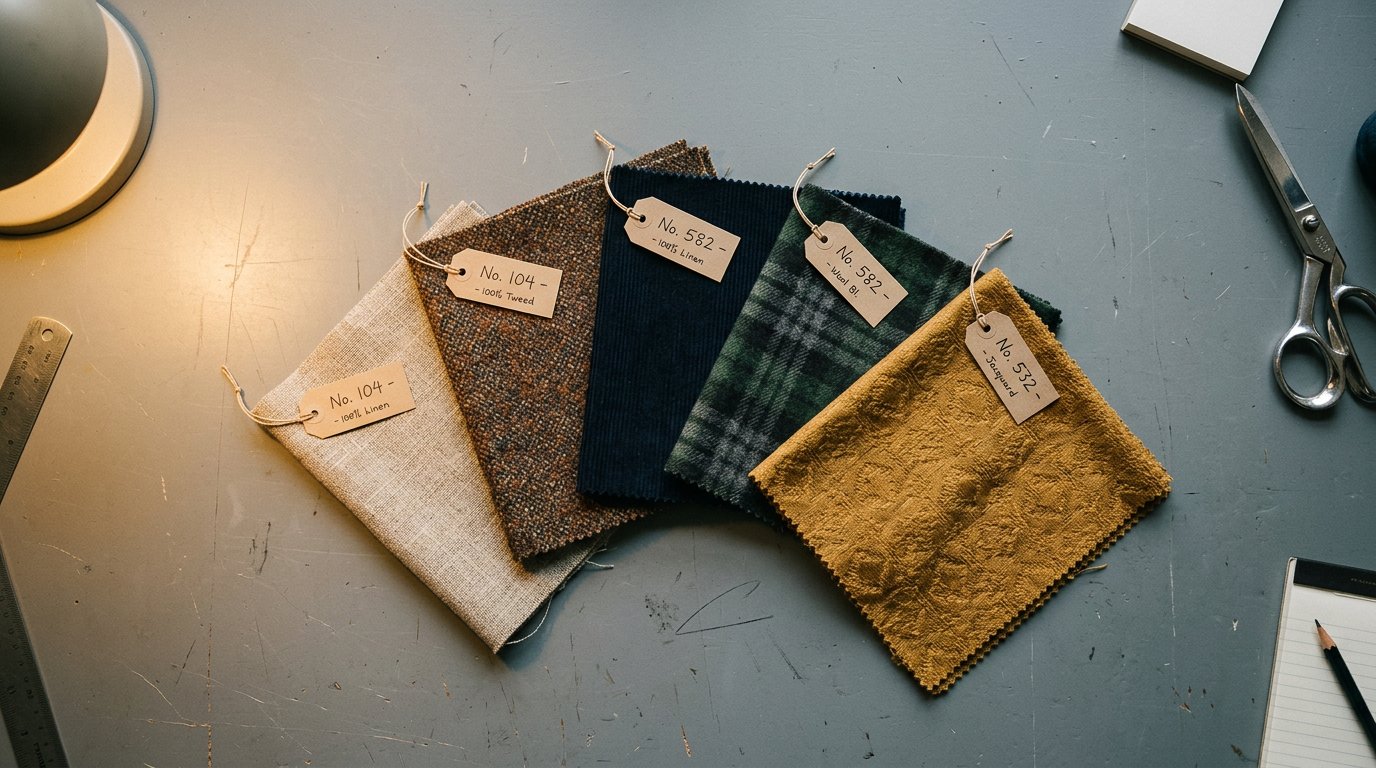
Deadstock, Overrun, Closeout, Jobber Lot, Second: The Label Is a Forecast
Sellers treat five words as if they were interchangeable. They are not. Each one tells you which part of the purchase is risky, and that is the part you have to test before money moves.
Overrun
The mill wove more than the brand contracted, so the goods are first quality, same construction, and often from the same dye lot as a run that already passed somebody else's inspection. Nothing is wrong with the fabric. What you inherit is another company's colour decision and another company's weight decision, in whatever quantity they over-produced. That is a merchandising problem, not a quality problem, and it is the friendliest label on this page.
Deadstock proper
Goods that were made, invoiced, and then never shipped or never sold. The fabric left the mill in good order and has spent years folded, stacked, moved, and probably unbagged. The risk sits in age and storage: compression creases, yellowed whites, an elastane that has quietly lost its snap. The weaving is fine. The history is unknown.
Closeout
A brand or retailer liquidating the tail end of a program. Expect partially used rolls, customer returns, and short pieces mixed in with full put-ups. The average can be excellent while the distribution is terrible, and you only learn the distribution by asking for piece lengths.
Jobber lot or assorted
Several fabrics or several dye lots bundled together, frequently priced by weight. Perfectly good for linings, pocketing, and toiles. Useless for a matched production run, because you have bought a mixture instead of a specification.
Second, B-grade, mill reject
Goods that failed a first-quality inspection for a stated reason: a weaving fault, a dye streak, a width variance. This is often the best buy available, with one condition attached. The seller states the reason. A second with a fault you can cut around is cheap fabric. A second with an unnamed fault is a lottery ticket with a fabric label on it.
The tell, and the price basis
An honest listing names the origin and the reason. A page that says only deadstock, with no mill, no year, and no explanation, is hiding the category rather than simplifying it.
Check the pricing unit before comparing anything. Retail fabric is normally quoted per yard at a stated width and weight. Jobber lots are often quoted per pound, and per-pound pricing conceals variance in width, put-up, and moisture regain, so it is not comparable to a yard price until you have weighed a measured cut yourself.
The Only Question That Matters First: Can You Reorder It?
Sort your product before you sort the price. There are two kinds, and the classification decides everything downstream.
Replenished products
Uniforms, workwear, core basics, hotel and restaurant replacement programs, anything a wholesale account re-orders on a schedule, anything sold with a promise that more is coming. For these, deadstock fails at any price. A second run cannot match dye lot, hand, width, or even shrinkage behaviour, because the goods came off different equipment in a different year. Running out mid-program leaves three bad options: re-cut from a mismatched lot and ship a visible colour break, remake at full cost, or refund the account. Any one of those costs more than the yardage saving, which is why the discount has to be judged against the risk rather than against the quoted per-yard number.
Finite products
A capsule drop, a limited run, a development cycle, a one-off commission, a toile. Here deadstock is close to ideal. Colour continuity stops being a requirement the moment nobody expects a second identical piece, and a cloth nobody else can buy becomes part of the product's story instead of a liability.
If you proceed: buy the allowance, then keep a reserve
Order the yards you need plus a re-cut allowance sized by what actually drives loss: number of sizes, whether you stripe-match or pattern-match, the loss built into your own marker, panels spoiled on the sewing floor, and remakes. A five-size tee run and a two-size structured coat run do not share an allowance, so no single percentage is honest for both.
Then do the thing almost nobody does. After the run ships, keep a sealed, labelled reserve cut from the same lot, stored dry and flat. Eight months later a customer sends back a torn jacket for repair and you either have matching cloth or you have an argument you cannot win.
Write it on the product page: limited lot, no restock. That sentence costs nothing and prevents the refund that a broken restock promise guarantees.
What You Are Actually Buying: One Lot, Not One SKU
A lot is a mixture, not a specification. The total yardage is the least useful number on the page, so stop reading it first and start interrogating what the yardage is made of.
- Piece-length breakdown, not total yardage. Two hundred yards in four long pieces and two hundred yards in forty short pieces are completely different purchases for anyone cutting a garment with a long panel. One is a production run. The other is a scrap bundle with ambitions.
- One dye lot or several? Dye lot consistency inside the lot is exactly what deadstock cannot promise, even when the colour name on the listing is accurate. Ask whether the goods were bundled from more than one shipment.
- Width, and whether the width holds. If your marker is built on a fixed width, narrow sections cost you panels. A lot slit or finished on different equipment will drift by a couple of centimetres and that is two sizes of loss on a long panel.
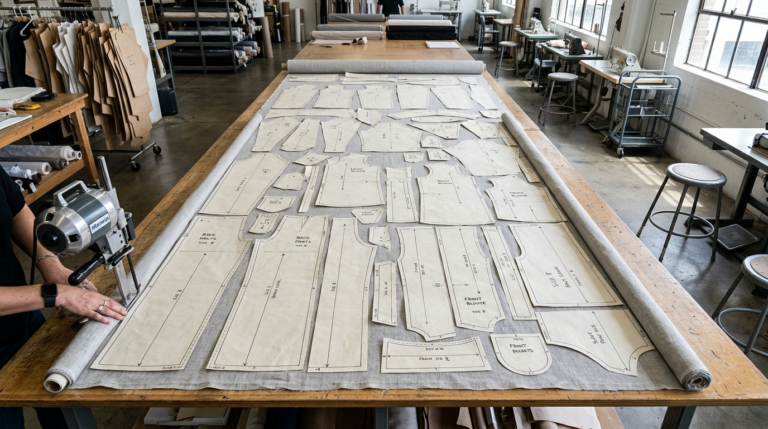
- Put-up. Roll, flat fold, bolt, or vacuum-packed flat pack. Flat-packed goods crease along the same lines for years, and creases set into a cellulosic fabric can shadow through a finished garment even after a hard press.
- Evidence the lot has already been picked over. The photograph may predate the first four buyers. The good full rolls are often gone while the listing still shows them, which is why a fresh photo request is worth more than a spec sheet.
- Buying by the yard is the hedge. Everything at Global Fabric Whole Sale is priced by the yard, so you can take a working length plus a first-run quantity and scale in steps instead of committing to an entire lot sight unseen. The store carries more than 10,000 fabrics and sends free samples, which is how you handle goods before deciding what a lot is worth.
A specification tells you what every yard will be. A lot tells you what the average yard is. Cutting rooms are damaged by variance, not by averages, which is why the questions above matter more than the price.
Testing Stock That May Be Years Old, and Why One Swatch Is Not Enough
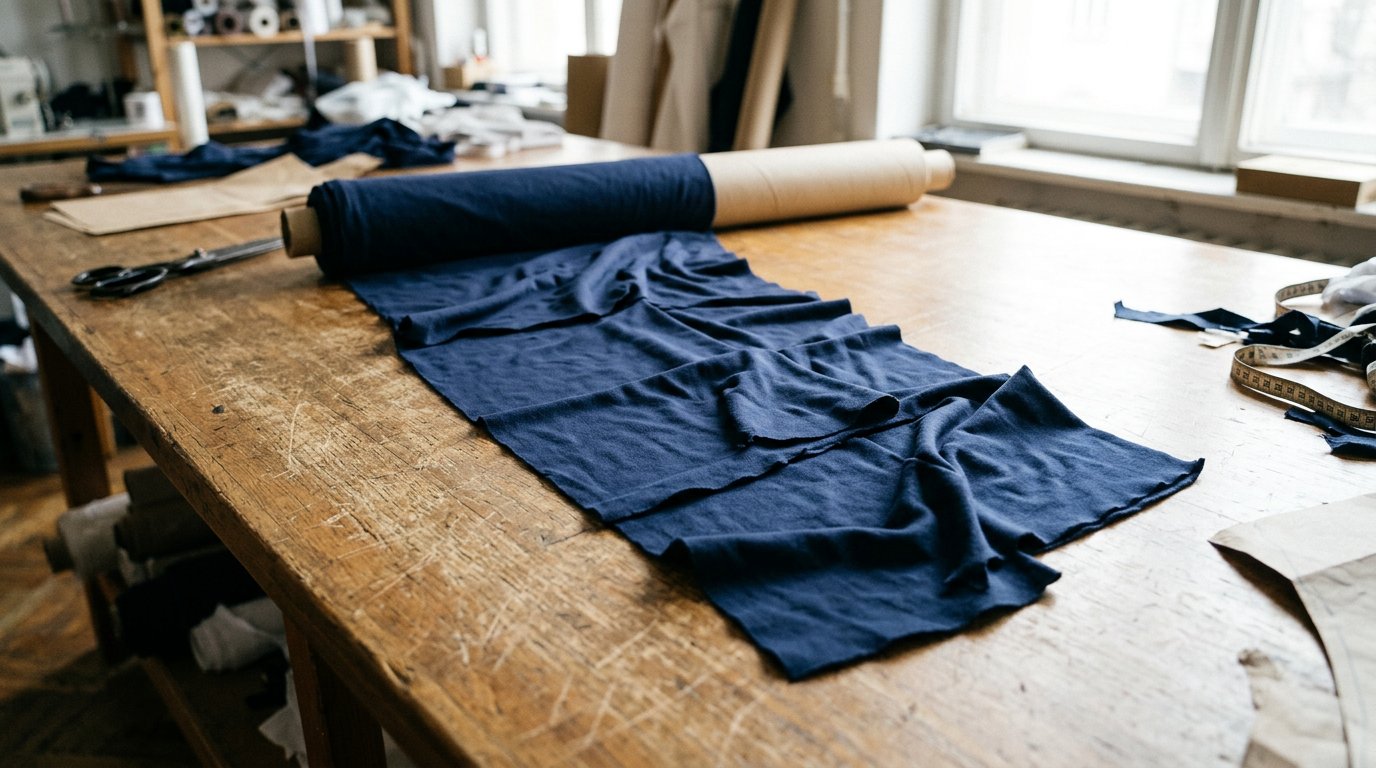
Ageing does not announce itself on a swatch. It shows up three months into a season, at the knee of a pair of leggings, or on a white tee under shop lighting. Sample the lot rather than the SKU.
- Insist the swatch comes from the goods being sold, not from a stock photo or a mill reference card. Then ask when the fabric was woven or how long it has been in storage. A seller who does not know is telling you something useful.
- Know what age does that a fresh cut hides. Elastane loses recovery, so a stretch fabric that tested fine new can sag after a season of wear. Whites and naturals yellow. Fold lines become permanent. Damp storage leaves a mildew smell that survives washing and sometimes survives finishing.
- Wash and shrink a measured square first. Aged goods can shrink differently from the mill's stated figure, because the fabric has already been under compression for years.
- On anything with spandex, test recovery rather than stretch. Mark a length, extend it, release it, and watch how far it comes back. Recovery is the property that ages, and it ages quietly.
- Press a hard fold into a corner and steam it out. If the crease leaves a shadow, that is how it will behave under your marker and in the finished garment.
- Check whites and pale naturals under daylight and under shop lighting. Yellowing that disappears in one and shows in the other still costs you the sale.
- Sample from more than one position in the lot. A clean top wrap says nothing about the bottom third, and this is the whole difference between sampling a SKU and sampling a lot.
- Use a good retail listing as the benchmark for what a lot listing owes you. Product KF1195, a 320gsm (11.3 oz) 95% cotton 5% spandex French terry with a fine smooth hand feel at 25.99 per yard, states weight, composition, and hand feel. Product KF620, a 230gsm (8.1 oz) 60% cotton 40% polyester French terry at 19.99 per yard, does the same. A listing that says only soft cotton blend has given you nothing to test against.
For the wider test menu, see the five fabric tests you can run at home before a bulk order. Everything here is about age, storage, and heterogeneity, which those general tests do not cover.
The Questions to Send Before You Pay, and the Answers That End the Conversation
Send this as one message. A seller with a clean lot answers it in ten minutes. A seller with a problem lot answers around it.
- Exact fibre content, as percentages.
- Weight in gsm, and the width in usable terms rather than cuttable width.
- Why the goods are available: cancelled order, program ended, over-production, failed inspection.
- One dye lot or several.
- Piece-length breakdown.
- Whether the lot was inspected, and against what standard.
- How it has been stored and for how long.
- Whether faults are marked and how they are marked.
- The return policy on this specific lot, in writing.
- Whether the price is per yard or per pound, with a guaranteed minimum length per roll if it is per pound.
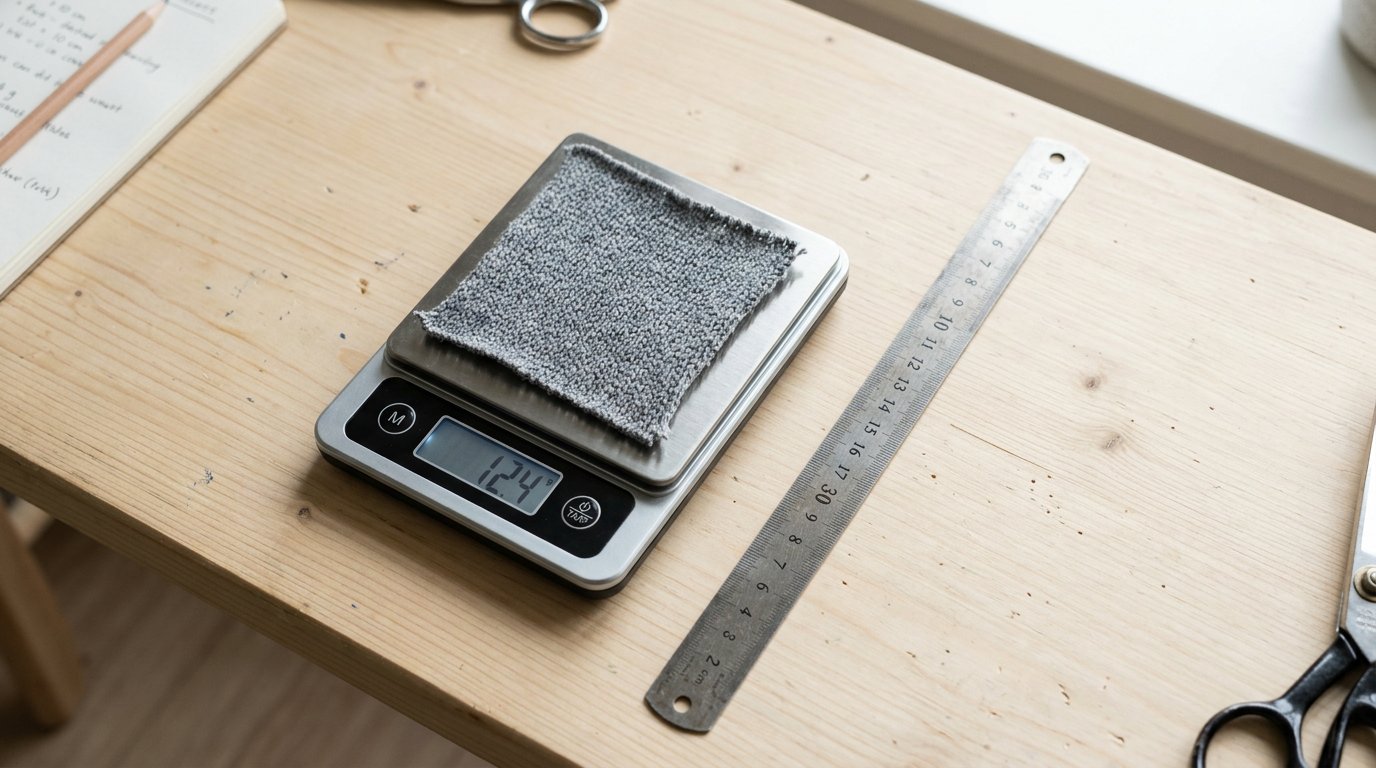
Verify the weight yourself
A claimed weight is checkable with a kitchen scale and a ruler in ten minutes. Cut and measure a square, weigh it, and convert. Grams per square metre is the metric figure, and one ounce per square yard is roughly 33.9 gsm, so a claimed 8.1 oz fabric should land near 275 gsm before you allow for the tolerances the mill was working to.
Answers that end it
Assorted, when you asked for a dye lot. We cannot guarantee the length. No returns on closeout, paired with no photographs of the actual goods. Refusal to state fibre content. A weight that does not survive your own scale check.
Protect the payment
Use a method you can reverse. Get the lot description written onto the invoice rather than agreed in a chat window. Inspect and photograph the goods before the cutter touches them, because once a marker is laid and the blade is in, a quality claim becomes a negotiation about your own cutting.
The procedural side is covered in the claims and refund guide for damaged wholesale fabric and in the red flags to watch when buying fabric online. What stays specific to deadstock is origin, storage, and reorderability, so keep asking those three.
The Real Cost per Finished Unit: Where the Discount Evaporates
A discount means nothing without a reference point. Start with first-quality pricing for the same weight and construction, then divide what you actually paid by the yards you can actually cut.
Set the benchmark first
The French terry range at Global Fabric Whole Sale gives a workable band. At 180 to 250 gsm the published price is 19.99 per yard: KF620 at 230gsm, KF784 at 250gsm, KF788 at 200gsm, and MQ43014 at 180gsm. At 320 to 370 gsm it is 25.99: KF1195 and KF1358 both at 320gsm, and MQ43009-370g at 370gsm. A deadstock French terry can be priced against those figures instead of against a feeling.
Then convert to usable-yard cost
Take an openly hypothetical lot: 240 yards at 10.00 per yard, against a 19.99 benchmark. On arrival, 40 yards sit in pieces too short for the longest panel and 15 yards are crushed or fault-marked. That leaves 185 cuttable yards, so the usable-yard cost is 2,400 divided by 185, which is about 12.97. The headline discount was 50 percent; the real one is closer to 35 percent, before anything else is added.
Add what the invoice never shows
Spreading and inspecting a faulted lot takes longer, cutting around faults is slower, and every remake is paid for twice. If your cutter is paid by the hour, a cheap roll with faults can beat a clean roll on the invoice and lose to it per unit. Add the matching problem: if the deadstock is the shell, the ribbing has to be dyed to a colour nobody can re-order, and that cost never appears in the per-yard price. Add the backup problem honestly, because sourcing part of the run at full price after a shortfall gives you a blended cost, and the blended cost is the true number.
The position worth taking
A modest discount on a non-reorderable lot is a bad trade. The discount has to pay for the continuity you are giving up, the unusable yardage, and the reserve stock you must hold back. If it only pays for the first of those, walk away.
Where Deadstock Fits Your Line, and Where It Quietly Wrecks It
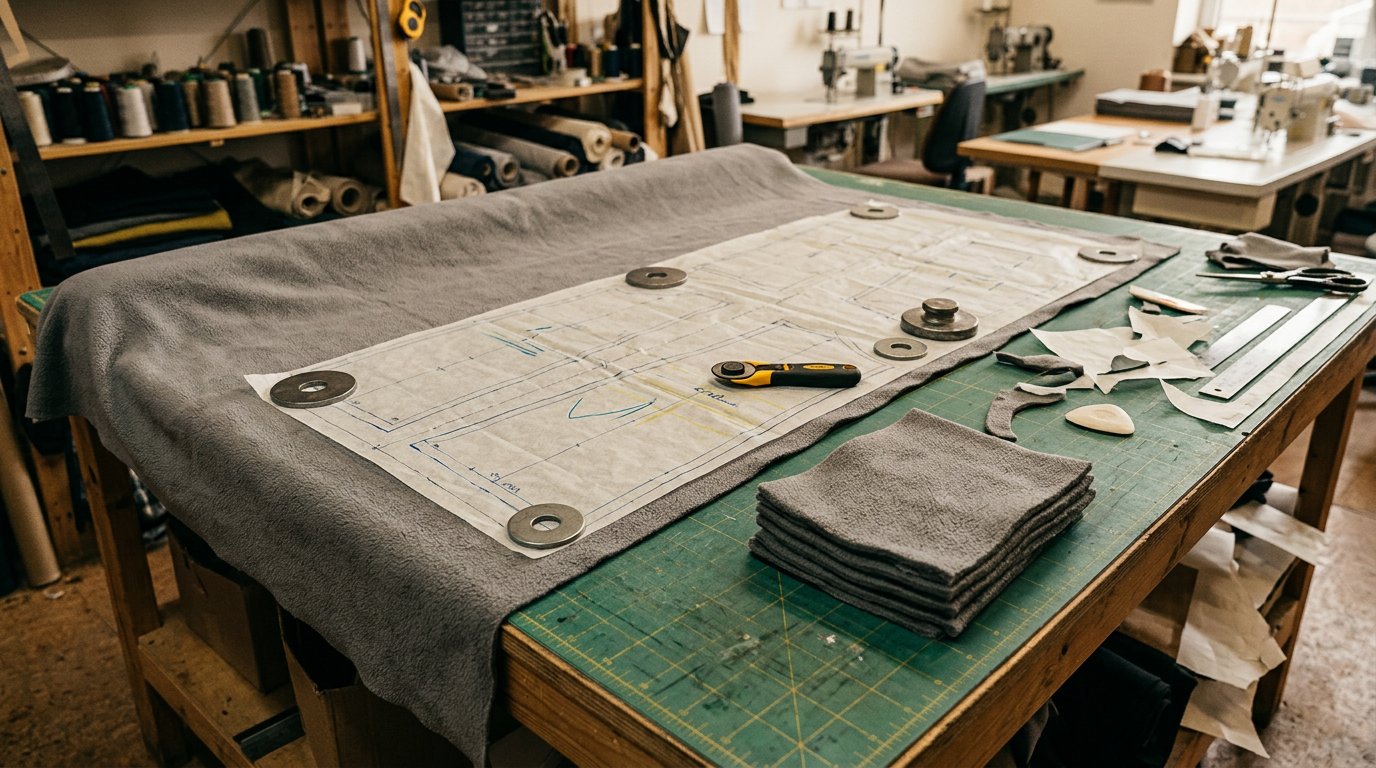
One general rule applied to everything you make is how people lose money on lots. Match the category instead.
Good fits
- Sampling and toiles, where the cloth only has to behave like the real thing.
- One-off capsules and limited drops, including a streetwear run built on fleece and jersey weights chosen for a single season.
- Linings and pocketing, where the colour match is loose and nobody sees it.
- Home decor commissions, quilting bundles, craft packs.
- Props, photography samples, and single bridal or eveningwear commissions where the client wants something nobody else owns.
Bad fits
- Uniform and workwear programs.
- Hospitality replacement programs.
- Core basics restocked every season.
- Multi-person bridal parties that must match exactly.
- Medical and PPE work.
- Anything a customer will re-order within a year.
The certification trap nobody mentions
Deadstock frequently arrives without the mill's test reports or chain of custody. That means any performance claim you want to print has no paper behind it: flame retardancy, organic content, recycled content, country of origin, or a named third-party certification. Without documentation you cannot make the claim, whatever the fabric actually is. The guide to what organic fabric certifications actually guarantee sets out what those documents have to say, and it is worth reading before you print anything on a hangtag.
Children's wear deserves its own line. Small finite runs are a good fit, but the safety and flammability documentation requirements do not relax because the fabric was cheap. If you cannot produce the paperwork, you cannot sell the garment into that market.
Let the listing do the work
Describe the product honestly and the lot stops being a problem. A limited-lot listing read by a customer who wanted a limited lot produces a happy customer. The same listing read by a customer who expected a restock produces a refund and a one-star review.
Deadstock, Decided: The Go/No-Go You Can Run in an Afternoon
Eight steps, in this order, and none of them take longer than the time you would spend arguing about the price.
- Classify the product as replenished or finite. This is the decision; everything after it is arithmetic.
- Get the reason the lot exists, in writing.
- Get a cut from the actual goods, wash it, and press it.
- Confirm one dye lot, the piece lengths, and the width.
- Compute usable-yard cost using cuttable yards, not the total on the listing.
- Add the handling premium and the trim-matching cost to the per-unit number.
- Hold back a sealed reserve cut and cost it into the run.
- Write limited lot, no restock on the product page.
The stopping rule
If any step cannot be completed because the seller will not or cannot supply what it needs, that is the answer to the whole question. A deadstock bargain does not require a leap of faith. It requires a piece-length list, a reason, and a swatch you can put in a washing machine.
The fastest test of whether a price is real
Price the same weight and construction at first quality and put the two numbers side by side. A 320gsm cotton-rich French terry has a published per-yard price at 25.99, and a 230gsm cotton-poly French terry has one at 19.99. Against those reference points, the lot price either looks like fair compensation for lost reorderability or it looks like a markup wearing a discount label. That comparison takes one search and settles most of these deals.
Global Fabric Whole Sale prices everything by the yard across more than 10,000 fabrics and sends free samples, which makes the store a useful benchmark rather than a competitor to the lot you are considering. Order a sample of a comparable weight, handle it, and let that first-quality cloth be the thing your discount has to beat.
Frequently asked questions
Is deadstock fabric lower quality than first-quality fabric?
Not necessarily. Overrun and true deadstock are usually first quality, because they came off the same loom as goods that passed inspection. Seconds and mill rejects did fail a first-quality inspection, which is fine if the seller names the fault. The real risks in deadstock are age, storage damage, mixed dye lots, and inconsistent piece lengths rather than weaving defects.
How much cheaper should deadstock fabric be?
There is no fixed percentage, and anyone quoting one is guessing. The discount has to cover three things at once: the reorderability you give up, the yardage you cannot cut, and the reserve cut you must hold back for repairs. Convert the lot price to a usable-yard cost and compare it per sellable garment against first-quality cloth of the same weight.
Can I use deadstock fabric for a product I plan to restock?
No, not if the restock has to look identical. A second run cannot match dye lot, hand, width, or shrinkage behaviour, so running out mid-program means a visible colour break, a full remake, or a refund. Use deadstock for limited runs and capsules, and keep a repeatable first-quality cloth for anything on a replenishment schedule.



 Login with Google