


How to Sew Stretchy Fabric Without the Frustration: A Practical Guide

Stretchy fabric is one of the most satisfying materials to work with — once you know what you’re doing. The problem is that most machines, set up for woven fabrics, will fight you every step of the way: skipped stitches, wavy seams, thread that snaps the moment you tug the garment. None of that is inevitable.
The fix isn’t a better machine. It’s the right needle, the right stitch, and an understanding that not all stretchy fabrics behave the same way. A lightweight single jersey needs a completely different approach than a thick 4-way stretch scuba — and this guide walks you through both.
What Makes Stretchy Fabric Tricky to Sew?
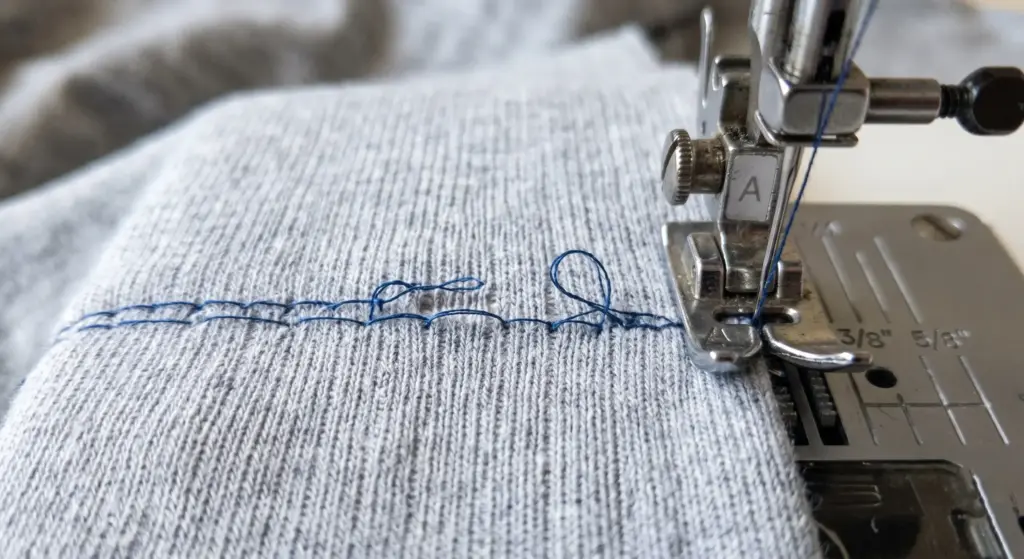
Two things go wrong when you sew stretchy fabric with standard settings. First, the needle pushes the fabric down into the feed dogs instead of piercing cleanly through it — this causes skipped stitches. Second, a straight stitch has no give, so when the seam is stretched in wear, the thread breaks.
Fix both problems and most of the frustration disappears. The sections below cover exactly how.
The Right Needle Makes All the Difference
A standard sharp needle pierces straight through knit fibres, damaging the loops and causing skipped stitches. On woven fabric that’s fine — on knits, it’s the most common source of frustration.
Switch to a ballpoint or stretch needle. The rounded tip slides between the knit loops rather than piercing through them, which eliminates most skipping instantly and prevents snags in the fabric.
- Light stretch fabrics (jersey, rib): size 75/11 ballpoint
- Medium stretch (ponte, double knit): size 80/12 or 90/14 stretch needle
- Heavy 4-way stretch (spandex, scuba): size 90/14 or 100/16 stretch needle
Also: change your needle more often than you think you need to. A slightly dull needle is the most common cause of persistent skipping, even when the type is correct.
Stitch Settings: What to Use and What to Avoid
A straight stitch will break under tension. For stretch fabrics, you need a stitch that can extend with the seam and spring back without snapping.
| Stitch Type | Best For | Notes |
|---|---|---|
| Zigzag (2–3mm wide) | Most stretch fabrics | Universal starting point; easy to adjust |
| Lightning / triple stretch | Jersey, swimwear, spandex | Stronger than zigzag; is less likely to snap under tension |
| Straight stitch | Non-stretch seams only | Will break if fabric is pulled — avoid on stretch |
| Overlock / coverstitch | Knit hems & seam finishing | Cleanest result; not required but recommended |
Start with a 2–3mm wide zigzag and a stitch length of around 2.5mm. That combination works reliably across most knit and stretch fabrics. If your machine has a dedicated stretch stitch (sometimes labelled as a lightning bolt), use that for seams that will be under the most tension — side seams and crotch seams on leggings, for example.
How Your Presser Foot Affects the Result
A standard presser foot grips the top layer of fabric more firmly than the bottom, which causes the two layers to shift — especially on slippery or very stretchy knits. A walking foot (also called an even-feed foot) moves the top and bottom layers at the same rate, giving you straight, even seams.
If you don’t have a walking foot, the tissue paper trick works surprisingly well: lay a strip of tissue paper under the fabric as you sew, then tear it away cleanly once the seam is done. It stabilises the feed without affecting the seam itself.
For very thin or delicate stretch fabrics, a Teflon or roller foot reduces drag and keeps the fabric feeding smoothly.
Adjust Your Tension (Most Beginners Skip This)
Upper thread tension set too tight is the second most common cause of problems after the wrong needle. If the seam puckers or the stitches look uneven on the underside, reduce your upper tension by one step and test on a scrap piece first.
Always do a test seam on a scrap of the same fabric before sewing your actual pieces. Stretchy fabric behaves differently from garment to garment — a setting that works perfectly on rib may need adjustment for spandex.
Sewing by Stretch Level — Not All Stretchy Fabrics Are the Same
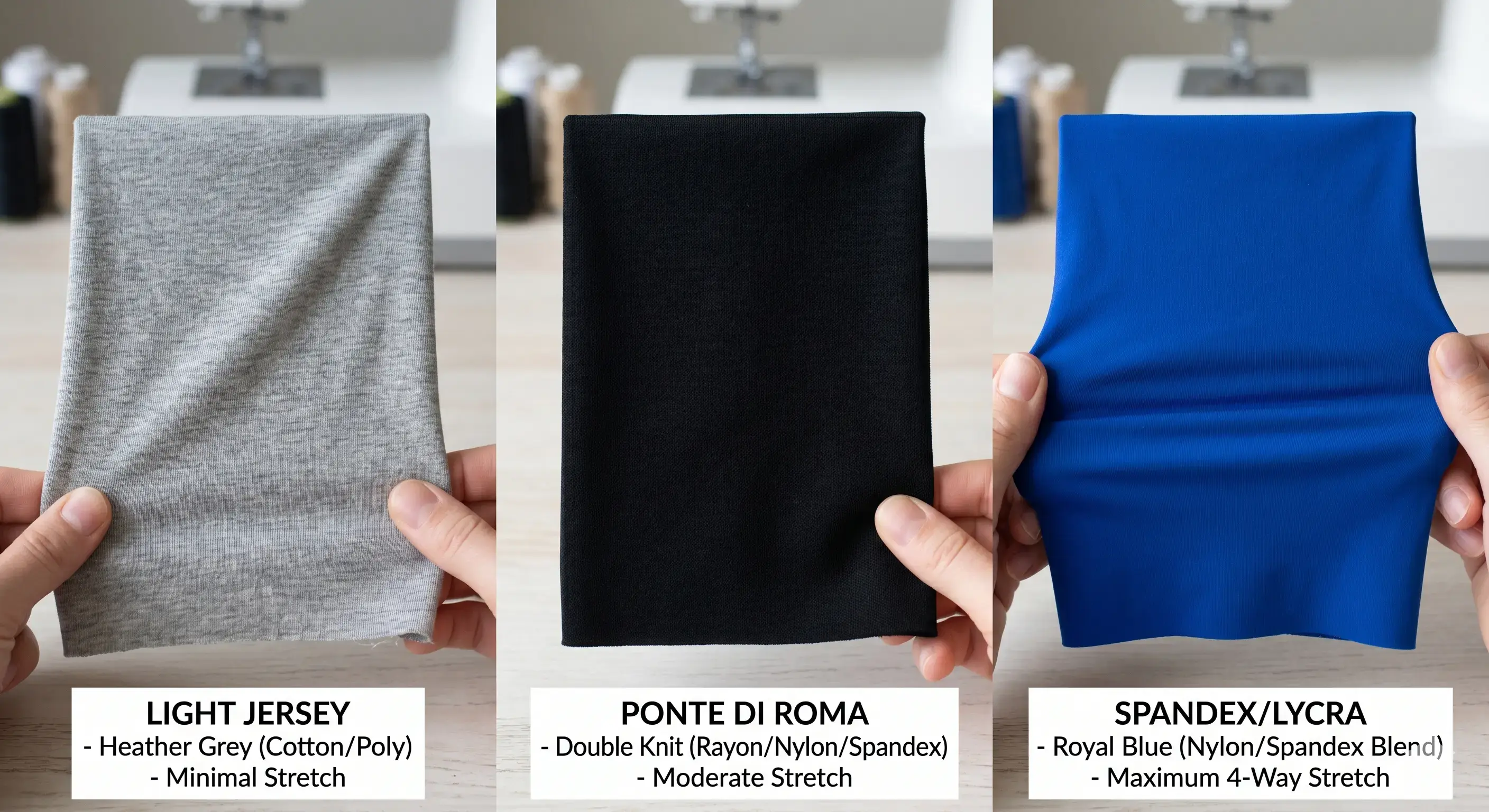
Most sewing guides treat “stretchy fabric” as one thing. It isn’t. A lightweight 2-way stretch jersey behaves very differently from a high-stretch 4-way spandex blend — and the techniques that work on one can cause problems on the other.
| Stretch Level | Fabric Examples | Key Technique | Best Projects |
|---|---|---|---|
| Light (2-way) | Single jersey, rib | Ballpoint needle + zigzag | T-shirts, cuffs, trim |
| Medium | Ponte di Roma, double knit | Stretch needle + walking foot | Dresses, blazers, pants |
| High (4-way) | Spandex, scuba, swimwear | Stretch needle + lightning stitch | Leggings, swimwear, activewear |
For 4-way stretch fabrics like spandex and scuba, the most important upgrade is switching to a lightning or triple-stretch stitch. These fabrics expand significantly under wear and a standard zigzag can still fail at high tension points.
For lighter single jersey and rib fabrics, a ballpoint needle plus zigzag is usually all you need. These fabrics are forgiving and a great starting point if you’re new to sewing knits.
5 Mistakes Beginners Make When Sewing Stretch Fabric
- Use a regular sewing needle. The most common cause of skipped stitches. Swap it for a ballpoint or stretch needle before anything else.
- Sewing with a straight stitch. It looks fine until the garment is worn — then the seam pops. Use zigzag or a dedicated stretch stitch.
- Pulling the fabric through the machine. Let the feed dogs do the work. Pulling distorts the fabric and creates wavy, stretched-out seams.
- Skipping the test seam. Tension and stitch settings need to be tuned for each fabric. Always test on a scrap of the same material first.
- Cutting without enough weight or pins. Stretchy fabric shifts easily on the cutting mat. Use pattern weights or plenty of pins to hold it in place before you cut.
Good Fabrics to Start With If You’re New to Sewing Knits
If you’re just getting started, choose a fabric with moderate stretch rather than the most elastic option. Rib fabric and Ponte di Roma are both stable enough to handle easily but have enough stretch to teach you the right technique. Once you’re comfortable with those, 4-way stretch fabrics like spandex blends become much less intimidating.
If you’re planning to make leggings specifically, take a look at the legging fabric guide for a breakdown of which materials work best by use case.
Frequently Asked Questions
Can I sew stretchy fabric on a regular sewing machine?
Yes — most standard machines can handle stretchy fabric once you’ve switched to the right needle and stitch type. A zigzag stitch and a ballpoint needle are all you need for most knit fabrics.
Do I need a serger to sew stretchy fabric?
No. A serger gives cleaner seam finishes and is faster for garments like T-shirts, but it’s not required. A regular machine with a zigzag stitch produces perfectly functional seams on stretch fabric.
Why does my machine skip stitches on stretchy fabric?
Almost always a needle problem. Make sure you’re using a ballpoint or stretch needle — not a standard sharp — and that it’s not dull. A fresh needle fixes the issue in the majority of cases.
What thread works best for stretch fabric?
Polyester thread has more give than cotton and is the standard recommendation for stretch fabrics. Avoid 100% cotton thread for seams that will be under tension — it’s more likely to snap.
Ready to sew? Browse our stretchy fabric collection — available by the yard in a range of weights and compositions, so you can order exactly what your project needs.




 Login with Google