-

Free Samples!



Sewing for Beginners: 6 Fabric Mistakes That Ruin a Project Before the First Stitch

Table of Contents
Most 'beginner sewing mistakes' aren't sewing mistakes at all. They start with the fabric: picking something slippery, stretchy, or unstable for your skill level, skipping prewash, or cutting against the grain. Fix the fabric choice and the prep, and half the classic beginner disasters never happen before you even reach the machine.
Key takeaways
- Most beginner sewing disasters start at fabric selection, not at the machine: slippery satin, sheer chiffon, and unstable stretch knits punish even perfect technique.
- Prewash, press, and square the grainline before cutting; skipping this step causes garments to twist or hang crooked no matter how accurate the stitching is later.
- Match needle type to fabric structure: sharp-point needles for wovens, ballpoint or stretch needles for knits, to prevent skipped stitches and snagged fibers.
- If right and wrong sides are nearly identical on a fabric, mark the wrong side with chalk right after cutting to avoid sewing a seam backwards.
- Heavier, tightly-woven or tightly-knitted mid-weight fabrics like a 230-320gsm cotton-blend French Terry or 220-270gsm interlock forgive early mistakes far better than chiffon, satin, or lace.
Why Your First Sewing Disaster Probably Started at the Fabric Store
You can thread your machine perfectly, nail your tension, and still end up with a wobbly, puckered mess because the fabric itself was never going to cooperate. Chiffon shifts the second you look at it. Satin slides off the table on its own. A stretchy jersey with no stabilizer waves and stretches out of shape under even a gentle presser foot. No amount of technique fixes that.
Most advice out there focuses on what happens once the fabric is already under the needle: adjust your presser foot, fix your tension, measure twice. That's useful, but it treats the symptom, not the cause. The real fork in the road happens earlier, at the moment you pick which bolt of fabric to buy for your skill level.
This post walks through six mistakes that sabotage beginner projects, and most of them trace back to a fabric decision made before the first stitch. We'll also show you exactly which fabric categories forgive early mistakes and which ones amplify them.
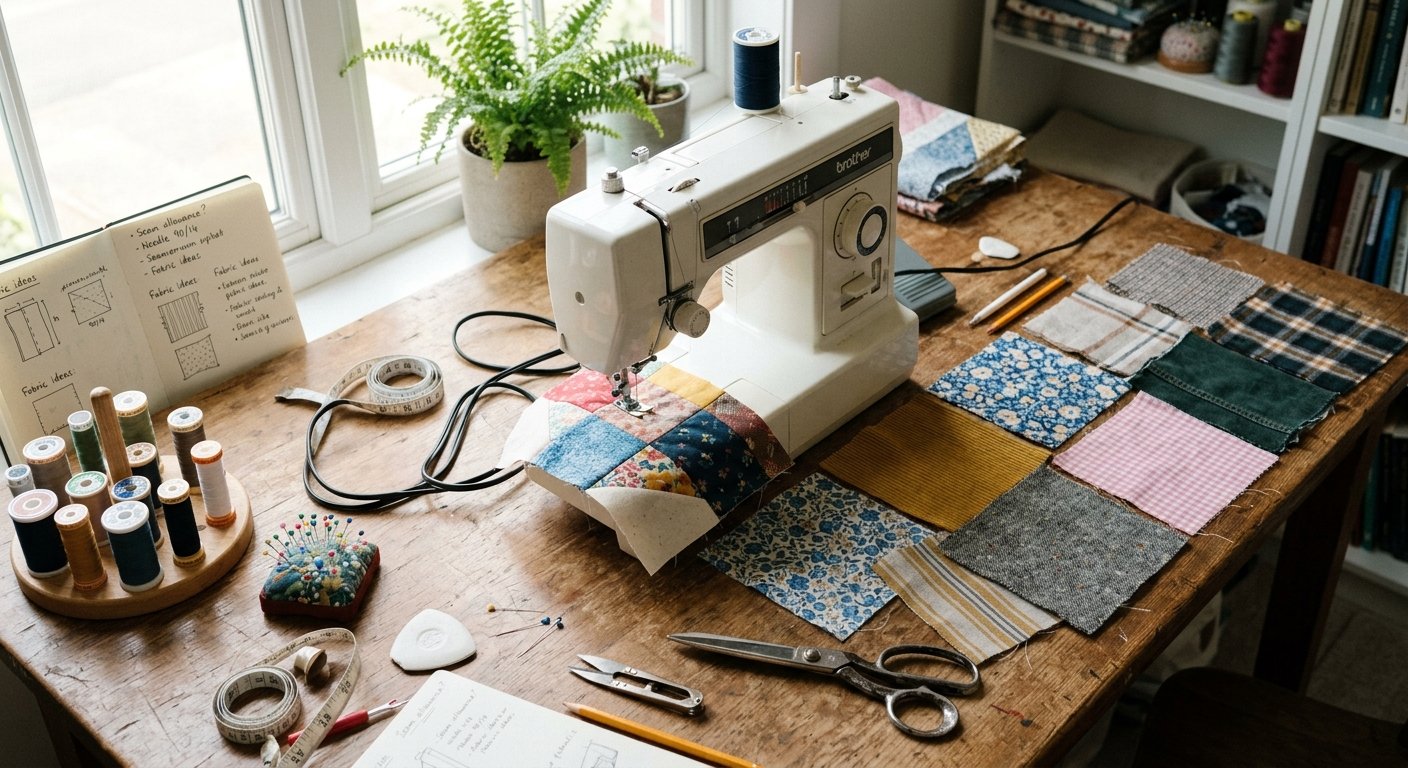
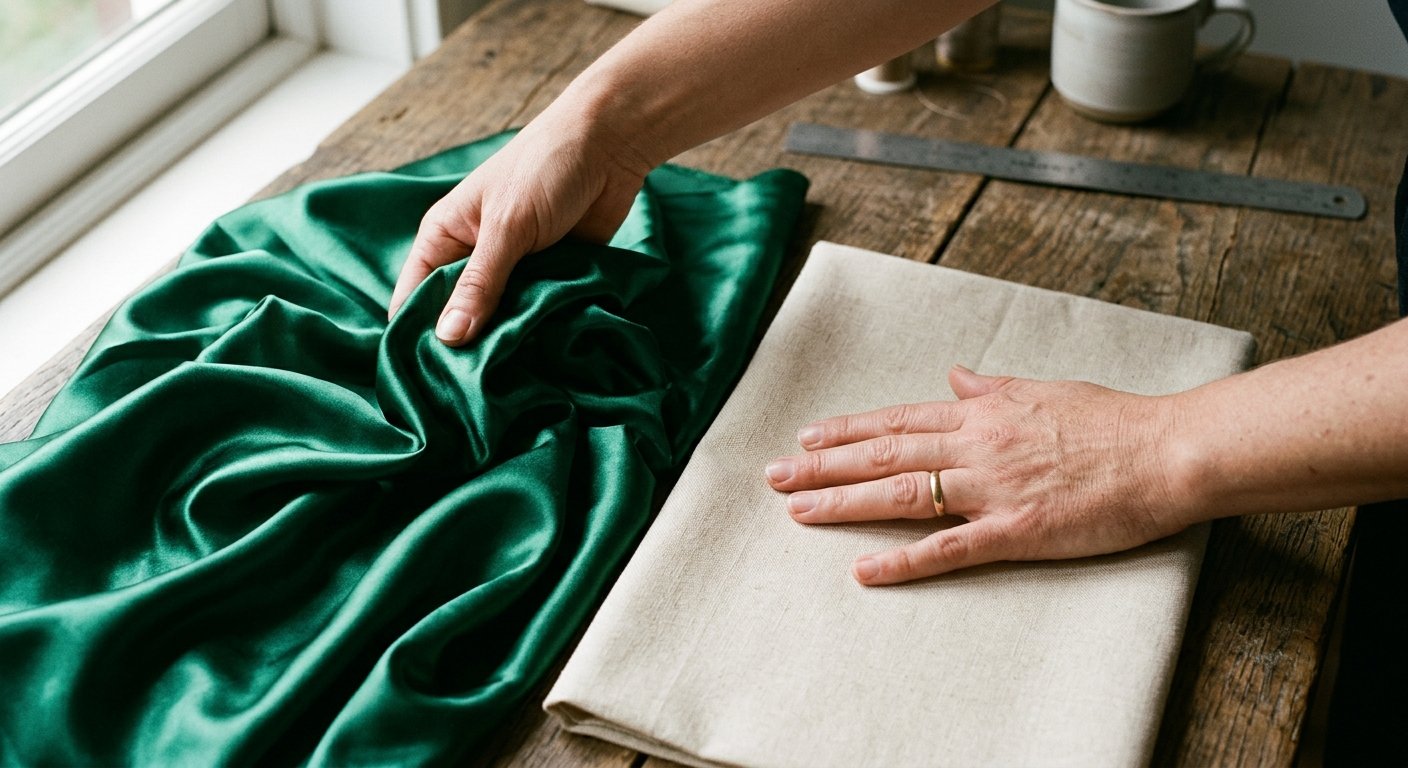
Mistake #1: Choosing a Fabric That Fights Back (Slippery, Stretchy, or Sheer)
Some fabrics are objectively harder to control, and it has nothing to do with your skill. Slippery synthetics like satin and chiffon shift under the presser foot almost as soon as the needle moves, which distorts seams even when your stitching is technically correct. You can read more about why satin behaves this way in our comparison of silk vs satin.
Knits and stretch blends bring a different problem. Fabric with spandex or elastane content needs to move with the needle, not against it. Sew it like a stable woven and you'll get puckered, wavy seams that never lie flat, no matter how many times you re-press them. Understanding the difference matters enough that we wrote a full breakdown on knit vs. woven fabrics and why confusing the two causes downstream problems.
Sheer fabrics are punishing in a different way: they reveal every crooked seam, every stray thread, every slightly frayed edge. There's nowhere to hide a small mistake.
The beginner-friendly swap is almost always a tightly woven, mid-weight cotton or cotton-blend. It holds its shape under the needle, doesn't slide, and tolerates a seam ripper without falling apart.
What Is the Most Difficult Fabric to Sew (And Why Beginners Keep Choosing It Anyway)
The hardest fabrics to sew are the ultra-sheer, bias-cut, or heavily textured ones: chiffon, velvet, satin, and lace. They move during cutting, fray or shed during construction, and hide stitch lines so poorly that every flaw is visible in the finished piece. Velvet adds another layer of difficulty because its nap shifts direction and crushes under pins.
So why do beginners keep buying them? Because they're shopping for pretty, not for sewable. A pattern photo showing a gorgeous chiffon dress doesn't come with a warning label about bias drape and fraying edges. If you're drawn to that kind of look for a special-occasion project, it's worth reading up on the best fabrics for evening dresses and formal wear before you commit a first attempt to the trickiest fiber on the list.
A simple litmus test before you buy: pinch the fabric and hold it flat on the table. If it slides off on its own without you pulling it, that's a fabric that will fight you at the machine too. Fabrics with some body, structure, and weight stay where you put them.
Mistake #2: Skipping the Grainline (And What to Do With Fabric Before You Even Cut)
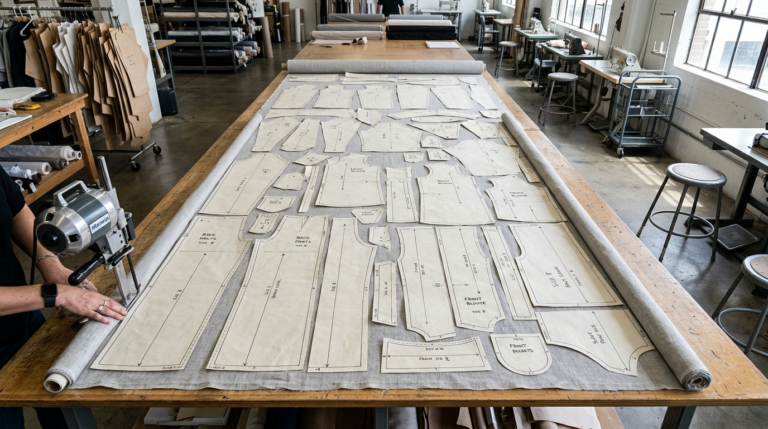
Prewash or pre-treat the fabric to remove sizing and shrink it before cutting, press it completely flat, then square up the grain before you pin a single pattern piece. Skip this and your garment can twist or hang crooked later, no matter how precise your stitching is.
The sequence that prevents most cutting disasters:
- Prewash or pre-treat the fabric the same way you plan to care for the finished garment, so shrinkage happens before cutting, not after.
- Press the fabric flat, removing fold lines and creases that distort measurements.
- Find and square the grainline. Woven fabric should be cut with the pattern aligned to the lengthwise grain, not just roughly straight.
- Mark with tailor's chalk before you cut, not just with pins, especially on fabrics that shift easily.
- Measure twice, cut once. It's cliché because it's the cheapest insurance step most beginners skip when they're excited to get started.
If you're unsure how a fabric will shrink or behave once treated, testing a small cut on a scrap first (rather than guessing) saves a lot of grief. Something like muslin fabric is a cheap way to test a pattern's fit and grain before you touch your good fabric at all.
Mistake #3: Mismatching Needle, Thread, and Stitch to the Fabric Type
If your stitches aren't catching, the usual cause is a needle that's wrong for the fabric weight or structure, not a tension dial that needs fixing. Beginners default to whatever needle is already in the machine, and that habit is a common source of skipped stitches and snagged seams.
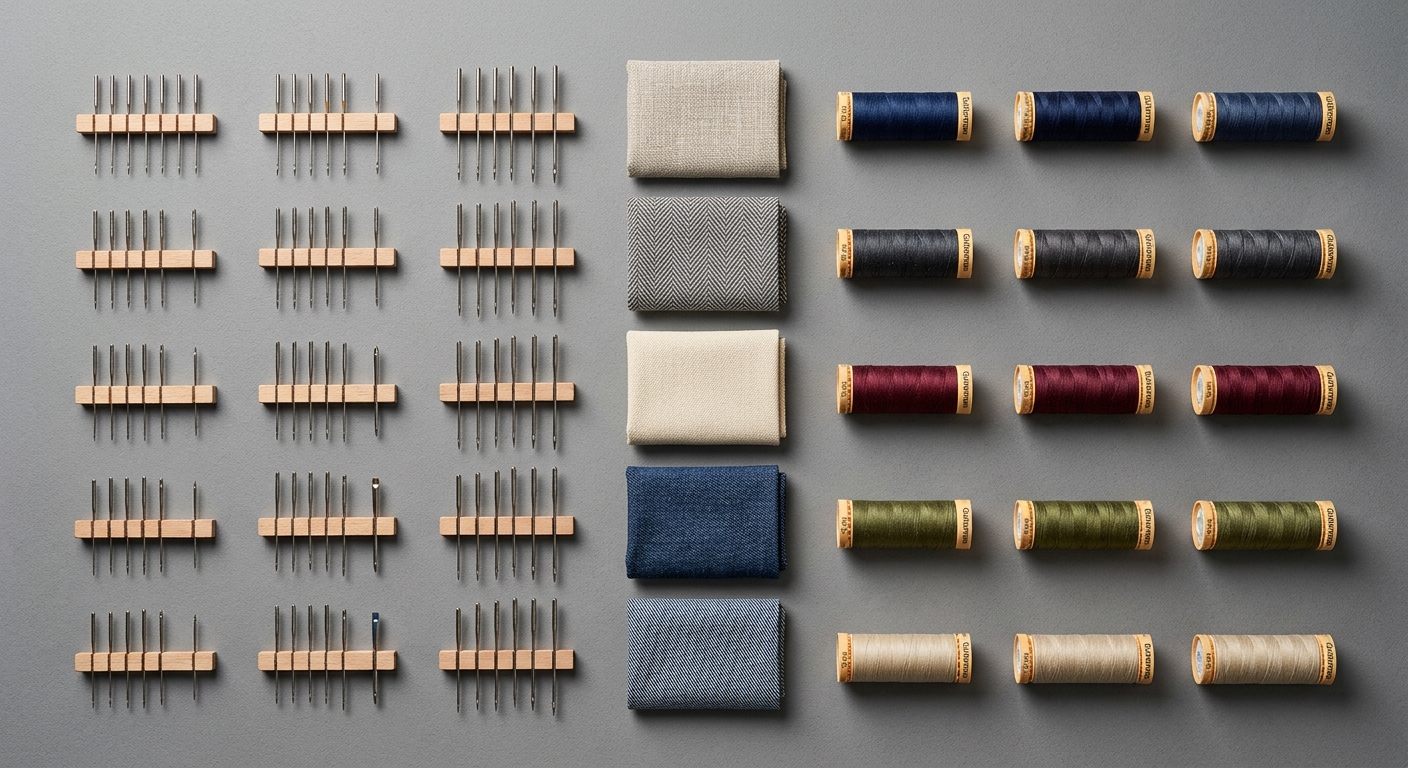
- Woven fabrics need a sharp-point needle that slices cleanly between the threads.
- Knit fabrics need a ballpoint or stretch needle. A sharp needle punctures the knit's fibers instead of pushing them aside, which causes runs and skipped stitches.
- Thread weight should scale with fabric weight: heavy topstitching thread on delicate chiffon will pucker it, while fine thread on heavy canvas simply won't hold under stress.
- Always test your stitch length, tension, and needle choice on a scrap of the actual fabric you're using, not a random swatch from the stash. Different fabrics, even similar-looking ones, behave differently under the same settings.
This is also where fiber content matters more than most beginners realize. A 95% cotton/5% spandex French Terry handles very differently from a 100% polyester tricot, even if they look similar on the bolt.
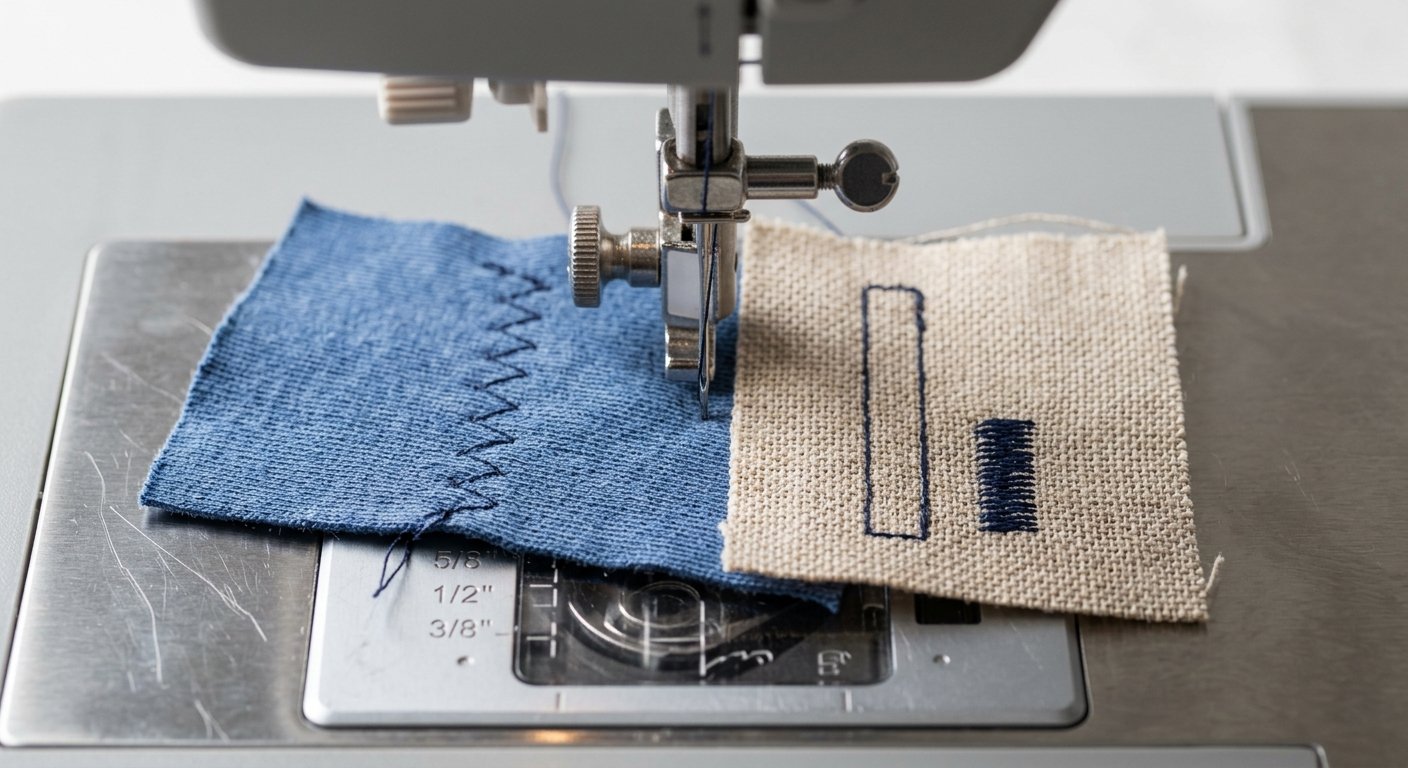
Mistake #4: Sewing a Seam the Wrong Way (Right Sides, Wrong Sides, and How to Recover)
If you accidentally sew fabric with the wrong sides together, use a seam ripper to unpick the seam rather than cutting it, then re-align the right sides and restitch. On fabrics that mark easily, like satin or velvet, work slowly and avoid repeated needle holes in the same spot, since they stay visible.
This mistake happens far more often on fabrics where the right and wrong sides look nearly identical, such as some plain cottons or certain knits, than on fabrics with an obvious print direction or nap. A busy plaid or a directional print makes the mistake almost impossible; a flat solid-color interlock makes it easy.
The fix is simple: the moment you cut your pieces, mark the wrong side with a small chalk dot or a safety pin on fabrics where the sides are ambiguous. It costs nothing and it prevents a mistake that's annoying to unpick later, especially on fabric that shows needle holes.
Mistake #5: Treating Pressing as Optional Instead of a Construction Step
Pressing each seam as you go isn't a finishing touch, it's part of construction. Skip it and bulk, misalignment, and uneven seam lines compound through the rest of the garment, so a tiny issue in step two becomes a visible flaw by step ten.
Heat tolerance isn't universal. Synthetics can scorch, glaze, or melt under an iron temperature set for cotton or linen. A fabric with spandex or polyester content needs a cooler setting and often a pressing cloth, while a heavy cotton can usually take direct heat and steam without complaint.
Always test your iron's heat setting on a scrap first, especially on blends where you're not sure which fiber dominates. If you're buying fabric you've never worked with before, running a few quick checks at home, including a heat test, before committing to a larger cut is worth doing. Our guide on fabric tests you can run at home before committing to a bulk order covers exactly this kind of due diligence.
Matching Fabric to Your Skill Level: A Beginner-Friendly Shortlist
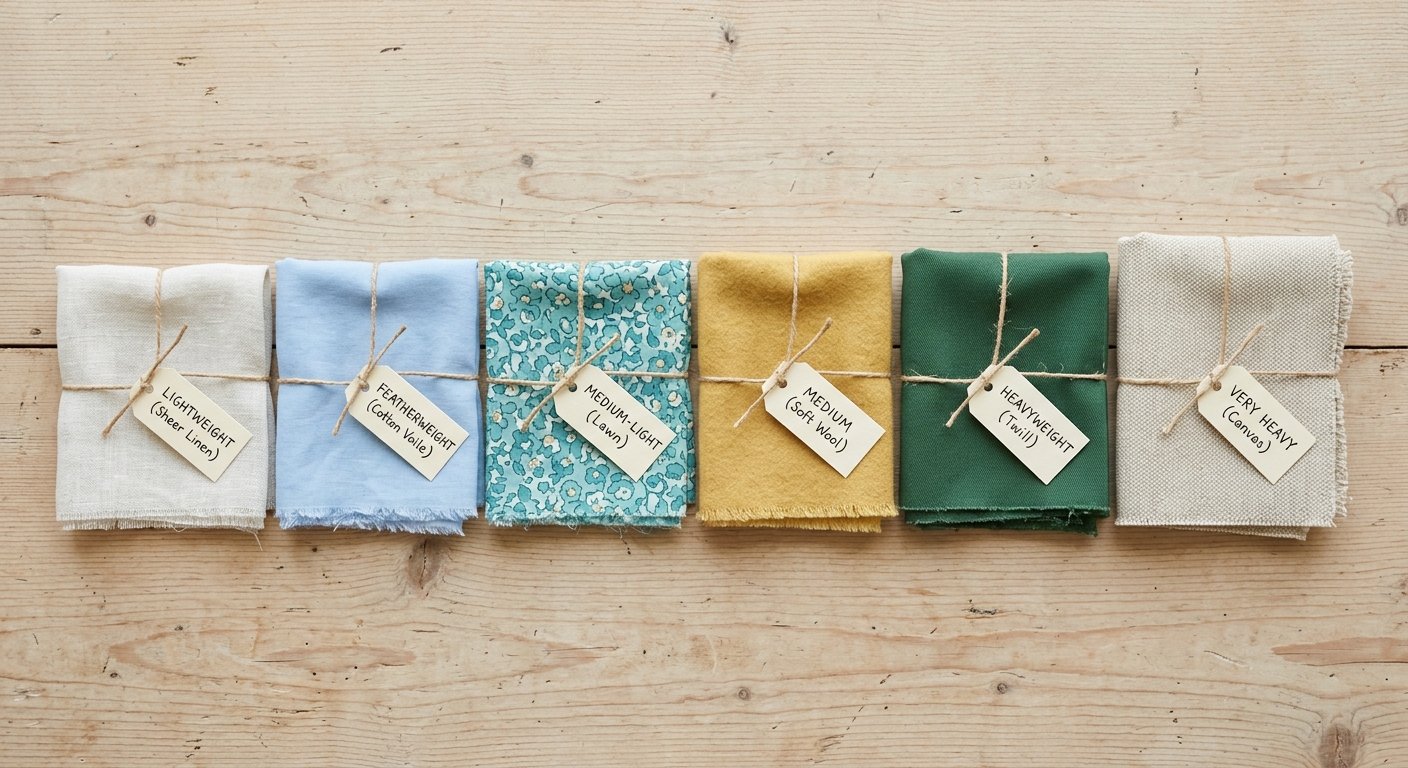
The general rule: the heavier and more tightly woven or knitted a fabric is, the more beginner mistakes it absorbs without showing. A trendy fabric that drapes beautifully in a finished garment often does so because it's thin and slippery, which is exactly what makes it hard to control under a beginner's needle.
| Category | Good First Projects | Why It Works |
|---|---|---|
| Mid-weight cotton/poly woven | Tote bags, simple tops, skirts | Holds a crease, doesn't fray badly, tolerates unpicking |
| Stable French Terry knit | Sweatshirts, loungewear | Heavier GSM (like the 230gsm 60/40 cotton-poly knit alternative to single jersey, or the 320gsm 84% cotton KF1358) resists curling and distortion better than a thin jersey |
| Interlock knit, 220-270gsm | Dresses, tops, T-shirts, sleepwear | Mid-range interlock weights behave predictably and are used across dresses, tops, T-shirts, sleepwear, and sportswear for good reason |
| Chiffon, satin, lace | Postpone until more experienced | Slippery, sheer, or textured in ways that punish small errors |
If you're not sure how a fabric will actually feel and move until you've got it in your hands, that's normal. It's also exactly why buying by the yard before committing to a full bolt matters so much at the beginner stage.
Start Your Next Project With Fabric That's On Your Side
Fix the fabric decision and the prep routine, and a lot of the classic beginner disasters simply don't happen, regardless of how new you are to the machine.
Mistakes are part of learning to sew. Nobody skips that stage. But there's no reason to make your learning curve steeper by fighting a fabric that was never going to cooperate in the first place.
Global Fabric Wholesale carries over 10,000 fabrics sold by the yard, which means you don't have to commit to a full bolt to test whether a fabric suits your skill level. On interlock fabric specifically, there's no minimum order, so you can start with a single yard, run your needle and heat tests, and only scale up once you know the fabric behaves the way you expect.
Frequently asked questions
What is the most difficult thing to sew?
Ultra-sheer, bias-cut, or heavily textured fabrics like chiffon, velvet, satin, and lace are the hardest to sew. They shift during cutting, fray easily, and reveal every crooked stitch line, which punishes small errors that heavier, tightly woven fabrics would simply absorb.
Why are my sewing machine stitches not catching?
Usually the needle is wrong for the fabric: a sharp-point needle on a knit punctures fibers instead of pushing them aside, causing skipped stitches and runs. Swap to a ballpoint or stretch needle for knits, and a sharp needle for wovens, then retest on a scrap.
What will you use if you accidentally sew the fabric the wrong way?
Use a seam ripper to carefully unpick the seam, never scissors, then re-align the right sides together and restitch. On fabrics that mark easily, such as satin or velvet, work slowly to avoid leaving visible needle holes in the same spot.
What to do with fabric before sewing?
Prewash or pre-treat the fabric to handle shrinkage and remove sizing, press it completely flat, and square up the grainline before pinning any pattern piece. Skipping these steps is the most common reason finished garments twist or hang unevenly.





 Login with Google