


Herringbone, Houndstooth, and Plaid: How Pattern Weaving Changes the Way Fabric Behaves on the Cutting Table

Herringbone, houndstooth, and plaid change fabric behavior because the pattern isn't printed on top of the cloth — it's built into the weave itself, which means the lines, chevrons, and checks shift with grain, bias, and yarn tension. That structural reality forces cutters to add 8–25% more yardage, slow down layout time, and match seams with a precision solid fabrics never require. Skip that step and you get mismatched sleeves, crooked lapels, and a garment that reads as cheap even if the fabric wasn't.
Why These Aren't 'Prints' — They're Structural Patterns
Here's the mistake a lot of new buyers make: they treat herringbone, houndstooth, and plaid like any other patterned fabric and order yardage the same way they would for a floral print. That's a costly assumption. These three patterns are created by the weave itself — the way warp and weft yarns cross — not by dye applied afterward.
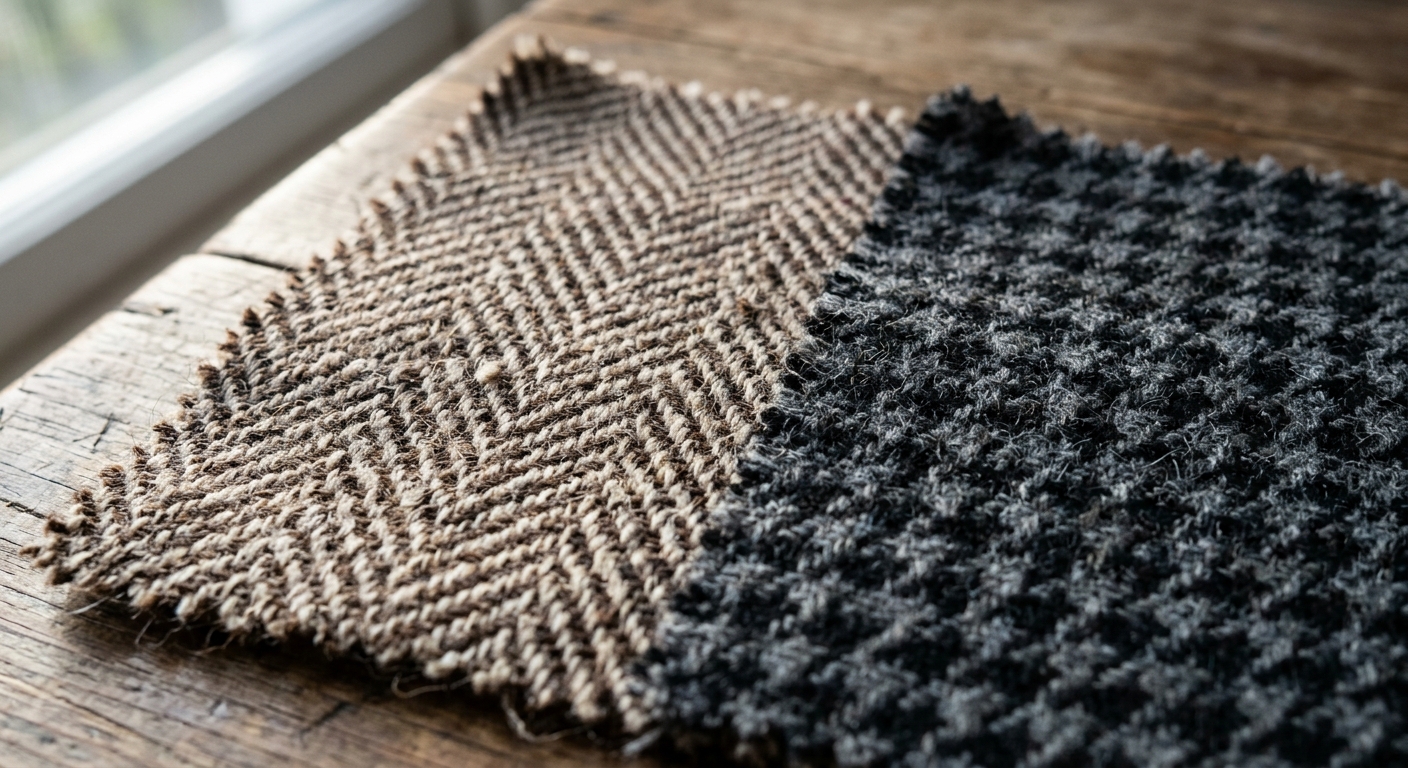
Herringbone is a broken twill weave where the diagonal ribs reverse direction, creating that V-shaped chevron. Houndstooth is a variation of the same broken twill, but woven with alternating light and dark yarns to form a four-pointed star-like check. Plaid (technically a woven check or tartan structure) uses colored yarns dyed before weaving, arranged in bands across both the warp and weft.
Because the pattern is woven in, it has thickness, texture, and directional grain — which means it behaves differently under scissors, rotary cutters, and steam than a flat printed surface ever would. If you're sourcing from a dobby fabric supplier, you're already dealing with loom-controlled geometric patterns — herringbone and houndstooth live in that same technical family.
The Yardage Math Nobody Warns You About
Plan on buying more fabric than the pattern pieces technically require — sometimes a lot more. Plaid can demand 15–25% extra yardage depending on the repeat size, while herringbone and houndstooth typically run 8–15% over a comparable solid.
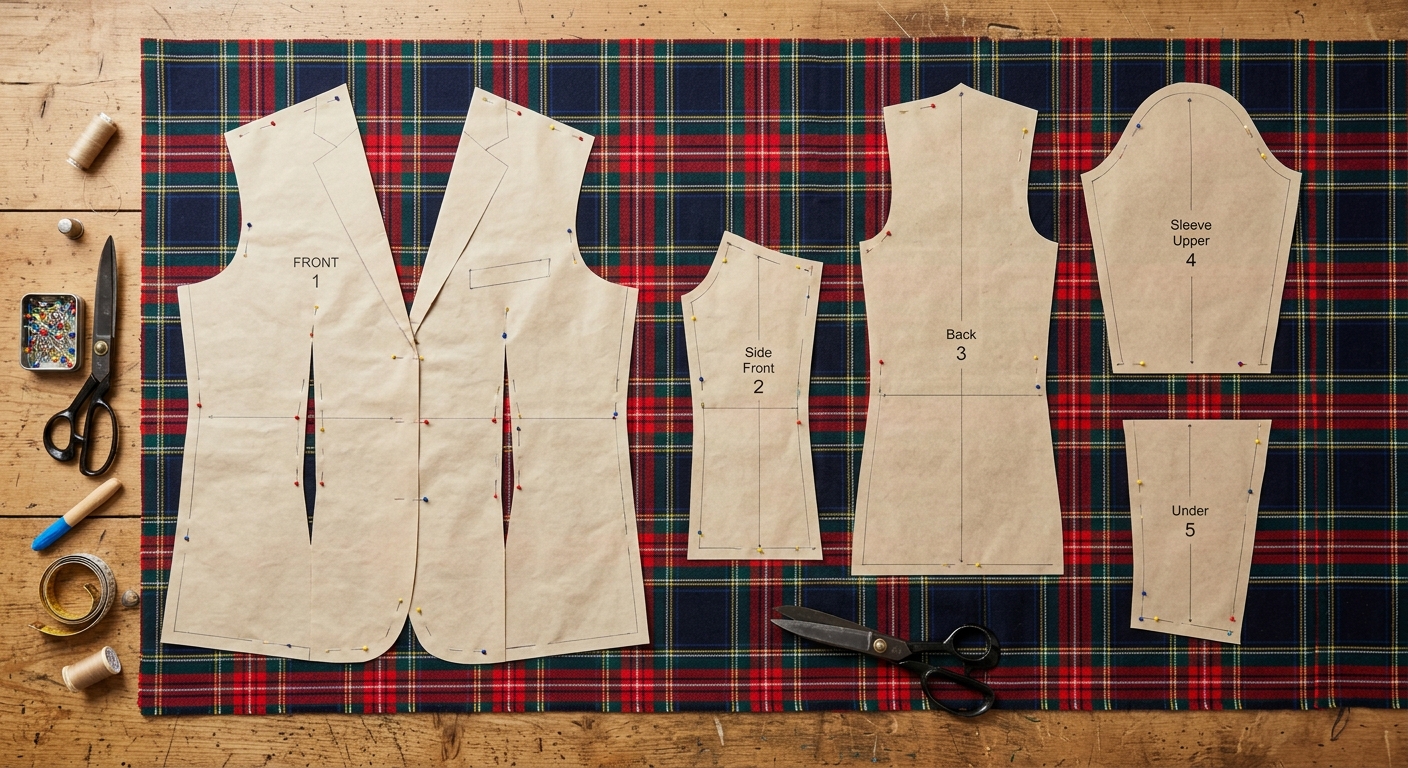
Why? Because every seam that crosses a visible pattern line has to match on both sides. A sleeve seam, a center back seam, a collar point — each one needs the chevron or check to continue unbroken across the join. That means cutters can't nest pattern pieces efficiently the way they would with a solid twill or poplin. For a deeper dive into avoiding over-ordering in general, see our guide on calculating exact fabric yardage needed — then add the pattern-matching buffer on top.
A Real Numbers Example
Say a tailored blazer pattern needs 2.5 yards of solid wool suiting. Switch to a large-scale plaid with a 4-inch repeat, and that same blazer can require 3.2–3.5 yards once you account for matching at the lapel, pocket flaps, and center back seam. Multiply that across a 500-unit production run and you're looking at hundreds of extra yards — budget for it before you quote the client, not after.
Directional Grain: The Detail That Sinks Amateur Cuts
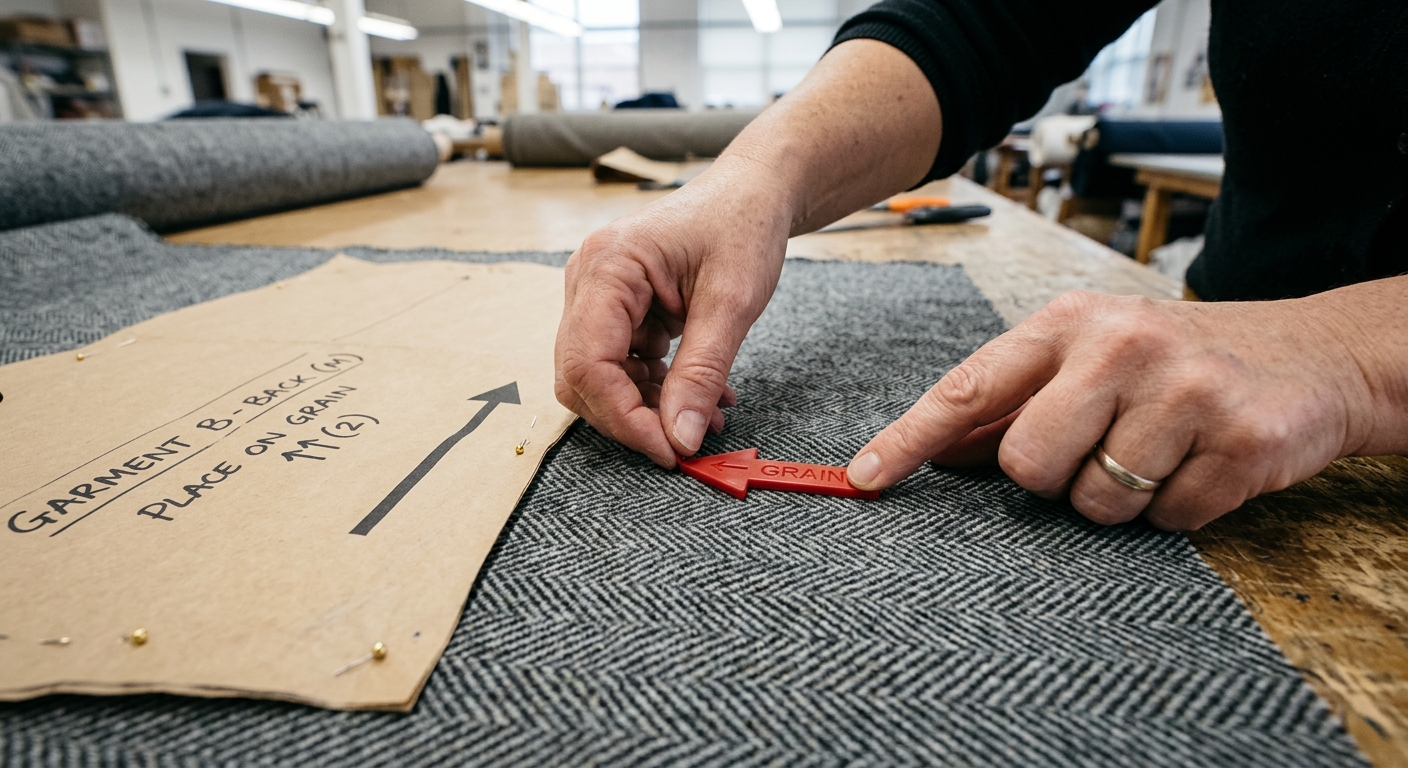
Herringbone chevrons point. That single fact wrecks more garments than any other cutting mistake with this fabric. If the zigzag on your left sleeve points up and the right sleeve points down, the asymmetry is obvious even to someone who's never sewn a stitch in their life.
Houndstooth has the same problem but it's subtler — the motif needs to sit at the same scale and orientation on mirrored pieces, or the four-point star pattern looks lopsided across the garment's centerline. Experienced cutters mark a directional arrow on every pattern piece before the first cut, the same way you would with a napped fabric like velvet.
For instance, a workwear brand producing herringbone work jackets in bulk once had an entire 200-unit batch flagged at QC because a second-shift cutter laid half the pieces upside down relative to the chevron direction. The fix cost them a full day of re-cutting and re-laying fabric that had already been paid for — a mistake that proper directional marking would have prevented entirely.
What Happens When You Cut These Patterns on the Bias
Cutting plaid on the true bias creates a diagonal striping effect sometimes called a 'barber pole' look — and it's either a deliberate design choice or a disaster, depending on whether the pattern maker meant to do it. Bias-cut plaid collars and cuffs are a classic menswear detail; bias-cut plaid everywhere else usually means someone wasn't paying attention to the lay plan.
Herringbone on the bias softens the visual chevron into something closer to a subtle texture — some designers actually prefer this for draped garments because it reduces the harshness of the diagonal line. Houndstooth is the least forgiving of the three: cut it on the bias and the four-point star motif essentially disintegrates into visual noise.
If your production involves stretch wovens or anything with mechanical give, this gets more complicated. Our stretch fabrics guide covers how elastane content changes bias behavior, which compounds everything discussed here when a plaid or herringbone fabric also has 2-4% spandex woven in.
Single-Ply Cutting: Slower, But Non-Negotiable for These Patterns
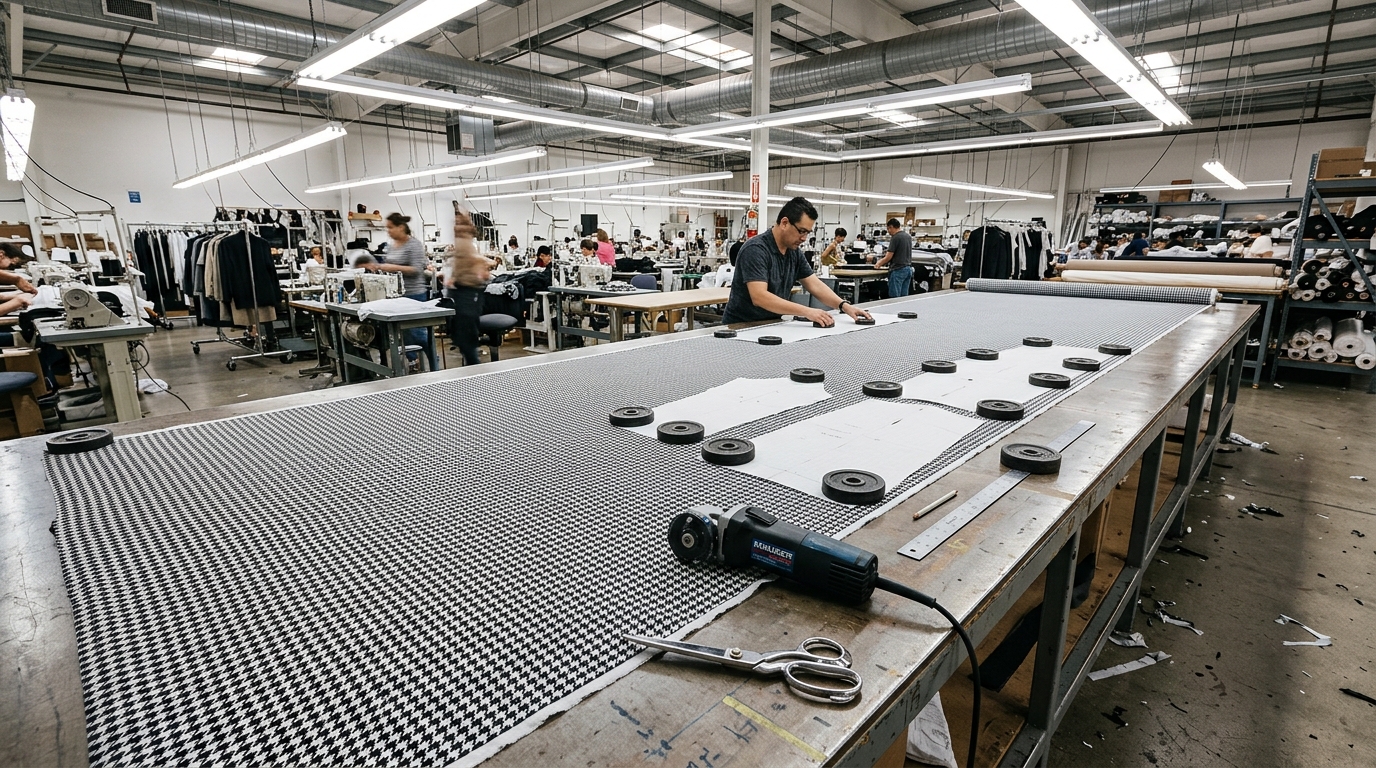
Most bulk cutting happens in multi-ply stacks to save time — lay ten, fifteen, even thirty layers of fabric and cut them all at once. That approach fails with herringbone, houndstooth, and plaid because even a few millimeters of shift between layers throws off pattern alignment at the seams.
Production floors cutting these fabrics typically drop to single-ply or two-ply lays, and they slow the cutting speed accordingly. It costs more labor time per unit, which is exactly why plaid and houndstooth garments often carry a price premium even when the raw fabric cost is comparable to a solid. If you're quoting a client on a patterned-weave order, build that labor differential into your pricing conversation up front — not as a surprise change order later.
Matching Checklist for Cutters
- Mark the pattern repeat point on every pattern piece before cutting
- Align center front and center back seams first, then work outward
- Check collar and lapel points against the body panel before committing to the cut
- Photograph the aligned lay plan before cutting as a QC reference
Scale Matters More Than Most Buyers Realize
A small-scale houndstooth (quarter-inch motif) behaves almost like a textured solid from a distance — forgiving of minor mismatches, fast to cut, low waste. A large-scale glen plaid or windowpane check with a 3-4 inch repeat is a completely different animal, demanding precise matching and generating significantly more fabric waste at the cutting table.
This scale difference also affects how the fabric reads in different garment applications. A fine herringbone works beautifully for a tailored jacket fabric because the pattern stays subtle even at seam breaks. A bold, oversized plaid on the same jacket silhouette needs careful panel planning or the garment starts looking like mismatched patchwork rather than intentional tailoring.
Coat-weight fabrics compound this further — thicker coat fabric in a large plaid is harder to steam and manipulate at the seam, so pattern shift during pressing becomes its own quality control concern that solid coatings never face.
Steaming, Pressing, and Pattern Distortion After the Cut
Cutting correctly is only half the battle — steam and heat can shift a woven pattern even after the pieces are cut. Herringbone wool, in particular, can 'walk' slightly under a hot iron if you press against the grain rather than with it, subtly distorting the chevron over multiple pressing cycles.
The fix is pressing with a clapper and pressing cloth, always working in the direction of the weave rather than against it, and avoiding excessive steam on loosely woven plaids that can shrink unevenly in the warp versus the weft. This uneven shrinkage is a different issue than what's covered in our fabric shrinkage cheat sheet — that resource addresses overall shrinkage percentages, but patterned weaves need an additional check for directional distortion, not just size change.
When It's Worth the Extra Cost — And When It Isn't
Not every project justifies the extra yardage, labor, and cutting time these patterns demand. A tailored blazer, a structured coat, or a statement accessory earns the premium — the pattern match becomes part of the perceived quality. A high-volume, budget-tier basic garment usually doesn't; the extra cost per unit erodes margin without a proportional increase in perceived value to the end customer.
A practical rule we give wholesale buyers: if the garment has structural seams that cross the torso or sleeve at a visible angle (blazers, structured coats, fitted vests), pattern-matched weaves are worth it. If the garment is loose, unstructured, or the patterned panel is small — like a vest fabric panel or a collar detail — you can often get away with a less rigorous match and save real money on yardage.



 Login with Google