


Fabric for Trade Show Booths and Backdrops: What Holds Up Under Lights, Travel, and Repeated Setup

The fabric that holds up best for trade show booths and backdrops is a stretch polyester knit, specifically one engineered for tension-mounted display frames, because it resists wrinkling after being crammed into a crate for three days, prints vividly under harsh LED lighting, and survives 100+ setup-and-teardown cycles without sagging or tearing at the seams. Cotton and canvas look great on day one in the showroom and terrible on day three of a convention floor. If your booth fabric can't survive a cross-country flight in a rolling case, it's the wrong fabric — full stop.
Why Trade Show Fabric Fails Faster Than Any Other Application
Most fabric gets judged on how it looks hanging still in a store or a living room. Trade show fabric gets judged on how it looks after being folded into a 24-inch crate, shipped through three airports, and stretched onto an aluminum frame by someone who's never touched it before. That's an entirely different stress test.
The real enemies aren't dirt or spills — they're heat, repeated flexing, and UV-heavy stage lighting. LED panel walls and halogen spotlights run hot and bright, and cheap dyes visibly shift color or dull within a single three-day show. Add the mechanical stress of tension-fit frames pulling fabric taut dozens of times a season, and you've got a textile doing a job most fabrics were never designed for.
This is also why GSM alone won't tell you what you need to know here — you need to think about recovery and colorfastness together, something we break down in fabric weight explained.
Stretch Polyester: The Default Choice, and Why
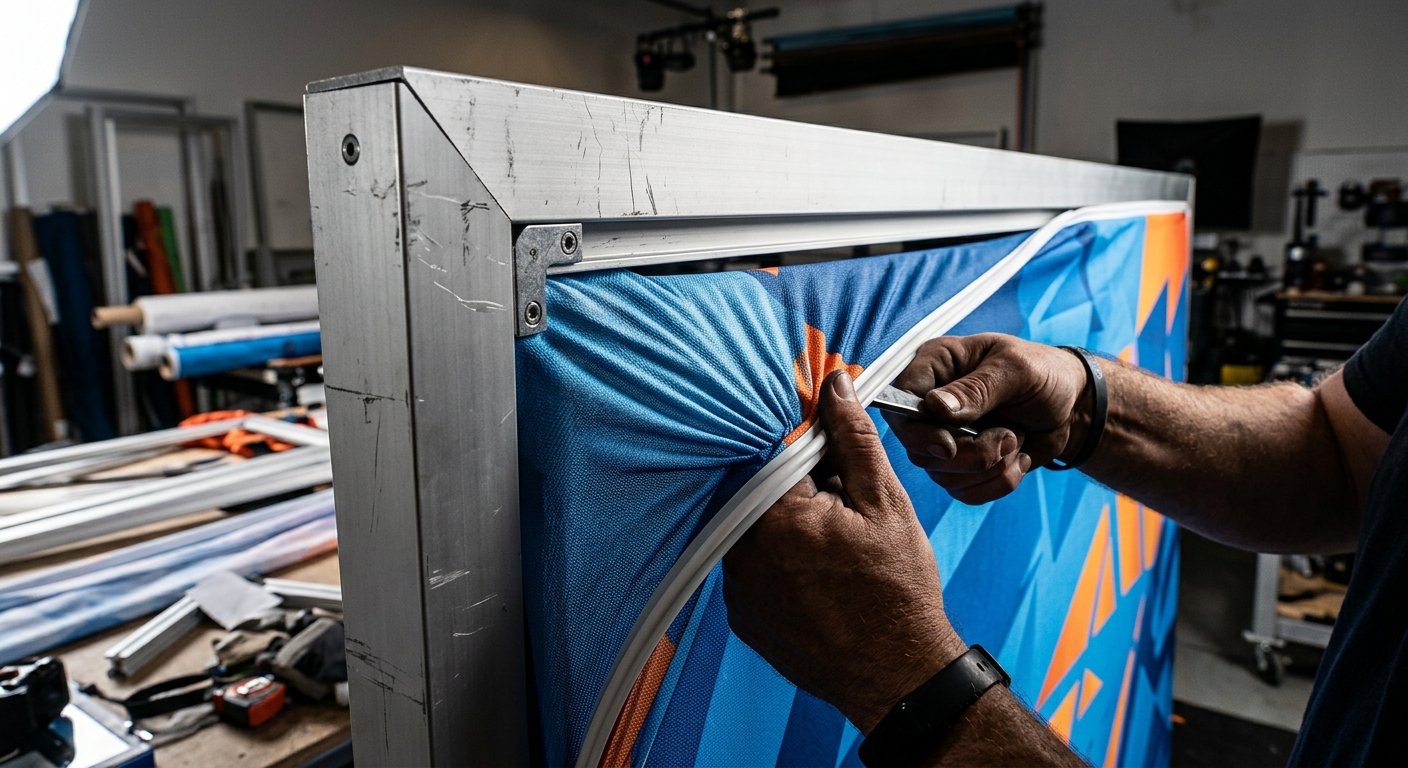
Tension fabric displays — the pop-up frames you see at nearly every convention hall — rely almost exclusively on 4-way stretch polyester knit, usually in the 180-220 GSM range. Here's why it wins: the stretch lets a single panel pull drum-tight over a frame without visible seams or sagging, and polyester's molecular structure means it springs back from folding instead of holding a crease.
Dye-sublimation printing is the other half of this story. Because the ink gets heat-bonded into the polyester fibers rather than sitting on top, colors stay saturated under stage lighting instead of washing out. A logo printed in Pantone-matched red needs to look the same under convention center fluorescents as it does under a vendor's portable LED rig — dye-sub on stretch poly delivers that consistency show after show.
For teams comparing fiber options more broadly, our breakdown of cotton vs. polyester vs. blends explains why synthetic fibers consistently outperform natural ones in high-stress, repeated-use scenarios like this.
If you've ever noticed a trade show backdrop with a faint shadow of the booth lights behind it showing through, that's a fabric without blackout backing — and it looks cheap. Blackout-backed polyester adds a thin black layer laminated to the back of the printed face, blocking light bleed-through completely.
This matters most for backlit displays and backdrops positioned near bright entryways or windows. A standard exhibitor booking a 10x10 corner spot near a hall entrance will almost always need blackout backing; a booth tucked in a dim interior row often doesn't need it and can save on cost with standard dye-sub poly instead.
Real-World Case: A Regional Trade Show Circuit Buyer's Fabric Switch
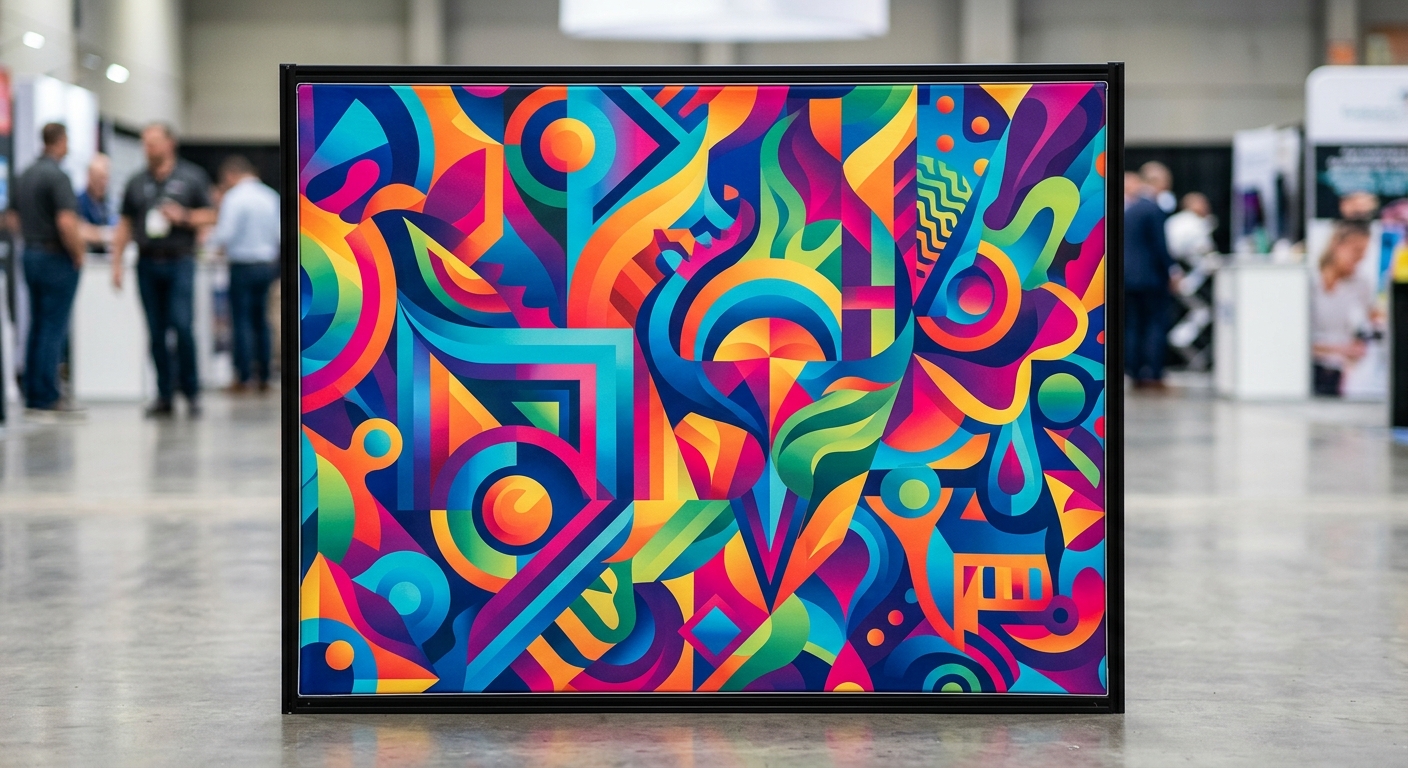
A mid-sized exhibitor running 14 regional shows a year was replacing their backdrop fabric every two to three events. The culprit was a satin-finish polyester that looked sharp in photos but creased permanently every time it got folded for shipping — the creases showed under booth lighting as dark horizontal lines across their logo.
Switching to a 4-way stretch knit with dye-sublimation printing solved it immediately. The fabric now gets folded into the same travel case 14 times a year and comes out smooth after a quick steam. Replacement frequency dropped from every third show to roughly once every two years — a direct fabric cost savings that more than offset the slightly higher per-yard price.
This is the kind of hidden cost that doesn't show up until month six — the same pattern we cover in the hidden costs of cheap wholesale fabric.
Weight Matters More for Travel Than People Realize
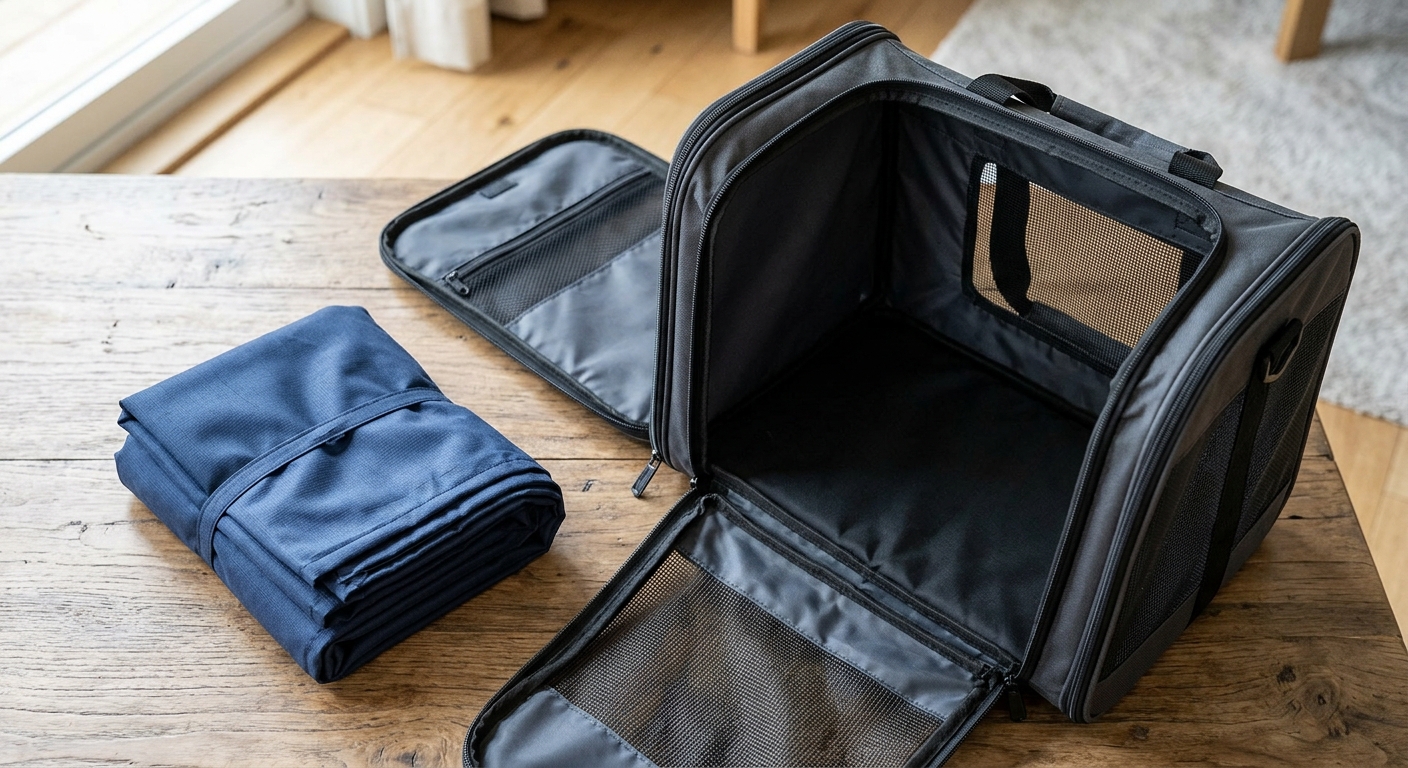
Every extra ounce per yard adds up fast when you're shipping multiple backdrop panels in checked crates or paying for excess baggage fees at convention travel. A 10x10 backdrop in heavy canvas can weigh three to four times more than the same size panel in lightweight stretch polyester — that's real money on airline freight and real strain on anyone hauling the case through a loading dock.
Lightweight doesn't mean flimsy here. Display-grade stretch poly in the 160-200 GSM range is engineered specifically to be thin enough to pack small and still opaque enough to hide the aluminum frame behind it. If you're sourcing fabric by weight for the first time, our guide on reading GSM like a pro will help you avoid ordering something too heavy for travel use.
Textured and Woven Options for Premium Booth Looks
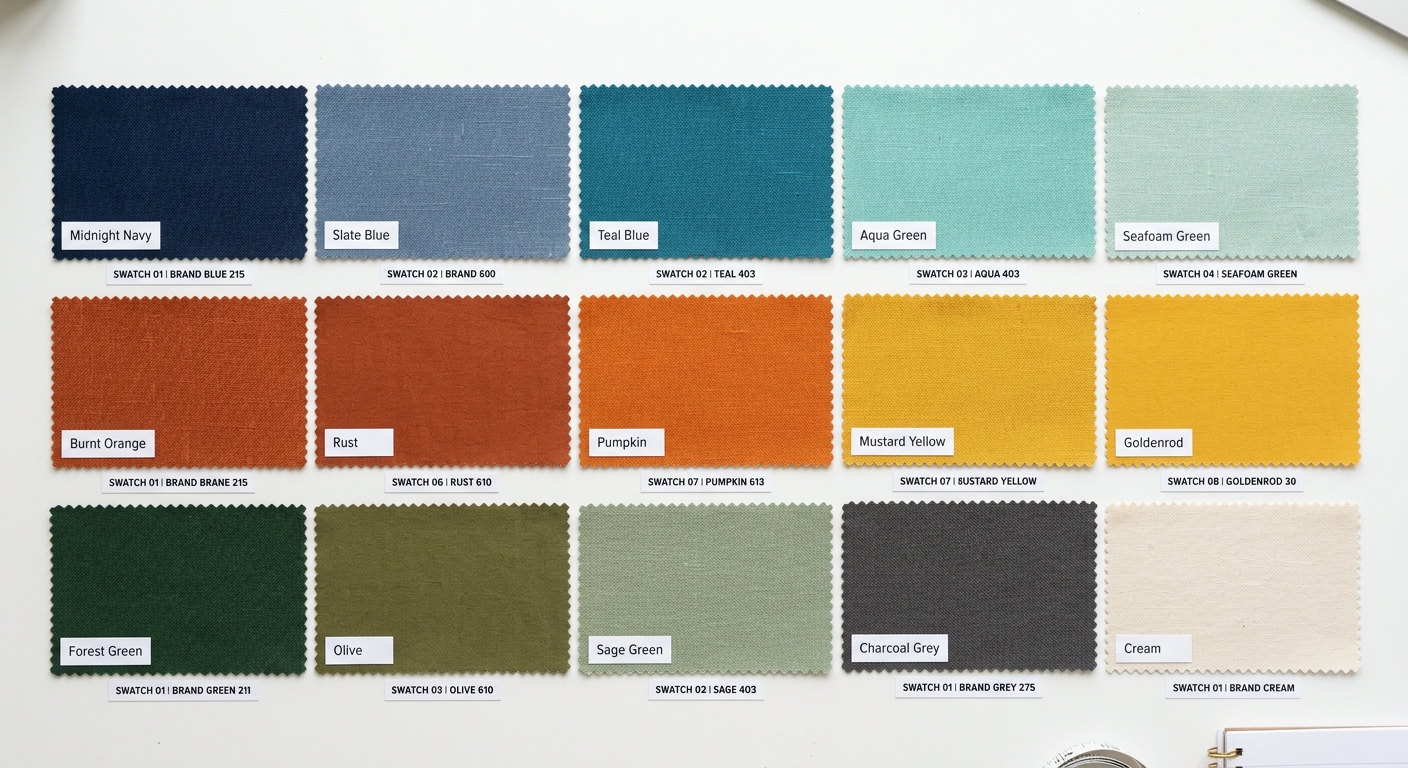
Not every booth wants the smooth, flat look of stretch poly — some brands want texture that reads as premium under lighting, like a subtle linen weave or a woven backdrop with visible grain. Textured fabric options can deliver that look while still using synthetic fiber bases engineered for durability, avoiding the wrinkle problems of true linen or cotton canvas.
For step-and-repeat backdrops at product launches or VIP events, a slight texture also helps hide seam lines and minor surface imperfections better than a dead-flat satin finish does — something worth considering if your backdrop will be photographed up close.
Canvas and cotton-blend banners still show up at trade shows, usually for budget setups or one-time events where longevity doesn't matter. They hold up fine for a single use but fold-crease badly, absorb humidity in convention halls, and fade faster under repeated UV exposure from stage lighting over multiple events.
If you're running a single regional event and tossing the backdrop afterward, cotton canvas is a legitimate low-cost option. If you're building a reusable asset for a yearly show circuit, it's the wrong material — the repeated creasing alone will shorten its usable life to a handful of events.
Color Consistency Across Multiple Panels and Shows
A problem exhibitors rarely anticipate: ordering backdrop panels in two separate production runs and discovering the colors don't quite match side by side under show lighting. This is dye lot variance, and it's a bigger issue with trade show fabric than almost any other application because panels get viewed edge-to-edge under unforgiving light.
Order all panels for a multi-section backdrop in a single production run whenever possible, and request a swatch approval before full production. Our piece on preventing dye lot mismatches covers exactly how to structure that request with a supplier.
Flame Retardant Ratings Aren't Optional at Most Venues
Here's something that catches first-time exhibitors off guard: most convention centers and trade show halls require backdrop and booth fabric to carry an NFPA 701 flame-retardant certification, and venue staff will check tags before setup. Showing up with uncertified fabric can mean last-minute denial of your booth space.
This isn't a minor compliance footnote — it's a hard gate that can shut down your entire exhibit. Always confirm FR certification with your supplier before ordering, and keep documentation on hand for show-day inspections. Our deep dive on FR ratings for contract work explains what the certifications actually mean and which ones venues typically accept.


 Login with Google