


French Terry Fabric vs Fleece Fabric: The Ultimate Comparison
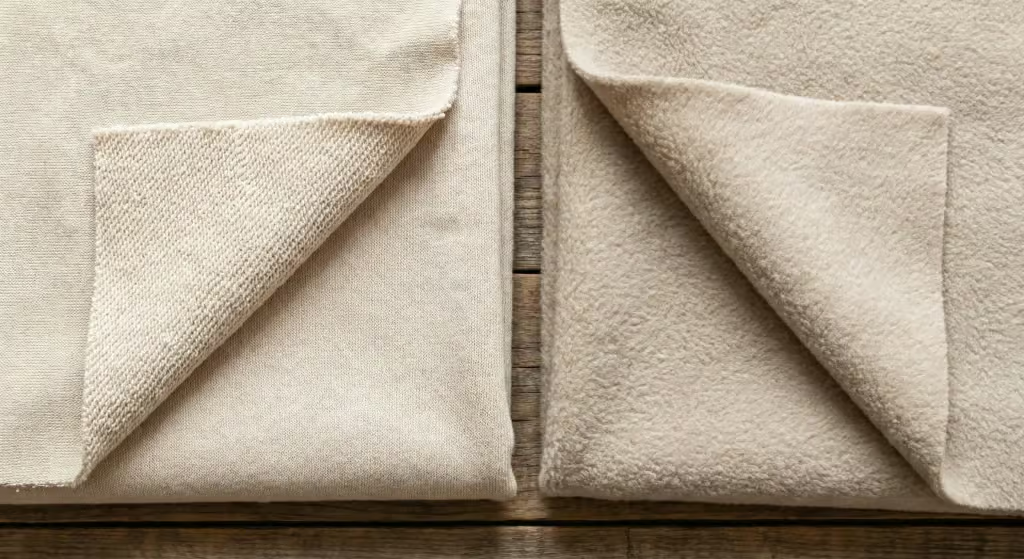
When you want to sew the perfect hoodie yourself, do you ever wonder whether to choose French terry fabric or Fleece fabric? You are looking at two fabrics that appear almost identical from the outside, but perform completely differently on the inside. This is the classic dilemma for every DIY fashion lover: French Terry vs. Fleece.
While they are both really comfortable, choosing the wrong one can lead to a sweatshirt that is too hot for summer or a pair of joggers that aren't cozy enough for winter. In our previous guide, we covered the basics of What is French Terry, but today, we are putting it head-to-head against its fuzzy rival, Fleece fabric.
In this guide, we’ll compare French terry vs. fleece in a clear, easy-to-understand way, focusing on what matters most to you: how warm each fabric is, when to wear it, how it feels on the skin, and which one fits your lifestyle better. This comparison breaks down the key differences in comfort, warmth, and everyday use, allowing you to decide which fabric best suits your lifestyle before making a purchase.
The Quick Answer: What is the difference between French Terry and Fleece?
The most significant difference between these two fabrics lies in their inner structures. French terry features a soft looped inner layer that delivers exceptional functionality. Garments made from it are breathable, moisture-wicking, lightweight, and airy. Fleece fabric undergoes a brushing process to create a fluffy, soft pile surface. This pile traps your body heat, keeping you warm.
Texture Comparison: Looped Back vs. Brushed Fleece
The most straightforward way to distinguish French terry fabric from Fleece fabric is, of course, by looking at them directly and feeling them with your hands. It's important to note that their right sides are very similar. To tell them apart, simply turn them inside out. This is the sensation you're about to experience:
The French terry fabric feels incredibly soft and smooth to the touch, like a high-quality thin towel. When you look at the inside of French Terry, you will see thousands of tiny, soft loops. This is often described as "unbrushed" fabric. Don't underestimate these loops. The looped structure helps wick sweat away from your body, keeping you cool and dry.
Now feel the back of the Fleece fabric. Many people prefer using it to make cozy, warm sweatshirts. Unbrushed fleece resembles French terry cloth. When it undergoes an extra manufacturing process called brushing, mechanical brushes cut and shred the loops, creating a thick layer of soft fibers. It feels fluffy to the touch, as soft as a cloud, even softer than French terry. This allows fleece fabric to provide excellent warmth, making it ideal for creating hoodies and sweatshirts for fall and winter. However, it is less breathable than French terry and also heavier.
Warmth vs. Breathability: Which Fabric Feels Better to Wear?
When it comes to everyday comfort, warmth and breathability often work against each other, and this is where French terry and fleece differ the most. Do you want to make a lightweight, breathable shirt for spring and summer, or a warm, thick hoodie for fall and winter? Or perhaps simply knit a blanket?
Fleece Fabric: It's perfect for making warm clothing. The brushed fleece lining traps heat, just like wearing an insulating layer. You'll feel cozy outdoors, but if you're active indoors, you might find it a bit stuffy—as mentioned earlier, fleece fabric isn't very breathable.
French Terry Fabric: French Terry offers significantly better breathability than fleece. It's thinner, and even heavier-weight French Terry maintains excellent breathability, preventing that stuffy feeling when worn. Garments made from it are suitable for all seasons—warm yet not overly bulky—thanks to its looped pile construction.
The Rule of Thumb: Choose Fleece for temperatures below 50°F (10°C), or when strenuous activity is not required. Choose French Terry for active days, layering, or temperatures above 60°F (15°C).
Care Guide: How to Wash and Maintain French Terry vs. Fleece
After learning about the characteristics and sewing techniques for French terry fabric and fleece fabric, let's explore how to care for them. Using the right care methods can extend the life of your garments. Not only is this environmentally friendly, but it also saves you money.
Care Guide for French Terry Fabric
French terry cloth resists deformation and pilling. But its high cotton content may cause shrinkage, with workshop tests showing shrinkage rates as high as 10%. So when working with this fabric, pre-wash it using the same method you would use to wash the finished garment. It is better to wash in cold water and air-dry.
Care Guide for Fleece Fabric
Compared to French terry, fleece fabric requires more careful handling. The brushed fibers are prone to pilling or shedding when exposed to high temperatures or rough washing. When laundering garments, turn them inside out and avoid using fabric softener. This helps preserve the fleece's fluffy surface texture and maintains its warmth.
| Care Aspect | French Terry | Fleece |
| Washing method | Cold water, regular cycle | Cold water, gentle cycle |
| Drying | Air dry or tumble dry low | Air dry preferred or tumble dry low |
| Pilling risk | Low to moderate | Moderate to high |
| Shedding | Minimal | Possible, especially when new |
| Fabric softener | Optional | Not recommended |
| Overall maintenance | Easy, low maintenance | Requires gentler care |
Creative DIY Projects Comparing French Terry and Fleece
Choosing the right fabric for a DIY project can make the difference between a piece you love to wear and one that stays in the closet. Because they behave differently—French Terry has a fluid drape and breathability, while Fleece offers structure and high heat retention, which makes each fabric better suited for specific types of projects.
French terry fabric is ideal for lightweight, everyday DIY pieces. Its breathable structure and soft drape make it a popular choice for hoodies, joggers, sweatshirts, and lounge sets that are meant to be worn indoors or year-round. It also works well for casual dresses, kids’ wear, and relaxed-fit pullovers where comfort and flexibility matter.
Fleece works best for warmth-focused DIY projects. Because of its insulating, fuzzy interior, fleece is commonly used for winter hoodies, cozy blankets, scarves, and cold-weather loungewear. It’s also a good option for outer layers or home projects where softness and heat retention are the priority over breathability.
Here is a list of the best applications for each.
DIY Projects for French Terry Fabric
- Hoodies
- Joggers
- Sweatshirts
- Lounge sets
- Casual Dresses
- Lightweight Pullovers
- Children’s Wear (Rompers & Leggings)
DIY Projects for Fleece Fabric
- Scarves
- Vests & Liners
- Cozy Blankets & Throws
- Cold-weather Loungewear
- Zip-Up Jackets & Quarter-Zips
- Winter Accessories (Beanies, Scarves, Mittens)
Which is Easier to Sew?
French terry fabric is generally easier to work with. Beginners to sewing can opt for this model, as its stitching is slightly easier for novices. Its looped back keeps the fabric stable, allowing seams to lie flatter and edges to stay cleaner. The loops grip the feed dogs better. And often results in garments that drape more naturally and feel less bulky at the seams—especially around cuffs, waistbands, and hoods. But the loops of French terry fabric tend to curl toward the smooth side. This can make pinning seams frustrating.
Fleece fabric requires more careful handling during construction. The fuzzy interior can stretch, shift, or shed during sewing, which is why fleece garments often use reinforced seams or thicker bindings. While this adds structure and durability, it can also make the finished piece feel heavier or stiffer.
Sewing Tips for You
While both French Terry and Fleece are knit fabrics, they present different challenges under the presser foot. French Terry can be slippery and prone to curling, while Fleece can be bulky and messy.
Sewing Tips for French Terry Fabric
French terry is generally beginner-friendly, but its looped back can catch if not handled properly.
- Since French Terry usually contains a high percentage of cotton (often 80-100%), it shrinks significantly. Wash and dry the fabric before cutting your pattern to prevent your finished garment from becoming a size too small after the first laundry cycle.
- Use a ballpoint or stretch needle to prevent skipped stitches. The rounded tip pushes the fabric fibers aside rather than piercing them, preserving the structural integrity of the knit.
- Choose an 80/12 or 90/14 size for medium-to-heavy-weight French Terry. These push the fibers aside rather than piercing them, preventing runs in the knit.
- A walking foot can help feed thicker French terry evenly, especially for hoodies and joggers.
- Use 100% Polyester thread. Cotton thread has no "give" and will snap when the fabric stretches. Polyester has slight elasticity that matches the fabric's behavior.
- Stabilize Shoulder Seams: Because French Terry is heavy but drape-y, the weight of the garment can pull the shoulders out of shape over time.
Sewing Tips for Fleece Fabric
Fleece is soft but more challenging due to its thickness and stretch.
- Ensure all pattern pieces are cut in the same direction. If you flip one piece upside down to save fabric, your finished garment will look like it has two different shades.
- Fleece fabric has good elasticity, so when cutting wool, ensure all pieces are cut in one go to prevent shifting.
- Use a Universal or Stretch Needle (size 90/14). You need a slightly larger needle to penetrate the thick layers without bending.
- Increase your stitch length to 3.0mm or 3.5mm. This helps the machine feed the thick fabric through smoothly.
- Expect some lint and shedding during cutting and sewing—clean your machine afterward.
Overall, French terry offers more control and flexibility when sewing, while fleece rewards careful handling with extra warmth and softness. Choosing the right tools and techniques ensures better-looking, longer-lasting DIY projects.
FAQs
Which fabric is actually warmer?
Fleece is significantly warmer. Because fleece is typically made of 100% synthetic fibers (polyester) and has a brushed, fuzzy surface on both sides, it excels at trapping body heat and blocking wind. French Terry is generally breathable and allows air to circulate, making it better for mild weather or indoor layering, but it won't insulate you in freezing temperatures like fleece will.
Does French terry pill like fleece?
French terry is less prone to pilling than fleece. Fleece fabrics, especially lower-quality ones, can pill over time due to their brushed surface.
Do they shrink in the wash?
French Terry shrinks; Fleece generally does not. The shrinkage rate of French terry fabric ranges between 5% and 10%. Fleece is almost always 100% polyester (a plastic-based fiber), which is heat-set and very stable. It rarely shrinks, though high heat can melt the fibers.
Is French terry good for beginner sewing at home?
Yes. French terry is generally easier to sew than fleece because it’s more stable and less bulky, making it beginner-friendly for DIY garments. Shop premium French terry fabric by the yard, making sewing easier.
Is French Terry or Fleece better for working out?
French Terry is generally better for intense exercise. Because it is cotton-based and looped, it is absorbent and breathable, wicking sweat away from the body.
Final Thoughts: Matching the Fabric to the Function
Ultimately, the battle between French Terry and Fleece isn't about which fabric is "better"—it is about which one is right for your specific environment and activity level.
If you are looking for a fabric that offers versatility, style, and breathability for year-round wear, French Terry is the sophisticated choice. It bridges the gap between a t-shirt and a heavy sweater, making it a staple for premium loungewear and athleisure. On the other hand, if warmth and insulation are your top priorities, fleece provides the soft, cozy feel many people look for in winter clothing.
| Feature | French Terry | Fleece |
| Primary Material | Cotton (often mixed with Spandex/Poly) | 100% Polyester (synthetic) |
| Texture | Smooth face; Looped back | Fuzzy/Brushed on one or both sides |
| Warmth Level | Low to Medium (Transitional) | High (Cold Weather) |
| Breathability | High (Wicks moisture well) | Low (Traps heat and humidity) |
| Stretch | usually 4-way (Good recovery) | usually 2-way (More stable/stiff) |
| Best Used For | Joggers, Hoodies, Loungewear | Jackets, Blankets, Winter Liners |
Whether you choose the refined loops of French Terry or the cozy fuzz of Fleece, understanding these structural differences ensures that your next sewing project—or your next clothing purchase—will perform exactly the way you need it to.



 Login with Google