


Mercerized vs. Non-Mercerized Cotton: What the Finishing Process Actually Changes

Mercerization is a chemical finishing step — cotton fiber is treated with a cold caustic soda (sodium hydroxide) solution under tension, which permanently swells the fiber, rounds out its cross-section, and increases its surface reflectivity. The practical result: mercerized cotton takes dye deeper and more evenly, gains up to 20% more tensile strength, and develops a subtle sheen that non-mercerized cotton simply can't replicate. If you've ever wondered why one cotton shirt fabric looks almost lustrous while another feels flat and matte, this is the process responsible for that difference.
What Actually Happens Inside the Fiber During Mercerization
Here's the part most buyers skip past: mercerization isn't a coating or a spray-on finish. It's a structural change to the cotton fiber itself, and that's exactly why it lasts the life of the fabric instead of washing out after a few cycles.
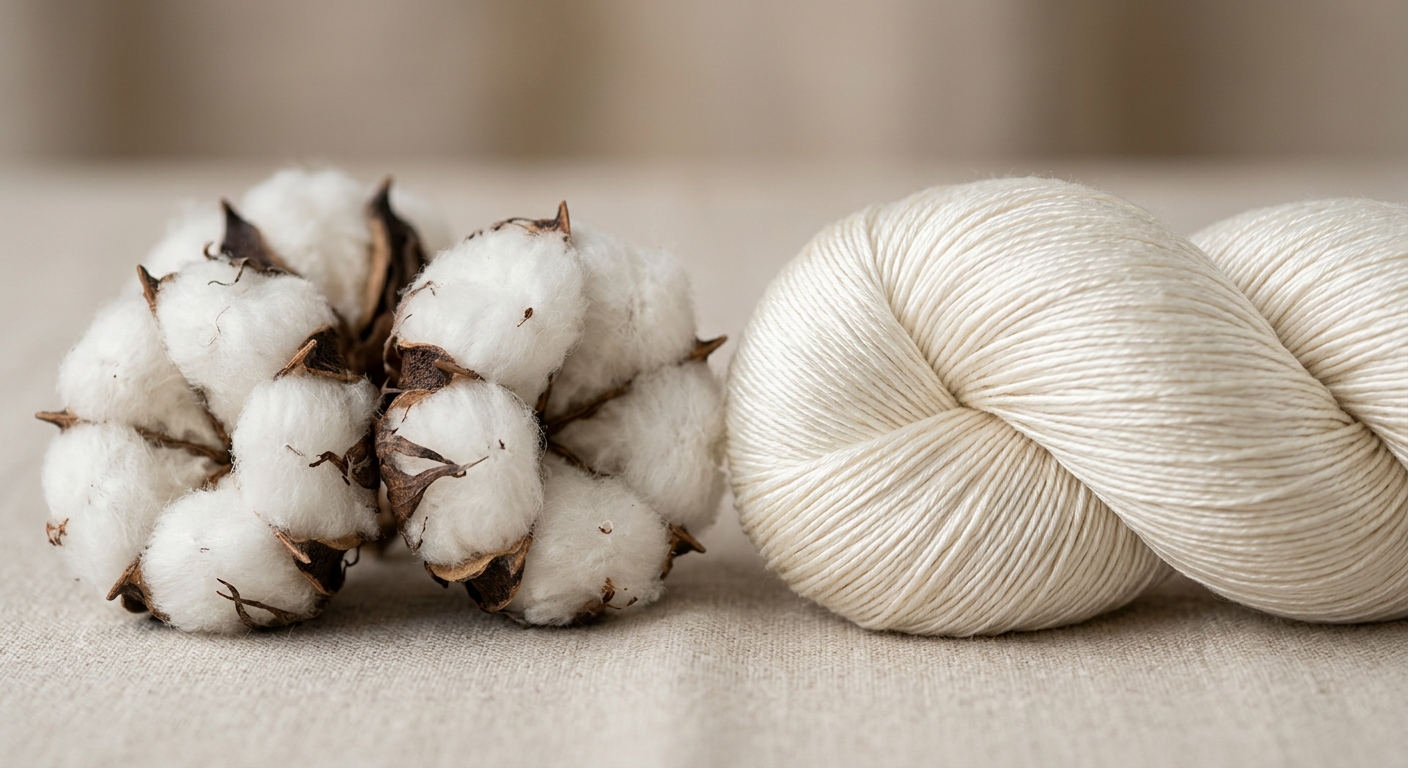
Raw cotton fiber has a kidney-bean-shaped cross-section with a twisted, ribbon-like structure. When soaked in a sodium hydroxide solution (typically 18-25% concentration) at low temperature while held under tension, the fiber swells and the cross-section rounds out into something closer to a cylinder. The natural twist relaxes. Once the caustic is neutralized with acid and washed out, the fiber locks into this new rounder, smoother shape permanently.
Why the Round Shape Matters
A rounder fiber reflects light more uniformly along its length — that's the source of the sheen. It also exposes more of the fiber's internal structure to dye molecules during coloring, which is why mercerized cotton yarn is the standard choice for high-end embroidery thread and fine dress shirting.
The Strength Gain Isn't Marketing Fluff — Here's the Number
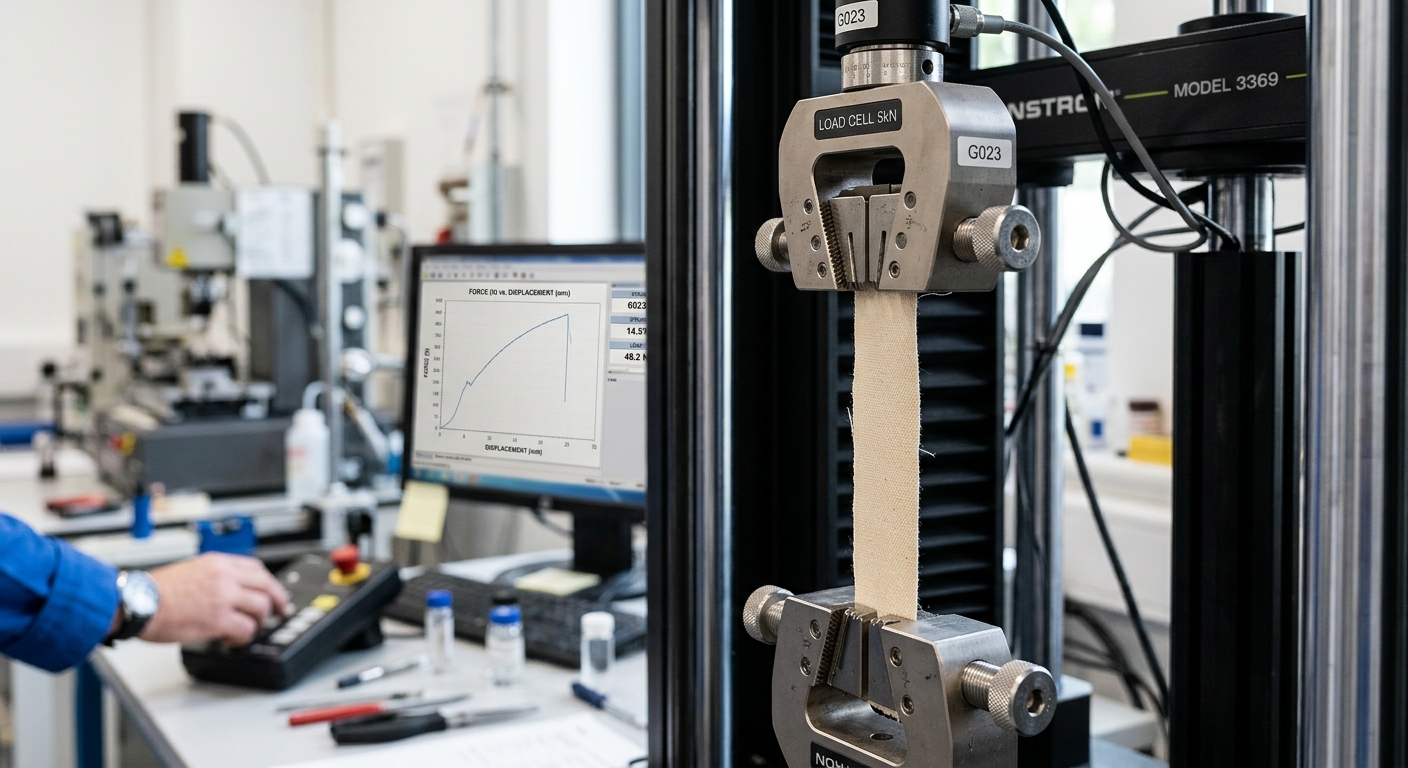
Mercerized cotton yarn tests 15-20% stronger in tensile strength than the same yarn untreated. That's not a rounding-error improvement — it's the difference between a shirt fabric that survives years of industrial laundering and one that starts fraying at the collar after twenty washes.
The strength gain comes from the fiber's improved molecular alignment. Once the cellulose chains reorganize during the caustic treatment, the fiber resists abrasion and pulling forces better under load. This is a big reason mercerized cotton dominates in shirt fabric production — dress shirts get washed and ironed constantly, and the fabric needs to hold up structurally, not just look good on day one.
For buyers sourcing fabric that needs to survive commercial laundering cycles — hospitality linens, uniforms, workwear shirting — this strength margin isn't optional, it's the whole point of specifying mercerized cotton on the PO.
Dye Uptake: Why Mercerized Cotton Colors Look More Saturated
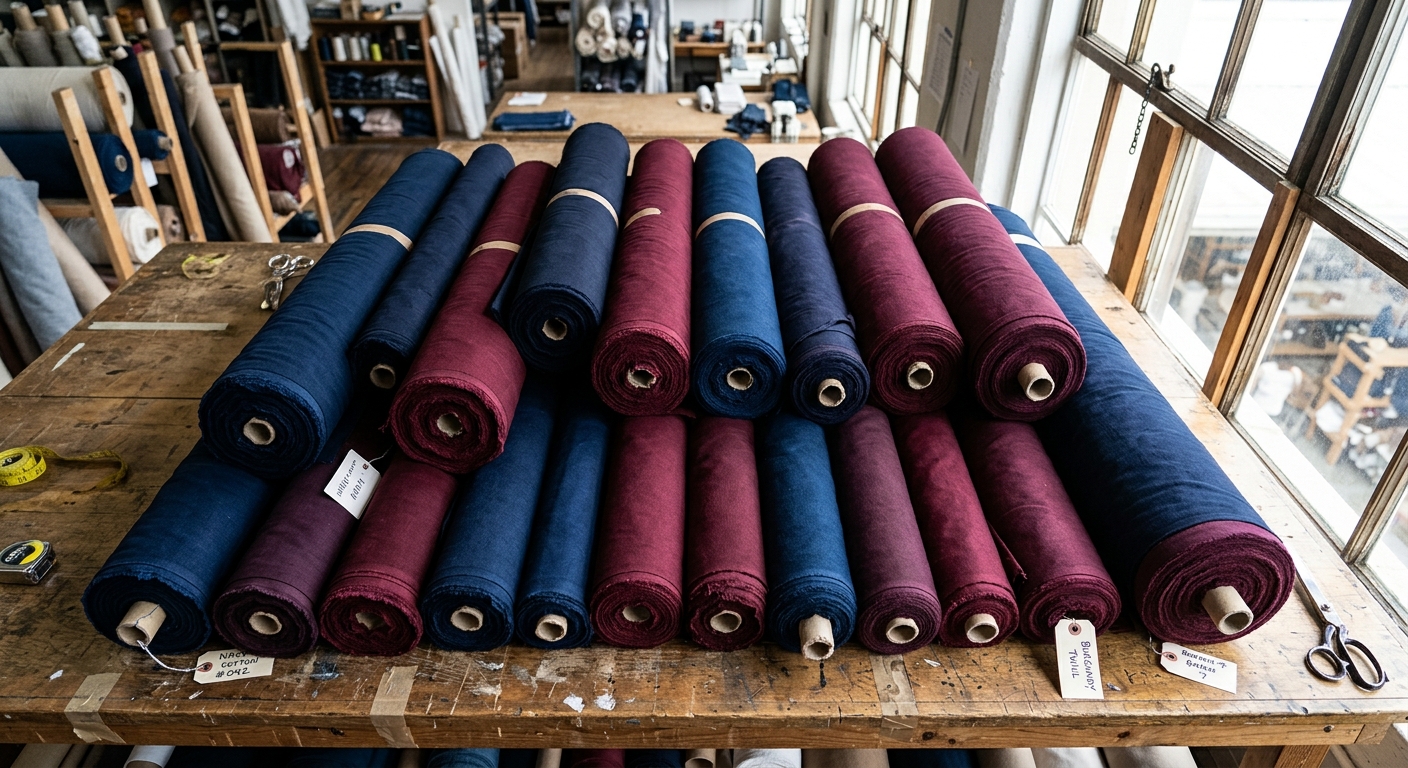
Ask any dyer and they'll tell you: mercerized cotton absorbs 25-30% more dye than untreated cotton, and the color penetrates deeper into the fiber rather than sitting mostly on the surface. That's why mercerized cotton fabrics tend to look richer and more saturated even when dyed with the exact same dye lot as an untreated batch.
This matters more than it sounds. If you've read our breakdown of dye lot variance and color mismatches, you already know that inconsistent dye absorption is one of the biggest silent killers of production runs. Mercerized cotton's improved and more even dye uptake actually reduces batch-to-batch variance because the fiber structure is more uniform going into the dye bath.
Real-World Example
A home décor brand ordering navy cotton sateen for table runner fabric found that switching from non-mercerized to mercerized base cloth cut their dye reject rate from roughly 8% to under 2% across a 6,000-yard run — the color simply held more consistently across rolls.
Shrinkage and Dimensional Stability After the Caustic Bath
Non-mercerized cotton shrinks more, and less predictably. Mercerization stabilizes the fiber's dimensions because the swelling-and-relaxing process under tension pre-sets the fiber's final size before it ever reaches your cutting table.
Typical non-mercerized cotton shrinkage runs 3-5% after the first wash, sometimes higher on loosely woven fabrics. Mercerized cotton, treated properly, usually shrinks closer to 1-3%. If you're placing bulk orders and calculating cut yardage down to the yard, that difference adds up fast across a production run. Our fabric shrinkage cheat sheet breaks down exact rates by fiber type if you want the full reference table.
For buyers still learning to translate spec sheets into ordering decisions, this is exactly the kind of number worth flagging — see our guide on reading a fabric spec sheet for the other seven numbers that matter just as much.
Hand Feel: Smoother Isn't Always Better
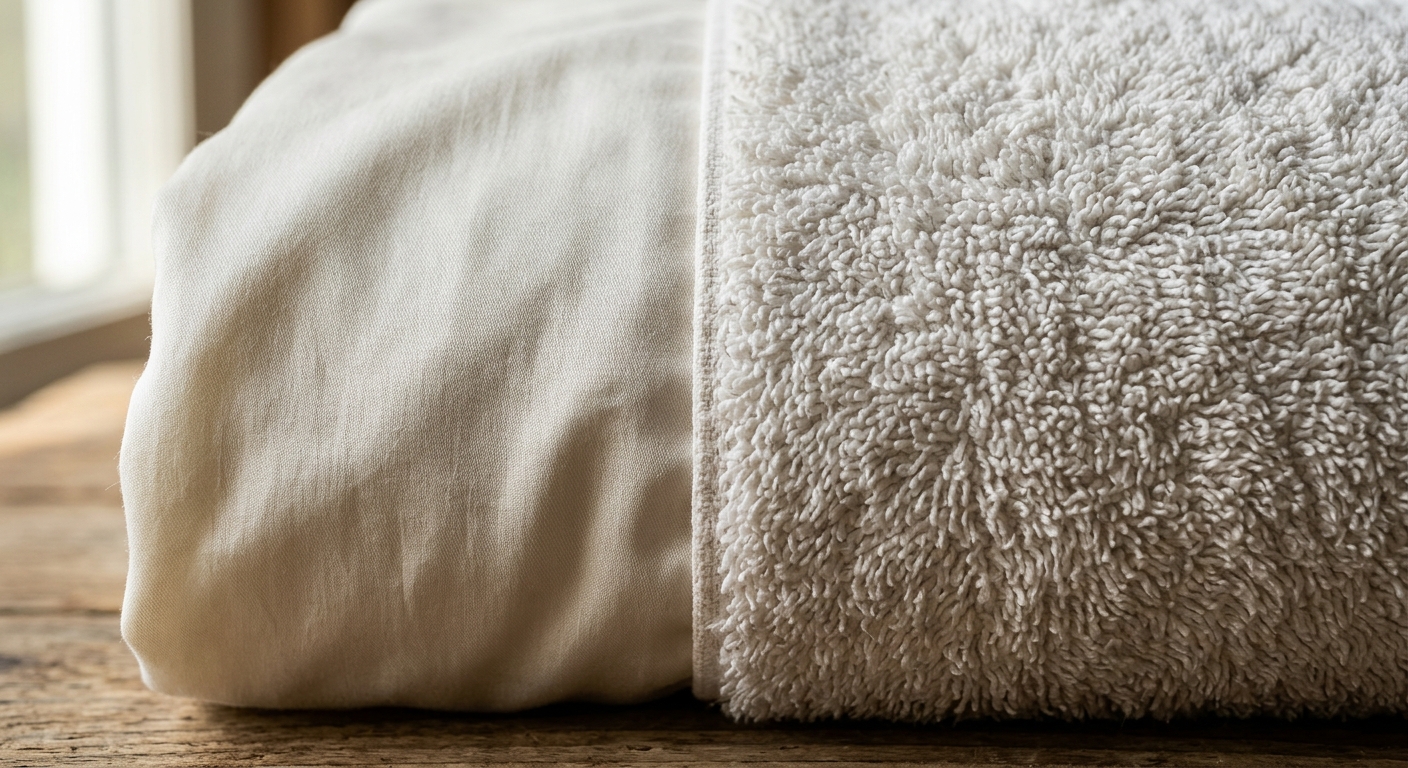
Mercerized cotton feels noticeably smoother and less fuzzy than non-mercerized cotton — but that's not automatically an upgrade depending on what you're making. The caustic treatment flattens the tiny fiber hairs (called fuzz or nap) that give raw cotton its soft, slightly textured hand.
For crisp dress shirting, fine sateen, or anything meant to feel polished, that smoothness is exactly what you want. But for towels, flannel, or anything relying on a soft, plush surface — think terry fabric — mercerization actually works against you. Terry cloth and toweling are almost always left non-mercerized on purpose, because the loop pile needs that raw fiber softness and absorbency to function.
Absorbency Trade-Off
This is the part buyers most often miss: mercerization slightly reduces absorbency because the rounder, smoother fiber surface has less capillary action than raw cotton's irregular structure. Great for shirting. Bad for anything that needs to soak up moisture.
Where Mercerized Cotton Is the Obvious Choice
If you're buying cotton for shirting, embroidery thread, or fine sateen bedding, mercerized is the default — not a premium upgrade to debate, but the baseline expectation. Most quality dress shirts and better-grade bedding you'll find in retail have been mercerized, and customers can tell the difference even if they don't know the term.
- Shirting fabric: higher strength survives constant laundering and pressing
- Embroidery thread: the sheen and dye depth make stitched logos and designs pop
- Fine bedding sateen: the smooth hand and richer color justify the price premium
- Quilting cotton for heirloom pieces: better color retention over decades
If you're sourcing in bulk for shirting programs, it's worth cross-referencing our cotton fabric guide for T-shirts — knit goods generally skip mercerization since the stretch and softness priorities differ from woven shirting.
Where Non-Mercerized Cotton Wins Instead
Don't assume mercerized is always the better spec — for a surprising number of applications, skipping the treatment is the smarter, cheaper call. Anything relying on natural fiber texture, high absorbency, or a rustic aesthetic actually performs worse once mercerized.
Denim is a classic example — the slight irregularity and softer hand of non-mercerized cotton yarn contributes to the fabric's characteristic texture and fade patterns over time. Toweling and washcloths need the raw fiber's absorbency. And for anything marketed as "raw," "vintage," or "artisanal" — think calico fabric — the matte, slightly textured finish of non-mercerized cotton is actually the selling point, not a flaw.
There's also a cost angle. Skipping mercerization saves 10-20% per yard on production cost. If your end use doesn't benefit from the strength or sheen gains, that's margin you're leaving on the table for no functional reason.
How to Verify What You're Actually Buying
Here's an uncomfortable truth: some suppliers use the word "mercerized" loosely, or apply a partial treatment that gives some sheen without the full strength and dye-uptake benefits. Always ask for the specific process spec — full mercerization is done at controlled caustic concentration under tension, not just a quick alkaline rinse.
A simple field test: mercerized cotton yarn, when burned, tends to hold its shape slightly better in the ash residue due to the altered cellulose structure, though this isn't a definitive lab test. The more reliable approach is requesting a strength test report or dye-uptake comparison from the mill directly. If you're auditing new suppliers generally, our 12-point supplier audit checklist covers exactly which documentation to request before you commit to a PO.





 Login with Google