


The Difference Between Sample Yardage and Production Yardage (And Why It Trips Up New Buyers)

Sample yardage and production yardage are not guaranteed to be the same fabric, even when they come from the same supplier and the same fabric code. Samples are often cut from a small test batch, a sample loom, or a prior dye lot — while your bulk order gets woven and dyed fresh, on different equipment, weeks or months later. That gap in timing and process is exactly why new buyers approve a swatch, place a 1,000-yard PO, and then open the shipment to find a fabric that's subtly (or not-so-subtly) off.
Why a 'Perfect Match' Swatch Doesn't Guarantee a Perfect Match Order
Here's the uncomfortable truth: most sample yardage is made under conditions that never repeat at scale. A mill might hand-dip a small lab sample to nail a color, or pull a few yards off a previous run that happened to look great. That swatch you're holding could be six months old.
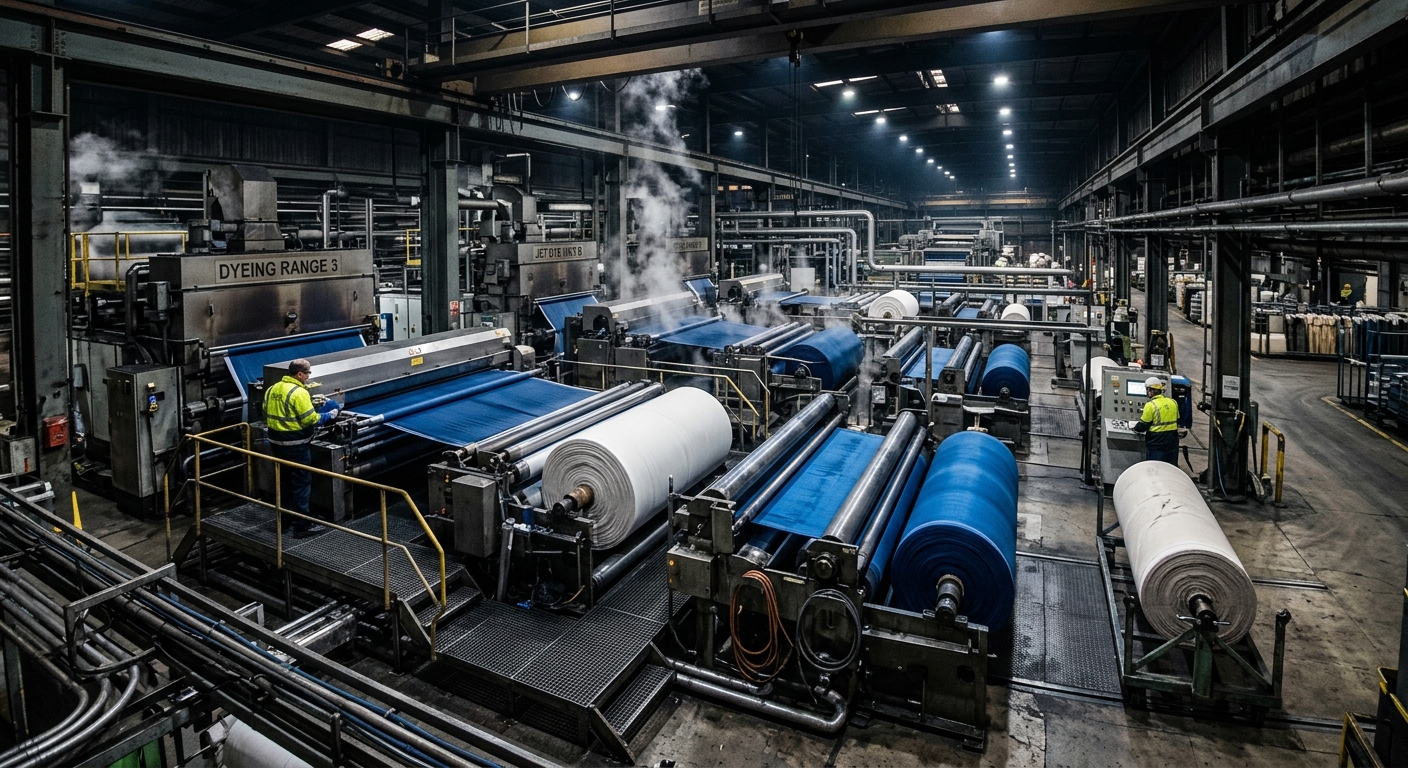
Production yardage, on the other hand, runs through industrial dye vats, tensioning rollers, and finishing lines designed for volume — not precision matching to a single swatch. Even a well-run mill sees natural variance batch to batch. This is the same underlying issue we cover in dye lot variance and how to prevent costly mismatches — sample-to-bulk drift is really just dye lot variance wearing a different hat.
The Fiber Content Loophole
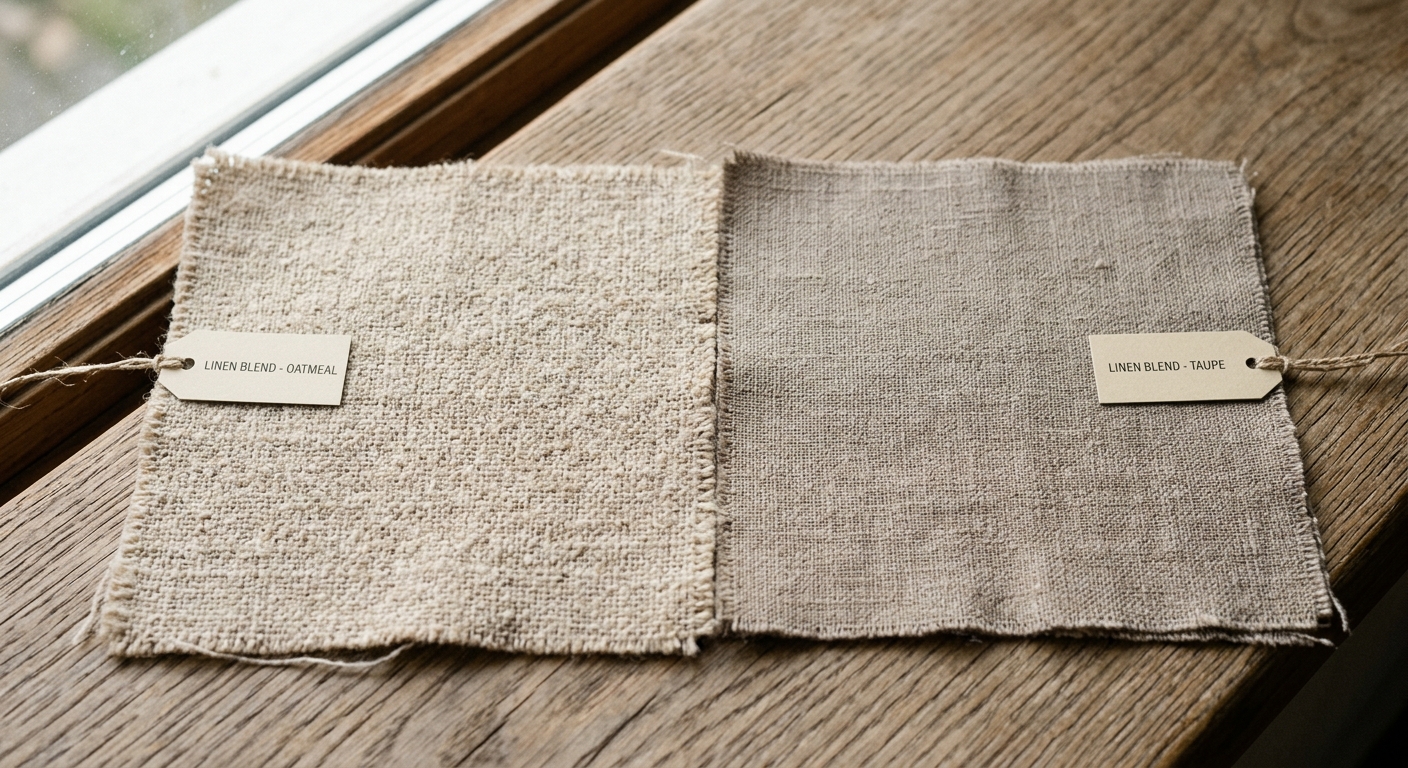
Some suppliers also swap fiber blends between sample and bulk without flagging it clearly — a 95/5 cotton-spandex sample might quietly become 90/10 in production because that's what the mill has on hand that month. Always confirm blend percentages in writing, not just visually.
What Actually Changes Between a Sample Run and a Production Run
It's not just color. Three things quietly shift between sample and bulk, and buyers rarely check for all three.
- Weight (GSM): Sample cuts are sometimes pulled from lighter test warps. A production run might land 5-10 GSM heavier or lighter than your swatch. If GSM accuracy matters to your product, revisit how to read GSM like a pro before you sign off on a bulk PO.
- Hand-feel: Bulk finishing chemicals (softeners, anti-pilling treatments) are applied at scale differently than on a sample loom. A fabric that felt buttery soft in the showroom can arrive stiffer or slicker — the same phenomenon explained in why fabric feels great in the showroom but wrong off the bolt.
- Shrinkage behavior: Production dyeing and finishing can change how a fabric shrinks post-wash compared to your sample. Cross-check against typical rates in our fabric shrinkage cheat sheet before you finalize pattern cuts.
A Real Example: The Activewear Startup That Got Burned
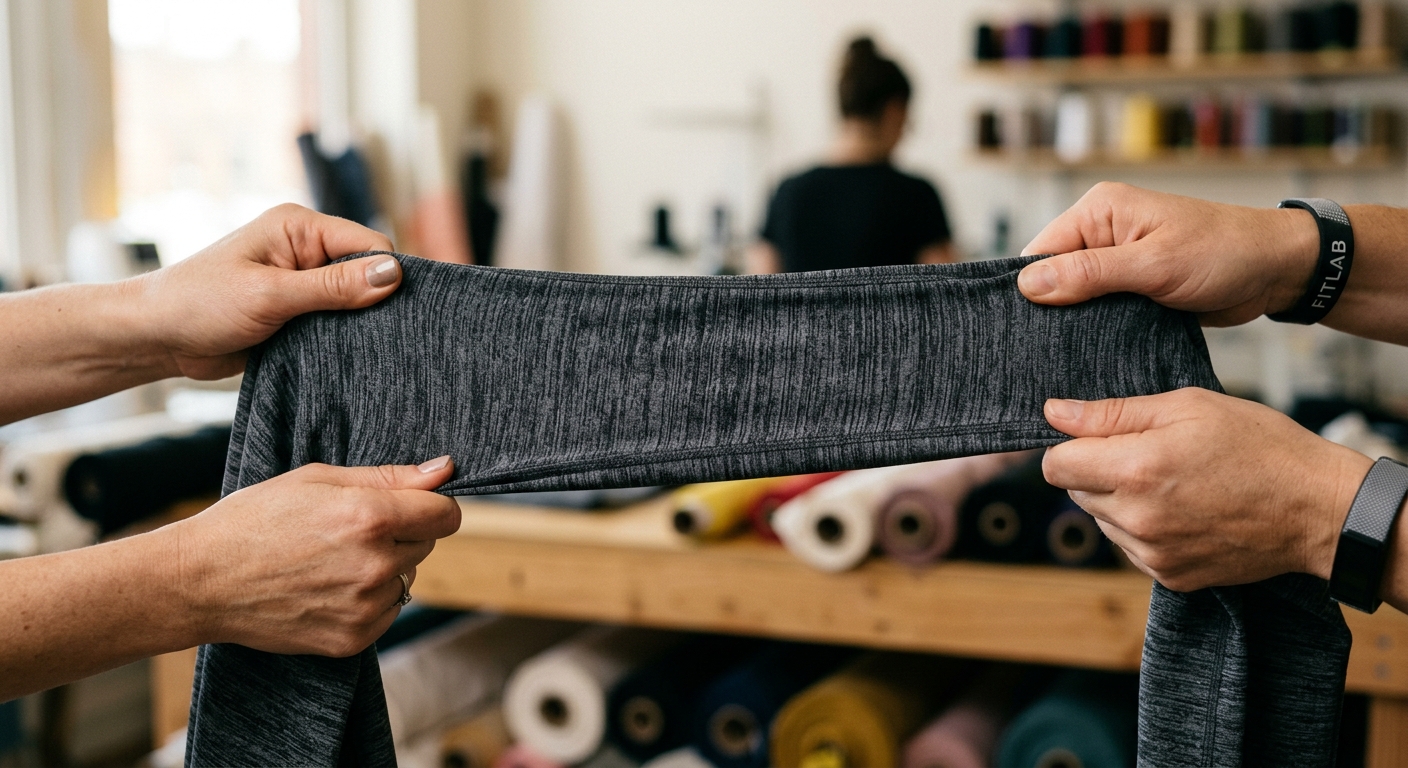
A small activewear brand ordered a 4-way stretch poly-spandex sample, loved the compression and matte finish, and placed a 2,000-yard PO based on that single swatch. Three months later, the bulk shipment arrived with a noticeably glossier finish and less recovery stretch.
What happened? The sample was cut from a finishing batch that used a different softener chemical than what the mill defaulted to for large orders — a cost-saving substitution nobody disclosed. The brand had to eat the cost of reprinting labels and quietly discounting the run. This is a textbook case of the kind of stretch inconsistency we break down in Stretch Fabrics 101. The fix would have cost nothing: request a pre-production (PP) sample cut from the actual bulk dye lot before shipping.
The Three Sample Types Every Buyer Should Know
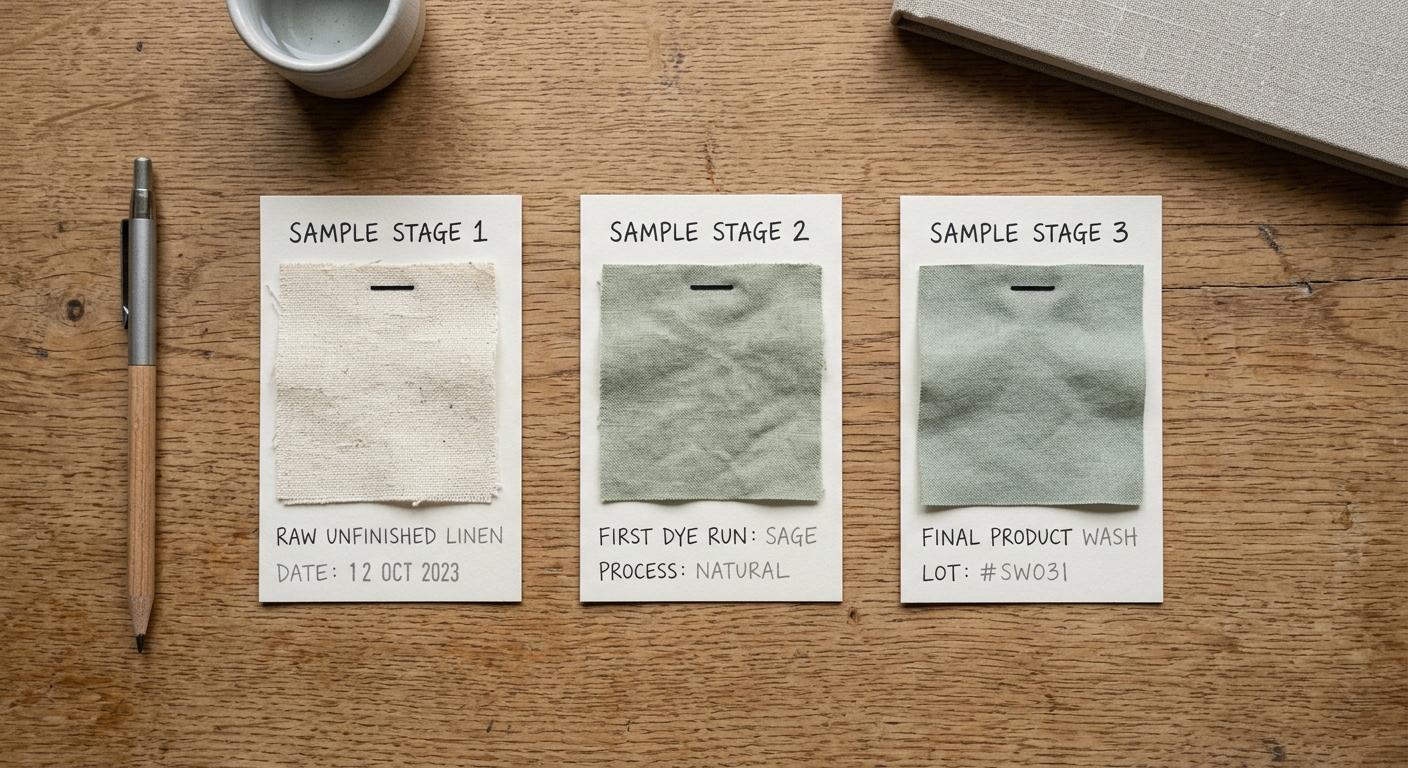
Not all 'samples' mean the same thing, and mixing them up is where most confusion starts.
1. Design/Color Sample
A small cutting used purely to approve color and print. Never assume this reflects final hand-feel or weight.
2. Strike-Off or Lab Dip
Used to nail down exact color formulas before bulk dyeing. This is your last real checkpoint to catch a color problem cheaply.
3. Pre-Production (PP) Sample
The gold standard. Cut from the actual bulk dye lot and bulk finishing process, right before full production starts. If a supplier resists sending a PP sample, that's a red flag worth flagging in your own 12-point supplier audit.
Comparing Sample Yardage vs Production Yardage Side by Side
Here's the breakdown buyers should keep pinned to their desk before placing any bulk order:
| Criteria | Sample Yardage | Production Yardage |
|---|---|---|
| Typical quantity | 1-5 yards | 500+ yards (per MOQ) |
| Dye batch | Lab dip or small test batch | Full production dye lot |
| Loom/finishing run | Sample loom or hand-finished | Industrial production line |
| Color accuracy | Close, not guaranteed exact | Can shift ±5-10% from sample |
| Hand-feel consistency | May differ from bulk finishing | Reflects true bulk chemical wash/finish |
| Lead time to obtain | Days to 2 weeks | 4-12 weeks depending on mill |
| Cost per yard | High (sometimes free) | Discounted bulk pricing |
| Best use | Design approval, hand-feel test | Actual product cutting |
How to Protect Your Bulk Order Before You Commit
You can't eliminate variance entirely — but you can build in checkpoints that catch problems before they hit 1,000 yards.
- Request a PP sample, always. No exceptions for orders over 200 yards.
- Ask for the dye lot number on both your sample and your bulk shipment. If they don't match, you have grounds to flag a discrepancy.
- Test hand-feel and shrinkage on the PP sample, not just the original design sample. Run a quick version of the checks in 5 fabric tests you can run at home before committing to a bulk order.
- Get tolerances in writing. Ask your supplier to confirm acceptable variance (e.g., ±3 GSM, ±1 shade on a color grading scale) in the PO itself, not just verbally.
If your order does arrive off-spec despite these steps, know your options — our step-by-step claims and refund guide and the Returns Portal walk through how to document and escalate the issue.
When Small Variance Actually Doesn't Matter
Not every project needs pixel-perfect matching. If you're sourcing muslin fabric for pattern testing or coated fabric for a utility tote line where slight sheen variance is invisible to the end customer, a wider tolerance is fine — and fighting for a perfect match just slows down your timeline for no real benefit.
Where it matters a lot more: matched sets, brand-color-critical apparel, or anything sold next to a physical swatch card at retail. Know which category your project falls into before you decide how hard to push on sample-to-bulk accuracy.




 Login with Google