


Fabric for Curtains and Drapery: Weight, Opacity, and Light Control Explained for Bulk Buyers

Curtain performance boils down to one number more than any other: grams per square meter (GSM). Fabric under 100 GSM lets light stream through no matter how tight the weave; fabric over 280 GSM starts blocking it almost entirely, especially in a triple-woven or coated construction. If you're buying in bulk for hotels, retail, or resale, matching GSM and weave density to the room's actual light-control need — not just the customer's fabric preference — is what separates a repeat wholesale account from a return shipment.
Why GSM Is the First Number You Should Ask For
Ask ten curtain buyers what fabric they want and nine will describe a color or a texture. Almost none will mention GSM — and that's exactly how bulk orders go sideways. Weight is the single best predictor of how a curtain will behave once it's hung, washed, and lived with for two years.
Light cotton voile sits around 40-60 GSM. It's beautiful for layering but does nothing for privacy after dark with a lamp on inside. Move up to a mid-weight poly-cotton at 150 GSM and you get real daytime privacy plus a decent drape. Cross 280 GSM and you're in blackout territory, where the fabric itself — not a separate lining — does the light-blocking work.
The Mistake Most Buyers Make
Buyers often confuse thread count with weight. A high thread count sheer can still let in 80% of sunlight if the yarns are fine. GSM measures actual mass per area, which correlates far more reliably with opacity than thread count does. If you're unsure how to read a spec sheet correctly, our guide on how to read GSM like a pro is worth bookmarking before you place your next PO.
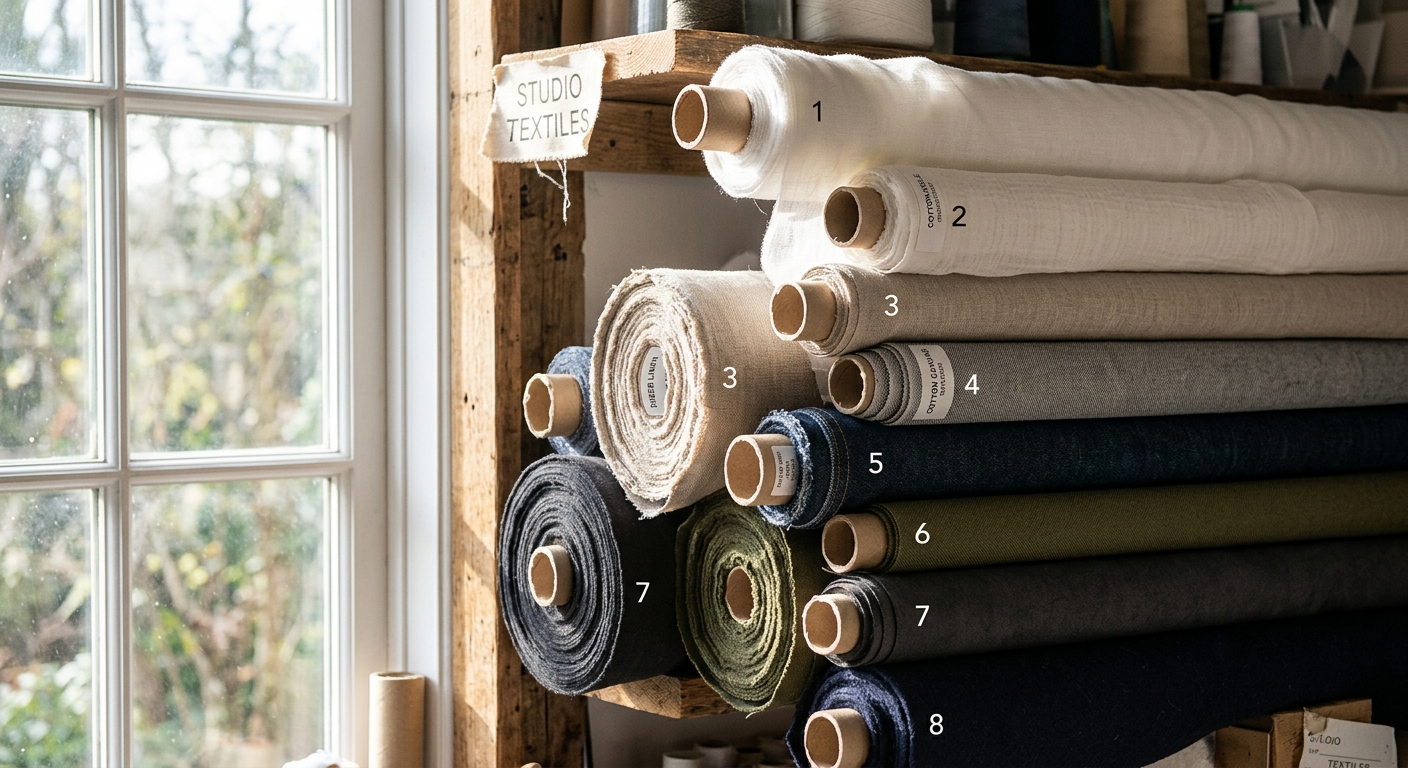
Opacity Isn't Just Fabric Weight — Weave Structure Matters Too
Two fabrics at the same GSM can have wildly different opacity if the weave differs. A tightly packed plain weave blocks more light than a looser dobby weave at identical weight, because the yarns overlap with fewer visible gaps.
This is why dobby fabric — despite its lovely textured surface — is rarely the right pick for a true blackout order even at higher weights. The small raised patterns create micro-gaps that let pinholes of light through. If a client insists on texture and darkness, the fix is a blackout lining behind a decorative dobby face fabric, not relying on the decorative layer alone.
Real-World Example
A boutique hotel chain once ordered 4,000 yards of a textured dobby drapery fabric expecting hotel-grade blackout performance. Guest complaints about morning light started within the first month. The fix wasn't reordering — it was adding a 3-pass blackout lining behind the existing fabric, preserving the look while solving the actual problem.
Blackout Fabric: What's Actually Inside It
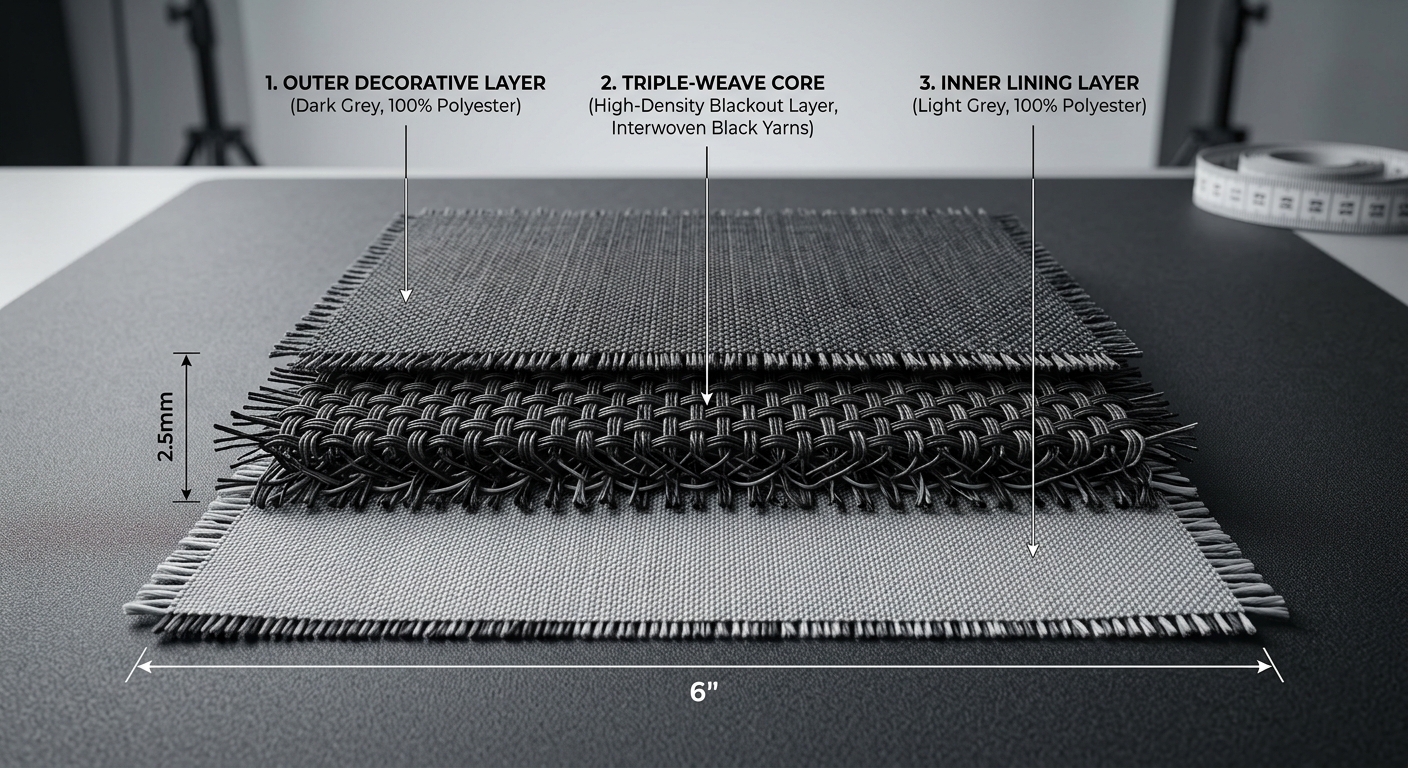
True blackout fabric isn't just heavy — it's engineered. Most commercial blackout drapery uses a triple-weave construction: a face yarn, a black center yarn that absorbs light, and a back yarn, all woven as one fabric. This is different from a fabric with a blackout coating or foam backing laminated on afterward, which tends to crack and peel after repeated washing or dry cleaning.
Coated blackout fabric is cheaper upfront and fine for short-term contract jobs — think event draping or temporary staging. Woven-in blackout costs more per yard but survives years of hospitality laundering cycles, which matters enormously for cruise lines and hotel groups doing 5-year refresh cycles instead of annual ones.
How to Spec It Correctly
- Ask suppliers whether blackout is woven-in or coated — this should be on every spec sheet.
- Request a light-block percentage test result, not just a GSM number.
- For hospitality contracts, always request flame-retardant certified blackout — see our breakdown of FR ratings for contract work before signing off.
Light-Filtering Fabrics: The Middle Ground Most Buyers Underuse
Full blackout isn't always the goal, and full sheer rarely satisfies anyone either. The 100–180 GSM range — light-filtering fabric — is where most residential and office reorders actually live, and it's underused in bulk catalogs because it's less dramatic to market than blackout.
Linen-cotton blends and mid-weight polyester in this range soften daylight without turning a room into a cave. For a home office or a hotel lobby lounge, this is often the smarter default than jumping straight to blackout. If you're comparing linen and cotton performance for warmer climates, our linen vs. cotton head-to-head covers drape and breathability differences that apply directly to drapery decisions too.
Drape and Hand: Why Heavy Doesn't Always Mean Elegant
Heavier isn't automatically better-looking. A 380 GSM stiff polyester blocks light beautifully but can hang like a board, refusing to fold into soft vertical pleats. A well-chosen 250 GSM cotton sateen, by contrast, drapes with movement while still delivering solid semi-opaque coverage.
Drape is a function of fiber flexibility and weave, not just mass. This is the same principle we cover in why fabric feels great in the showroom but wrong off the bolt — a sample swatch rarely tells you how ten yards will fall once gravity and pleats are involved. Always request a full-length hanging sample before committing to a bulk yardage order for drapery.
Sheer and Voile: The Fabric Everyone Underestimates
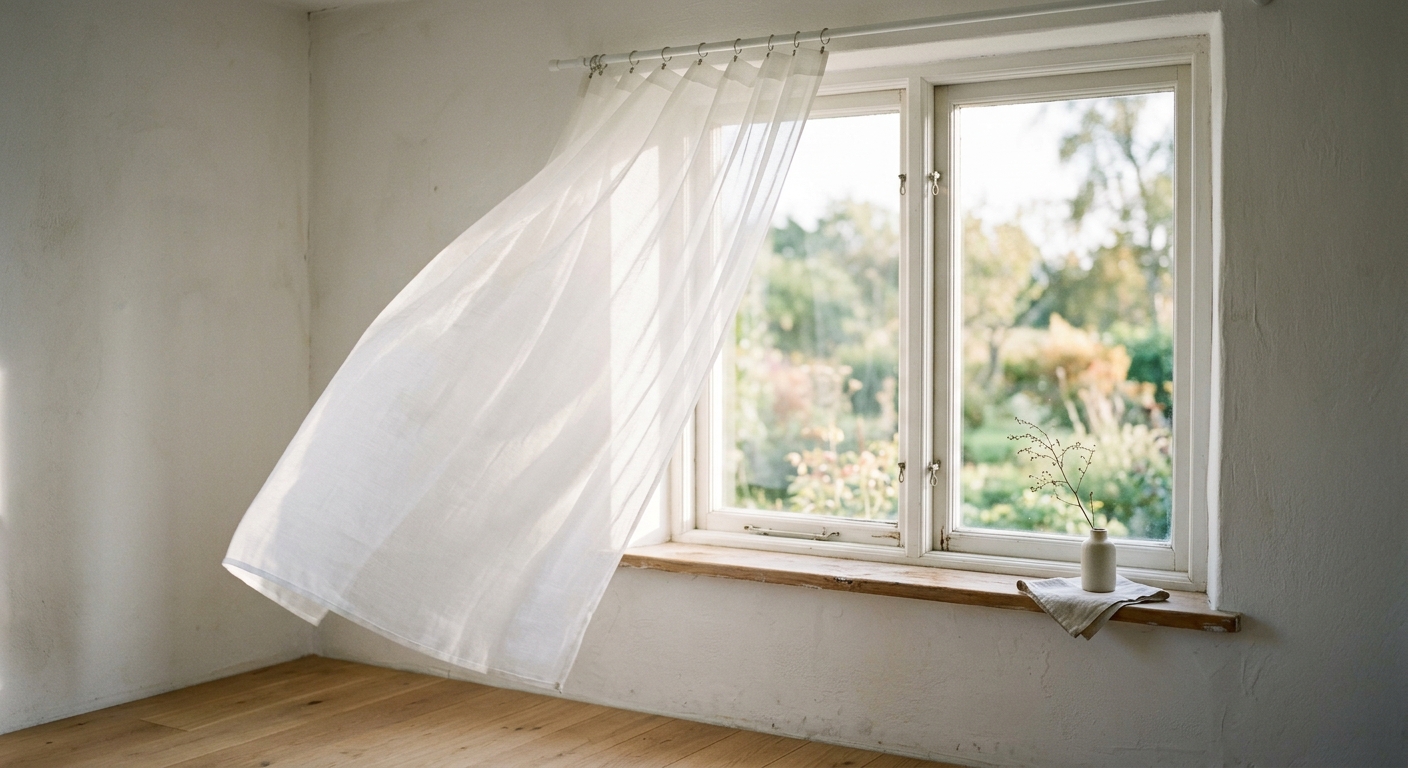
Sheer curtains aren't just decorative filler — they're a light-management tool most buyers overlook. A quality voile at 50-70 GSM diffuses harsh direct sun into soft ambient light, which matters enormously in south-facing rooms or storefronts where full blackout would kill natural light entirely during business hours.
The mistake is treating all sheers as interchangeable. Polyester voile holds its crispness and resists yellowing near UV exposure far better than cotton voile, which tends to go dull and slightly gray within a year of daily sun contact. For storefront or sunroom applications, polyester fabric is usually the more durable long-term buy, even though cotton feels nicer in hand initially.
Lining Fabric: The Cheapest Way to Upgrade Light Control
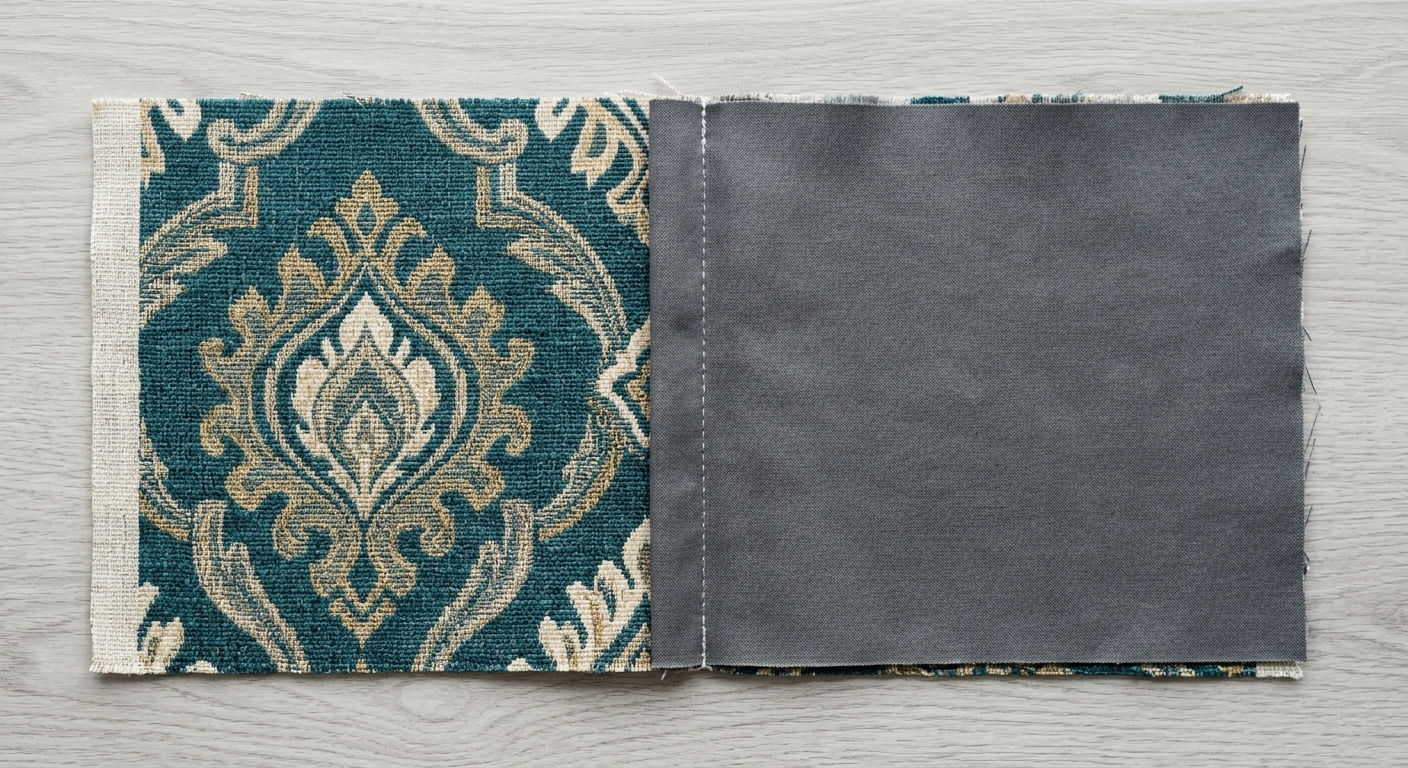
You don't always need to reorder your entire drapery fabric to fix a light problem — sometimes the lining is the whole answer. A basic cotton sateen face fabric paired with a proper lining fabric can jump from light-filtering to near-blackout performance without touching the decorative face at all.
This is standard practice in hospitality: designers pick the visible face fabric for aesthetics, then spec the lining purely for performance — light block, thermal insulation, or noise dampening. It's also the cheapest lever bulk buyers have when a client wants a specific print or texture that simply doesn't come in a heavy enough weight on its own.
Quick Lining Reference
- Standard cotton lining: adds modest opacity, breathable, good for warm climates.
- Thermal/blackout lining: 2-3 pass coating, blocks 90%+ light, adds insulation.
- Interlining (middle layer): adds body and blackout without changing the face fabric's hand-feel at all.
Ordering by the Project Type, Not the Room Name
'Bedroom curtain' and 'living room curtain' are marketing categories, not fabric specs. A bulk buyer supplying a boutique hotel chain, a cruise line, and a residential retailer needs three different opacity strategies even if all three orders get labeled 'bedroom drapery' on the PO.
Hospitality contracts typically demand FR-rated blackout at 300+ GSM regardless of room type, driven by insurance and code requirements more than aesthetics. Residential resale customers usually want more flexibility — light-filtering as the default, blackout as an upsell option. Knowing which bucket your buyer falls into before you commit warehouse space to a specific weight range saves you from sitting on unsold inventory. This ties directly into the hospitality fabric requirements that hotels, restaurants, and cruise lines actually enforce.



 Login with Google