


Velvet, Velour, and Velveteen: What’s the Difference and Which One Should You Be Buying?
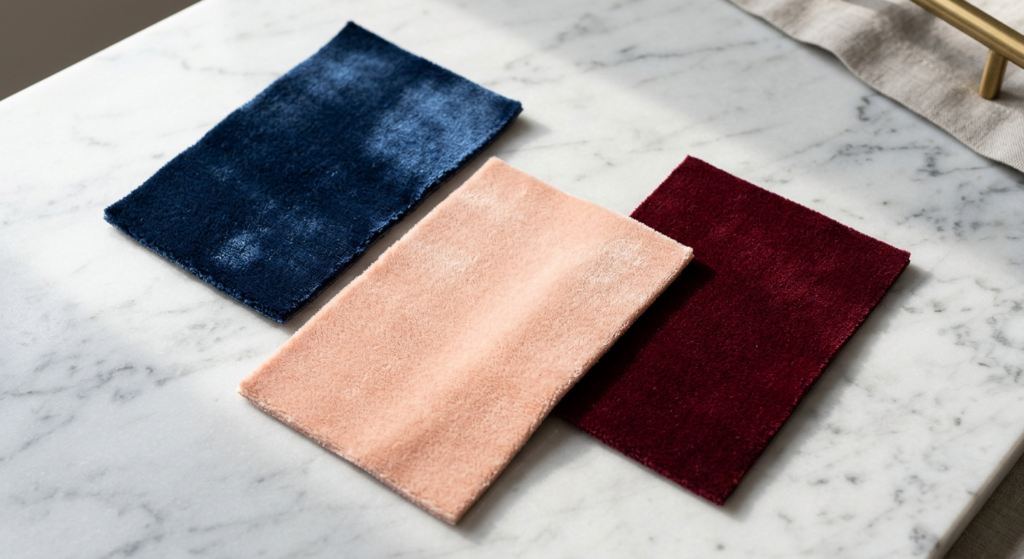
Velvet is a woven fabric with a dense, upright pile that drapes like liquid. Velour is a knit with a similar plush feel but built for stretch and comfort. Velveteen is also woven, but with a shorter, weft-based pile that gives it a stiffer body and a more matte sheen. If you want luxury drape, buy velvet. If you want stretch and comfort, buy velour. If you want a budget-friendly, sturdy substitute for velvet, buy velveteen.
The One Thing That Actually Separates These Three Fabrics
Forget pile height for a second. The real fork in the road is woven vs. knit. Velvet and velveteen are woven. Velour is knit. That single distinction drives almost every behavior difference you'll experience on the cutting table and at the sewing machine.
Woven pile fabrics (velvet, velveteen) have no inherent stretch unless they're blended with spandex. They fray at the edges, demand careful cutting in one direction, and hold structure. Knit velour, by contrast, stretches in two or four directions, doesn't fray the same way, and behaves more like a t-shirt fabric with a fuzzy face.
If you've ever wondered why a velour tracksuit feels nothing like a velvet blazer even though they're both “soft and fuzzy,” that's why. For a deeper look at how weave and knit structures change fabric behavior, our guide to weave structures is a useful companion read.
Velvet: The Luxury Original
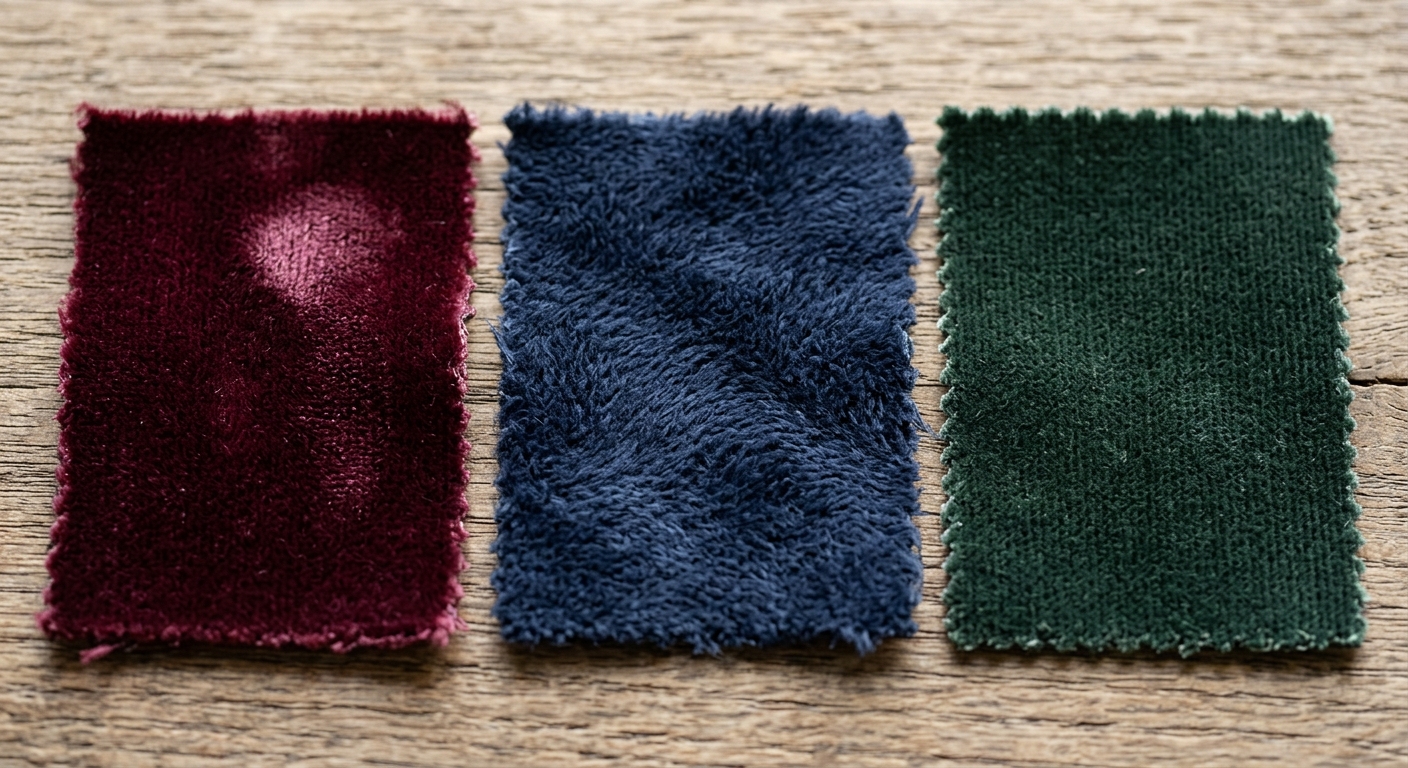
Velvet is made on a special double-cloth loom that weaves two layers of fabric face-to-face, connected by warp threads. A blade then slices the layers apart, creating two pieces of velvet with cut warp pile standing upright. That's why true velvet has such a directional, almost liquid sheen — light catches the pile differently depending on which way you stroke it.
Fibers and their behavior
- Silk velvet: The classic. Drapes like water, breathes well, costs $25–$60+ per yard wholesale. Crushes easily, which is also the basis of crushed velvet finishes. crushed velvet fabric
- Rayon/viscose velvet: Almost identical drape to silk at half the price. Look at our viscose fabric options if you want that fluid hand without the silk premium.
- Polyester velvet: Most durable, least drape. Best for upholstery and stage costumes. $8–$15/yd.
- Stretch velvet: Polyester with 5–10% spandex. The bridge between true velvet and velour.
For example, a bridal designer producing a winter capsule of 200 evening gowns chose rayon velvet over silk to keep cost per gown under $90 in fabric — and got 95% of the drape silk would have delivered. That's the kind of decision that decides margin on a collection.
Velour: Built for Comfort and Stretch
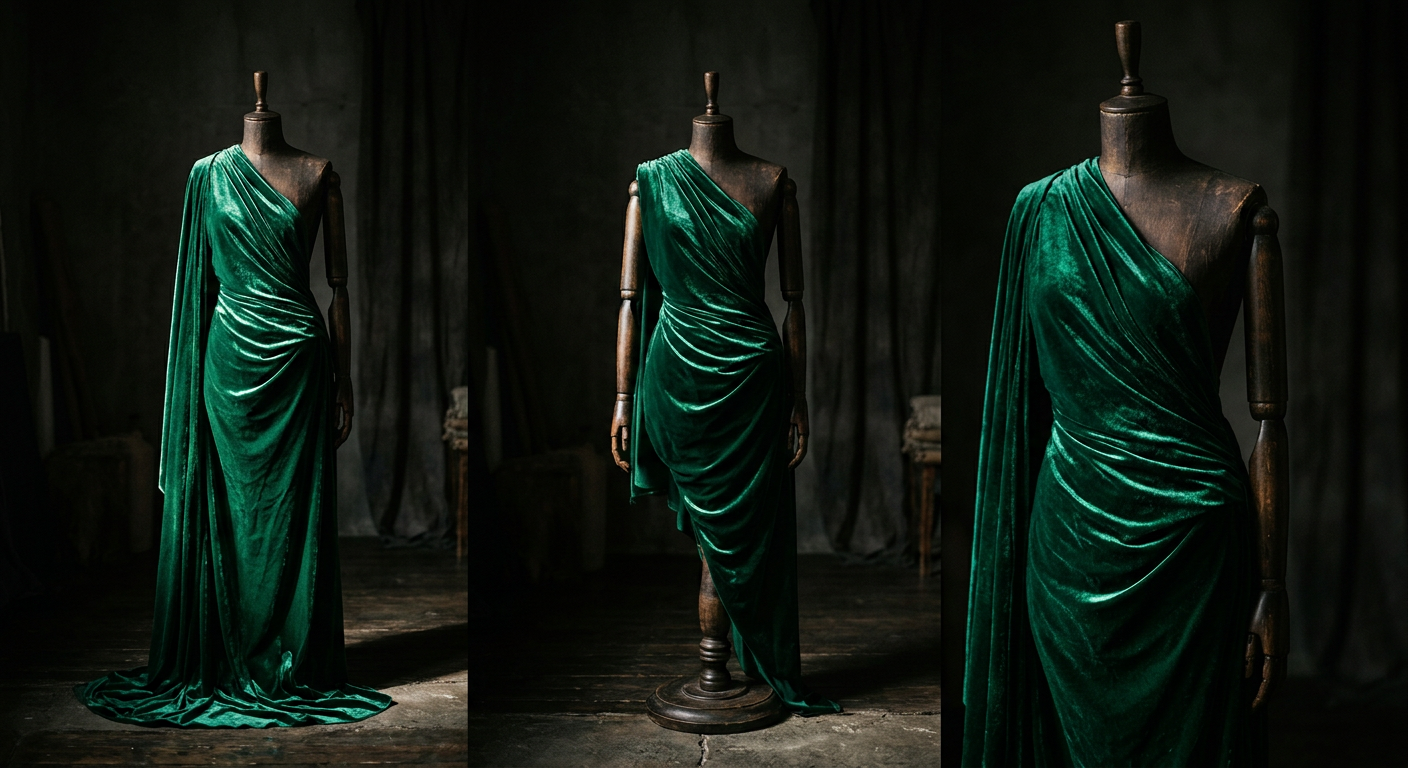
Velour is knit on a circular or warp knitting machine that creates loops, which are then cut to form a short, soft pile. Because the base is knit, it behaves like jersey with a plush face. That's why it dominates loungewear, dancewear, robes, and kids' clothing.
Cotton velour is absorbent and soft — common in towels and baby clothes. Polyester velour is what you see in those iconic tracksuits and stage costumes. Many activewear-adjacent velours run 85% poly / 15% spandex for that snap-back recovery.
Where velour shines in production
- Hoodies, robes, and loungewear sets — the body needs to move
- Dancewear and gymnastics leotards (4-way stretch versions)
- Children's clothing where softness matters more than formality
- Stage curtains and theater costumes (heavier weights, 250–400 GSM)
A small loungewear brand we've worked with switched from a woven cotton corduroy to a 280 GSM cotton velour for their winter pajama line. Returns dropped because the new fabric didn't pinch behind the knees. Comfort isn't a vague concept — it's measurable in reorder rates.
Velveteen: The Workhorse Cousin
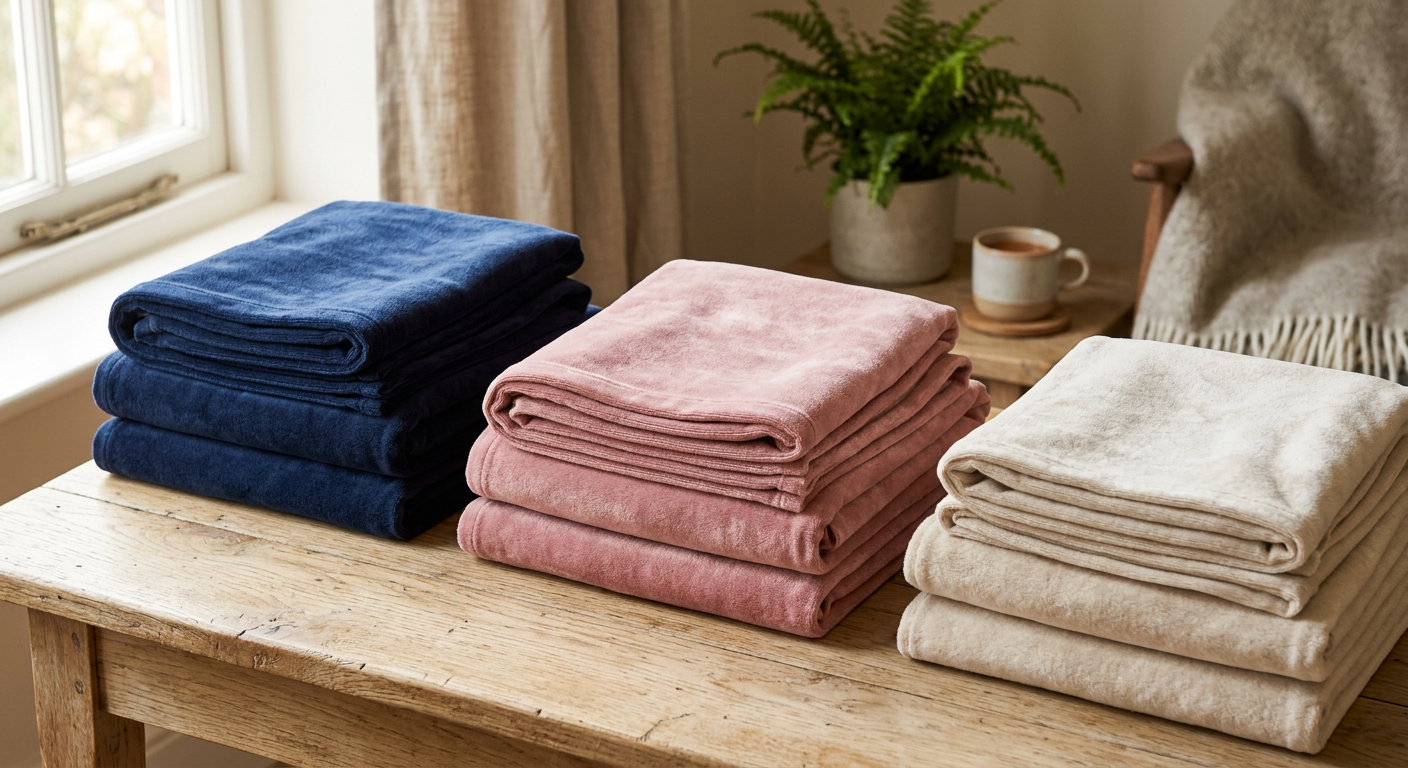
Velveteen is the most misunderstood of the three. It's woven like velvet, but the pile comes from the weft (filling) yarns instead of the warp. That makes the pile shorter (under 1.5 mm), denser, and sturdier. The result is a fabric that looks like a more matte, more structured velvet — and costs significantly less.
It's almost always made from cotton or cotton-poly, which gives it a different drape entirely. Velveteen holds a crease. It tailors well. It doesn't crush as dramatically as silk velvet. And it cuts and sews more like a sturdy cotton than a delicate pile fabric, which is why so many home sewers and craft buyers reach for it.
Best applications
- Children's holiday clothing — jackets, dresses, vests
- Costume work and historical reproduction
- Light upholstery (cushions, pillows, headboards) where wear is moderate
- Craft and hobby projects, quilted accents, and bookbinding
If a customer asks for “velvet” but the use case is a structured jacket for a 6-year-old at $35 retail, you're almost certainly better off recommending velveteen.
The Hidden Costs: Cutting, Sewing, and Waste
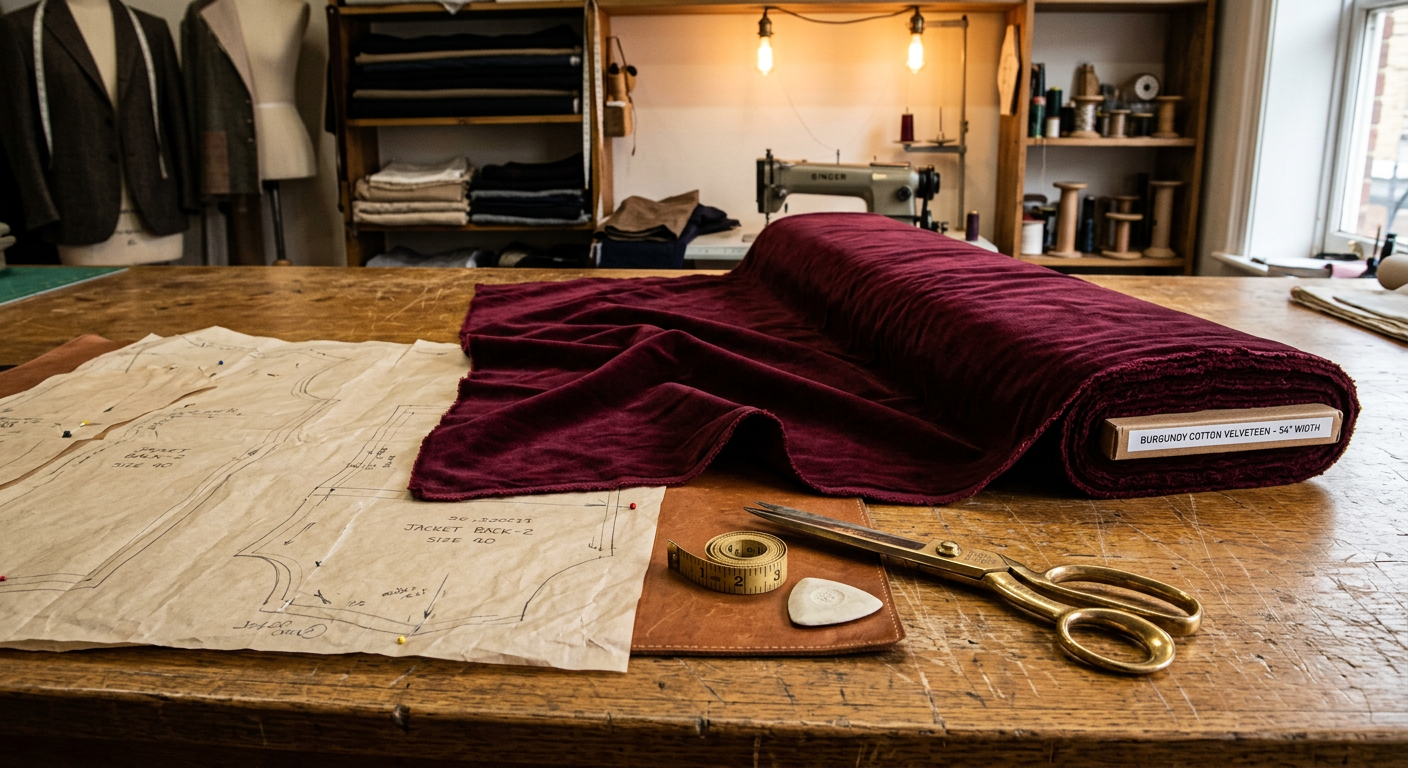
Here's where buyers get burned. The sticker price per yard is only part of the math. All three of these fabrics have a nap — a directional pile that reflects light differently depending on orientation. That means every pattern piece has to be cut in the same direction. No flipping pieces to nest them efficiently.
Expect 15–25% more fabric consumption on a napped layout vs. a non-directional layout. On a 500-unit run, that adds up fast. Factor it into your yardage calculations from the start — our fabric yardage guide walks through the math.
Sewing complications by fabric
- Velvet: Pile crushes under presser feet. Use a walking foot, tissue paper between layers, or a roller foot. Steam, never iron the face.
- Velour: Stretchy knit means you need ballpoint needles and stretch stitches. Skipped stitches are the #1 complaint.
- Velveteen: The easiest of the three to sew. Standard sharp needles, regular foot, normal stitches. Just respect the nap direction.
Cheap fabric that doubles your labor cost isn't actually cheap. We covered this trap in detail in the hidden costs of cheap wholesale fabric.
How to Pick the Right One: A Decision Framework
Skip the romance and answer four questions:
1. Does the garment need to stretch?
Yes → velour. No → velvet or velveteen.
2. What's the price ceiling per finished unit?
Premium ($150+ retail) → silk or rayon velvet. Mid ($50–$150) → polyester velvet or quality velveteen. Budget (under $50) → velveteen or basic polyester velour.
3. How structured does the silhouette need to be?
Fluid drape (gowns, drapery, scarves) → velvet. Structured tailoring (jackets, vests, kids' formalwear) → velveteen. Body-hugging or relaxed (loungewear, dancewear) → velour.
4. Who's sewing it?
Experienced industrial line → any of the three. Newer team or home sewists → velveteen first, then velour, velvet last.
For instance, a hotel sourcing manager wanting decorative throw pillows for 80 guest rooms doesn't need silk velvet. A heavy polyester velvet or a sturdy velveteen will look luxurious at a fraction of the cost and survive housekeeping. That's the kind of context where fabric choice quietly protects margin. (If you're working on contract hospitality projects, our hospitality fabric requirements guide is worth a read first.)
Care, Longevity, and Customer Complaints
The single most common complaint across all three fabrics? Pile damage from improper care. Each one has a personality:
- Velvet crushes under weight and water. Hang, don't fold. Steam from the back. Most silk and rayon velvets are dry-clean only.
- Velour is the most forgiving — most cotton and polyester velours are machine washable cold, tumble dry low. This is a major selling point for loungewear.
- Velveteen is washable in most cases (especially cotton), but the pile flattens if you over-dry it. Always pull from the dryer slightly damp.
If you're selling B2C, print care instructions on a sewn-in label, not just a hangtag. The number of returns we hear about traced back to a customer washing velvet in hot water is genuinely depressing. Set expectations in the product copy too.
Sourcing Smart: What to Ask Your Supplier
Before you commit to a bulk order of any pile fabric, get answers to these:
- Pile density (tufts per square inch or per cm²): Higher density = richer look and better wear. Cheap velvets often skimp here.
- Fiber content with percentages — not just “velvet” on a spec sheet
- GSM (weight): A 180 GSM velvet behaves very differently from a 320 GSM one. Read our GSM guide if you're not fluent yet.
- Pile direction marking on the bolt — saves cutting errors on the floor
- Colorfastness rating (especially for dark velvets, which can crock onto lighter garments)
- Shrinkage percentage for cotton velveteen and cotton velour — anything over 5% needs pre-shrinking before cutting
Ask for cut samples, not just swatches. A 4x4" swatch won't show you how the fabric drapes over a body or holds a seam. A half-yard cut tells you the real story.
The Bottom Line
Velvet is the luxury choice with the drape and sheen no other fabric matches — at a price and a sewing difficulty to match. Velour is the comfort and stretch champion, perfect for anything that touches skin and needs to move. Velveteen is the underrated middle child: structured, affordable, easy to sew, and dressy enough for plenty of applications where true velvet would be overkill.
Pick based on the actual job — stretch needs, drape needs, price ceiling, and who's sewing it. Don't let romantic naming convince you to overspend or undersell.
Ready to source? Browse our full range of woven fabrics, including velvet and velveteen in production-ready quantities, or reach out to request swatch cuts before committing to a roll. We'd rather you get the right fabric the first time than the cheapest fabric twice.



 Login with Google