-

Free Samples!



Why Your Fabric Pills After Two Washes: The Fiber Science Behind Pilling and How to Avoid It

Table of Contents
Your fabric pills after two washes because short, weak fibers are working their way out of the yarn under friction, tangling into tiny balls, and — if there's any polyester in the mix — refusing to fall off. It's not a defect in most cases. It's the predictable result of short staple length, loose twist, low GSM, or a synthetic blend that anchors pills in place instead of letting them shed. Fix any one of those variables and the problem largely disappears.
What Pilling Actually Is (At the Fiber Level)
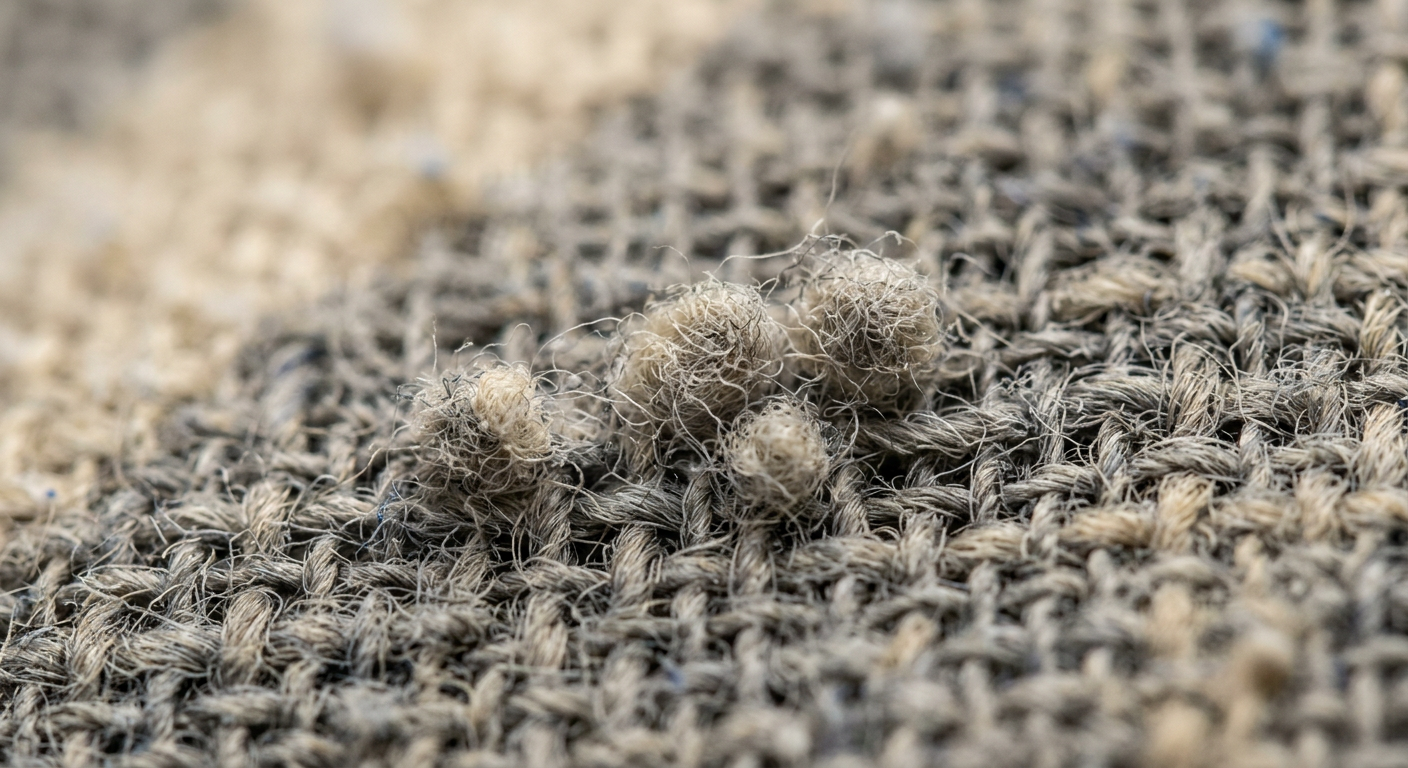
A pill forms in three stages: fuzz, entanglement, and anchoring. First, friction — from your washing machine drum, your jeans rubbing against a tote, your elbow on a sofa arm — lifts loose fiber ends out of the yarn body. Those loose ends are called fuzz. With continued abrasion, the fuzz twists around itself into a small ball. So far, so harmless.
The problem starts at stage three. On 100% natural fiber fabrics, the pill is held to the surface by a weak fiber or two, and the next wash cycle usually snaps it off. On synthetic or blended fabrics, polyester and nylon fibers are strong enough that they don't break — they hang on indefinitely, accumulating more fuzz and growing into the ugly little nodules you see after two washes.
That's the entire mechanism. Once you understand it, every prevention tactic below makes intuitive sense.
Staple Length: The Single Biggest Predictor
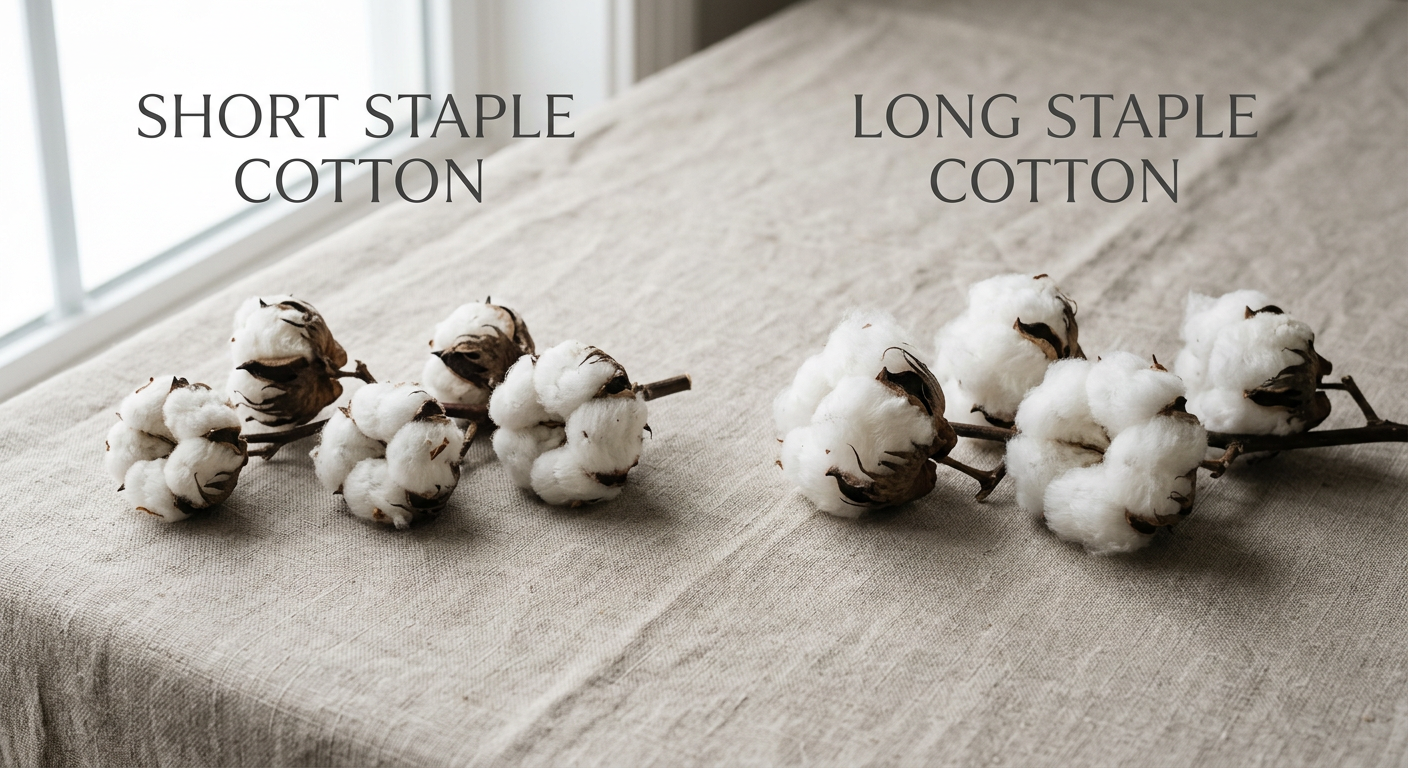
If you remember one variable from this article, make it staple length. Short fibers have more loose ends per square inch — and every loose end is a potential pill. Long fibers stay buried in the yarn.
Here's the rough hierarchy in cotton alone:
- Upland cotton (short staple, ~22mm): pills readily. Common in budget tees and sheets.
- Pima cotton (long staple, ~35mm): noticeably more pill-resistant.
- Supima/Egyptian Giza (extra-long staple, 38mm+): very pill-resistant. Premium shirting territory.
A real example: a boutique sleepwear brand we worked with switched from a 180 GSM upland cotton jersey to a 175 GSM combed Pima jersey. Same weight, same drape, but customer pilling complaints dropped from roughly 8% of returns to under 1% over a season. The only variable was staple length and combing. If you're sourcing sleepwear fabric or shirting, this is the lever to pull.
Why Polyester Blends Pill More Than Either Fiber Alone
Counterintuitive but true: a 50/50 cotton/poly blend often pills worse than 100% cotton or 100% polyester. The reason is mechanical, not chemical.
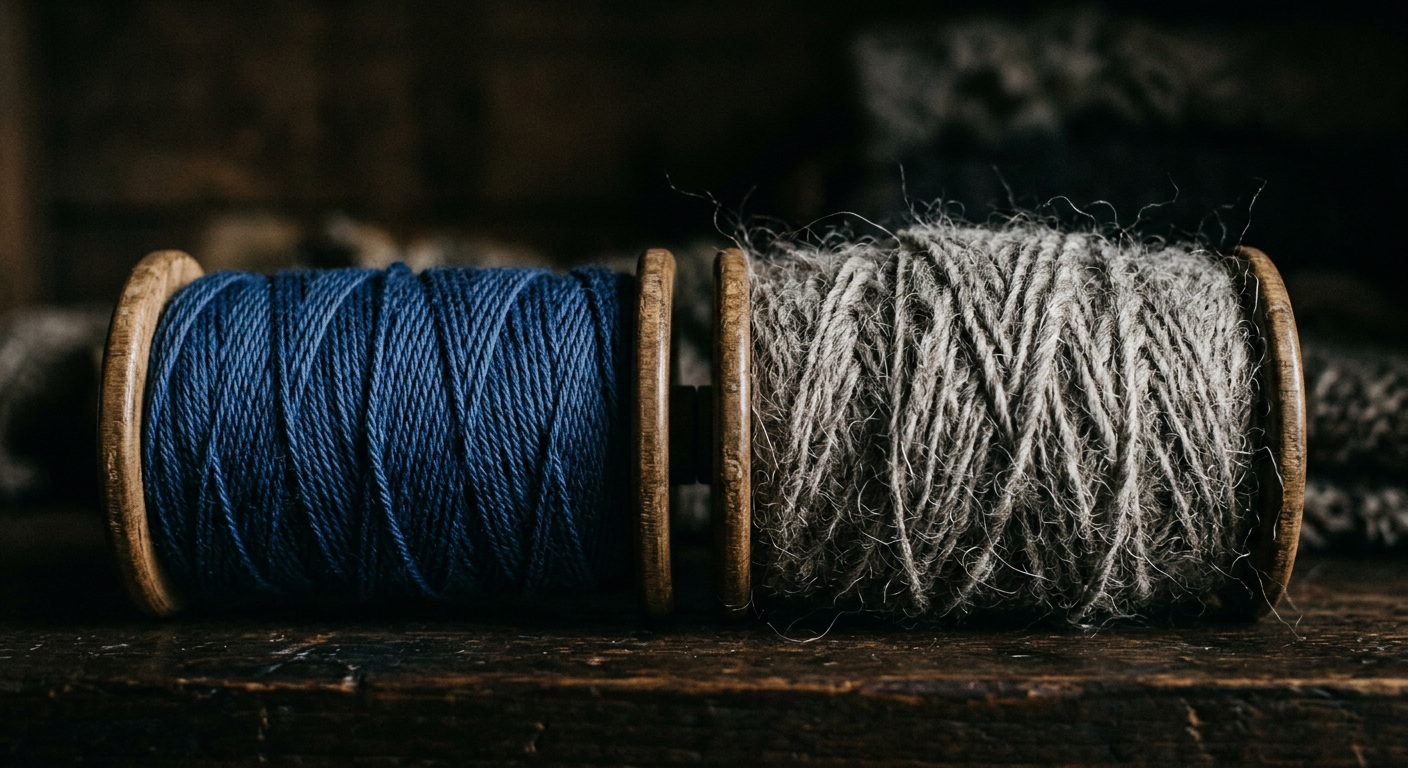
Cotton fibers break easily. Polyester fibers don't. In a blend, the cotton fibers fuzz up and form pills as expected — and then the strong polyester fibers anchor those pills to the fabric surface like little leashes. The pill literally cannot fall off because polyester won't snap.
This is why a cheap school-uniform polo (typically 65/35 poly-cotton) looks rough after a month while a 100% cotton oxford from the same closet still looks crisp. For deeper context on when blends make sense anyway, our breakdown of cotton vs polyester vs blends for bulk buyers covers the trade-offs in detail.
Yarn Twist and Construction: The Hidden Variables
Two fabrics can have the same fiber, same GSM, and behave completely differently in the wash. The difference is usually how the yarn was spun and woven.
Yarn twist
Tightly twisted yarns trap fiber ends inside the yarn body. Loosely spun yarns let them poke out. Voile and poplin (high twist) pill far less than flannel or jersey (low twist, brushed surface). Brushed fabrics are practically designed to fuzz — that's how they get their hand feel.
Combed vs carded
Combed cotton has had the shortest fibers literally combed out before spinning. Carded cotton hasn't. Combed yarn pills dramatically less. If a spec sheet says “100% cotton” without specifying combed, assume carded.
Weave vs knit
Knits pill more than wovens because the loop structure exposes more surface area to abrasion. Within knits, interlock pills are less than single jersey because both sides are tightly faced. Within wovens, satin weaves pill more than plain weaves due to longer floats.
GSM, Density, and Why Lightweight Fabrics Lose First
Lower GSM doesn't automatically mean more pilling — but lower thread density almost always does. A thin, loosely woven fabric exposes more fiber surface to friction per square inch. Tight construction physically locks fibers in place.
A useful rule of thumb when comparing two cotton fabrics of similar weight: count the threads visible per centimeter with a pick glass. A 130x70 construction will outperform a 90x60 even at the same nominal GSM. If you're new to reading construction numbers, our guides on fabric weight and GSM and reading a fabric spec sheet walk through exactly which numbers predict performance.
The Martindale and Pilling Test Numbers You Should Demand
If a mill can't give you a pilling test result, treat that as a red flag. Reputable mills run either the Martindale pilling test (ISO 12945-2) or the ICI box test (ISO 12945-1) and report a grade from 1 to 5.
- Grade 5: no pilling. Premium territory.
- Grade 4: slight fuzz, no real pills. Acceptable for most apparel.
- Grade 3: visible pilling. Borderline — fine for fashion items with short life cycles, not for uniforms or hospitality.
- Grade 2 or below: reject for anything beyond disposable.
For contract and hospitality work, specify Grade 4 minimum at 7,000+ Martindale rubs. For activewear and outerwear, push for Grade 4 at 10,000+. Our overview of hospitality fabric requirements covers where these thresholds come from in commercial settings.
Real-World Example: A Bedding Brand That Fixed Pilling in 30 Days
A direct-to-consumer bedding startup was getting hammered with 1-star reviews mentioning pilling on their flagship sheet set after two to three washes. The spec sheet looked fine on paper: 200 GSM, 100% cotton, 300 thread count. So what was wrong?
Three things, when we dug in:
- The cotton was carded upland, not combed. Short fibers everywhere.
- The yarn count was inflated by plying two thinner yarns, which technically hit 300 TC but used a weaker base yarn.
- The finishing skipped singeing — a flame treatment that burns off surface fuzz before the fabric ever leaves the mill.
The fix: switch to combed 40s single-yarn percale, add singeing and mercerization to the finishing spec, and bump up to 220 GSM. Per-meter cost rose about 18%. Pilling complaints disappeared within one production cycle, and the brand raised retail pricing by 30% on the new SKU. The math worked. If you're spec'ing sheeting fabric, ask specifically about singeing and yarn structure — most buyers never do.
Care Habits That Cause (or Prevent) Pilling
Even great fabric pills if you wash it badly. Pass this list to your end customers — or print it on the care label.
- Turn garments inside out. The friction happens on whichever side faces outward in the drum. Inside-out protects the visible surface.
- Wash with similar fabrics. Denim, towels, and zippers shred softer fabrics. Separate them.
- Skip the dryer when possible. Tumble drying multiplies abrasion by an order of magnitude. Line drying nearly eliminates it.
- Use liquid detergent, not powder. Undissolved powder granules act like tiny abrasives.
- Lower the water temperature. Hot water swells fibers, loosens twist, and accelerates fuzz formation.
- Wash less often. Genuinely. Most garments don't need washing after every wear.
For mills that pre-treat with enzyme washes or biopolishing, much of this is already handled — the fabric arrives with surface fuzz cellulase-trimmed before it ever reaches the consumer.
How to Spec Pill-Resistant Fabric at Order Time
The cheapest place to fix pilling is on the purchase order, not after the goods arrive. Put these requirements in writing when you spec:
- Fiber and staple: Specify combed long-staple cotton (Pima, Supima, or Giza) for any next-to-skin or visible product.
- Yarn: Request ring-spun, not open-end. Ring-spun yarn has tighter fiber alignment.
- Finishing: Demand singeing for wovens, biopolishing/enzyme wash for knits, and mercerization where luster matters.
- Testing: Require a Martindale pilling result of Grade 4 minimum, with the test report attached to the PO.
- Avoid problem blends: Skip 50/50 cotton-poly for high-abrasion end uses. If you need synthetic strength, go to 100% poly with a proper anti-pill filament yarn rather than blending.
Pair those specs with the right end-use category — long sleeve shirting, crepe for drapey wovens, or tightly knit interlock for activewear — and pilling stops being a recurring complaint.
Putting It All Together
Pilling isn't mysterious. It's the predictable outcome of short fibers, loose twist, low density, problem blends, and skipped finishing steps — amplified by aggressive laundering. Control those variables and your fabric will look new after wash 20, not wash 2.
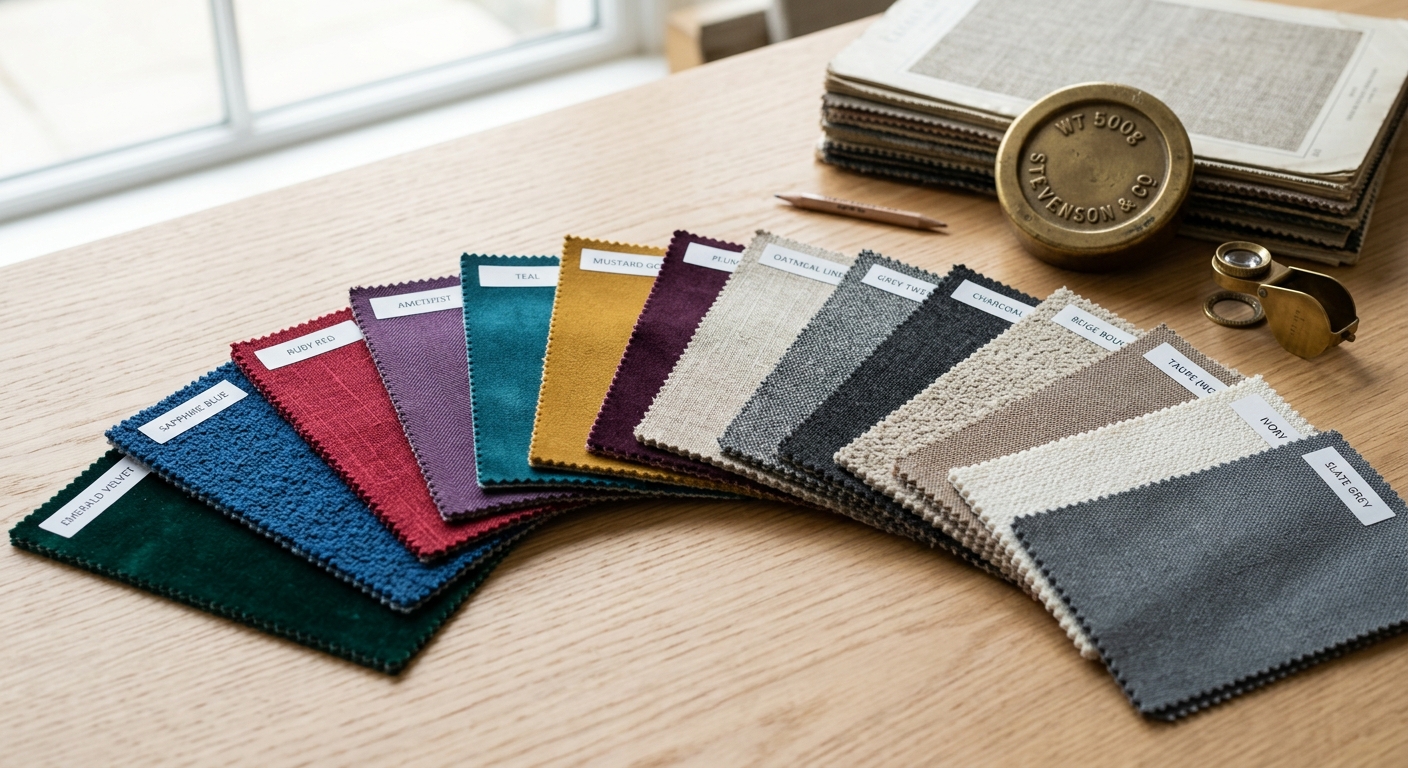
If you're sourcing bulk fabric and want spec sheets that actually tell you what you need to know — staple length, yarn structure, finishing, Martindale pilling grade — browse our catalog at Global Fabric Wholesale or reach out to our team. We'll send swatches with the pilling test reports attached, so you can see the numbers before you commit to a roll.



 Login with Google