


Viscose vs Rayon: Same Fabric, Different Label — Here’s What to Know

Viscose and rayon are the same fiber. The only real difference is where you’re shopping: labels in North America typically say “rayon,” while European and Asian markets use “viscose.” Same manufacturing process, same cellulose base, same end result on your sewing table.
If that’s all you needed to know, you’re good to go. But there’s one situation where the label can actually mean something different — and it’s worth understanding before your next order.
The Short Answer: They’re the Same Fiber
A label that says “100% rayon” and a label that says “100% viscose” are describing identical fabric. The U.S. Federal Trade Commission permits both terms to be used interchangeably on garment labels, which is why you’ll find both in common use without any technical distinction between them.
The word “viscose” comes from the thick, honey-like liquid that forms during the manufacturing process — the same process used everywhere to turn wood pulp cellulose into soft, drapey fiber. “Rayon” is simply the commercial name that stuck in North America when the fiber was introduced in the early 20th century.
So if you’ve been wondering whether to choose one over the other based on the name alone: don’t. Focus on GSM, weave structure, and fiber composition instead — those are what actually affect how the fabric behaves.
Viscose vs Rayon at a Glance
| Property | Viscose | Rayon |
|---|---|---|
| Common name (North America) | Rayon | Rayon |
| Common name (Europe / Asia) | Viscose | Viscose |
| Fiber origin | Plant cellulose (wood pulp) | Plant cellulose (wood pulp) |
| Manufacturing process | Viscose process | Viscose process |
| Hand feel | Soft, smooth, slightly cool | Soft, smooth, slightly cool |
| Drape | Fluid, relaxed | Fluid, relaxed |
| Wet strength | Weakens when wet — handle with care | Weakens when wet — handle with care |
| Care | Hand wash or gentle cycle; lay flat to dry | Hand wash or gentle cycle; lay flat to dry |
| Breathable? | Yes | Yes |
| FTC label status | Permitted interchangeably | Permitted interchangeably |
When “Rayon” on a Label Means Something Else
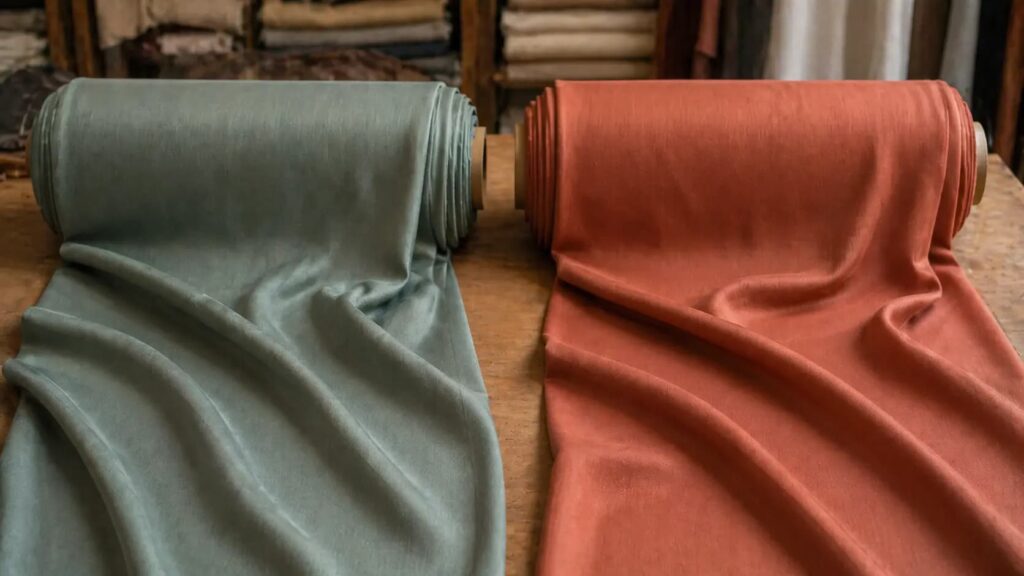
Here’s where it gets worth paying attention: “rayon” is also used as a category name for a broader family of regenerated cellulose fibers. When a label says “100% rayon” without any further detail, you can safely assume it’s viscose rayon. But some labels identify a specific type within the rayon family — and those types do perform differently.
Two you’ll come across most often:
- Modal — made from beech wood pulp and engineered to hold its shape better when wet. It’s noticeably softer than standard viscose and resists shrinking more effectively through repeated washing. If a label specifies modal, that’s a meaningfully different fabric. See our full modal guide.
- Lyocell / Tencel — produced using a closed-loop solvent process that recovers and reuses more than 99% of its chemicals, making it one of the more environmentally considered options in the rayon family. Learn more about lyocell.
The rule of thumb: if the label only says “rayon,” treat it as viscose. If it names a specific type, that information matters.
What This Means When You’re Shopping for Fabric?
When you’re comparing two listings — one described as “100% viscose” and another as “100% rayon” — the name is not the variable to evaluate, what actually determines how the fabric will feel, behave, and hold up is:
- GSM (grams per square meter): a lighter GSM gives you a more floaty, transparent result; a heavier GSM gives more structure and opacity.
- Weave structure: viscose chiffon drapes very differently from viscose crepe or viscose jersey, even though all three carry the same fiber name.
- Blend composition: a 95% viscose / 5% elastane blend stretches; a 100% viscose woven does not.
If you’re not sure how to compare fabric weights across listings, our GSM guide breaks it down in plain terms.
How Viscose (Rayon) Feels and What You Can Make with It
Because viscose and rayon are the same fiber, everything below applies to both.
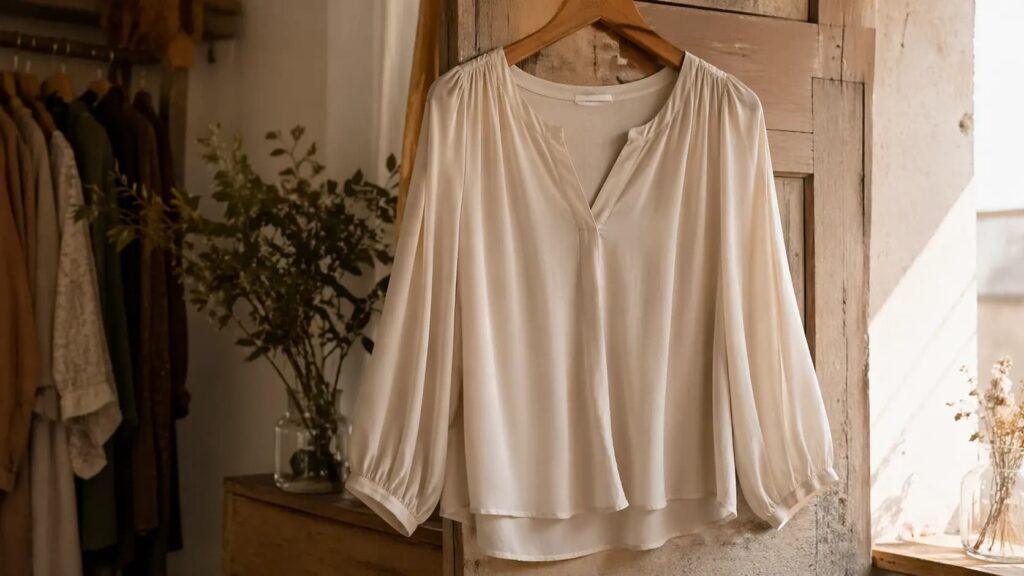
Viscose is soft against skin and takes color well — prints stay vivid, and solid-colored pieces have a clean, saturated look. It’s also one of the more breathable fabric options in this category, making it a natural choice for warm-weather garments.
Its biggest strength is how it moves. Viscose is one of the more drapey fabrics available, which is exactly why it’s used so widely in flowy dresses, blouses, and skirts. It follows the body without clinging, and cuts and sews cleanly when handled with care.
What it’s well suited for:
- Dresses and skirts (especially wrap and A-line styles)
- Blouses and lightweight tops
- Scarves and lightweight lining
- Loungewear where softness matters more than durability
One thing to plan for: viscose weakens when wet, which means it’s prone to stretching or losing shape during washing. Hand wash or use a gentle machine cycle, and always lay flat to dry rather than wringing or hanging.
From Our Experience
The viscose vs rayon question comes up often — and almost always from buyers who found the same or similar fabric listed under different names across different sites, and weren’t sure whether they were looking at the same thing.
The short version: if two listings show the same fiber content, GSM, and weave type, the name difference is a geography issue, not a quality issue. Where buyers do hit problems is when they compare a standard viscose crepe to something labeled “rayon” that turns out to be a modal or lyocell blend — different properties, different care requirements, different price point. For reference on how fiber labeling is regulated in the U.S., the FTC’s Textile Fiber Products Identification Act lays out exactly which fiber names are permitted on garment tags and how they must be disclosed.
Frequently Asked Questions About Viscose and Rayon
Is viscose the same as rayon?
Yes. Viscose and rayon refer to the same type of fiber. “Rayon” is the term used in North America; “viscose” is used in Europe and most of Asia. Both describe a semi-synthetic fiber made from plant cellulose using the same manufacturing process.
If a label says “100% rayon,” is it viscose?
Almost always, yes. When a label says “100% rayon” without further detail, it is describing viscose rayon. The exception is when the label also specifies a subtype — such as modal or lyocell — in which case those are distinct fibers with different performance characteristics.
Is modal the same as viscose or rayon?
No — modal is a different fiber within the broader rayon family. It’s engineered to be softer and stronger when wet than standard viscose, and it holds its shape better through washing. See how modal differs →
Does viscose feel different from rayon?
Not when produced using the same process and weave. A viscose chiffon and a rayon chiffon of equal GSM will feel and behave identically. Any variation you notice between products labeled one way or the other comes from weight, weave, or blend differences — not the name.
Can I use viscose and rayon fabric the same way when sewing?
Yes. Care instructions, sewing techniques, and handling requirements are the same for viscose and rayon. Both are slippery to cut and benefit from being washed before sewing to account for any initial shrinkage. Use a sharp needle, reduce stitch tension slightly, and avoid high heat when pressing.
Viscose and rayon are the same starting point — what you make with them is up to you. Browse our full viscose fabric collection to find the weight, weave, and colorway that fits your next project.




 Login with Google