-

Free Samples!



What Fabric Works Best for Outdoor Furniture and Marine Use? UV Resistance, Mildew, and Waterproofing Explained

Table of Contents
Solution-dyed acrylic fabric is the best all-around choice for outdoor furniture and marine applications — full stop. It delivers exceptional UV resistance (typically 1,500+ hours of fade resistance), inherent mildew resistance, and strong water repellency without sacrificing breathability or hand feel. But “best” depends on your specific use case: a restaurant patio in Phoenix has different demands than a fishing charter in the Florida Keys. This guide unpacks the three performance pillars — UV resistance, mildew resistance, and waterproofing — with real specs, real trade-offs, and practical guidance so you order the right outdoor fabric in the right quantity the first time.
Why Outdoor and Marine Fabrics Aren't Just Tough Indoor Fabrics
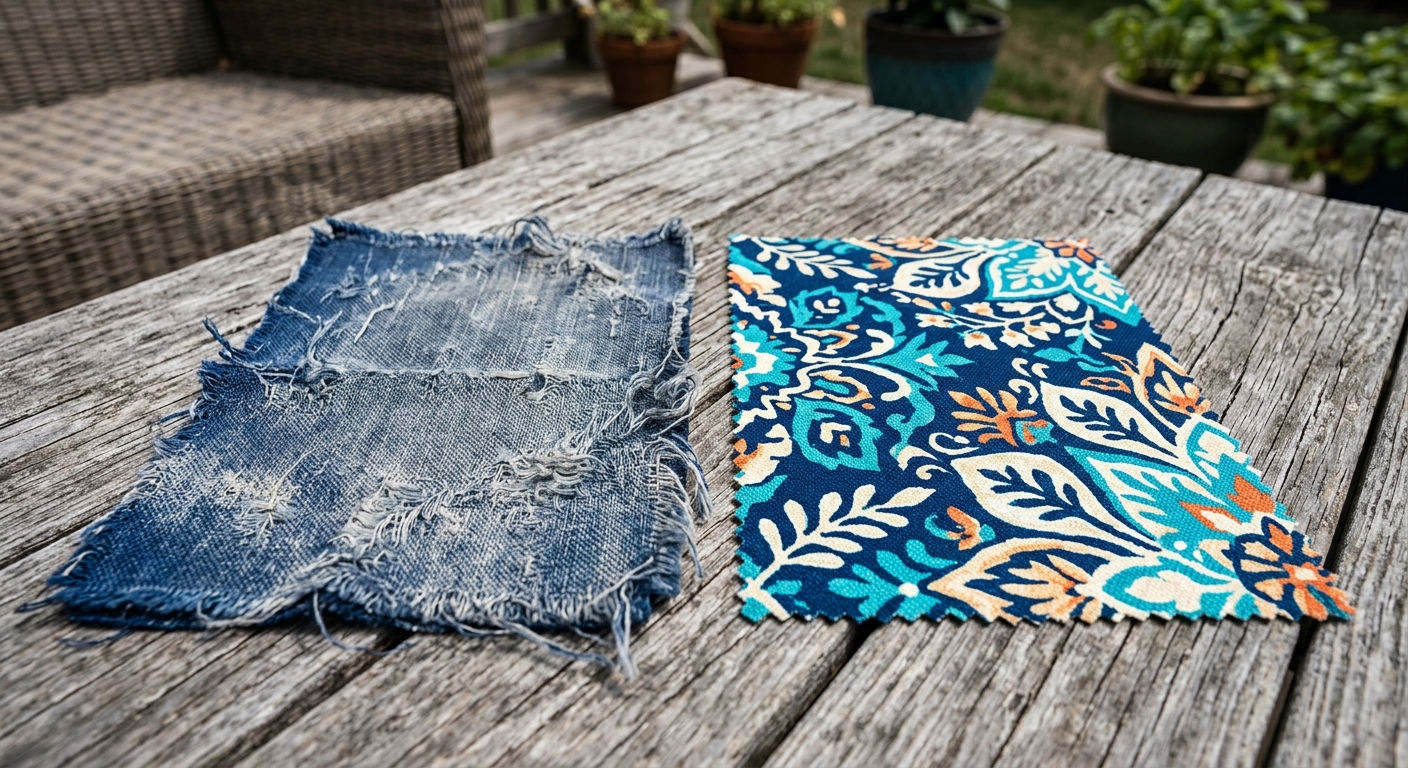
Here’s a mistake that costs businesses thousands of dollars every year: they buy a heavy-duty upholstery fabric rated for 100,000 double rubs and assume it’ll survive outdoors. It won’t. Abrasion resistance and outdoor durability are completely different performance categories. A cotton-poly blend might pass a Wyzenbeek test with flying colors, yet disintegrate under six months of direct sunlight.
Outdoor and marine environments attack fabric on three fronts simultaneously:
- UV radiation — breaks down polymer chains, causing fading, brittleness, and fiber degradation.
- Moisture — creates the conditions for mold, mildew, and bacterial growth.
- Salt, chlorine, and pollutants — accelerate chemical degradation and staining.
Indoor upholstery specs like Martindale or Wyzenbeek abrasion ratings tell you almost nothing about how a fabric handles these three threats. Instead, you need to look at UV hours (AATCC 16 or equivalent), water column pressure (hydrostatic head), and antimicrobial treatment longevity. If you’re new to reading these numbers, our guide on how to read a fabric spec sheet covers the fundamentals.
UV Resistance: The Single Most Important Spec for Outdoor Fabric
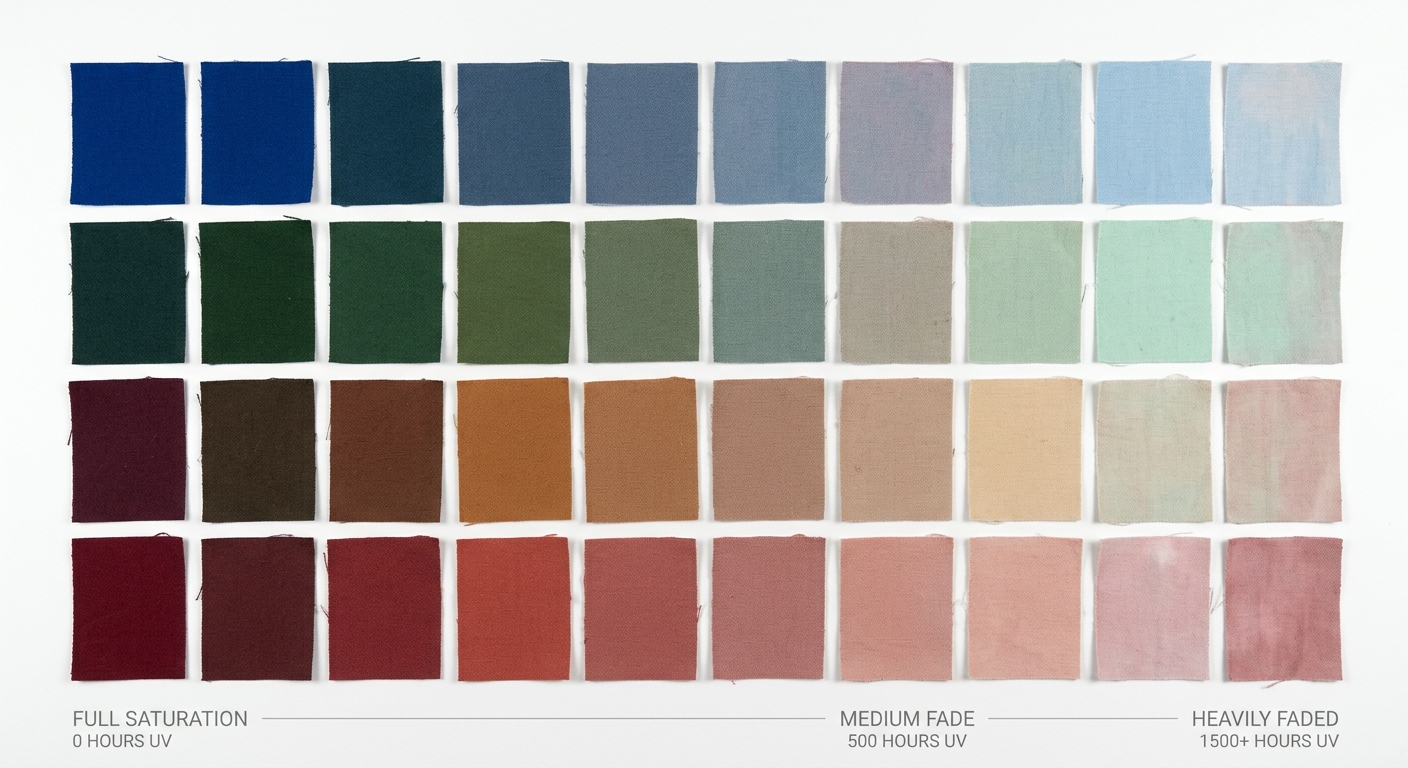
UV radiation is the silent killer of outdoor textiles. Most fabrics lose 50% of their tensile strength after just 500 hours of UV exposure if they aren’t engineered to resist it. For context, a cushion in direct Arizona sun accumulates roughly 3,000+ UV hours per year. Even in temperate climates like the Pacific Northwest, you’re looking at 1,500–2,000 hours annually.
How UV Resistance Is Built into Fabric
There are two fundamentally different approaches, and the difference matters enormously:
- Solution-dyeing (dope-dyeing): Pigment is injected into the fiber itself before it’s extruded. The color is part of the molecular structure. This is why solution-dyed acrylic and solution-dyed polyester hold color so well — the UV has to destroy the entire fiber to destroy the color.
- Topical UV treatments: A UV-inhibiting chemical is applied to the finished fabric surface. These work initially but degrade with washing, abrasion, and — ironically — UV exposure itself. Expect 1–3 seasons of protection before reapplication is needed.
If you’re buying for a commercial application where replacing cushions annually isn’t an option, solution-dyed is the only rational choice. For those also interested in UV protective fabric for wearable applications, the same dyeing principles apply.
Real Numbers to Look For
Ask your supplier for AATCC 16 Option 3 (Xenon Arc) test results. Here’s what the hours mean in practice:
- 500 hours: Minimal protection — fine for a seasonal patio umbrella stored in winter.
- 1,000 hours: Moderate — suitable for covered porches or shaded commercial seating.
- 1,500+ hours: Commercial-grade — what you need for year-round exposed furniture, boat canvas, and awnings.
Mildew Resistance: What Actually Prevents Growth (and What Doesn't)
Mildew doesn’t eat synthetic fibers — it eats the dirt, body oils, pollen, and organic residue that accumulate on them. That’s an important distinction. A fabric labeled “mildew resistant” isn’t necessarily immune; it just doesn’t provide a food source the way cotton or linen does, and it may include antimicrobial treatments that inhibit spore growth on surface contaminants.
Fiber Type Matters More Than Treatments
Olefin (polypropylene) and solution-dyed acrylic are inherently hostile to mildew because they absorb virtually zero moisture. Polyester absorbs slightly more (about 0.4% moisture regain) but is still far better than any natural fiber. Nylon, by contrast, absorbs 4–8% moisture and becomes a mildew magnet in humid marine environments — even with antimicrobial treatments.
The Antimicrobial Treatment Question
Many outdoor fabrics come with antimicrobial finishes (silver-ion, zinc pyrithione, or proprietary formulations). These help, but they’re a second line of defense, not a first. A well-chosen fiber that drains and dries quickly will outperform a poorly chosen fiber with an expensive antimicrobial coating. For marine use in subtropical climates, insist on both: the right base fiber plus an antimicrobial finish.
For instance, a marina operator in Galveston, Texas, switched from treated polyester sling fabric to solution-dyed acrylic for their rental boat cushions. Despite the higher per-yard cost, they eliminated their quarterly mildew deep-cleaning service entirely — saving roughly $2,800 per season across their 14-boat fleet. The fabric paid for itself in seven months.
Waterproofing vs Water Repellency: Know the Difference Before You Order
This is where buyers get burned most often. “Water resistant,” “water repellent,” and “waterproof” are three different things, and manufacturers use them loosely.
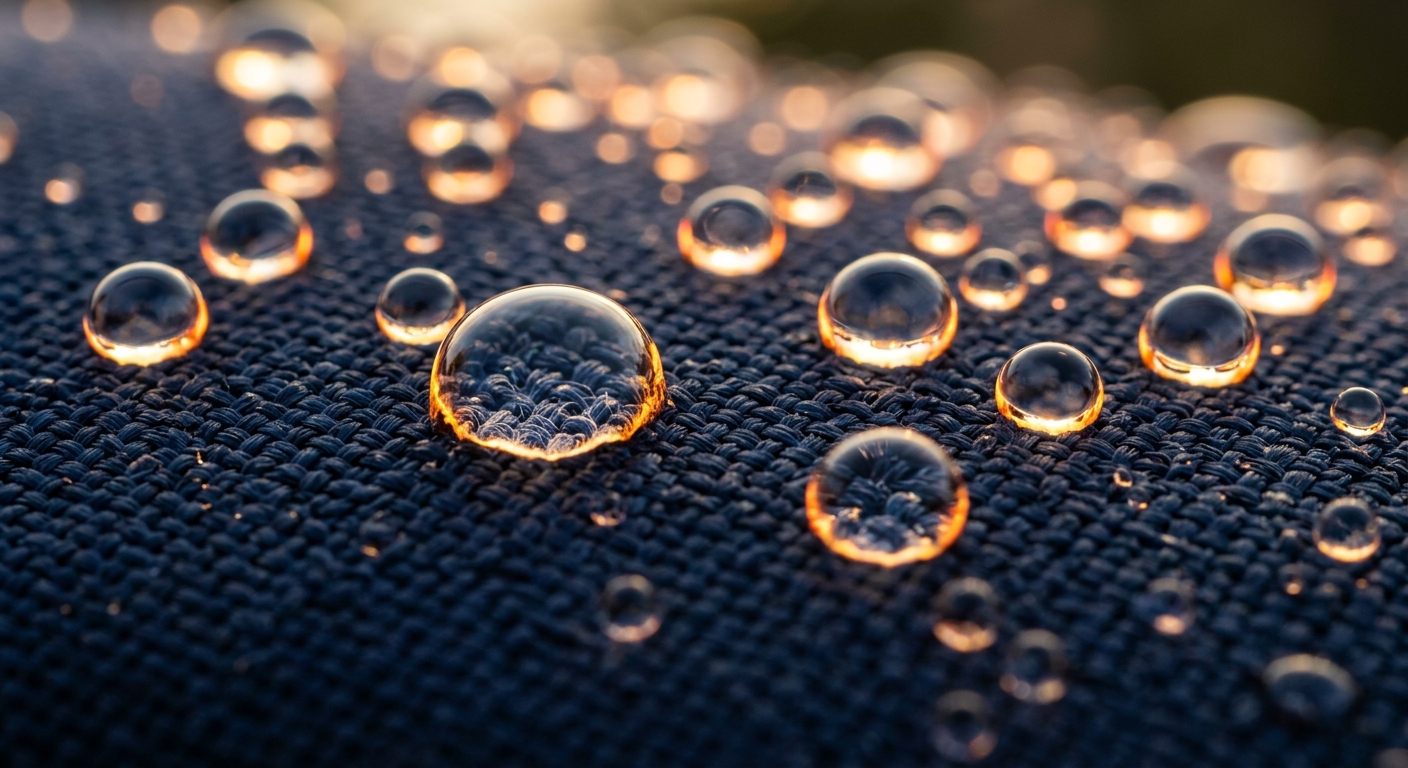
- Water-repellent: Fabric is treated (usually with a fluorocarbon or silicone-based DWR finish) so water beads and rolls off the surface. It will eventually soak through under sustained pressure or heavy rain. Most solution-dyed acrylics fall here.
- Water-resistant: Fabric resists light moisture penetration. Think light rain or splash zones. Not suitable for fully exposed marine applications.
- Waterproof: Fabric blocks water entirely, usually via a PVC, polyurethane, or TPU laminate or coating on the back. Vinyl marine fabrics and coated polyesters are truly waterproof.
The Breathability Trade-Off
Here’s the catch: Truly waterproof fabrics don’t breathe. That’s fine for a boat cover or a bimini top. It’s terrible for a seat cushion. Trapped moisture between a waterproof cover and a foam insert creates a sauna effect — and that’s exactly the warm, humid environment where mildew thrives inside the cushion even if the fabric surface is clean.
For cushion applications, water-repellent and breathable is almost always better than waterproof. Pair it with quick-dry foam (open-cell or reticulated foam) and you get a system that sheds rain, drains fast, and dries within hours. Save the truly waterproof vinyl for hard surfaces: helm seats, console covers, and storage compartments.
The Top Fabric Types for Outdoor and Marine Use — Head to Head
Let’s get specific. Five fabric types dominate the outdoor and marine market. Each has a clear sweet spot — and clear limitations.
Solution-Dyed Acrylic
The industry benchmark. Brands like Sunbrella, Outdura, and Tempotest all use this technology. Expect 1,500+ UV hours, excellent breathability, good water repellency (with DWR treatment), and a soft hand feel that’s comfortable against skin. Downside? It’s the most expensive option per yard, and it’s not truly waterproof without a laminate backing.
Polyester (Solution-Dyed or Coated)
A budget-friendly alternative. Solution-dyed polyester approaches acrylic performance at 60–70% of the cost. Standard dyed polyester with a UV topcoat is cheaper still but fades faster. Polyester is the workhorse for bulk buyers who need decent outdoor performance without premium pricing.
Olefin (Polypropylene)
Underrated. Olefin absorbs less moisture than any other common textile fiber (essentially zero), resists mildew inherently, and offers excellent UV resistance. It’s widely used in outdoor sling chairs and area rugs. The limitation: it has a lower melting point (~165°C) and a waxy hand feel that some customers find less premium.
Vinyl (PVC-Coated Fabrics)
The marine industry standard for hard-use surfaces. Completely waterproof, easy to clean, and highly resistant to salt spray. Modern marine vinyls have improved dramatically in UV resistance and flexibility compared to a decade ago. But they don’t breathe at all, and cheaper grades crack in cold weather.
Nylon (Outdoor-Treated)
Generally not recommended for prolonged outdoor exposure. Nylon fabric has excellent tensile strength and abrasion resistance, making it tempting for marine hardware like sail covers or bags. But its UV resistance is inherently poor — nylon loses roughly 50% of its strength after just 500 hours of UV exposure. Reserve it for components that stay shaded or are replaced frequently.
Matching Fabric to Application: Patio, Poolside, Boat, and Commercial
Choosing outdoor fabric without considering the specific application is like choosing tires without knowing the vehicle. Here’s a practical breakdown:
Residential Patio Furniture
Solution-dyed acrylic or solution-dyed polyester. These cushions need to look good, feel comfortable, and survive 3–5 seasons with minimal maintenance. A 200–300 GSM fabric with DWR treatment is the sweet spot. If you’re unsure about how GSM affects performance, heavier isn’t always better — it just dries slower.
Poolside and Splash-Zone Seating
Olefin or solution-dyed acrylic. Chlorine and sunscreen are brutal on dyes. Solution-dyed fibers resist both. Olefin’s zero moisture absorption means it dries in minutes — a genuine advantage when wet guests are cycling through lounge chairs.
Boat Upholstery and Covers
Marine-grade vinyl for helm seats and hard surfaces. Solution-dyed acrylic for bimini tops, cockpit cushions, and canvas. A charter boat company in Annapolis, Maryland, reported that switching from budget polyester canvas to 9.25 oz solution-dyed acrylic for their bimini tops extended replacement cycles from 2 years to 6+ years — a 65% reduction in total cost of ownership despite paying nearly double per yard upfront.
Commercial Outdoor Seating (Restaurants, Hotels, Resorts)
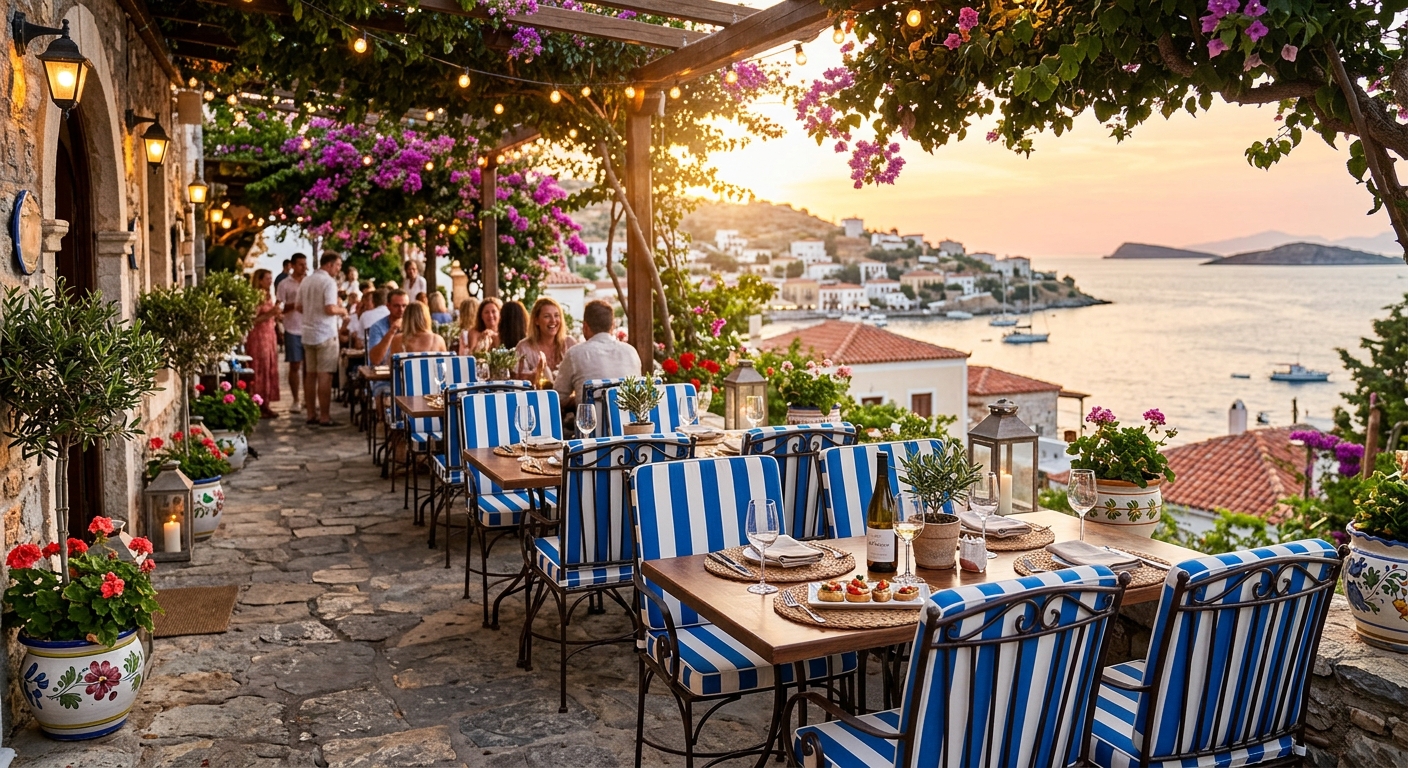
Solution-dyed acrylic with antimicrobial treatment and a DWR finish. Commercial environments demand fabrics that can be cleaned aggressively (bleach-cleanable is a must for hospitality) without losing color or water repellency. Check that your fabric is certified bleach-cleanable — not all outdoor fabrics are. For guidance on matching durability ratings to real-world use cases, we’ve covered that in depth separately.
Key Performance Tests and Certifications to Demand from Your Supplier
Don’t take marketing claims at face value. Outdoor fabric is one of those categories where the gap between a spec sheet and real-world performance can be enormous. Here are the specific tests and standards to request:
- AATCC 16 (Colorfastness to Light): The UV resistance benchmark. Insist on Option 3 (Xenon Arc) results, not Option 1 (Carbon Arc), which is less representative of real sunlight.
- AATCC 127 (Water Resistance — Hydrostatic Pressure): Measures how much water pressure a fabric can withstand before leaking. A result above 600 mm water column is considered good for outdoor cushion covers.
- ASTM G154 (Accelerated Weathering): Simulates years of outdoor exposure in weeks. Ask for before/after tensile strength and color data.
- AATCC 30 (Antifungal Activity): Confirms mildew resistance. Look for a rating of “no growth” after 14 days.
- CFFA-5 or IMO standards (for marine): If you’re supplying commercial vessels, fire retardancy certifications are legally required in many jurisdictions.
A reputable wholesale supplier should be able to provide these test results or direct you to the fabric manufacturer’s technical data sheets. If they can’t, that’s a red flag — and we’ve written about the hidden costs of cheap wholesale fabric that often show up exactly here.
Maintenance and Longevity: How to Maximize Your Fabric Investment
Even the best outdoor fabric won’t last if maintenance is ignored. The good news? Proper care for high-quality outdoor textiles is surprisingly simple.
Routine Cleaning
Brush off loose dirt weekly. Monthly, clean with a solution of mild soap (not detergent) and lukewarm water. Rinse thoroughly — soap residue actually attracts dirt and accelerates mildew growth. For stubborn stains on solution-dyed acrylic, a diluted bleach solution (1 cup bleach per gallon of water) is safe and effective. This is one of acrylic’s biggest advantages: try that on polyester and you’ll likely damage the DWR finish.
Reapplying Water Repellency
DWR (Durable Water Repellent) finishes degrade over time — typically after 12–18 months of heavy use or 3–5 professional cleanings. Reapplication is straightforward with spray-on products like 303 Fabric Guard or similar. Budget about $15–20 per treatment per set of patio cushions. It’s cheap insurance.
Storage
If cushions will be stored for winter, make sure they’re completely dry first. Storing damp outdoor cushions — even mildew-resistant ones — in an enclosed space is asking for trouble. A breathable storage bag beats a sealed plastic bin every time.
Cost Considerations: When Premium Fabric Actually Saves Money
Solution-dyed acrylic typically runs $18–$35 per yard at wholesale, compared to $8–$15 for standard outdoor polyester and $12–$22 for marine vinyl. That price gap makes budget-conscious buyers hesitate. But the total cost of ownership calculation almost always favors the premium option for exposed, high-use applications.
Consider a 40-seat restaurant patio. At roughly 3 yards per seat cushion set (seat + back), you need 120 yards. The difference between $12/yard polyester and $25/yard acrylic is $1,560. But if the polyester fades and needs replacement after 2 seasons while the acrylic lasts 5–7, you’re spending $1,440 on polyester replacements (plus labor) versus zero on acrylic. The “expensive” fabric is actually $1,440 cheaper over five years — and that’s before accounting for the better customer experience of vibrant, clean-looking cushions.
For residential use with moderate sun exposure and winter storage? Budget polyester is perfectly reasonable. Context matters. The key is matching the fabric tier to the actual exposure conditions and replacement tolerance.
Choosing Your Outdoor Fabric: A Practical Decision Framework
Skip the analysis paralysis. Answer these four questions and you’ll land on the right fabric 90% of the time:
- Is the fabric in direct, unshaded sunlight for more than 4 hours daily? → You need solution-dyed fiber (acrylic or polyester). Topical UV treatments won’t cut it.
- Will it contact water regularly (rain, splash, salt spray)? → For cushions: water-repellent + breathable. For covers and hard surfaces: waterproof vinyl or coated polyester.
- Is the environment humid or subtropical? → Prioritize zero/low moisture absorption fibers (olefin or acrylic) and antimicrobial treatments.
- What’s the expected replacement cycle? → Under 2 years: budget polyester is fine. 3+ years: invest in solution-dyed acrylic or marine vinyl.
At Global Fabric Wholesale, we carry a range of outdoor-suitable textiles across different performance tiers. Whether you’re outfitting a single boat or sourcing for a hospitality chain, we can help you match the right fabric to your specific application and budget. Browse our catalog or reach out to our team for spec sheets and bulk pricing — getting the right fabric upfront is always cheaper than replacing the wrong one.



 Login with Google