


Why Your Fabric Feels Great in the Showroom But Wrong Off the Bolt: Understanding Drape and Hand

Your fabric feels different off the bolt because a 4x4-inch swatch can't show you drape — and drape only reveals itself when fabric has enough mass and width to fold, cascade, and move under its own weight. Hand (the surface feel) can also shift once the fabric relaxes from its shipping tension, absorbs ambient humidity, or gets cut on the true bias instead of straight grain. In short: swatches test hand reasonably well, but they almost always lie about drape.
Drape Is a Function of Mass, Not Just Fiber
Here's the mistake almost every buyer makes: they assume drape is a fixed property of the fiber. It's not. Drape is what happens when gravity acts on fabric mass across a given width — and a swatch simply doesn't have enough width or mass to demonstrate that.
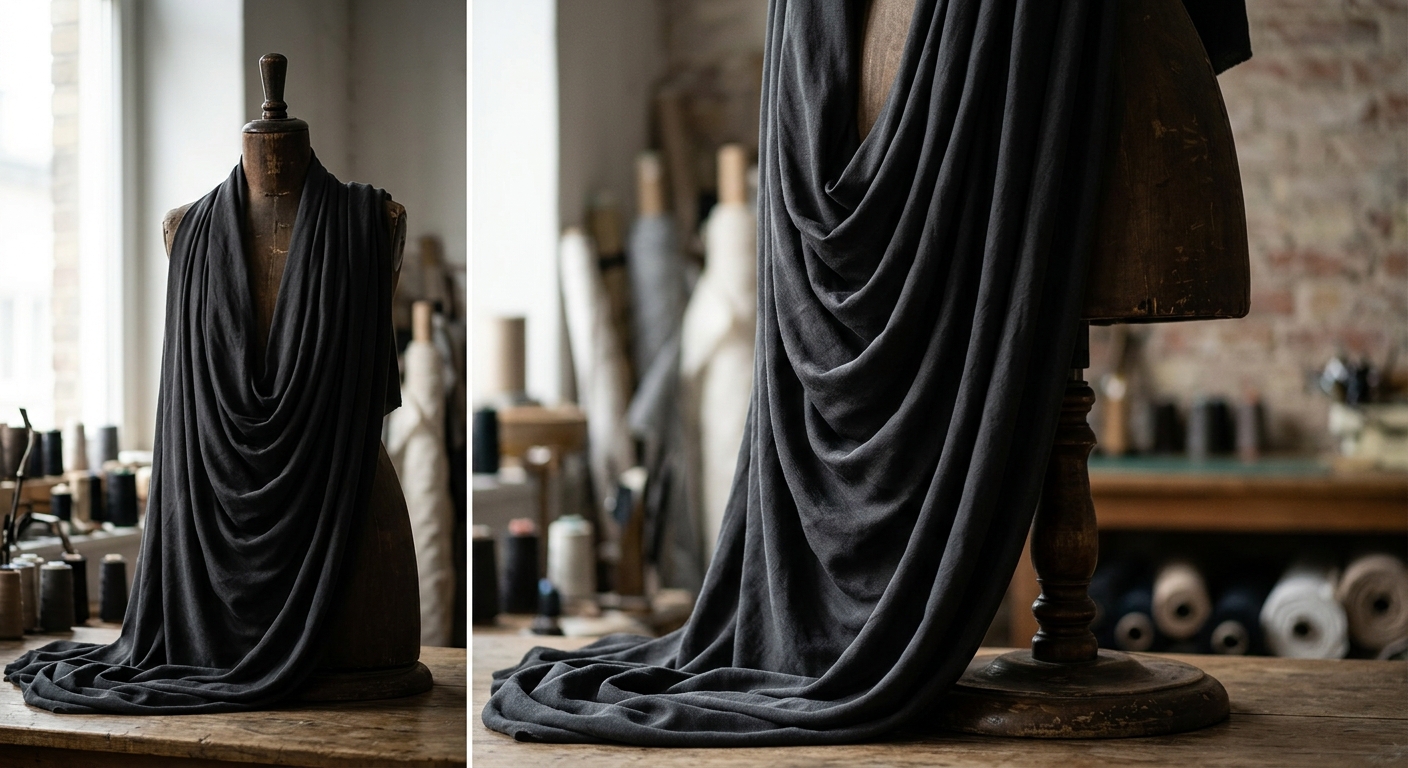
Textile labs measure this with something called the drape coefficient — the percentage of a circular fabric sample's area that remains visible when draped over a smaller disc and viewed from above. A stiff fabric like cable fabric might show a drape coefficient of 70-90% (barely any fold, mostly flat). A fluid fabric like viscose can drop to 20-30%, forming deep, cascading folds.
On a 4-inch swatch, you physically cannot form those folds. The fabric is too small to fall under its own weight, so your hand automatically reads it as softer and more pliable than it will behave once you're working with a full yard.
Hand-Feel Perception Changes With Sample Size
Hand feel — the softness, crispness, or coolness you register when you touch fabric — is more reliable on a swatch than drape, but it's still distorted. Small samples concentrate sensory feedback into a tighter area, which tricks your fingers into perceiving more density and smoothness than actually exists across a full width.
The Edge Effect
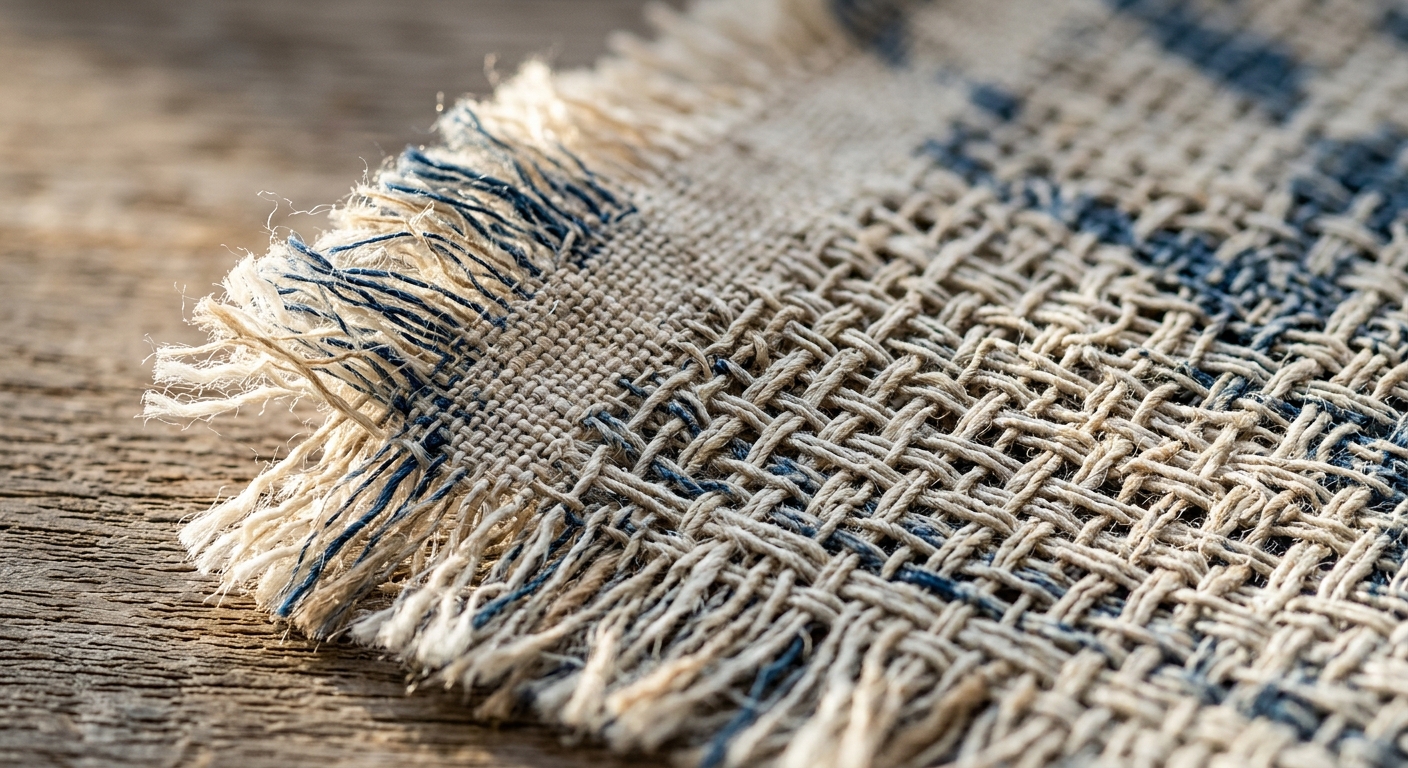
Every swatch has cut edges nearby. Those edges add perceived structure — a kind of false crispness — because your fingers are subconsciously registering the edge stiffness along with the open-weave feel in the middle. Cut a 36-inch square from the same fabric and the center will feel noticeably softer and looser than the swatch ever did.
If your customers keep complaining that a fabric feels different once it arrives, this edge effect is often the missing explanation — and it pairs well with the vocabulary breakdown in our hand-feel vocabulary guide.
Grain Direction Distorts Both Drape and Hand
A swatch cut on the straight grain feels stable and predictable. Rotate that same fabric 45 degrees to the bias, and drape can change dramatically — some fabrics gain 30-40% more stretch and fluidity on the bias alone.
This is why a designer cutting bias-cut evening gowns from satin fabric will get a completely different drape result than someone cutting the same yardage on-grain for structured panels. If your supplier only sends you a straight-grain swatch, you're missing half the story.
Real-World Example
A bridal studio once ordered georgette based on a swatch that felt crisp and structured. On the cutting table, the bias-cut skirt panels sagged into soft, uneven folds — not because the fabric was defective, but because nobody tested drape on the bias before committing to a 200-yard order.

Finishing Treatments Wear Off — And Take the 'Good Feel' With Them
That silky-smooth hand you felt in the showroom might not be the fiber at all — it might be a temporary softener, silicone finish, or calendering treatment applied for presentation purposes. These finishes can wash out or wear down within a handful of uses, revealing the fabric's true, often coarser, baseline hand.
- Silicone softeners: add slip and smoothness, typically fade after 3-5 washes
- Calendering (heat/pressure rolling): creates temporary sheen and crispness on wovens
- Starch or sizing: adds body to cottons and linens, washes out completely on first laundering
Always ask your supplier directly: is this hand permanent, or finish-dependent? It's a fair question, and any legitimate mill will answer it without hesitation.
Weight (GSM) Tells You More Than Touch Does
Your hands are surprisingly bad at estimating fabric weight in isolation — especially on small swatches, where you're not accounting for surface area. Two fabrics can feel similarly substantial as swatches but behave completely differently once cut: one at 120 GSM will drape like liquid, while a 280 GSM version of the same weave will hold structure and resist folding.
If you haven't already, run through our guide on reading GSM like a pro before your next order — it's the single most objective number you can use to predict drape behavior before the fabric even ships.
Humidity and Storage Change Hand More Than People Realize
Fabric is hygroscopic — it absorbs and releases moisture from the air, and that moisture content directly affects hand. A fabric that felt crisp in a climate-controlled showroom can feel noticeably softer, heavier, or even slightly tacky after sitting in a humid warehouse for a few weeks.
Natural fibers like cotton, linen, and viscose are most affected; synthetics like polyester are more stable. If you're storing rolls long-term, our fabric storage guide covers the humidity thresholds that actually matter for preserving hand and preventing mildew.
How to Actually Test Drape Before You Commit to a Bulk Order
Stop trusting the swatch alone. Here's the test that actually predicts real-world drape:
The DIY Cascade Test
- Request a minimum 24x24-inch cutting, not a standard swatch
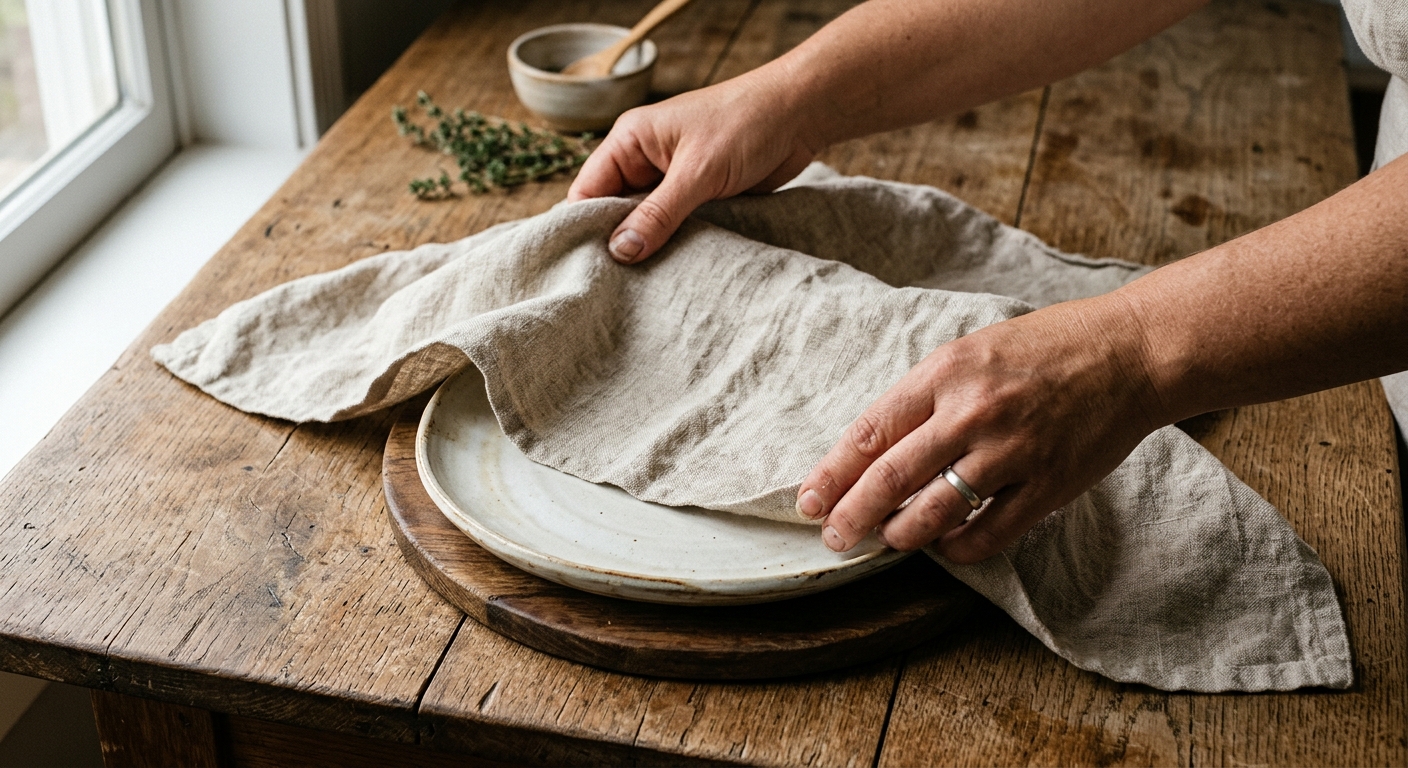
- Drape it over a round object (a dinner plate works) and observe how many folds form and how deep they fall
- Compare that fold pattern against a fabric you already know and trust
- Test on both straight grain and a 45-degree bias cut
This takes ten extra minutes and it's the difference between a garment that flows the way you pictured it and a costly reorder. Pair this with the home testing methods in our 5 fabric tests guide for a complete pre-order checklist.



 Login with Google