

Natural vs Synthetic Dyes: How Fabric Coloring Affects Durability, Fading, and Your Bottom Line
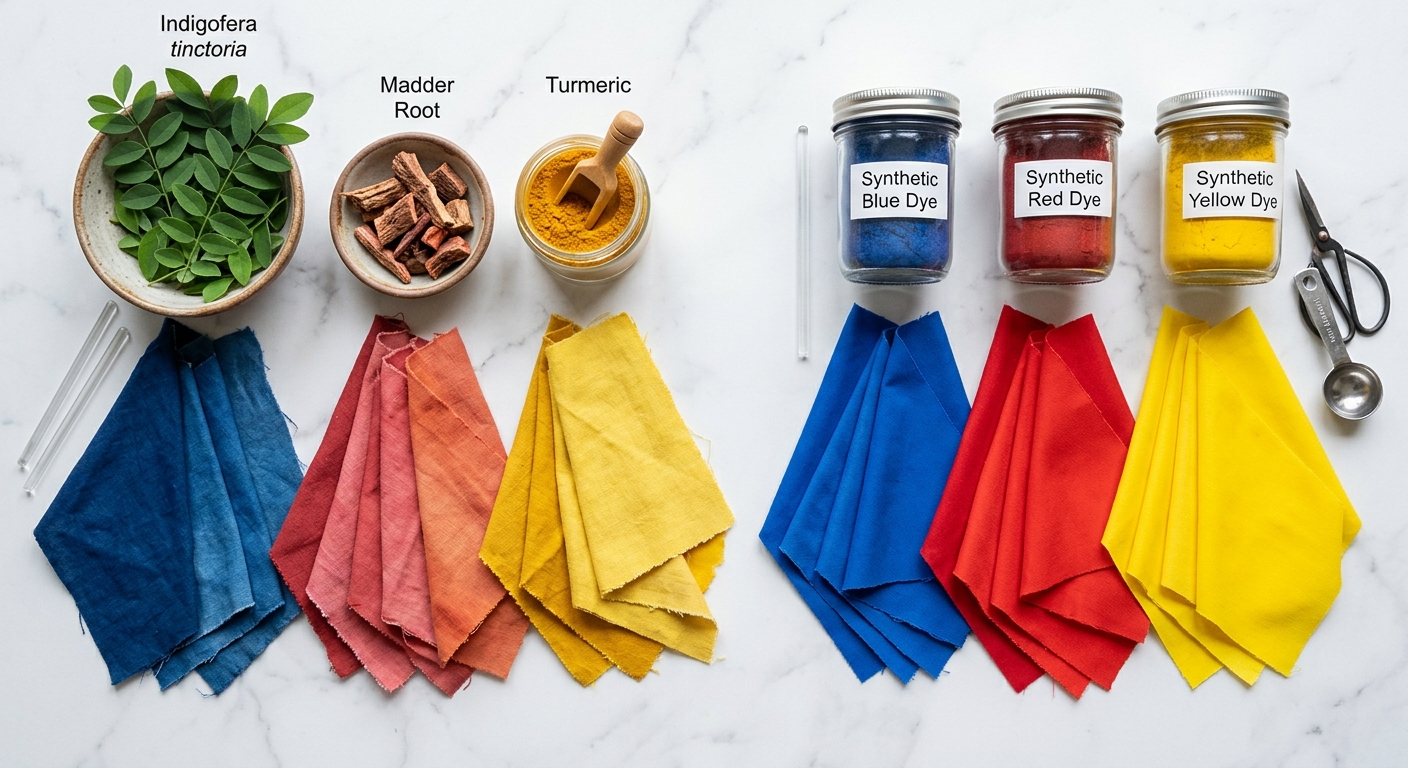
Synthetic dyes win on colorfastness, cost efficiency, and batch-to-batch consistency — which is exactly why they account for over 90% of commercially dyed fabric worldwide. Natural dyes, derived from plants, minerals, and insects, offer genuine eco-appeal and unique tonal depth, but they fade faster, cost more per yard at scale, and introduce variability that can wreck a production run if you're not prepared. If you're buying wholesale fabric and need to understand how dye type affects the longevity of your product and the health of your margins, this is the breakdown you need.
What Actually Makes a Dye 'Natural' or 'Synthetic'?
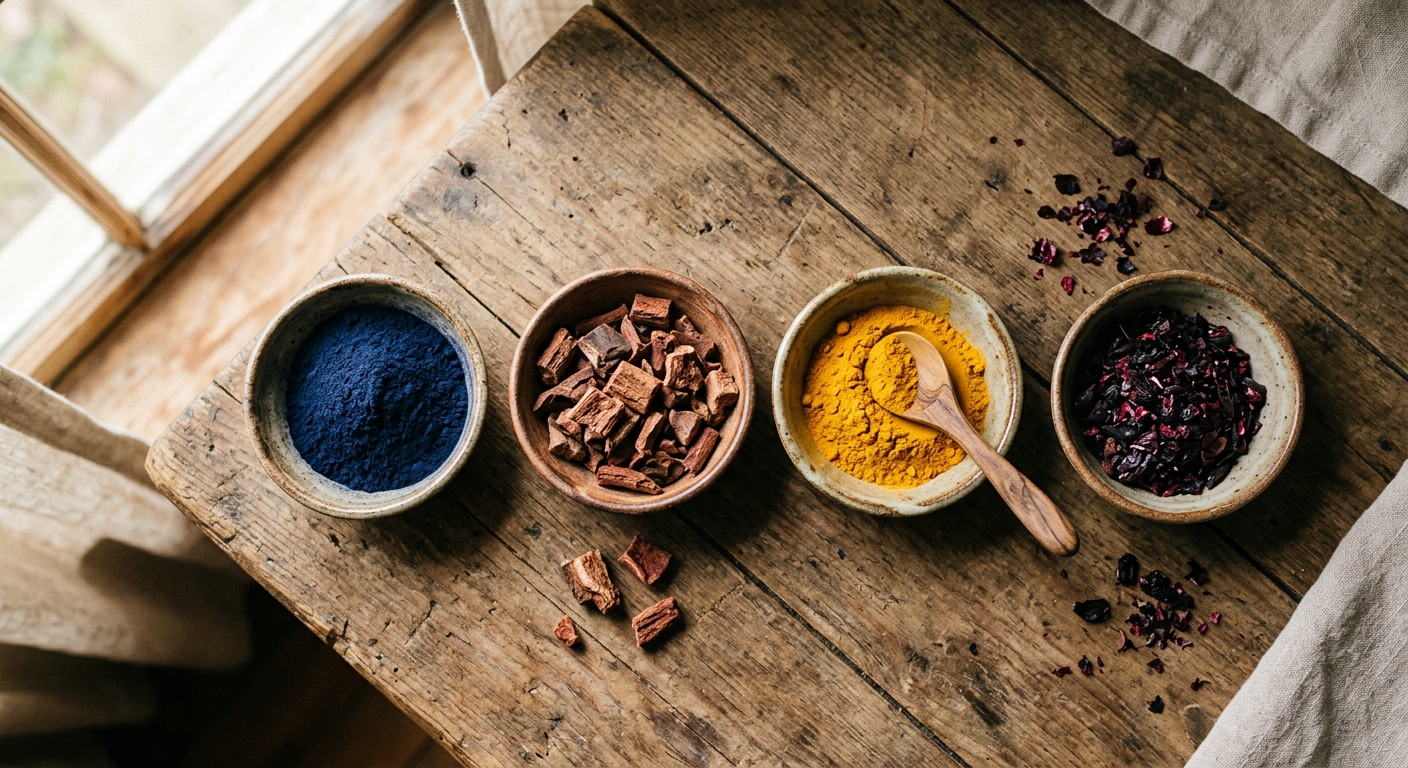
The distinction is chemical origin, and it matters more than marketing suggests. Natural dyes come from biological sources — indigo from the Indigofera plant, cochineal red from scale insects, turmeric yellow from the rhizome. They bond to fiber through mordants (metallic salts like alum, iron, or tin) that act as a chemical bridge between the dye molecule and the textile fiber.
Synthetic dyes, invented in 1856 when William Henry Perkin accidentally produced mauveine from coal tar, are engineered molecules designed to bond directly and aggressively to specific fiber types. The major families — reactive dyes, disperse dyes, acid dyes, vat dyes — each target different fiber chemistries. Reactive dyes form covalent bonds with cellulose fibers like cotton. Disperse dyes penetrate polyester at high temperature and pressure. This molecular precision is why synthetic dyes outperform natural ones on colorfastness tests by a wide margin.
Why This Matters for Wholesale Buyers
When you're sourcing fabric by type, the dye chemistry determines how that fabric will behave after 20, 50, or 100 wash cycles. A gorgeous indigo-dyed cotton may look stunning on the bolt but disappoint your end customer after a few months of regular wear. Understanding the chemistry helps you match dye type to end-use — and avoid costly returns.
Colorfastness Head-to-Head: The Numbers Don't Lie
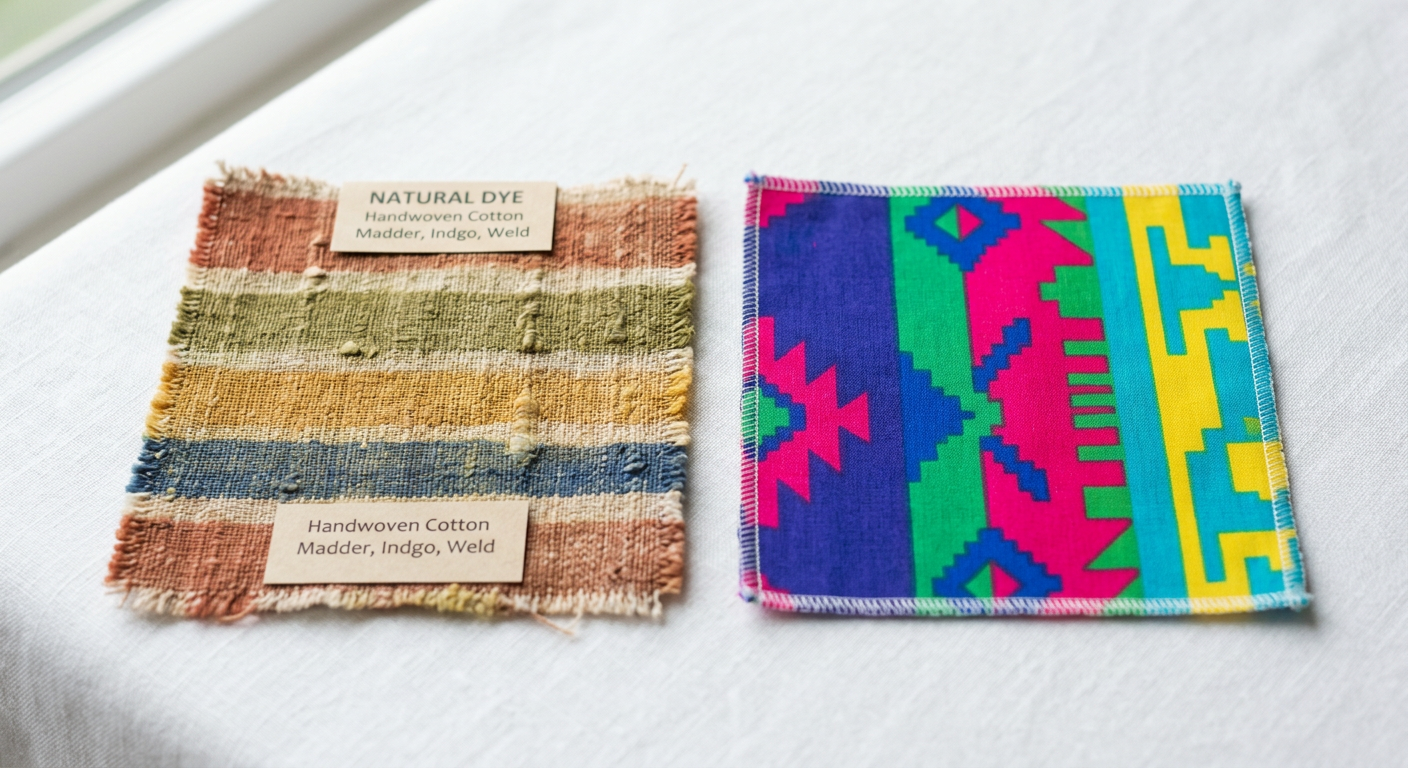
Most naturally dyed fabrics score between 2 and 3 on the ISO 105 colorfastness scale (where 1 is severe change and 5 is no change). Most synthetically dyed fabrics score 4 to 5. That's not a subtle difference — it's the gap between a shirt that looks washed-out after a season and one that holds its color for years.
Wash Fastness
Natural dyes are particularly vulnerable to detergent chemistry. Alkaline detergents (the standard in most households) accelerate the breakdown of plant-based dye molecules. Turmeric, for instance, is notoriously fugitive — it can lose 40–60% of its color intensity within 5 home washes. Indigo performs better but still “crocks” (transfers color through friction) significantly more than synthetic alternatives.
Light Fastness
UV radiation breaks molecular bonds. Natural dye molecules, being less structurally complex, degrade faster under sunlight. This is critical if you're producing fabrics for UV protective clothing or outdoor applications — natural dyes are essentially disqualified for these use cases. Synthetic vat dyes and reactive dyes with copper phthalocyanine structures can achieve light fastness ratings of 6–7 on the blue wool scale (out of 8), while most natural dyes hover around 2–4.
Rub Fastness (Crocking)
Crocking is the transfer of color from fabric to skin or other surfaces through friction. Naturally dyed fabrics, especially those using indigo or logwood, are notorious crockers. If you're sourcing fabric for T-shirts or any garment with skin contact, high crocking means customer complaints. Synthetic dyes with proper fixation treatments reduce crocking to near-zero levels.
Side-by-Side Comparison Table
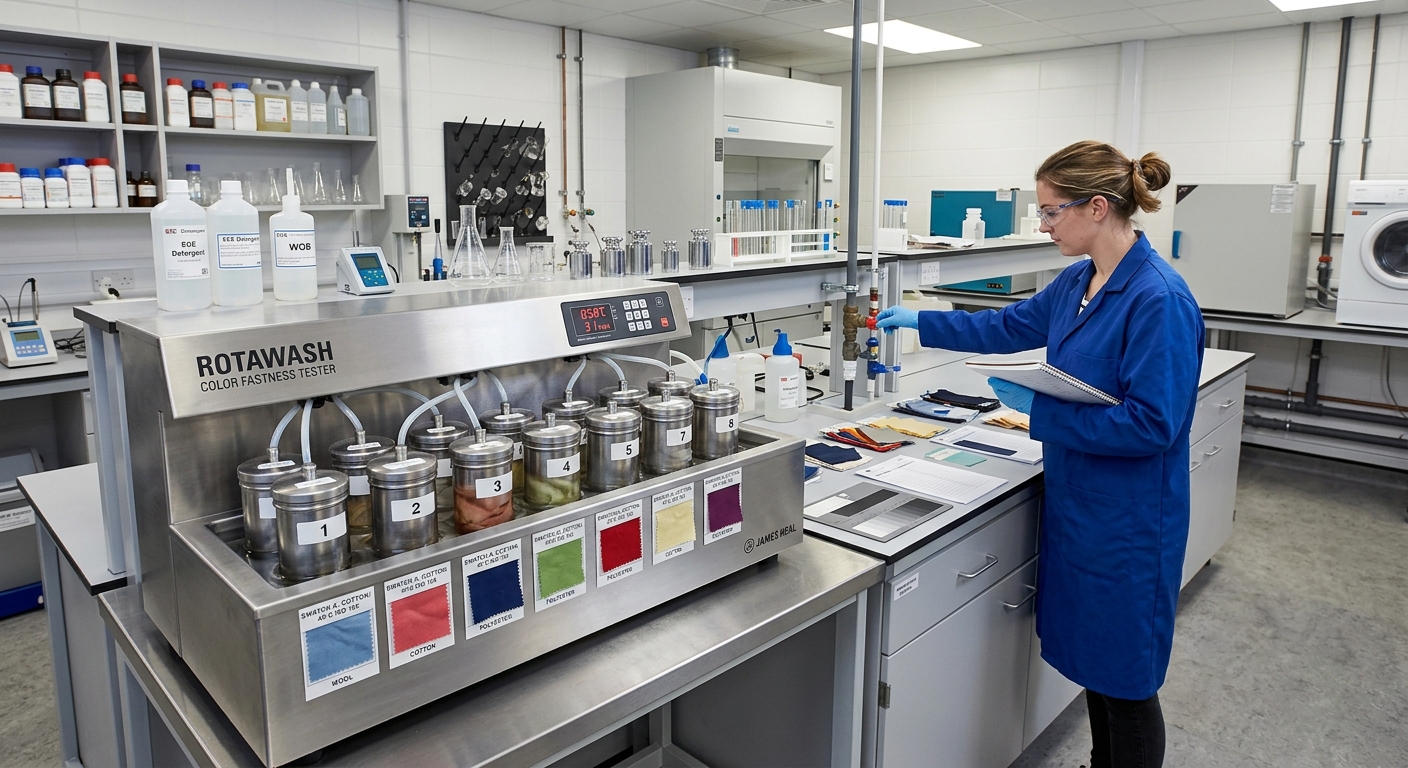
Here's how natural and synthetic dyes stack up across the criteria that matter most to wholesale buyers and manufacturers:
| Criteria | Natural Dyes | Synthetic Dyes |
|---|---|---|
| Colorfastness (wash) | Moderate — fades noticeably after 10–15 washes | Excellent — minimal change after 50+ washes |
| UV/Light Resistance | Poor to moderate | Good to excellent |
| Color Range | Limited — earthy, muted tones | Virtually unlimited |
| Batch Consistency | Variable — crop and season dependent | Highly consistent |
| Cost per Yard (bulk) | 15–40% higher | Lower baseline cost |
| Environmental Impact | Biodegradable; high water use | Chemical waste; lower water per unit |
| Best Use Case | Artisan, eco-luxury, limited runs | Mass production, activewear, upholstery |
| Mordant Required | Almost always | Rarely |
The takeaway? If you need color that lasts and costs that scale, synthetic dyes are the default for good reason. Natural dyes earn their place in niche, premium-positioned product lines where the story and sustainability angle justify the tradeoffs.
The Real Cost Breakdown: Why Natural Dyes Hit Your Margins Harder
Here's a number that surprises people: natural dyeing can cost 2–5x more per kilogram of dye material than synthetic equivalents, and that's before you factor in the mordanting step, longer dye bath times, and lower first-pass exhaustion rates (meaning more dye is wasted in the bath).
Direct Cost Factors
- Raw dye material: Indigo extract runs $30–80/kg depending on purity. A comparable synthetic indigo costs $8–15/kg.
- Mordants: Alum (potassium aluminum sulfate) adds $2–5 per kg of fabric. Many natural dyes require pre-mordanting AND post-mordanting.
- Processing time: Natural dyeing typically requires 2–8 hours of dye bath immersion versus 30–90 minutes for reactive synthetic dyes on cotton.
- Water usage: Natural dyeing uses 50–100 liters of water per kg of fabric. Synthetic processes with modern low-liquor-ratio machines can get below 30 liters.
Indirect Cost: Rejects and Returns
The hidden cost that really stings? Batch inconsistency. Natural dye sources vary by harvest, region, and storage conditions. Two bolts of “the same” madder-dyed cotton can look noticeably different under retail lighting. For a wholesale buyer filling a 500-yard order, that variability means quality control headaches, potential rejects, and unhappy customers. As we've covered in our guide to hidden costs of cheap wholesale fabric, the sticker price is never the whole story.
When Natural Dyes Actually Make Business Sense
Don't write off natural dyes entirely — they're a genuine competitive advantage in the right market segment. The global natural dye market is projected to exceed $5 billion by 2028, driven by consumer demand for sustainable and non-toxic textiles.
The Sweet Spot: Premium Positioning
Natural dyes work when the customer is paying for the story, not just the color. Artisan fashion brands, baby clothing lines marketing non-toxic fabrics, and eco-luxury home textiles are all segments where “plant-dyed” on the label commands a 20–50% price premium that more than offsets the higher production cost.
Real-World Example: A Small Children's Clothing Brand
Consider a children's apparel startup sourcing 200 yards of organic cotton jersey for a capsule collection. They chose turmeric and avocado pit dyes — not because those dyes outperform synthetics, but because their customer base (eco-conscious parents) actively seeks chemical-free textiles. The brand charges $38 per onesie versus $18 for a comparable synthetically dyed product. The natural dye cost added roughly $1.50 per garment, but the premium positioning added $20 in margin. That math works — but only because the brand understood its audience and kept production runs small enough to manage batch variation.
If you're exploring this route, start with fabrics that take natural dyes well — unbleached cotton, linen, silk, and wool. Synthetics like acrylic and polyester are essentially incompatible with natural dyes without extreme modification.
How Fiber Type Interacts with Dye Chemistry
Not all fabrics accept all dyes equally, and this is where many wholesale buyers make expensive mistakes. Dye chemistry is fiber-specific — using the wrong dye class on the wrong fiber is like putting diesel in a gasoline engine.
Cellulose Fibers (Cotton, Linen, Rayon)
These fibers have hydroxyl groups that form covalent bonds with reactive dyes — the gold standard for wash-fast color on cotton. Natural dyes also bond reasonably well to cellulose, especially with alum mordanting, which is why cotton and linen are the go-to substrates for natural dyeing.
Protein Fibers (Wool, Silk)
Acid dyes and certain natural dyes (cochineal, lac, logwood) bond to the amino acid groups in protein fibers. Silk takes natural dyes beautifully — it's one of the few fibers where natural dyes can approach synthetic-level vibrancy.
Synthetic Fibers (Polyester, Nylon, Acrylic)
Polyester requires disperse dyes applied at 130°C under pressure. Natural dyes simply cannot penetrate polyester's crystalline structure. If you're ordering polyester blends — and you probably are, given that cotton-polyester blends dominate wholesale — the synthetic fiber component will only accept synthetic dyes. Period. Blended fabrics often require two separate dye baths (one for each fiber), which adds cost and complexity.
Fading Over Time: What Accelerates It and How to Slow It Down
All dyes fade. The question is how fast and under what conditions. Understanding the degradation triggers lets you advise your customers — and select fabrics that hold up to their intended use.
The Big Three Fading Accelerators
- UV exposure: Sunlight breaks chromophore bonds. Fabrics in window displays, outdoor furniture, or sun-exposed garments fade fastest. For any outdoor or high-UV application, insist on synthetic dyes with light fastness ratings of 5+ on the blue wool scale.
- Alkaline detergents: Most household detergents are pH 9–11. Natural dyes, especially those without robust mordanting, degrade rapidly in alkaline conditions. Synthetic reactive dyes are engineered to withstand this.
- Chlorine bleach: Devastating to both natural and synthetic dyes, but natural dyes are destroyed at much lower concentrations. Even residual chlorine in tap water can affect fugitive natural dyes over time.
Practical Tip for Wholesale Buyers
Always request colorfastness test reports (ISO 105 series) from your supplier before committing to a large order. Specifically ask for wash fastness (ISO 105-C06), light fastness (ISO 105-B02), and rub fastness (ISO 105-X12). If a supplier can't provide these, that's a red flag — and understanding fabric specifications like GSM is only half the picture if you don't also know how the color will perform.
Eco Credentials: The Sustainability Debate is More Nuanced Than You Think
Here's the uncomfortable truth: natural dyes aren't automatically “greener” than synthetic ones. The sustainability picture is far more complex than the marketing suggests.
Where Natural Dyes Win
Natural dye molecules are biodegradable. Wastewater from natural dyeing is generally less toxic (assuming non-heavy-metal mordants). The raw materials are renewable. For brands building a genuine sustainability narrative, these are real advantages.
Where Natural Dyes Lose
Natural dyeing uses significantly more water per unit of fabric. It requires more land to grow dye crops (indigo plantations, madder fields). Low exhaustion rates mean more dye waste per bath. And here's the kicker — many traditional mordants (chrome, tin, copper) are themselves environmental hazards. A “naturally dyed” fabric mordanted with potassium dichromate is arguably worse for the environment than one dyed with a modern low-impact reactive dye.
The Middle Ground: Low-Impact Synthetic Dyes
The textile industry has developed low-impact and GOTS-approved synthetic dyes that combine the performance of synthetic chemistry with reduced environmental footprint — lower water use, no heavy metals, high exhaustion rates (meaning less dye in the wastewater). For most wholesale applications, these represent the best balance of performance, cost, and environmental responsibility.
Choosing the Right Dye Type for Your Product Line
Stop thinking about natural vs. synthetic as a philosophical choice — it's an engineering decision. Match the dye to the product's end use, target market, and price point.
Choose Synthetic Dyes When:
- You need consistent color across large production runs (500+ yards)
- The end product will be washed frequently (apparel, activewear, workwear)
- UV exposure is expected (outdoor fabrics, window treatments)
- You're working with polyester, nylon, or blended fabrics
- Cost per unit matters more than “natural” marketing claims
Choose Natural Dyes When:
- Your brand identity centers on artisan craftsmanship or sustainability
- Production runs are small (under 200 yards) and variation is acceptable
- The target customer will pay a 25%+ premium for “plant-dyed” labeling
- The fiber is cellulose or protein-based (cotton, linen, silk, wool)
- The product won't face harsh washing or prolonged sun exposure
Real-World Example: A Home Décor Brand
A mid-size home décor company sourced two fabric lines for throw pillows — one in synthetically dyed emerald fabric for their mainstream collection, and one in indigo-dyed organic cotton for a limited “artisan” capsule. The emerald line sold at $24 per pillow with a 55% margin. The artisan line sold at $48 with a 45% margin — a lower percentage, but a higher absolute dollar margin per unit. Both lines succeeded because the dye type matched the positioning. The mistake would have been using natural dyes on the mainstream line or synthetic dyes on the artisan line.
Make Dye Type Part of Your Sourcing Checklist
Dye type is one of those specifications that wholesale buyers overlook until it causes a problem — faded inventory, customer complaints, or margins eaten by returns. Now you know better.
For the vast majority of bulk fabric orders, synthetic dyes deliver superior colorfastness, lower cost, and predictable consistency. Natural dyes have a legitimate place in premium, eco-positioned product lines where the higher cost is offset by higher retail pricing and a compelling brand story.
Whatever you choose, demand colorfastness data from your supplier, match the dye chemistry to your fiber type, and factor in the full cost — not just the price per yard but the downstream costs of fading, returns, and customer dissatisfaction.
At Global Fabric Wholesale, we carry a wide range of wholesale fabrics with detailed specifications so you can make informed sourcing decisions. Browse our collections, check the technical details, and order with confidence — because the right fabric starts with the right information.




 Login with Google