


Satin vs. Charmeuse vs. Duchess: Choosing the Right Lustrous Fabric for Bridal and Formalwear Orders

Charmeuse is the lightest and most fluid of the three, built for bias-cut gowns that need to pour over the body. Classic satin sits in the middle, a dependable all-rounder for linings, sashes, and straight-cut bodices. Duchess satin is the heaviest and stiffest, the one you reach for when a gown needs to hold a ballgown silhouette or a structured strapless bodice without boning doing all the work.
Key takeaways
- Charmeuse, classic satin, and duchess are all satin-weave fabrics differentiated by weight and float length, not separate materials.
- Duchess satin provides enough structure to reduce (not eliminate) the need for boning in strapless bodices and ballgown skirts.
- Charmeuse is best reserved for bias-cut, unboned designs since its light weight can't support beading or structural seams.
- Confirm GSM and fiber content on every spec sheet since 'satin' alone doesn't guarantee a consistent weight across suppliers.
- Always check satin swatches under both warm and daylight lighting before approving bulk yardage, since sheen reads differently under each.
Satin, Charmeuse, and Duchess Aren't Three Fabrics, They're Three Weights of the Same Weave
Satin, charmeuse, and duchess sound like separate fabrics, but they're all variations on a single weave structure. The satin weave uses long floats, where the weft or warp yarn skips over several threads before tying in, and that's what creates the smooth, light-reflecting surface. No special coating, no finish trick. Just geometry.
What actually changes between them
The difference comes down to yarn weight, float length, and fiber content, and together those three variables decide how stiff the drape is and how intense the sheen looks. Charmeuse is traditionally a lightweight satin weave with a plain-weave back, which is why it feels almost slippery. Classic satin can be produced across a wide range of weights, so it covers a lot of middle ground. Duchess satin is the densest of the three, often blending silk with rayon or a synthetic fiber specifically to add body.
| Fabric | Weight | Drape Behavior |
|---|---|---|
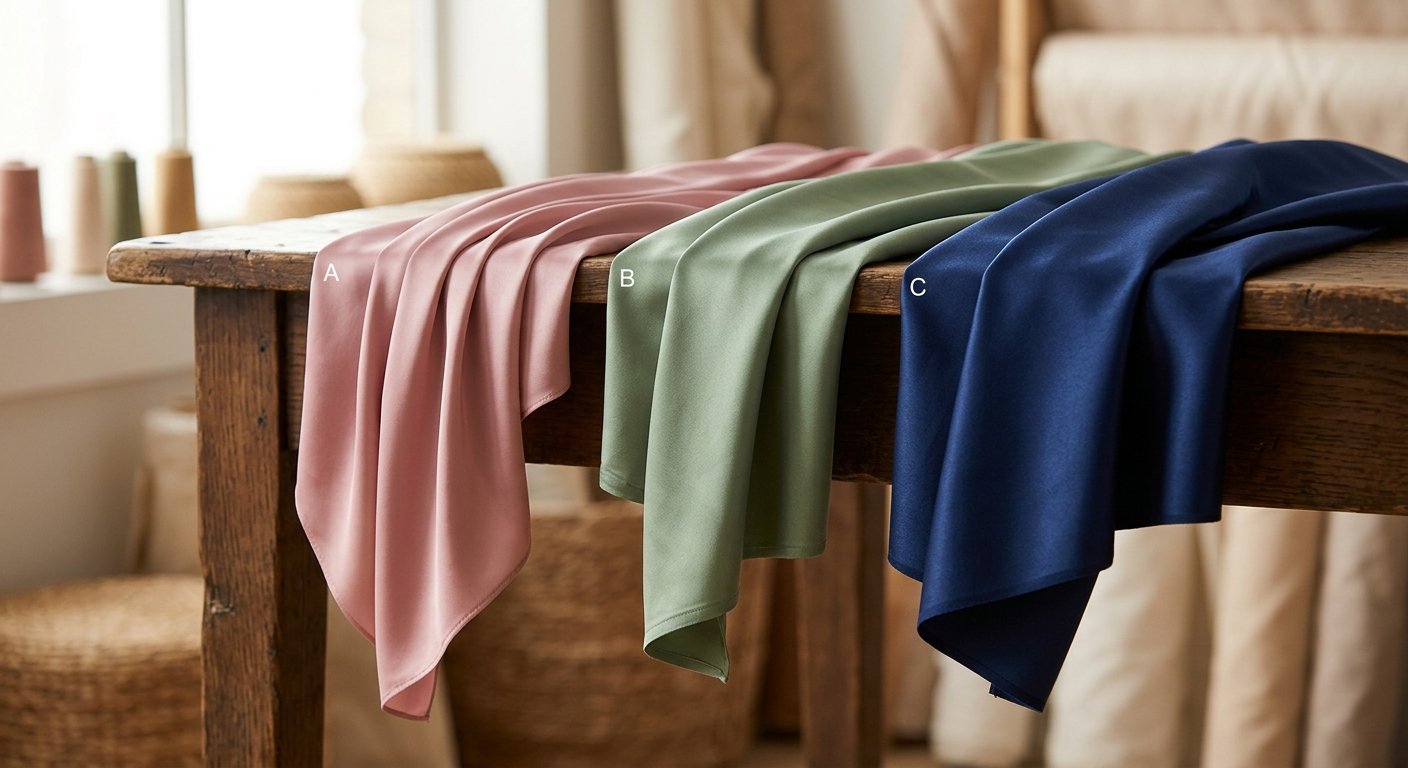
| Charmeuse | Lightest | Pools off a table edge |
| Classic Satin | Mid-range, variable | Falls softly, holds some shape |
| Duchess Satin | Heaviest | Holds a stiff fold |
There's a quick test buyers use right on the bolt: drape a length off the edge of a table. Charmeuse pools into soft puddles almost immediately. Duchess holds a crisp fold and barely moves. That single test tells you more than a spec sheet description ever will.
Charmeuse: When the Gown Needs to Move Like Liquid
Charmeuse earns its reputation on bias-cut slip dresses, soft cowl necklines, and lining layers that are meant to skim the body rather than hold any shape of their own. If a designer wants a gown that looks like it was poured on rather than constructed, charmeuse is almost always the fabric doing the work.
That same lightness is also its weak point. Because the base cloth is thin, it shows every seam pucker, every pin mark, every pressing mistake. Pattern cutting and pressing have to be precise, because charmeuse has nowhere to hide an uneven seam. It's also not the right choice for structured bodices, boned corsetry, or heavy beading, since the fabric simply doesn't have the body to support that kind of weight without sagging or distorting.
One more practical note for buyers: charmeuse tends to show more visible wrinkling in transit and storage than duchess does. That matters when you're deciding how a bulk order gets rolled, folded, or shipped, and it's worth checking with your supplier before yardage goes into a container.
Classic Satin: The Dependable Middle Ground for Linings, Sashes, and Straight Cuts
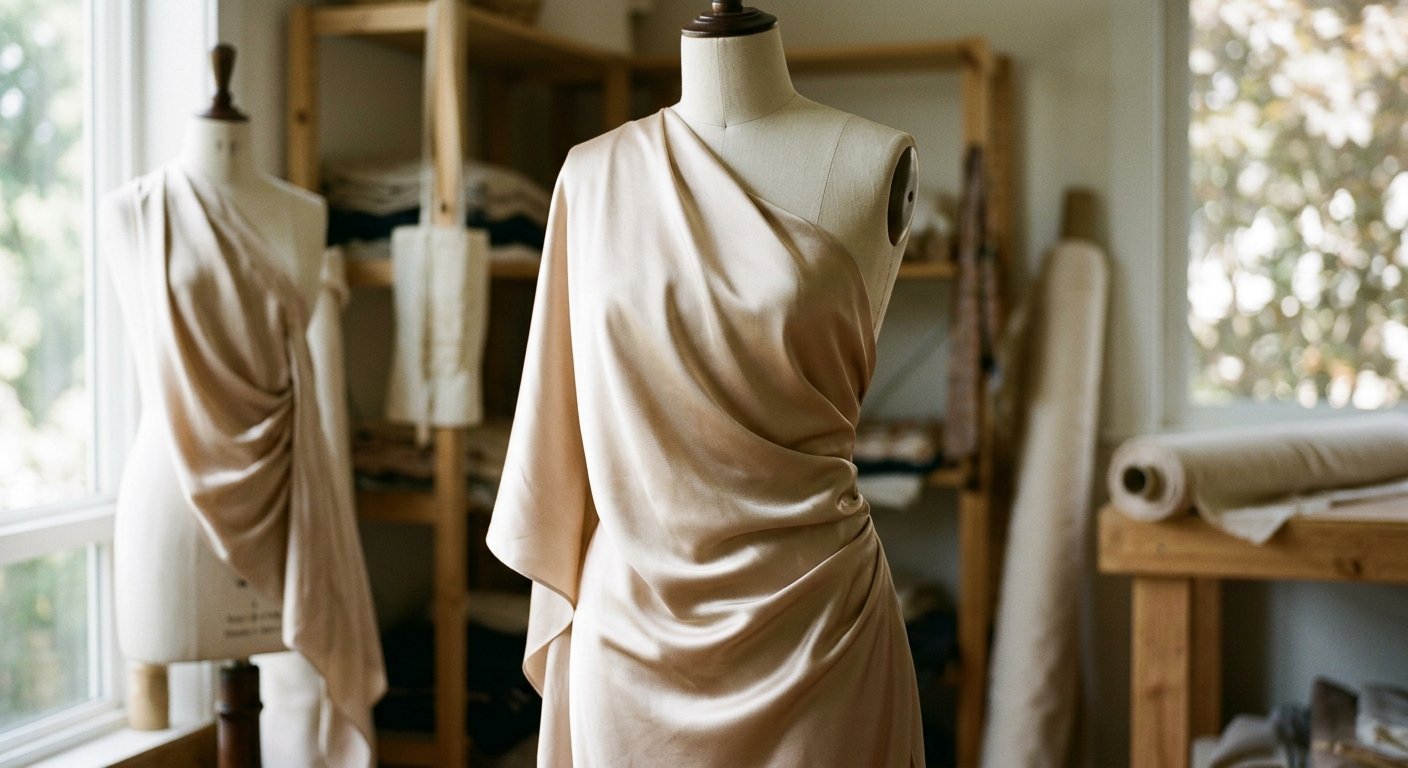
Classic satin is the fabric you reach for when you don't need charmeuse's fluidity or duchess's structure, just reliable sheen with reasonable workability. It's a strong lining choice under lace or beaded overlays because its smooth face slides on without catching delicate threads.
It also shows up constantly in sashes, piping, and covered buttons, where the goal is sheen without the stiffness duchess would bring. The catch is that 'satin' on a spec sheet isn't a precise enough term by itself. Satin can be produced at wildly different weights, so always confirm GSM or weight before committing to an order, not just the weave name. For a deeper breakdown of why weight matters so much, see how to read GSM like a pro.
Some satin is also available with a two-sided finish, shiny on the face and dull on the back, which matters for reversible design details like collars or cuffs where both sides show. If sheen itself is the priority across a collection, it's worth browsing shiny fabric options to compare finishes side by side.
Duchess Satin: Built for Ballgowns, Strapless Bodices, and Anything That Has to Hold Its Shape
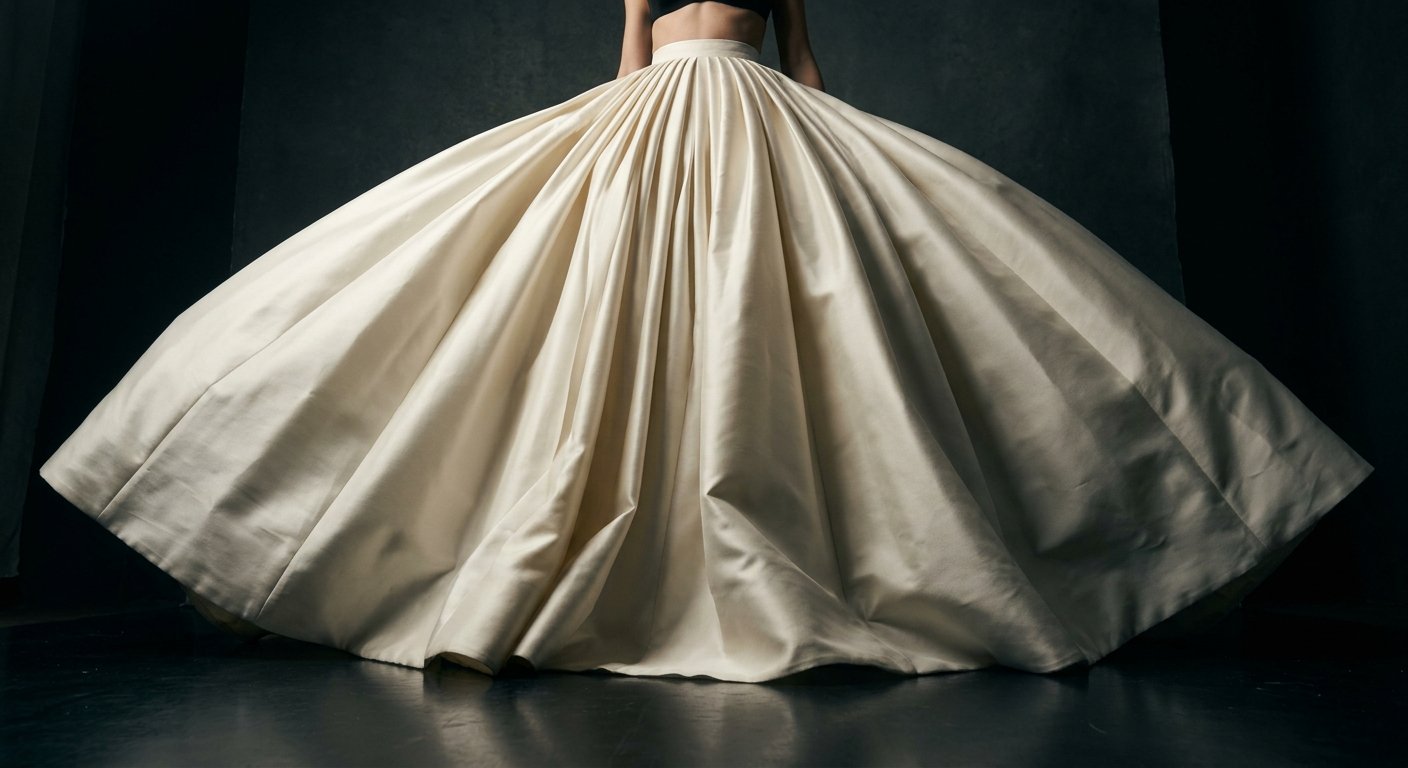
Duchess satin is the structural choice in this family. Its heavier weight and denser weave give it natural body, which is exactly why it's the default for ballgown skirts, structured strapless bodices, and tailored formal jackets. It holds a shape without needing as much help from the construction underneath.
Because duchess holds a fold rather than draping softly, it reduces, though doesn't eliminate, the need for internal boning or heavy interfacing in a bodice. That's a real advantage when you're trying to keep a garment lighter for the wearer. The flip side is that duchess fights back when you try to gather it softly or cut it on the bias. If the silhouette calls for soft, flowing movement, duchess simply isn't the right pick.
It's also typically the priciest of the three per yard, since the denser yarn use drives up material cost. That's worth factoring into a bridal order budget early, not after yardage has already been cut.
Matching the Fabric to the Part of the Garment, Not Just the Dress
Most bridal and formal gowns don't use one satin type throughout. They mix weights deliberately, matching each fabric to the job that part of the garment is doing.
- Bodice: duchess for structure, charmeuse only if the design is soft and unboned
- Skirt: duchess for ballgown volume, classic satin for A-line shapes, charmeuse for sheath or mermaid silhouettes that need to cling
- Lining: classic satin or charmeuse, never duchess, since lining needs to glide against the body, not add bulk
- Sashes, bows, covered buttons: classic satin for its balance of sheen and workability
Buyers designing a full collection should expect to order two or three satin weights rather than one. To get a sense of how many distinct options exist at each weight, the application categories are a practical starting point: the Bridal Dress category alone carries 365 fabrics and 276 colors, the Wedding Dress category has 304 fabrics and 126 colors, and the Evening Dress category spans 689 fabrics and 373 colors. That range exists because weight, fiber, and finish all shift independently within the same weave family.
Fiber Content Changes the Math: Silk, Polyester, and Acetate Blends
Weave type and fiber content are two separate decisions, and mixing them up is a common mistake. Silk-based versions of charmeuse, classic satin, or duchess give the deepest, warmest sheen and the best drape-to-weight ratio of any option. That comes at a premium price and requires careful cleaning, which matters for the final garment care label.
Polyester satin and charmeuse are more affordable and far more colorfast and washable, which makes them a smart pick for samples, mockups, or budget-conscious formalwear lines. The tradeoff is a flatter, more uniform shine that doesn't quite match silk's depth. Acetate or silk-rayon blends show up often in duchess satin specifically, since they add body and stiffness without silk's full cost.
Always confirm fiber content on the spec sheet rather than assuming 'satin' automatically means silk. The fiber drives both the hand-feel on the cutting table and the care instructions that end up printed on the finished garment. If you're trying to build the vocabulary to describe and compare hand-feel across suppliers, this guide to hand-feel terminology is a useful companion.
Where Bridal Orders Go Wrong: Weight Mismatches and Dye Lot Surprises
A few recurring mistakes show up again and again in satin-family bridal orders, and none of them have to do with the fabric being defective.
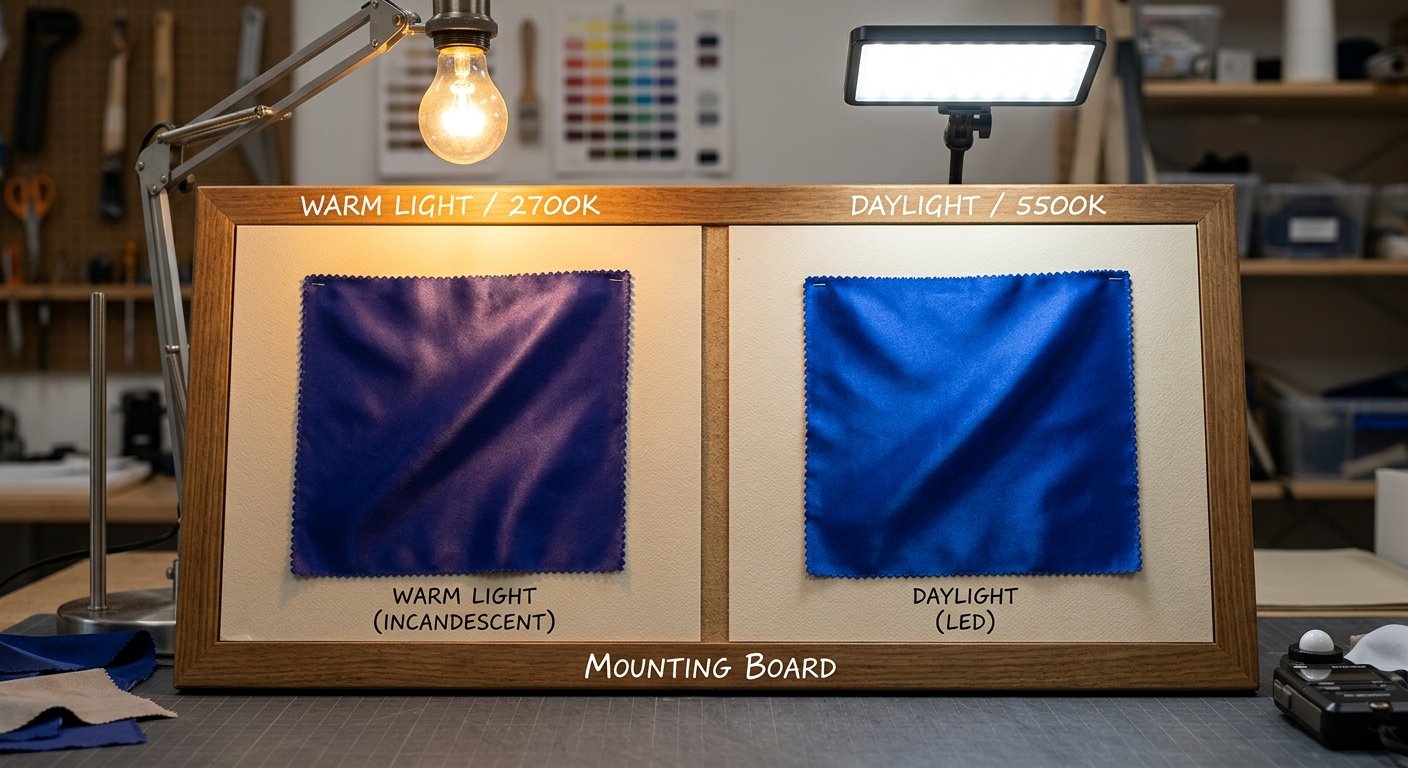
- Ordering swatches under showroom lighting and being surprised by how different the sheen looks under venue or photography lighting. Always check satin swatches under both warm and daylight bulbs before approving a bulk order.
- Assuming one bolt of duchess satin matches another supplier's duchess satin in stiffness. The term isn't standardized the way GSM is for knits, so two 'duchess' fabrics can behave very differently.
- Underestimating how much extra yardage bias-cut charmeuse eats up compared to straight-grain duchess cutting. That difference adds up fast across a full order.
- Mixing satin types from different production runs within the same gown without checking sheen consistency side by side first.
Imagine a buyer who orders duchess satin for a ballgown skirt from one mill and charmeuse lining from another, assuming both will read as the same ivory tone under reception lighting. Without a side-by-side check under matched lighting, that's exactly the kind of mismatch that only surfaces after the gowns are already cut.
Getting the Right Lustrous Fabric for Your Next Order
The one-line rule to carry forward: charmeuse for flow, classic satin for versatility, duchess for structure. Match the fabric to the job each part of the garment is doing, not just to the overall dress concept.
Before committing to production yardage, order physical swatches of all three weights side by side and compare them in person rather than relying on photos. With over 10,000 fabrics sold by the yard, Global Fabric Whole Sale's Bridal Dress and Wedding Dress categories are a practical place to compare weights and colors directly, and to request those swatches, before placing a bulk order.
Frequently asked questions
Can duchess satin be used for a soft, flowing gown?
Not really. Duchess satin's dense weave holds folds rather than draping softly, so it fights against bias-cut patterns and soft gathers. It's built for structure, like ballgown skirts or strapless bodices, not for a gown designed to pour or cling to the body.
Is charmeuse the same as silk satin?
No. Charmeuse refers to a specific lightweight satin-weave construction with a plain-weave back, and it can be made from silk, polyester, or blends. Silk satin describes the fiber, not the weave, so a silk fabric could be charmeuse, classic satin, or duchess depending on how it's constructed.
How much extra fabric should I order for bias-cut charmeuse compared to duchess?
There's no fixed percentage, since it depends on the pattern pieces and gown style, but bias cutting on charmeuse generally consumes noticeably more yardage than straight-grain duchess cutting. Ask your pattern maker for a bias-adjusted yardage estimate before finalizing a bulk order quantity.






 Login with Google