-

Free Samples!



Twill, Sateen, Poplin, Oxford: A Visual Guide to Weave Structures and Where Each One Shines

Table of Contents
Twill, sateen, poplin, and Oxford are four foundational weave structures — and the difference between them isn't decorative, it's structural. Twill uses a diagonal interlacing for durability and drape, sateen floats warp yarns over multiple wefts for sheen, poplin tightly interlaces fine warp with heavier weft for crispness, and Oxford groups yarns in a basket pattern for texture. Pick the wrong one and your shirts wrinkle, your bedding pills, or your chinos lose their shape after a season.
Why Weave Structure Matters More than Fiber Content
Here's something most buyers miss: two fabrics made from identical 100% cotton yarn can behave completely differently depending on how they're woven. A 200 GSM cotton twill and a 200 GSM cotton poplin will drape, wrinkle, and wear in opposite ways.
Weave structure determines three things fiber alone can't: how light reflects off the surface, how the fabric folds when it hangs, and how it holds up under abrasion. That's why a sateen pillowcase feels slippery and a poplin pillowcase feels crisp, even when both are cotton percale-grade yarn.
Once you can read a weave by sight and touch, you stop relying on vague mill descriptions and start specifying exactly what you want. Pair this with our guide on reading fabric spec sheets and you'll catch substitutions before they ship.
Twill: The Diagonal Workhorse
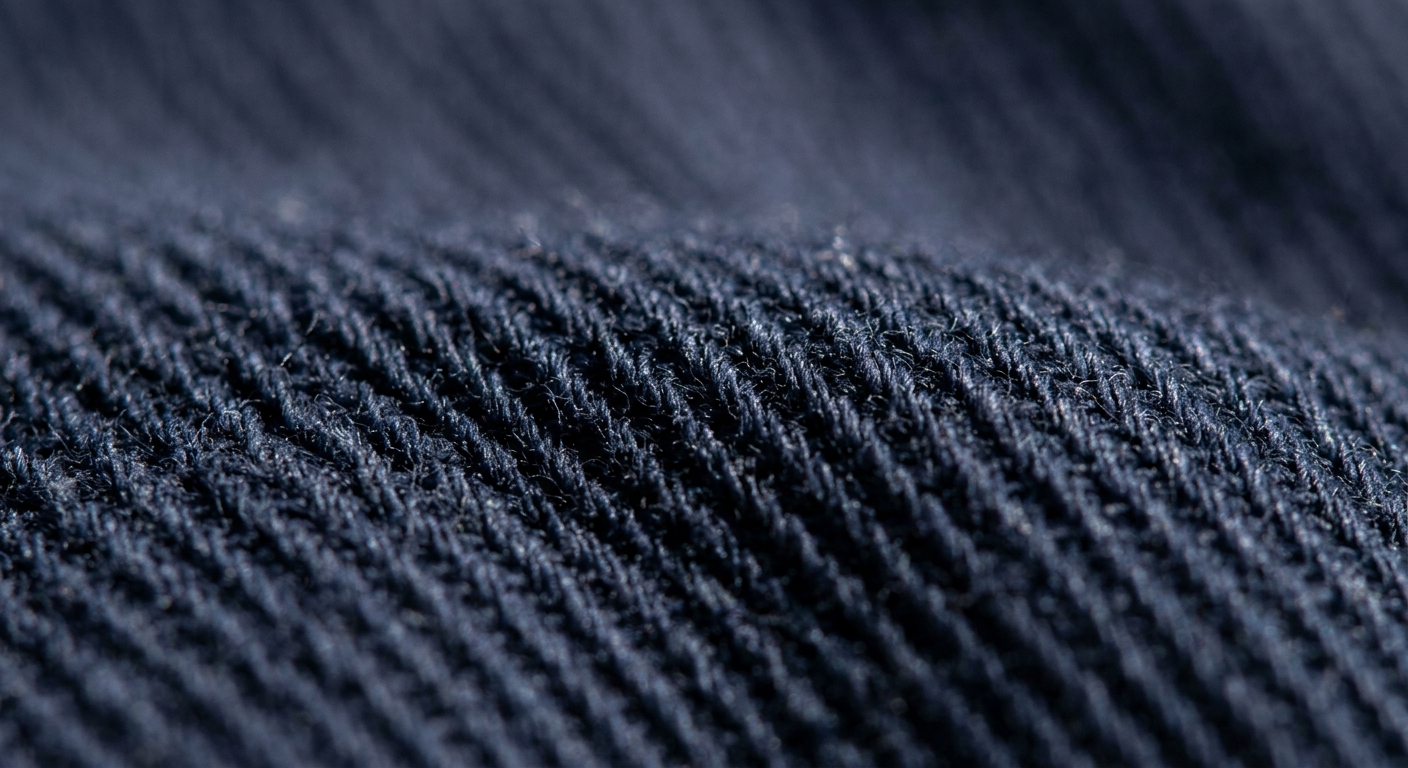
Twill is the weave you can identify with your fingertips alone. Run a thumb across the surface and you'll feel parallel diagonal ridges — that's the signature 2/1 or 3/1 interlacing pattern where the weft yarn passes over two or three warp yarns, then under one, shifting by one yarn each row.
Why It Dominates Workwear
The diagonal structure does two things at once. It packs more yarn into the same square inch (boosting durability and tear strength), and it lets the fabric drape softly without looking limp. Denim, gabardine, chino cloth, and herringbone are all twill variants.
Where It Shines
- Chinos and trousers: 240–300 GSM cotton twill holds a crease but moves with the body
- Workwear and jackets: heavier 320+ GSM twills resist abrasion at the knees and elbows
- Lining for structured garments: lightweight twills hang cleanly inside blazers
For instance, a uniform manufacturer producing 5,000 pairs of chef pants would specifically request a 280 GSM cotton-poly twill — the diagonal weave hides stains better than poplin and survives industrial laundering cycles where plain weaves fray. Browse our suit fabric collection to see how twills are spec'd for tailored applications.
Sateen: The Weave that Catches Light
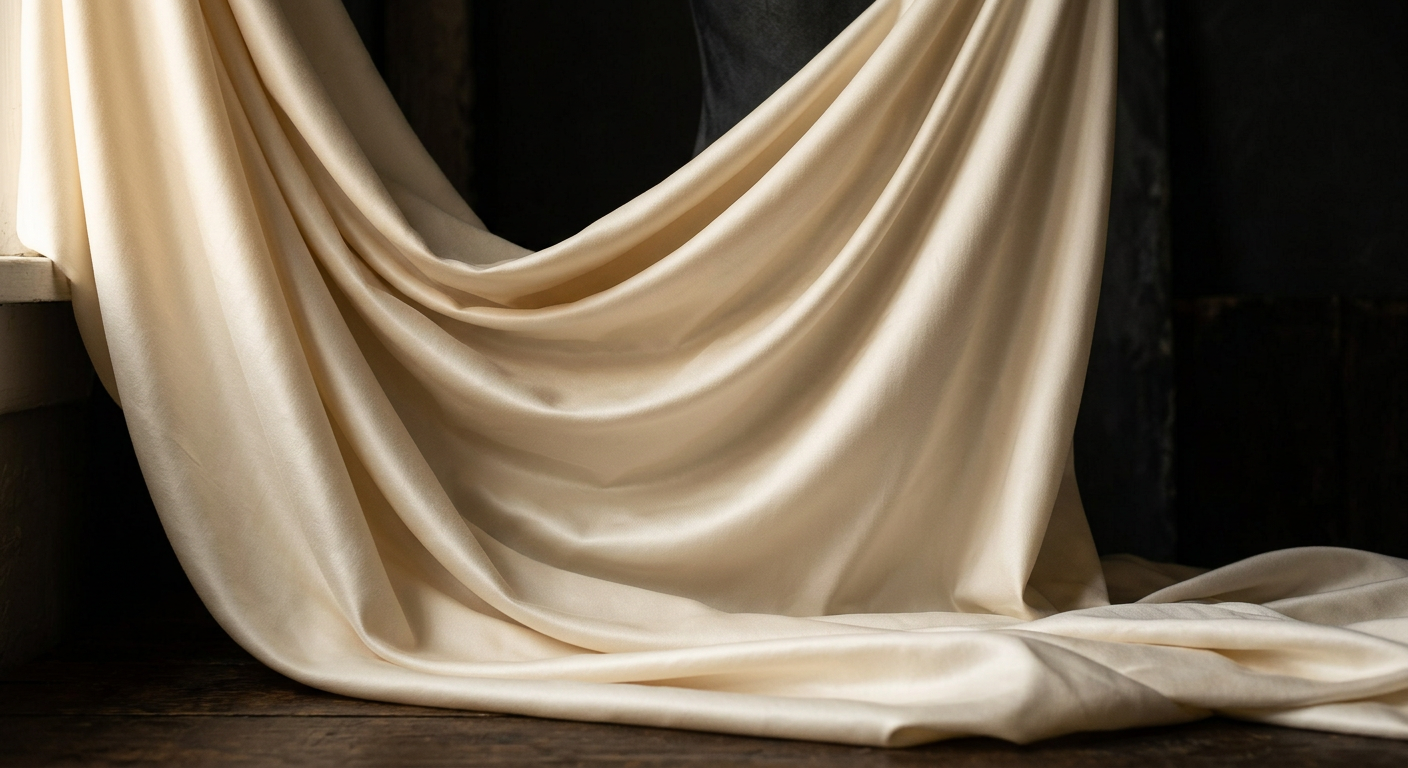
Sateen is the only weave on this list that's designed to look expensive. The construction floats four or more warp yarns over a single weft yarn, creating long, smooth surfaces that reflect light uniformly. The result: a soft sheen that mimics silk satin using cotton or polyester.
The Trade-off Nobody Talks About
Those long floats are also sateen's weakness. They snag. A single pulled thread can run for inches because there's less interlacing to anchor each yarn. That's why sateen belongs in low-abrasion applications — bedding, eveningwear, drapery linings — and not in upholstery or kids' clothing.
Real-world Spec Example
A boutique hotel sourcing premium bedding will typically order 300+ thread count cotton sateen at around 130 GSM. The high thread count + sateen weave combination is what creates that hand-feel guests associate with luxury — but the same fabric used as a tablecloth would shred within a month. For drapery applications where sateen's drape really earns its keep, our curtain fabric range includes several sateen-finish options.
Poplin: Crisp, Clean, and Underrated
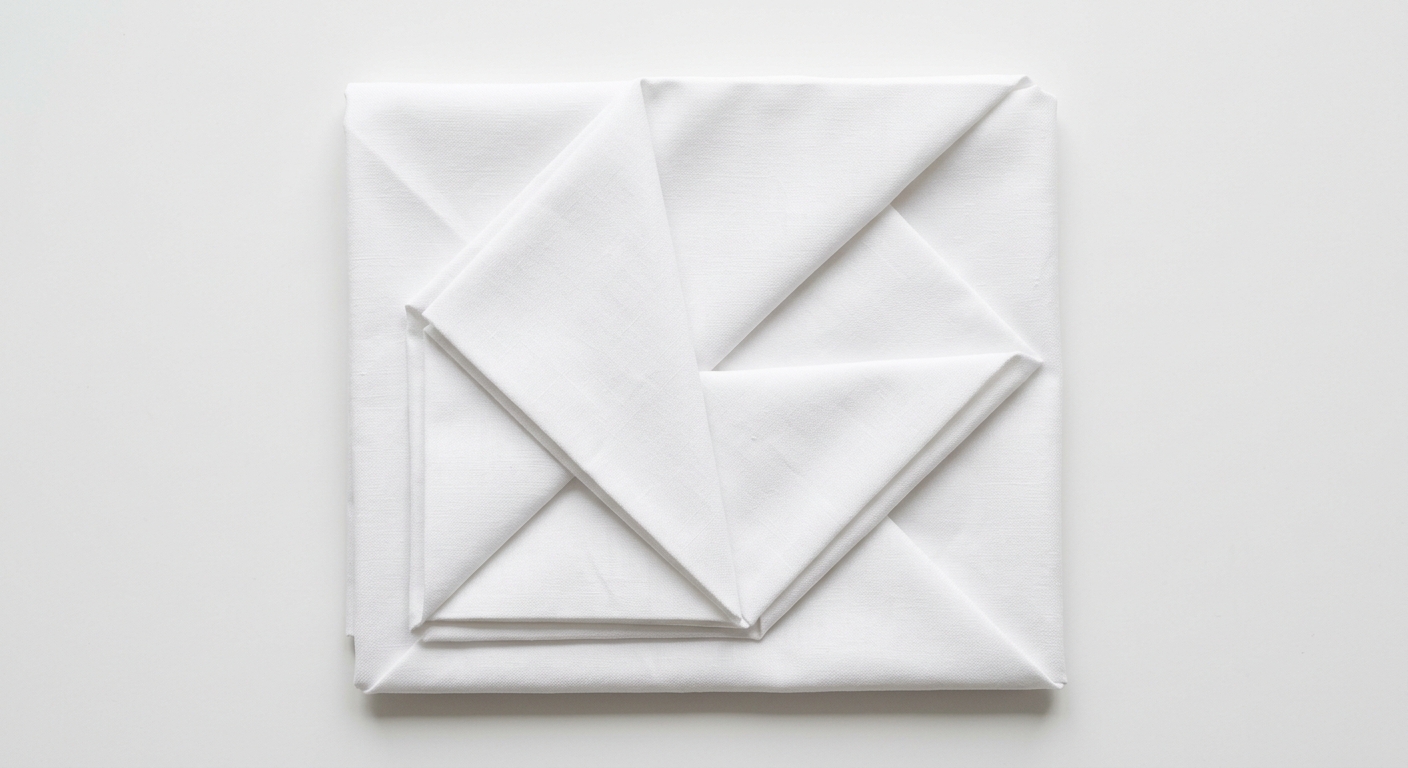
Poplin (sometimes called broadcloth in the US) is the plainest of plain weaves — one warp over, one weft under, repeat. What makes poplin distinct is the yarn asymmetry: a fine, tightly twisted warp paired with a slightly heavier weft creates a subtle horizontal rib you can see if you tilt the fabric against the light.
Why Dress Shirt Makers won't Switch
That dense 1/1 interlacing is what gives poplin its hallmark crispness. It presses flat, holds a collar shape, and shows print colors with high clarity because there are no surface floats to scatter light. The downside: it wrinkles. A pure cotton poplin shirt looks sharp at 8 am and lived-in by 2 pm — which is why most production poplins are now cotton-poly blends in the 60/40 to 80/20 range.
Typical Specs
- 120–140 GSM for dress shirts and blouses
- 140–160 GSM for uniform shirts and chef coats
- 100–120 GSM for lightweight summer dresses and skirt fabric applications
If you're choosing between blend ratios, our breakdown of cotton vs polyester vs blends covers the wrinkle-vs-breathability math in detail.
Oxford: The Textured Cousin of Poplin
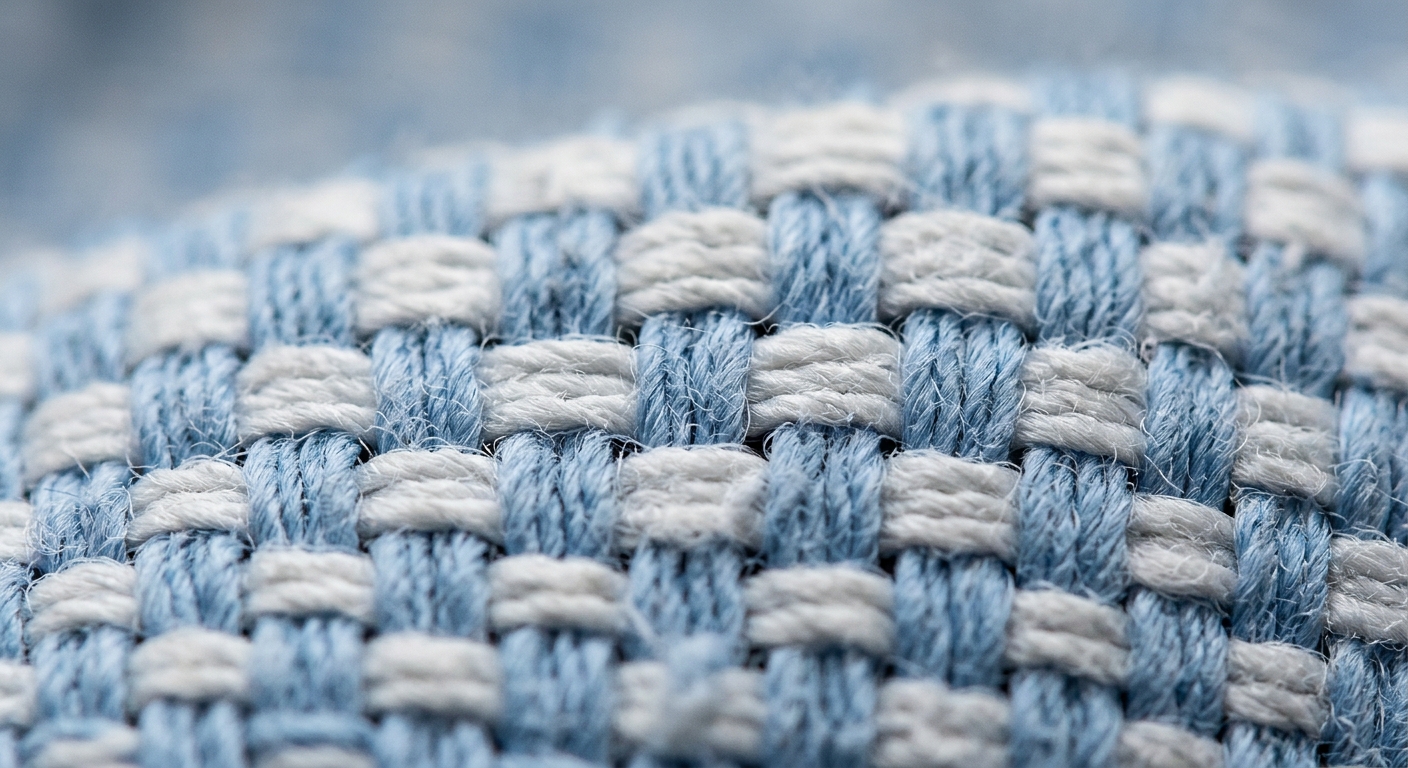
Oxford weave is what happens when you take a plain weave and double up the warp yarns. Instead of one-over-one, it's typically two-over-one (pinpoint oxford) or two-over-two (classic oxford), creating a small basketweave effect with visible texture and tiny diagonal flecks.
What You Gain, What You Lose
The basket structure makes Oxford softer and more breathable than poplin of the same weight — air moves through those slightly looser interlacings. It also takes dye unevenly on purpose: traditional Oxford cloth uses a white weft against a colored warp, producing that characteristic two-tone heathered look.
The trade: Oxford is bulkier and less formal. You won't wear it under a tuxedo. But for casual button-downs, it's hard to beat.
Where Oxford Belongs
- Casual button-down shirts: 140–180 GSM with a 2x1 pinpoint structure
- Heavyweight sport shirts: 200+ GSM classic oxford with visible basket texture
- Tote bags and light accessories: the bulk and abrasion resistance work in Oxford's favor here
A common mistake: brands ordering “Oxford” from overseas mills and receiving something closer to a heavyweight poplin. Always ask for the warp/weft ratio in the spec sheet (e.g., 2x1, 2x2) — not just the weave name.
How to Identify Each Weave in 10 Seconds
You don't need a microscope. With practice, the four weaves are distinguishable by eye and hand:
The Visual Test
- Are diagonal lines visible? Twill.
- Surface looks shiny on one side, matte on the other? Sateen.
- Perfectly flat, fine horizontal lines? Poplin.
- Tiny checkerboard texture, often two-toned? Oxford.
The Fingernail Test
Scrape your nail gently across the surface. Twill catches in one direction (with the diagonal) and slides in the other. Sateen feels slick like butter. Poplin feels firm and resistant. Oxford has a faint bumpiness you can feel in any direction.
The Crumple Test
Ball each fabric in your fist for five seconds and release. Twill bounces back almost fully. Oxford recovers about 70%. Poplin holds creases sharply. Sateen falls somewhere in the middle but shows shine variation along the wrinkle lines.
Matching Weave to Product: The Decision Shortcut
When you're spec'ing fabric for a new product, work backwards from the end use:
Need Structure and Durability?
Twill. Always. Pants, jackets, workwear, bags, structured outerwear like puffer jacket shells. The diagonal weave is doing real work.
Need Drape and Visual Luxury?
Sateen — but only in low-abrasion contexts. Bedding, evening dresses, dressy blouses, drapery linings.
Need a Clean, Printable Surface that Holds Shape?
Poplin. Dress shirts, uniforms, lightweight summer dresses, anything that benefits from a flat canvas for prints or embroidery. It also pairs beautifully with embellishments — see our embroidered fabric range for examples.
Need Casual Texture and Breathability?
Oxford. Button-downs, casual shirting, light bags, anywhere a hint of visible weave adds character.
For instance, a startup launching a five-piece workwear capsule might use heavyweight twill for the jacket and pants, poplin for the dress shirt, and Oxford for the casual button-down — three weaves, three distinct functions, one cohesive collection. If that's your situation, our guide to capsule collection fabric selection covers the coordination strategy.
Common Sourcing Mistakes with Weave Specs
Three errors show up over and over when buyers order weaves they don't fully understand:
1. Confusing Thread Count with Weave Quality
A 400 thread count poplin isn't automatically better than a 200 thread count one. Past a certain density, mills inflate thread counts by using multi-ply yarns counted as separate threads. Ask for single-ply thread count and yarn count (e.g. 80s, 100s) instead.
2. Specifying “sateen” When You Actually Want Satin
Sateen is a weave using staple fibers (usually cotton). Satin is the same weave structure but using filament fibers (silk, polyester). They look similar but behave differently — satin is slipperier, more delicate, and harder to sew.
3. Ignoring Weft Yarn Weight
Two poplins at the same GSM can feel completely different if one uses a heavier weft. Always request both warp and weft yarn counts. This is the kind of detail that prevents the dye-lot and hand-feel surprises we cover in our dye lot variance guide.
Putting It All Together
Once you can recognize twill's diagonal, sateen's sheen, poplin's crispness, and Oxford's texture, you've moved past relying on vague mill descriptions and into specifying fabric the way a technical designer does. Match the weave to the job — structure goes with twill, luxury with sateen, sharpness with poplin, character with oxford — and your finished products will perform the way your samples promised.
Ready to source any of these weaves at wholesale volume? Browse the full Global Fabric Wholesale catalog by weave type, weight, and application — or reach out for custom mill specs if you need something built to a specific warp/weft ratio.




 Login with Google