


Hospitality Fabric Requirements: What Hotels, Restaurants, and Cruise Lines Actually Demand

Hospitality buyers demand three things from fabric: certified flame resistance (NFPA 260, CAL TB 117-2013, or IMO FTP Code depending on venue), high abrasion durability (50,000+ Wyzenbeek double rubs for seating), and aggressive cleanability that survives bleach, solvents, and daily turnovers. Miss any one of those and the fabric won't make it past procurement — let alone a fire marshal or a cruise line's safety officer. The specifics, though, shift dramatically between a boutique hotel lobby, a quick-service restaurant booth, and a cruise ship balcony chair.
Why Hospitality Fabric Is a Different Animal Than Residential
A residential sofa might see 3,000 sits a year. A hotel lobby chair takes that in a month. Restaurant booths in a busy diner can clock 20,000 sit-downs annually — and each one arrives with ketchup, red wine, or toddler fingers.
This is why contract-grade fabric isn't just “heavier” residential fabric. It's engineered from the fiber up. Specifications cover abrasion, pilling, seam slippage, colorfastness to light, colorfastness to crocking, flammability, and cleanability — each with a pass/fail threshold written into the buyer's RFP.
For a concrete sense of why weight and construction matter so much in these environments, our upholstery durability ratings guide breaks down double-rub numbers and what they actually predict in real-world wear.
What Hotels Actually Specify
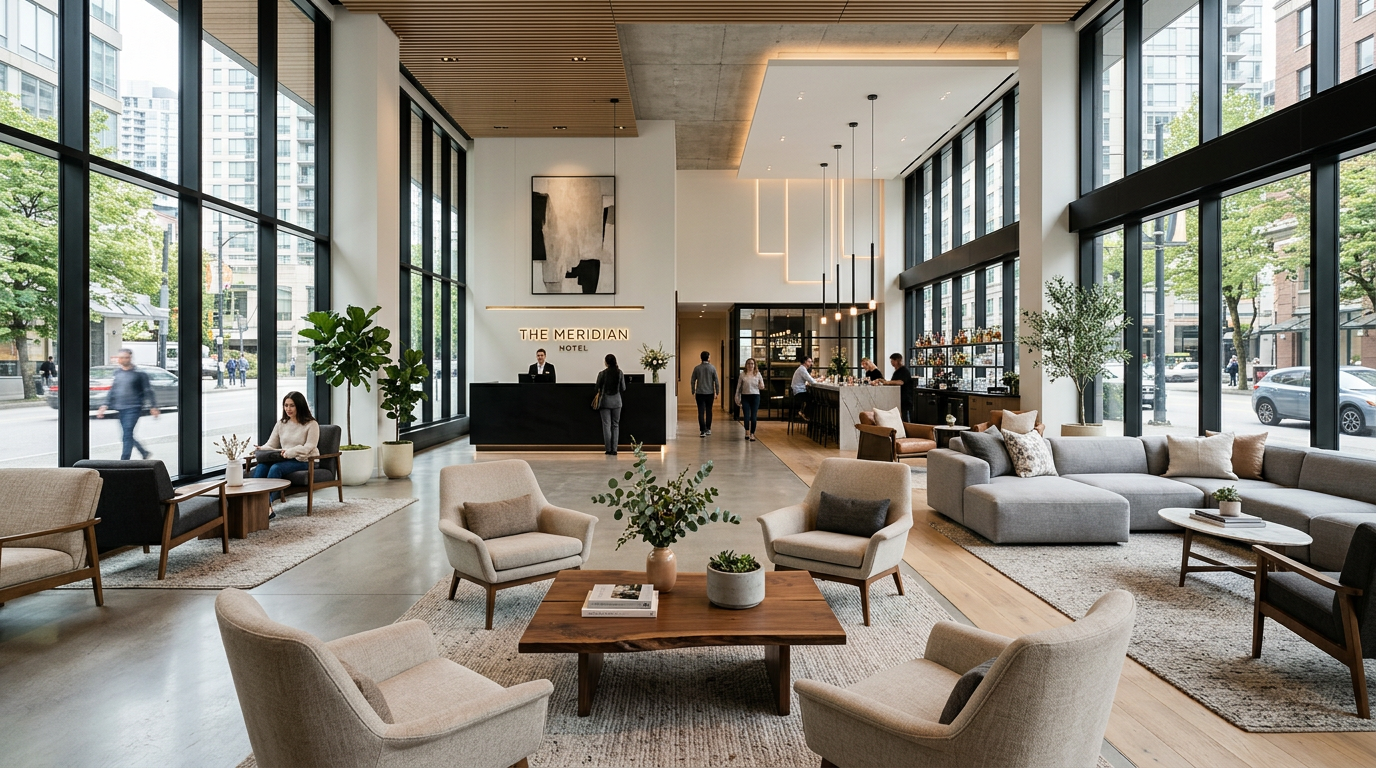
Hotels operate on a tiered system: guest rooms, public spaces, and F&B outlets each have their own fabric spec.
Guest Room Upholstery
Expect a minimum of 30,000 double rubs for occasional chairs and 50,000 for desk chairs. Most major flags (Marriott, Hilton, IHG) require CAL TB 117-2013 compliance and NFPA 260 Class I. Polyester or poly-olefin blends dominate here because they resist oil-based stains from cosmetics and room service.
Lobby and Public Spaces
This is where fabric earns its keep. Lobbies need 50,000–100,000 double rubs, lightfastness of Class 4 or better (because of atrium glass), and moisture barriers on the underside of seat cushions. Soil-release finishes are standard.
Bedding and Drapery
Flame code for drapery is typically NFPA 701 — a vertical flame test. Blackout linings must be inherently flame-retardant, not topically treated, because topical FR washes out after three commercial launderings. For a boutique property specifying linen-look window treatments, solution-dyed polyester with an IFR (inherently flame-retardant) rating is the go-to.
Restaurant Fabric: Where Cleanability Beats Everything
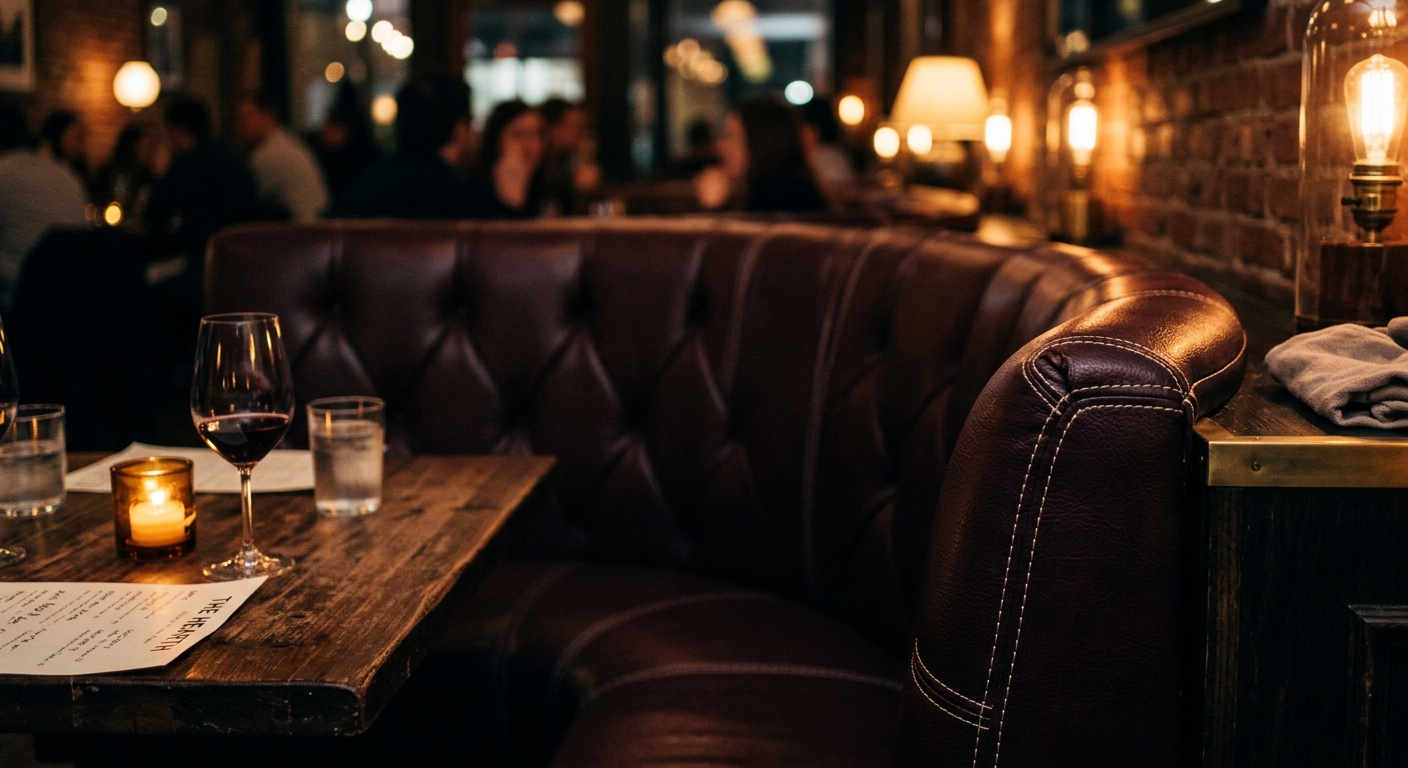
Restaurant buyers will trade softness for bleach tolerance every single time. A booth that can't be wiped down with a 10% bleach solution is a liability.
Solution-dyed acrylic and polyurethane-coated fabrics (often marketed as “performance vinyl”) dominate casual dining. They resist red wine, turmeric, and grease — and they can be sanitized between seatings without fading.
For example, a regional BBQ chain rolling out 40 new locations recently specified a 100,000 double-rub polyurethane seat fabric with a 1,000-hour xenon arc lightfastness rating for window-side booths. The upcharge over standard vinyl was about 18%, but projected reupholstery intervals stretched from 3 years to 7. That math wins every procurement meeting.
California's TB 133 Problem
If you're supplying restaurants in California or any jurisdiction that adopts CAL TB 133, the fabric isn't tested alone — the entire seat assembly (foam, barrier, fabric) must pass a full-scale burn test. This usually forces the use of an FR barrier cloth underneath the decorative fabric, which changes hand feel and cost.
Server aprons and uniforms are a separate story — check our apron fabric collection for the twill and canvas weights that hold up to commercial laundering.
Cruise Lines: The Most Punishing Spec in the Industry
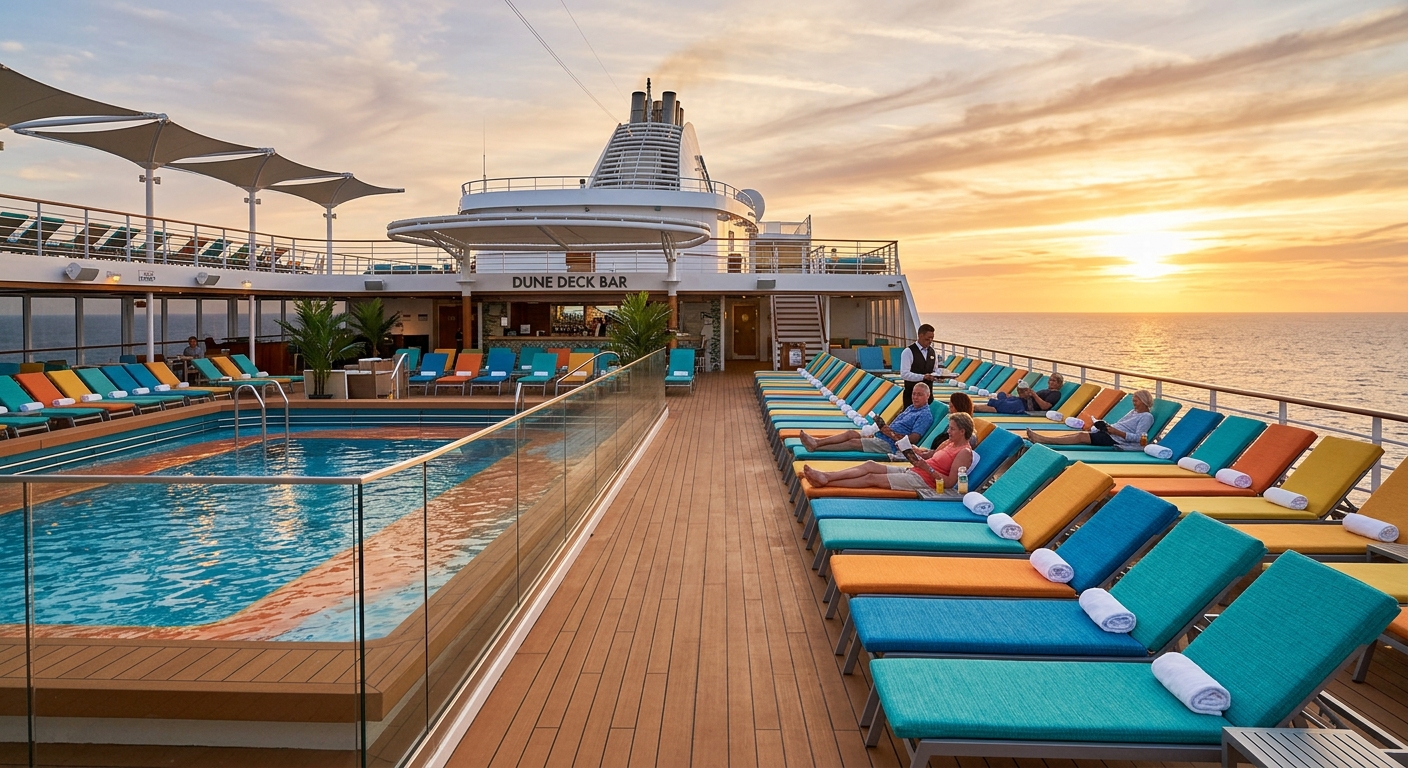
Cruise ships are floating cities with stricter fire codes than any land-based venue. The governing standard is the IMO FTP Code Part 8 — International Maritime Organization's Fire Test Procedures for upholstered furniture. It's substantially tougher than NFPA 260.
Fabrics must also survive salt air, UV exposure at sea (which is roughly 25% higher than inland due to ocean reflection), mildew pressure in humid climates, and daily cleaning protocols that often involve hospital-grade disinfectants.
What Passes
- Trevira CS (inherently FR polyester) — the industry workhorse for interior seating and drapery
- Solution-dyed acrylic for outdoor decks (Sunbrella Contract and equivalents)
- Silicone-coated polyester for pool loungers
- 100,000+ double rubs minimum for main dining and theater seating
A Caribbean cruise operator refitting a 2,400-passenger ship typically orders 60,000–90,000 yards of upholstery fabric per refit. At that volume, a single failed lightfastness test during sea trials can delay a relaunch by six weeks and cost millions. Specs get scrutinized line by line.
The Numbers That Actually Matter on a Hospitality Spec Sheet
Every hospitality RFP reads like an engineering document. Here are the thresholds that appear on nearly every spec sheet — and what they mean.
- Wyzenbeek double rubs (ASTM D4157): 30,000 = heavy residential, 50,000 = contract, 100,000+ = severe contract
- Martindale cycles (EN ISO 12947): 40,000+ for commercial seating (European standard equivalent)
- Lightfastness (AATCC 16): Class 4 minimum for interiors, Class 5–6 for windowside and outdoor
- Pilling (ASTM D3512): Grade 4+ after 3,000 cycles
- Seam slippage (ASTM D4034): Less than 1/4 inch at 25 lbs force
- Crocking (AATCC 8): Wet and dry both Class 4+
If you're ordering in bulk, know how to interrogate these numbers before you sign. Our spec sheet reading guide walks through the eight data points that separate a pass from a disaster.
Fiber Choices That Actually Win Contracts
Not every fiber can pass contract spec — and the ones that do have trade-offs.
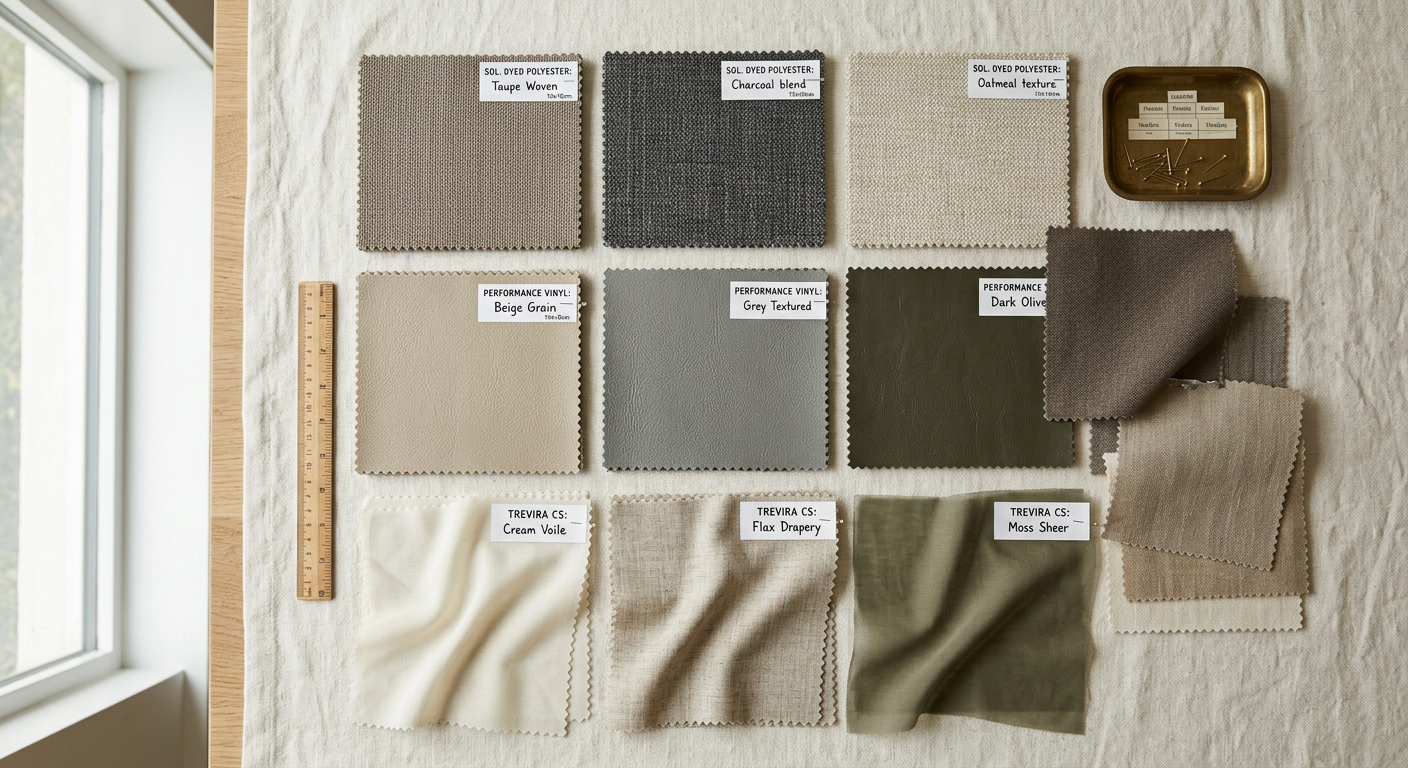
Solution-Dyed Polyester
Colorfast to light and bleach because pigment is locked into the fiber itself, not dyed onto it. This is the default for pool decks, cabana drapery, and anything that takes UV. Higher upfront cost, but lightfastness often tests at Class 6+.
Trevira CS
Inherently flame-retardant polyester that passes IMO, NFPA 701, and most European standards without topical treatment. Dominates hotel drapery and cruise interiors. For comparison against natural fibers, the cotton vs polyester bulk buying breakdown explains why synthetics win almost every contract spec.
Olefin (Polypropylene)
Cheap, hydrophobic, and stain-resistant by nature. Common in budget hotel guest rooms and value-tier restaurants. Weakness: low melting point (~165°C) means it can scorch under a hot iron or near heat sources.
Polyurethane (Performance Vinyl)
Replaced traditional PVC in most healthcare and restaurant settings because it's softer, more breathable, and phthalate-free. Bleach-cleanable and 250,000+ double rubs on premium grades.
Where Cotton and Linen Fit
Rarely alone. Blended with polyester (typically 30/70 or 50/50) for decorative pillows and accent pieces where hand feel matters more than abrasion. Pure linen is effectively banned from contract seating because of wrinkling and abrasion failures — though our linen vs cotton comparison shows where it still excels in lighter-duty applications.
Cleaning Codes and Why Procurement Cares
Every contract fabric carries a cleaning code that tells housekeeping what they can legally use without voiding the warranty.
- W: Water-based cleaners only
- S: Solvent-based cleaners only
- WS: Either — the hospitality gold standard
- X: Vacuum only — avoid in any contract setting
A mid-scale hotel chain I worked with switched from a W-code fabric to a WS-code alternative across 180 properties. Annual replacement rates dropped 34% because housekeepers stopped setting permanent stains with the wrong cleaner. The fabric cost 12% more per yard. Payback was under 18 months.
Bleach cleanability is a separate rating. True bleach-cleanable fabrics survive a 1:10 sodium hypochlorite solution for at least 10 minutes without color change. Not all WS-coded fabrics pass this — always verify.
Hidden Costs Hospitality Buyers Miss
The per-yard price on a quote is rarely the real cost. Here's where hospitality projects bleed money:
- Dye lot variance across large orders: A 10,000-yard order for a hotel refit split across three dye lots can visibly mismatch in the same lobby. Specify “single dye lot” or “matched lots” in the PO.
- Backing and barrier requirements: CAL TB 133 jobs need FR barrier cloth, which can add $3–8/yard to the assembled cost.
- Shrinkage after fabrication: Even contract fabrics shrink 2–4% after tensioning and application. Always order 5% overage minimum.
- Lead times on certified stock: IMO-certified and Trevira CS inventory often runs 10–14 weeks from the mill. Plan accordingly.
For a deeper breakdown, see our piece on the hidden costs of cheap wholesale fabric — most of those traps apply doubly in contract work.
How to Vet a Hospitality Fabric Supplier
Before you issue a PO, demand these five documents:
- Current test reports (not older than 24 months) from a recognized lab — SGS, Intertek, UL, or Bureau Veritas
- Flame certification specific to your jurisdiction — don't accept a generic “meets flame standards” claim
- Care and cleaning protocol sheet
- Warranty terms — minimum 3 years on abrasion and colorfastness for contract grades
- Sample yardage from the same dye lot you'll be ordering from
Ask one specific question: “Has this exact SKU been installed on a cruise line / national hotel flag / multi-unit restaurant within the last two years? Can I speak to that client?” Real contract suppliers answer yes without flinching.
Putting It All Together
Hospitality fabric buying is a four-variable problem: flame compliance, abrasion durability, cleanability, and lightfastness. Get all four right and the venue runs for 7–10 years without a refit. Get one wrong and you're reupholstering in year two while explaining to a GM why the budget blew up.
Start with the flame code your jurisdiction requires, filter to fabrics that meet or exceed your abrasion and cleaning thresholds, then pick on aesthetics last. That order matters — designers who pick fabric on looks first and scramble to find compliant alternatives rarely end up with what they originally specified.
If you're sourcing for a hotel refresh, a restaurant rollout, or a cruise refit and want samples of contract-grade stock that actually pass the tests, Global Fabric Wholesale carries certified hospitality-grade fabrics with the documentation to back every spec. Reach out with your RFP — we'll tell you honestly whether we can hit your numbers.




 Login with Google