


MOQ Negotiation Playbook: How to Get Better Wholesale Fabric Terms Without Burning Bridges

Getting a lower MOQ on wholesale fabric is less about pressure and more about giving the supplier something worth bending their rules for — longer contracts, faster payment, consolidated colorways, or a willingness to take their standard stock instead of custom runs. The buyers who consistently land better terms do three things: they understand why the MOQ exists in the first place, they negotiate the full package (MOQ, price, lead time, payment terms) instead of fixating on one number, and they build credibility over multiple orders. This playbook shows you exactly how to do all three.
Why MOQs Exist (And Why That Matters for Your Pitch)
Before you ask for a lower MOQ, know what you're actually asking the mill to absorb. MOQs aren't arbitrary — they're math.
A dyehouse needs roughly 300–500 meters to hit a consistent color across a lot. A knitting machine costs the same to set up for 100 yards as it does for 10,000. And a weaving loom running narrow specialty fabric might need 1,000 meters just to warp efficiently. When you ask a supplier to drop their MOQ from 500 yards to 100, you're asking them to eat setup costs, waste inventory, and potentially run an off-spec lot.
That reframes the negotiation. Your job isn't to convince them to lose money — it's to find a structure where neither of you does. A buyer sourcing cotton fabric by the yard from an established stock program has far more MOQ flexibility than one commissioning custom-dyed Chantilly lace, because the economics are completely different.
The three MOQ categories you'll encounter
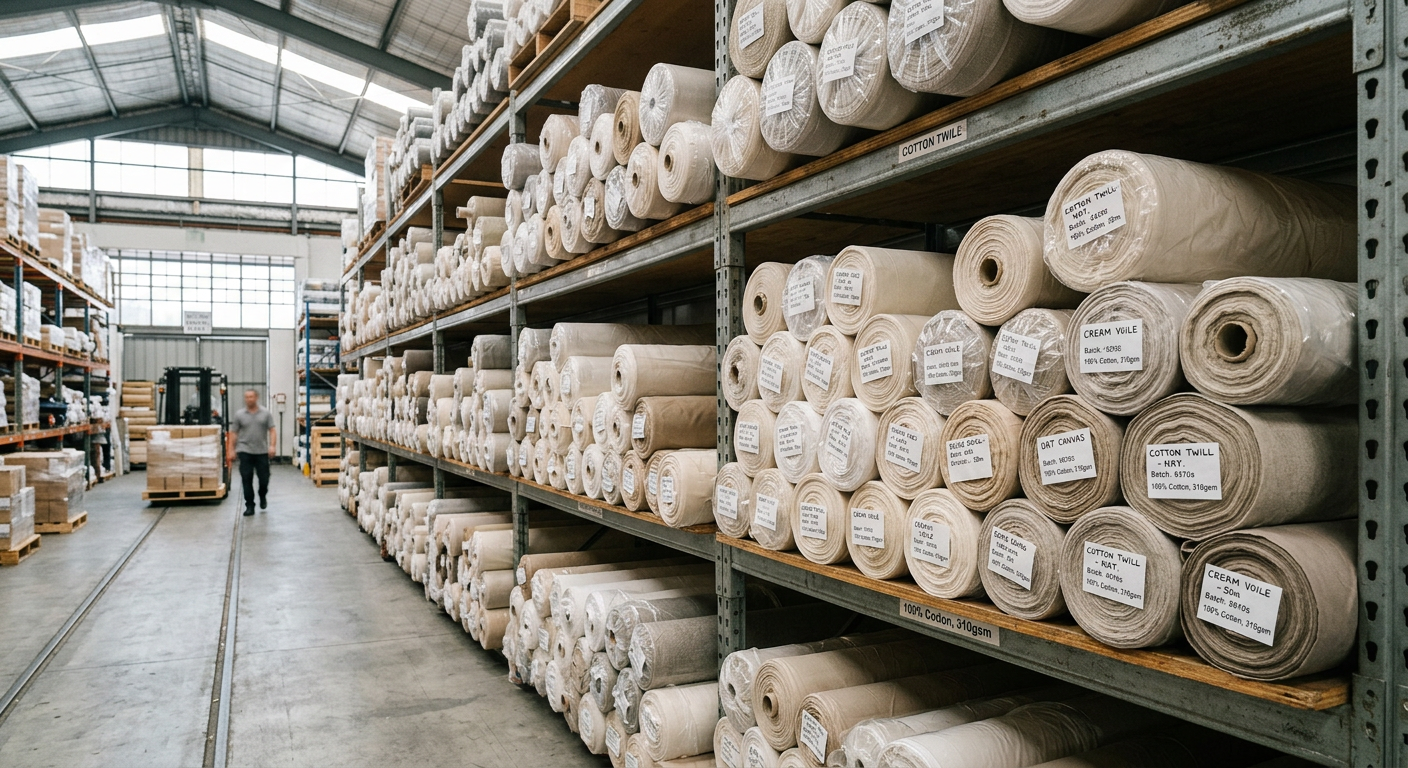
- Stock MOQ — fabric the supplier already holds. Usually negotiable down to 50–100 yards.
- Production MOQ — fabric they need to knit, weave, or finish. Typically 500–1,500 yards per color.
- Custom MOQ — custom color, pattern, or construction. Often 2,000+ yards and rarely flexible.
The Four Levers You Can Actually Pull
Every MOQ negotiation comes down to trading one thing for another. Here are the levers suppliers respond to — ranked by how much they actually move the needle.
Commitment Volume over Time
A 500-yard order today is boring. A signed letter of intent for 5,000 yards spread across four quarters is interesting. Suppliers will often cut per-order MOQs in half if you commit to annual volume, because it lets them plan production and buy yarn at better prices themselves.
Payment Terms
Most mills operate on 30% deposit, 70% before shipping. Offer 50% upfront or full payment against proforma and watch the MOQ magically drop. Cash flow is the single biggest pain point for fabric producers — especially smaller mills running tight working capital.
Color and SKU Consolidation
If your MOQ is 500 yards per color and you want four colors, you're asking for 2,000 yards total. Ask if they'll run 125 yards of each color as one combined dye lot with shared setup. Many will, because the loom time is the same.
Flexibility on Lead Time
Telling a supplier “I need this in 8 weeks” is a cost. Telling them “I can wait until your next open production slot” is a gift. Offer to be the filler order and you'll often get both a lower MOQ and a better price.
Opening the Conversation Without Sounding Cheap
Your first email sets the tone for every term you'll get over the next five years. Don't lead with the ask.
Bad opener: “Hi, what's your lowest MOQ and best price on denim?” This signals you're a one-shot buyer shopping on a spreadsheet, and the supplier will quote accordingly — high price, standard MOQ, no flexibility.
Better opener: introduce your brand, share your annual fabric spend range, describe the specific program (not just “denim” but “12oz selvedge denim for a men's small-batch jean line, 3,000 yards annually across two colorways”), and then ask about their capabilities. You're now a prospect, not a price shopper.
A script that actually works
“Hi [Name], we're developing a sleepwear capsule launching in Q3 and evaluating mills for a recurring program. Expected annual usage is around 4,000 yards of 180gsm cotton modal across three colors. Could you share your stock program, typical MOQ per color for production runs, and what volume commitment would unlock your best tier? Happy to share our tech pack and timeline.”
Notice what this does: it anchors on annual volume, implies a long-term program, invites tiered pricing, and treats the supplier as a partner. You haven't asked for a discount once, but you've set up the conversation to produce one.

Real-World Example: How a Small Swimwear Brand Cut Its MOQ by 60%
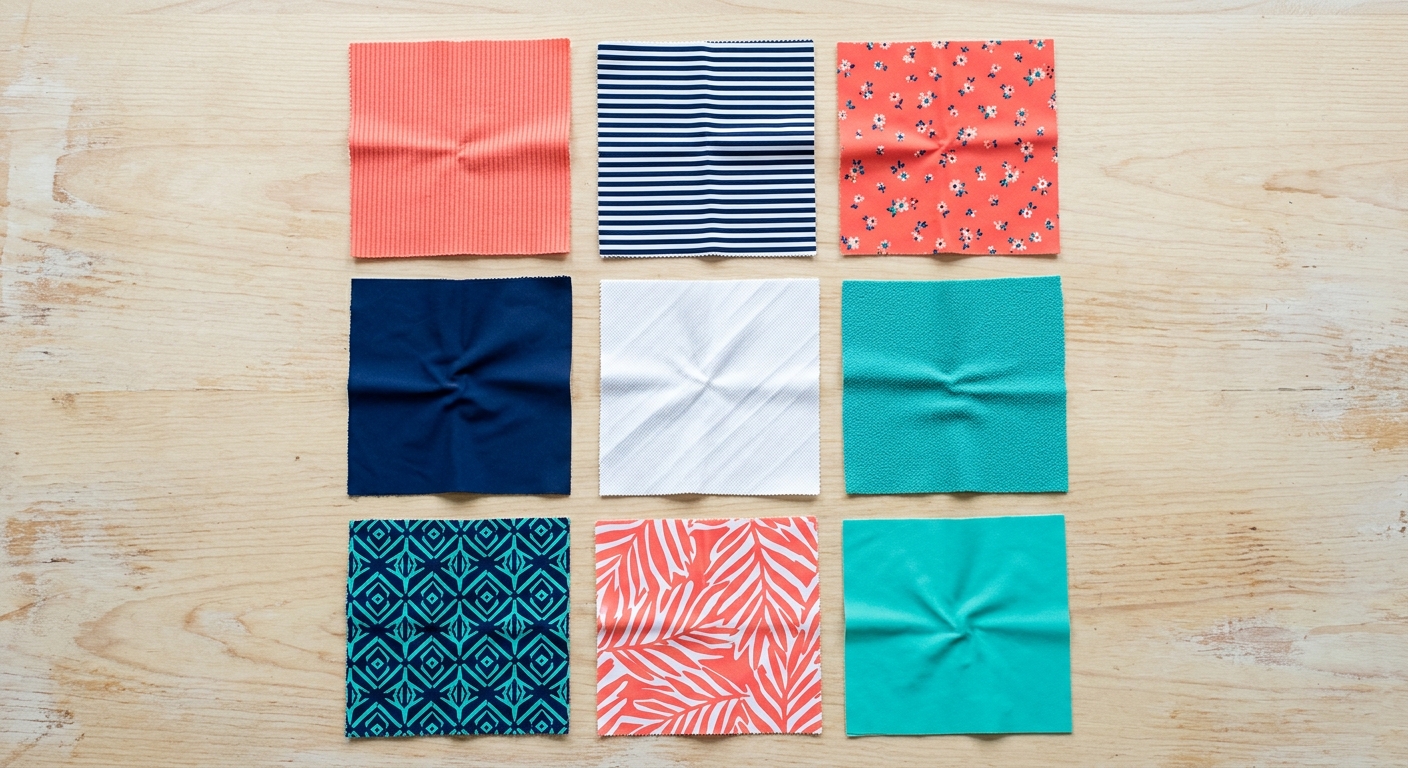
Here's a scenario I see play out constantly. A two-year-old swimwear brand wanted 200 yards of a specific quick-drying fabric in four colors for a summer drop. The mill's standard MOQ was 500 yards per color — 2,000 yards total, which would've tied up their entire season's capital.
Instead of negotiating on MOQ directly, the founder did three things:
- Shared a 12-month forecast showing the swim program growing to 6,000 yards annually.
- Agreed to run all four colors in a single production week with shared setup.
- Offered 100% payment against the proforma invoice instead of the standard 30/70 split.
The mill countered with 200 yards per color (800 total) at the original price per yard, plus a commitment to hold that same MOQ for any reorder within 12 months. Net result: MOQ dropped 60%, cash was out the door 45 days earlier (which the mill valued), and the brand had a supplier relationship that now prioritizes their orders during peak season. Nobody got squeezed.
The Trade-Offs Most Buyers Miss
Lower MOQ almost always costs you something. Smart buyers know what they're giving up and decide whether it's worth it. Here's what usually moves.
Price Per Yard
Cutting MOQ in half often adds 8–15% to unit cost. On cheap basics that's fine. On premium cashmere or technical fabrics, it can gut your margin. Run the math before you celebrate.
Color Accuracy
Smaller dye lots are harder to color-match to a standard. If you're reordering to match previous production, a shrunken MOQ lot may drift outside your Delta-E tolerance. For brand-critical colors, keep the bigger MOQ and split across SKUs instead.
Finishing Options
Many finishes — water repellent, mechanical softening, anti-pilling — have their own minimum run sizes that are separate from the base fabric MOQ. A mill might drop fabric MOQ to 300 yards but still require 1,000 yards for the DWR finish you want.
Priority in the Queue
This is the hidden cost. Small orders slot into production whenever there's a gap. If you're a 200-yard order behind three 3,000-yard orders, your “4-week lead time” may quietly become 9 weeks. Negotiate expected ship dates in writing, not just MOQ.
How to Negotiate Without Burning the Relationship
The fastest way to ruin a supplier relationship is to treat every interaction like a zero-sum game. Mills talk to each other, especially in specialized categories like UV protective fabric or technical performance textiles. Burn one bridge and you may find doors closing elsewhere.
Rules of Engagement
- Never negotiate on a first order you haven't placed yet. Run a small paid sample program first. Credibility earns concessions.
- Don't lie about competing quotes. Suppliers know market rates. If you claim someone else quoted 30% lower on the same spec, they'll assume you're either lying or comparing inferior fabric — both damage trust.
- Always give a reason, never just an ask. “Can you do 300 yards?” loses. “Our launch capital is limited but we're projecting reorder every 10 weeks — can we start at 300 yards and scale to your 500-yard MOQ by order three?” wins.
- Pay on time. Early if possible. This is the single most underrated leverage tool in fabric sourcing. Suppliers remember who pays.
- Escalate gracefully. If the sales rep can't move, ask politely whether the decision could be reviewed with their production manager — don't go over their head silently.

When to Walk Away (And When to Push Harder)
Not every negotiation should end in a deal. Walk away when:
- The MOQ is still 3x your realistic annual demand even after negotiation — you'll end up with dead stock.
- The supplier won't provide a signed quality spec or a written lead time commitment.
- Payment terms require 100% upfront to an unknown entity with no escrow or trade assurance.
- The fabric doesn't actually match your spec on the sample, and they're pushing you to commit anyway.
Push harder when:
- You've built 2+ orders of positive history and are still being quoted first-order MOQs.
- You have genuine annual volume to put behind the commitment.
- Market conditions favor buyers (off-season, excess capacity, commodity fiber price drops).
- You're consolidating fabric spend across multiple programs with one supplier.
If you're still figuring out how much you actually need before you can negotiate intelligently, start with our guide on calculating fabric yardage — nothing undermines a negotiation faster than vague volume projections. And if you want to avoid the classic traps baked into cheap quotes, read our breakdown of the hidden costs of cheap wholesale fabric before signing anything.
Building a Multi-Year MOQ Reduction Strategy
The buyers with the best MOQs didn't get them on email number one. They built them over time using a deliberate sequence.
Year one: establish
Take standard MOQs. Pay on time or early. Send clean POs with no surprise changes. Respond to emails within 24 hours. Your goal is to become a no-drama customer the rep actually likes working with.
Year two: consolidate
Start routing more categories through the supplier — if they did well on your cotton, give them a shot at your cardigan knit program too. Consolidated spend unlocks tier pricing and lower MOQs across the board.
Year three: restructure
Now you have leverage. Renegotiate the framework agreement: blanket POs with rolling releases, lower MOQs per release, extended payment terms, priority production slots, and held-stock programs where the mill keeps 500 yards of your core fabrics ready to ship within 5 days.
This is how a brand goes from “500-yard MOQ, 10-week lead time, 50% deposit” in year one to “100-yard release against annual blanket, 2-week ship from held stock, net 30 terms” by year three. Same supplier. Different relationship.
Putting the Playbook to Work
Good MOQ negotiation isn't a single clever email — it's a system. Know why the MOQ exists, bring real levers to the table (volume commitments, payment terms, consolidation, flexibility), open the conversation like a partner instead of a price shopper, and understand the trade-offs you're making on price, color accuracy, and queue priority. Then repeat that discipline across enough orders that the supplier starts offering concessions before you ask.
If you're sourcing fabric for a new program and want to start the conversation with a supplier who publishes clear stock availability, tiered pricing, and transparent MOQs across categories from denim to textured wovens, browse the Global Fabric Wholesale catalog or reach out with your spec — we're happy to talk through what's realistic for your volume and timeline.


 Login with Google