


What Is Burlap Made Of? The Fiber, Weave & What It Feels Like

Burlap is made from jute — a natural plant fiber extracted from the stalks of the jute plant. Those fibers are spun into coarse yarn and then woven together in a loose, open plain weave. That combination is exactly what gives burlap its distinctive rough texture, its durability, and its breathability.
If you've ever picked up a piece of burlap and wondered why it feels so different from cotton or linen, the answer starts in the fiber itself. This article walks you through what burlap is made of, how it's constructed, and how those material properties translate into what you can and can't use it for.
Where Does Burlap Come From? Meet the Jute Plant
Burlap's raw material is jute — one of the most widely grown natural fibers in the world, and one of the most affordable to produce.
The jute plant (Corchorus capsularis or Corchorus olitorius) grows tall and slender — often reaching three to four meters — in warm, humid climates. Bangladesh and India together account for the vast majority of global jute production, with the plants thriving during the monsoon season when rainfall does most of the irrigation work naturally.
The crop reaches harvest-ready maturity in around four to six months. Crucially, jute cultivation typically requires relatively low chemical inputs compared with many other fiber crops — which is part of why burlap has a reputation as one of the more sustainable natural textiles.
The fiber itself comes from the inner bark — or bast — of the stalk, not the leaves or seeds. This matters because bast fibers are long, strong, and structurally rigid by nature. That rigidity is what makes jute thread coarser than cotton or wool, and it's also what gives burlap its structural integrity even at a loose weave.
For comparison, linen is also a bast fiber fabric — derived from the flax plant — but it's processed to a much finer grade, which is why linen feels noticeably softer than burlap even though the two share a similar fiber category.
From Stalk to Fabric: How Burlap Is Made
Understanding the production process helps explain why burlap looks and feels the way it does — and why it behaves differently from more refined natural fabrics.
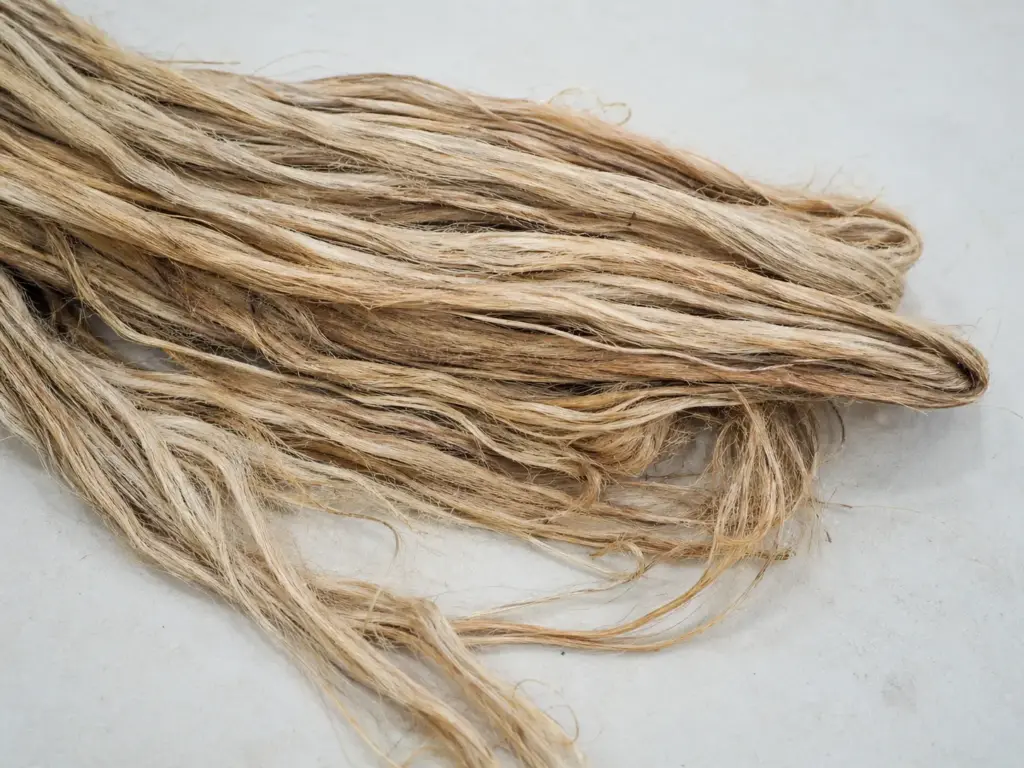
Retting
After harvesting, the jute stalks are bundled and submerged in water — a process called retting — for roughly 10 to 30 days. During this time, bacteria break down the pectin that binds the fibers to the woody core, making it possible to strip the fiber cleanly from the stalk.
Stripping and Drying
Once retting is complete, the softened fibers are stripped from the stalks by hand or machine, then washed and dried. At this stage they're graded by quality — finer, longer fibers go to higher-grade applications; shorter or less uniform fibers become standard burlap.
Spinning into Yarn
The dried fibers are spun into coarse, twisted yarn. Because jute fiber retains a degree of its natural stiffness even after processing, the resulting yarn is rougher to the touch than cotton or wool yarn of a similar weight.
Plain-Weave Construction
The yarn is woven on looms using a basic plain weave — each weft thread passes alternately over and under each warp thread. What makes burlap's weave distinctive is the low thread count and wide thread spacing: the yarns don't pack tightly together, leaving visible gaps in the weave structure. That open mesh is what gives burlap its characteristic grid-like surface and makes it breathable.
Why Is Burlap So Coarse? The Science Behind the Texture
The roughness of burlap isn't a flaw — it's a direct result of two structural factors working together.
First, the fiber itself. Jute bast fibers have a higher lignin content than softer natural fibers like cotton or modal. Lignin is the woody compound that gives plant cell walls their rigidity. In jute, that lignin remains largely intact even after processing, making each fiber strand stiffer and rougher at the microscopic level.
Second, the weave density. Because burlap uses a loose, open plain weave with minimal thread count, there's very little fiber-to-fiber contact smoothing out the surface. Each coarse yarn sits exposed rather than being compressed and softened by its neighbors the way tightly woven fabrics are.
Together, these two factors produce a fabric that scores high on structural integrity and breathability — but low on softness. That's exactly the right trade-off for craft applications, gardening, and packaging, where you need the fabric to hold its shape and let air through, not to feel smooth against skin.
Natural Burlap vs Faux Burlap: What's the Difference?
Not everything sold as 'burlap' is actually jute. Faux burlap — typically made from polyester — is designed to look like the real thing but with different performance characteristics.
| Feature | Natural Burlap (Jute) | Faux Burlap (Polyester) |
|---|---|---|
| Fiber | Jute bast fiber | Polyester filament |
| Texture | Coarse, scratchy, visible weave gaps | Softer, more uniform, minimal shedding |
| Shedding (lint) | Yes — fibers shed with handling | Minimal to none |
| Scent | Earthy, natural smell | None |
| Biodegradable | Yes — biodegrades in soil over time (rate varies by conditions) | No |
| Moisture resistance | Absorbs moisture; can mildew if wet | Resists moisture; dries faster |
| Care | Hand wash or spot clean; avoid machine washing | Usually machine washable |
| Best for | Gardening, eco-packaging, rustic décor | Indoor home décor, wreaths, crafts |
If your project involves prolonged outdoor exposure or soil contact — like wrapping root balls or protecting young plants — natural jute is the right choice precisely because it biodegrades in place. For indoor decorating, wreath-making, or any project where you'll handle the fabric repeatedly, faux burlap's softer hand and machine-washability are real practical advantages.
How Burlap Weight Affects What You Can Make
Burlap isn't a single-weight fabric. It's available in a range of weights measured in GSM (grams per square meter), and that weight determines how the fabric handles, drapes, and holds up in use.
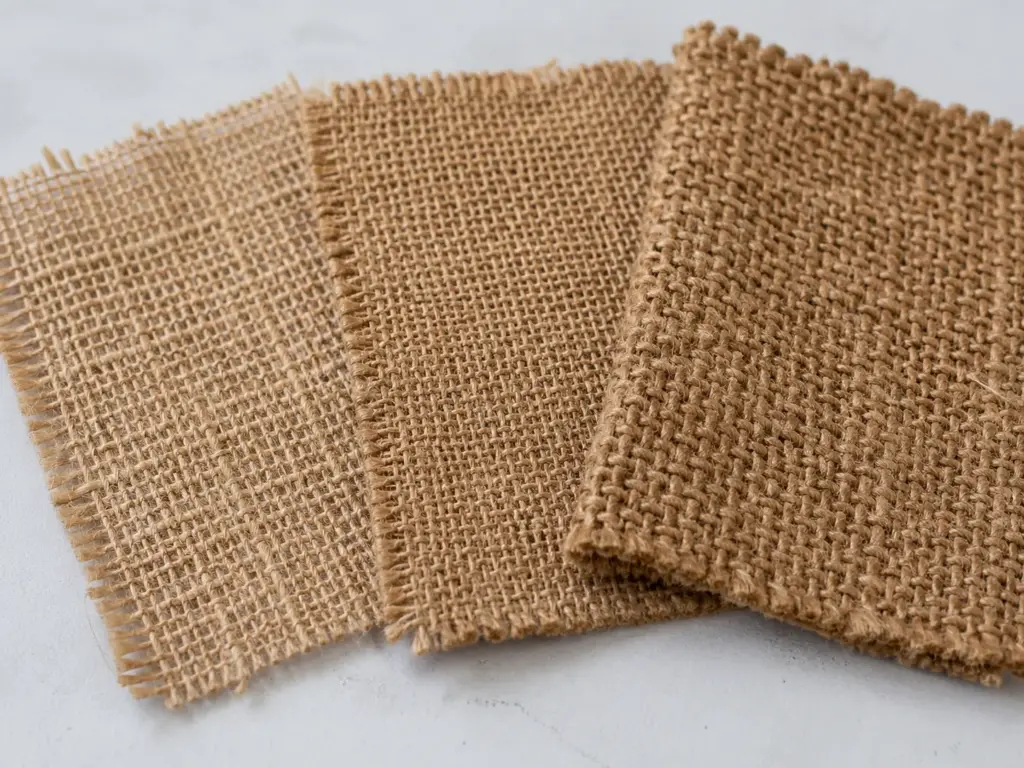
| Weight Range | Weight Range Approx. GSM | Best Used For |
|---|---|---|
| Lightweight | 150–200 GSM | Decorative ribbons, gift wrap, floral accents, craft overlays |
| Medium | 230–280 GSM | Garden plant protection, outdoor windbreaks, and industrial sacking |
| Heavy | 300 GSM+ | Garden plant protection, outdoor windbreaks, industrial sacking |
As a general rule: if you're picking up burlap for structured, coarse-textile projects like bags or table décor, medium-weight is the most versatile starting point. Lightweight burlap can feel flimsy for anything structural; heavy burlap is stiffer and harder to work with in detailed crafts.
Is Burlap Sustainable? A Quick Look at Jute's Eco Credentials
Burlap has a genuine environmental case — not just as marketing language.
Jute plants grow to harvest maturity in four to six months, requiring relatively small quantities of fertilizer and pesticides compared with many other fiber crops. The crop requires little irrigation beyond natural rainfall in monsoon-season growing regions. And because jute is a bast fiber derived from plant cellulose, untreated burlap is 100% biodegradable — it will biodegrade in soil over time, leaving no synthetic residue. (The exact breakdown rate varies with soil conditions, moisture levels, and how the fabric has been treated, so no single timeline applies universally.)
There's also a low-waste production angle: the woody jute stalks left after fiber extraction are used as firewood in local communities rather than discarded as industrial waste.
One caveat worth noting: treated or coated burlap (waterproofed or dyed with synthetic finishes) loses much of its biodegradability. If the eco-credentials matter for your project, check that you're buying untreated natural burlap fabric.
For authoritative background on jute as a natural fiber crop, the FAO overview of jute as a natural fiber crop covers its cultivation, fiber characteristics, and global production context.
Frequently Asked Questions About Burlap
Is burlap always made from jute?
Mostly yes — but not exclusively. Some burlap variations use flax, hemp, or sisal fibers. Polyester faux burlap, which looks similar but behaves differently, is also widely sold. When buying for gardening or composting projects where biodegradability matters, always confirm the fiber content is 100% natural jute.
Is burlap the same as hessian?
Yes. Burlap and hessian refer to the same woven jute fabric — the term simply varies by region. 'Burlap' is standard in North America; 'hessian' is used in the UK, Australia, and most Commonwealth countries. The material itself is identical.
Does burlap soften over time?
It does soften slightly with repeated washing and handling, as loose surface fibers wear down. However, it won't reach the softness of cotton or even linen — the coarseness is structural, not just surface lint. If softness matters for your project, faux burlap or a lightweight calico fabric may be a better fit.
Can burlap be dyed?
Yes. Natural jute burlap absorbs dye well due to its porous, open fiber structure. The resulting colors tend to be earthy and slightly muted rather than vivid — the natural tan-brown base of the jute fiber affects how colors read. Faux polyester burlap takes dye more evenly and produces brighter, more consistent results.
The Bottom Line
Burlap is jute. The fiber's natural stiffness, combined with a loose open-weave construction, produces a fabric that's durable, breathable, and structurally supportive — but purposefully rough. Whether you're buying it for garden use, rustic home décor, or a craft project, understanding those fiber and weave fundamentals helps you pick the right weight and finish for what you're actually making.
Ready to see what's available by the yard? Browse the full range of burlap fabric at Global Fabric Wholesale — including natural jute and faux burlap options, in the width and yardage you need.



 Login with Google