


French Terry vs Single Jersey: What’s the Difference?

French terry and single jersey are both popular knit fabrics, but they serve very different purposes: French terry is a mid-weight fabric with a looped reverse side that adds warmth and structure, while single jersey is a lightweight, smooth knit best suited to T-shirts and draped garments. Choosing between them comes down to the weight, warmth, and finish your project needs.
How Each Fabric Is Constructed
Both fabrics are produced on circular knitting machines, but their loop structures differ significantly — and that difference defines everything from hand-feel to end use.
French Terry
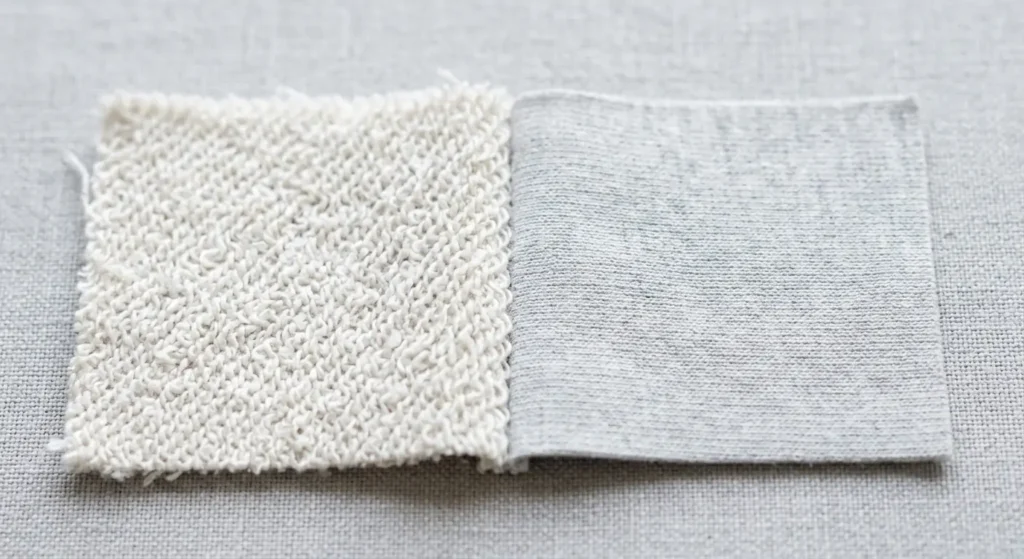
French terry fabric is knitted with a smooth face and uncut loops on the reverse side. Those loops trap air, adding insulation and giving the fabric its characteristic soft, slightly spongy feel. The result is a fabric that is heavier and more structured than most knits, typically landing between 180 and 350 gsm.
Single Jersey
Single jersey is knitted in a single layer with a plain stitch, producing a smooth face and a slightly textured reverse with visible horizontal lines (known as purl stitches). It is much lighter — usually 120 to 200 gsm — and drapes fluidly, making it ideal for close-fitting or flowing garments. If you need a stretchy fabric with excellent drape, single jersey is a strong candidate.
Weight, Warmth, and Breathability Compared
Weight is the most practical differentiator when choosing between these two knits.
French terry sits in the mid-weight category, which is why it is the go-to fabric for sweatshirts, joggers, and hoodies. The looped back provides a degree of insulation without the bulk of fleece fabric, making it comfortable across three seasons. It is breathable enough for light activity but warm enough for cooler days.
Single jersey, by contrast, is one of the most breathable knit fabrics available. Its open, lightweight structure allows air to circulate freely, which is why it dominates warm-weather garments like T-shirts, summer dresses, and lightweight loungewear. It offers minimal insulation and is best worn in spring through summer or as a layering base.
For a deeper look at how French terry performs across different seasons, see our guide on choosing the best French terry fabric for each season.
Side-by-Side Comparison
The table below summarises the key differences to help you make a quick decision:
| Criteria | French Terry | Single Jersey |
|---|---|---|
| Construction | Looped pile on reverse | Plain single-layer knit |
| Weight | 180–350 gsm | 120–200 gsm |
| Texture | Smooth face, looped back | Smooth both sides |
| Stretch | Moderate 2-way stretch | Good 2-way stretch |
| Breathability | Moderate | High |
| Warmth | Medium warmth | Minimal warmth |
| Best Use Cases | Sweatshirts, joggers, kidswear | T-shirts, dresses, linings |
| Care | Machine wash cold, low tumble | Machine wash cold, low tumble |
Which Projects Suit Each Fabric?
Matching the fabric to the garment type will save you time, thread, and frustration at the cutting table.
When to Choose French Terry
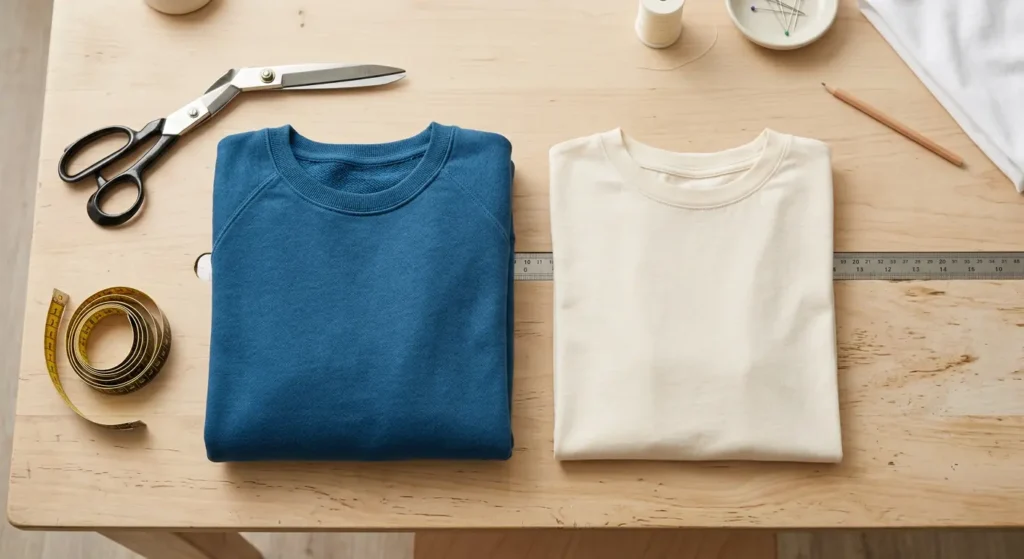
French terry excels in garments that need body and warmth without stiffness. Think sweatshirts, zip-up hoodies, jogger pants, and casual jackets. It is also a favourite for children's clothing — the looped back is gentle against sensitive skin. For more inspiration, our post on Why Parents Prefer French Terry Fabric for Kidswear covers this in detail.
For example, an independent children's wear designer sourcing fabric for a winter play-suit range would find French terry ideal: it is durable enough for repeated washing, soft enough for all-day wear, and structured enough to hold seams cleanly.
When to Choose Single Jersey
Single jersey is the workhorse of everyday apparel. It is the fabric behind most basic T-shirts, lightweight dresses, leggings, and casual tops. Its fluid drape also makes it useful as a lining inside structured knit garments. If you are working with a pattern that calls for a jersey knit with at least 50% stretch, single jersey is almost always the right call.
Making Your Final Choice
If your project needs warmth, structure, and a fabric that feels substantial in the hand, our wholesale french terry collection is the clear winner. If you need something lightweight, breathable, and easy to drape — especially for warm-weather garments — single jersey delivers exactly that.
A useful rule of thumb: reach for French terry when you want the comfort of a sweatshirt, and reach for single jersey when you want the ease of a T-shirt. Both fabrics are forgiving for sewers at all skill levels, and both respond well to a ballpoint needle and a stretch stitch or serger finish.
Still unsure which knit fabric fits your project? Browse the full range of fabrics available at Global Fabric Wholesale — filterable by weight, stretch, and material — with no minimum order and worldwide shipping. If you need a recommendation, our team is happy to help via the contact page.





 Login with Google