


What Every Small Fashion Brand Needs to Know About Ordering Fabric Online in 2026

Small fashion brands that order fabric online in 2026 need to master three things: understanding minimum order quantities, requesting swatches before committing, and building a reliable supplier relationship that can scale with their growth. Gone are the days when online wholesale meant gambling on color accuracy and fabric weight — today's best online wholesalers offer by-the-yard purchasing, detailed product specs, and fast shipping that make them the smartest sourcing channel for emerging labels. This guide breaks down exactly what you need to know so you stop wasting money on fabric that doesn't match your vision and start building collections with confidence.
Why 2026 is the Best Time for Small Brands to Buy Fabric Online
Five years ago, ordering fabric online meant crossing your fingers and hoping the “champagne satin” you ordered didn't arrive looking like mustard. That era is over. Online wholesale fabric suppliers have invested heavily in high-resolution photography, detailed weight and stretch specifications, and generous swatch programs that eliminate most of the guesswork.
Here's what's changed specifically for small brands:
- Lower MOQs: Many online wholesalers now sell by the yard, not by the bolt. That means you can order 5–15 yards for a capsule collection without sitting on 200 yards of deadstock.
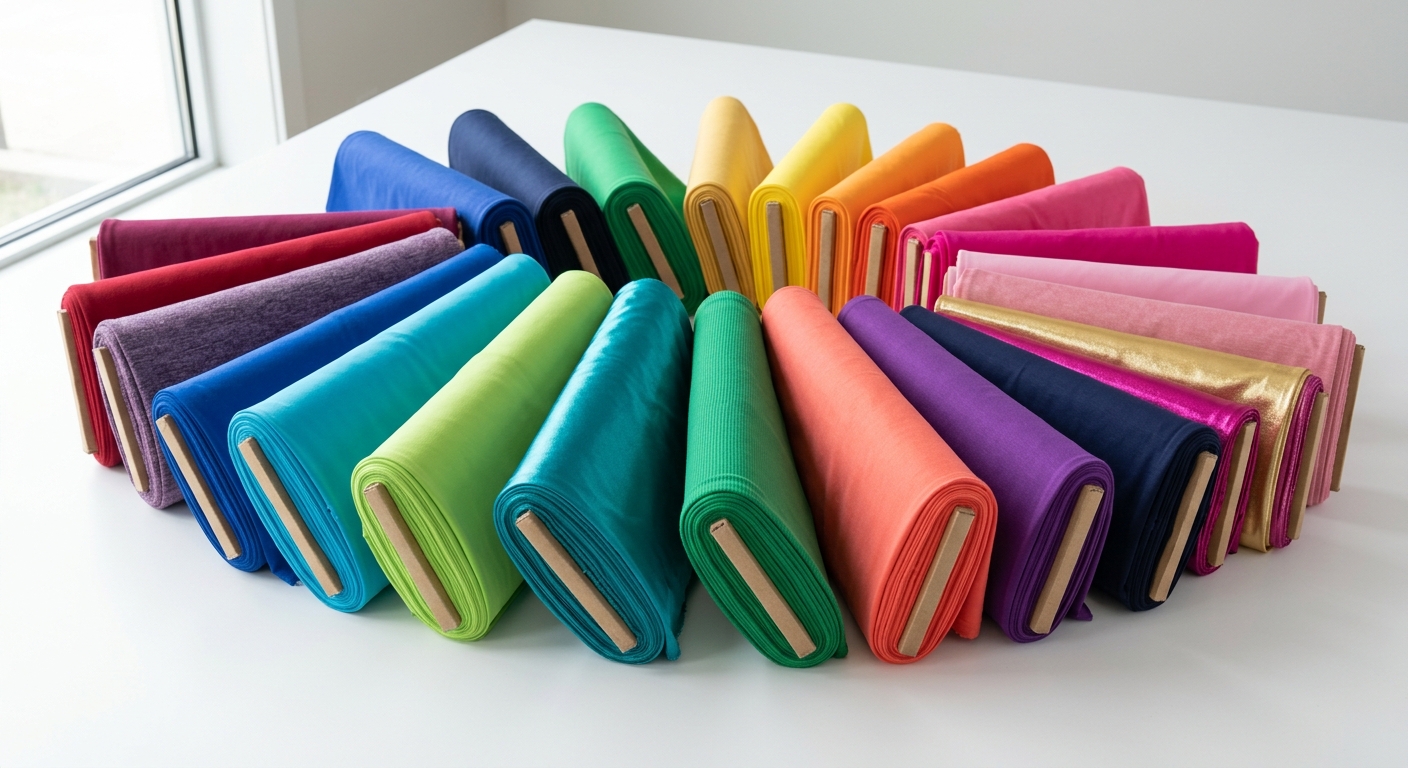
- Broader selection: A single online store can stock everything from spandex fabric by the yard for activewear to shiny fabric for evening pieces — a variety that no local shop can match.
- Transparent pricing: Wholesale pricing is listed upfront. No awkward phone calls to “request a quote” just to find out if a fabric fits your budget.
The bottom line? If you're still sourcing exclusively from local fabric shops or relying on a single overseas mill, you're likely overpaying, under-diversifying, or both.
Understanding MOQs: The Number That Makes or Breaks Small Brand Budgets
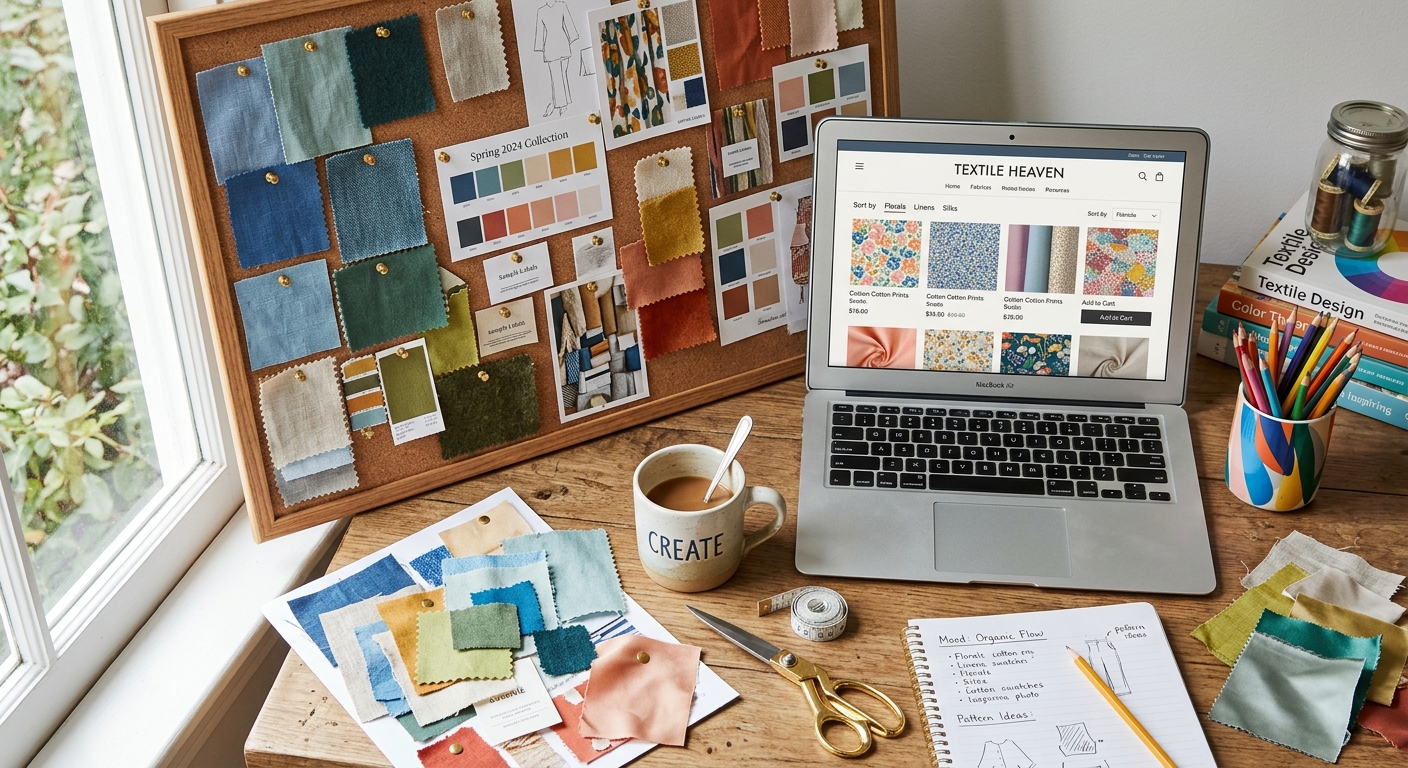
Minimum order quantity is the single biggest barrier between a small fashion brand and affordable fabric. Traditional mills often require 50 to 500 yards per colorway — fine if you're producing 2,000 units, devastating if you're launching a 50-piece capsule.
How to Navigate MOQs Strategically
First, know what you actually need. A basic formula: multiply the yardage per garment (check your pattern layout) by your target production quantity, then add 10–15% for cutting waste and samples. If that number comes to 12 yards, you don't need a mill — you need a by-the-yard wholesaler.
Second, look for tiered pricing. Some suppliers offer a lower per-yard price once you cross a threshold — say, $6.50/yard for 1–9 yards and $5.80/yard for 10+ yards. That small difference adds up across a full collection.
Real-World Example
Consider a small streetwear label launching a line of hoodies. Each hoodie requires roughly 2.5 yards of fleece or hoodie fabric. For an initial run of 30 units, that's 75 yards plus a 10% waste buffer — about 83 yards total. At a by-the-yard wholesaler, that's a perfectly reasonable order. At a traditional mill with a 200-yard MOQ, you'd be forced to overbuy by 140% and warehouse fabric you may never use.
The takeaway: match your supplier type to your actual production volume, not to your aspirational volume.
Always Order Swatches — Here's How to Evaluate Them Properly
Ordering fabric without a swatch is like hiring someone without an interview. You might get lucky, but the odds aren't in your favor.
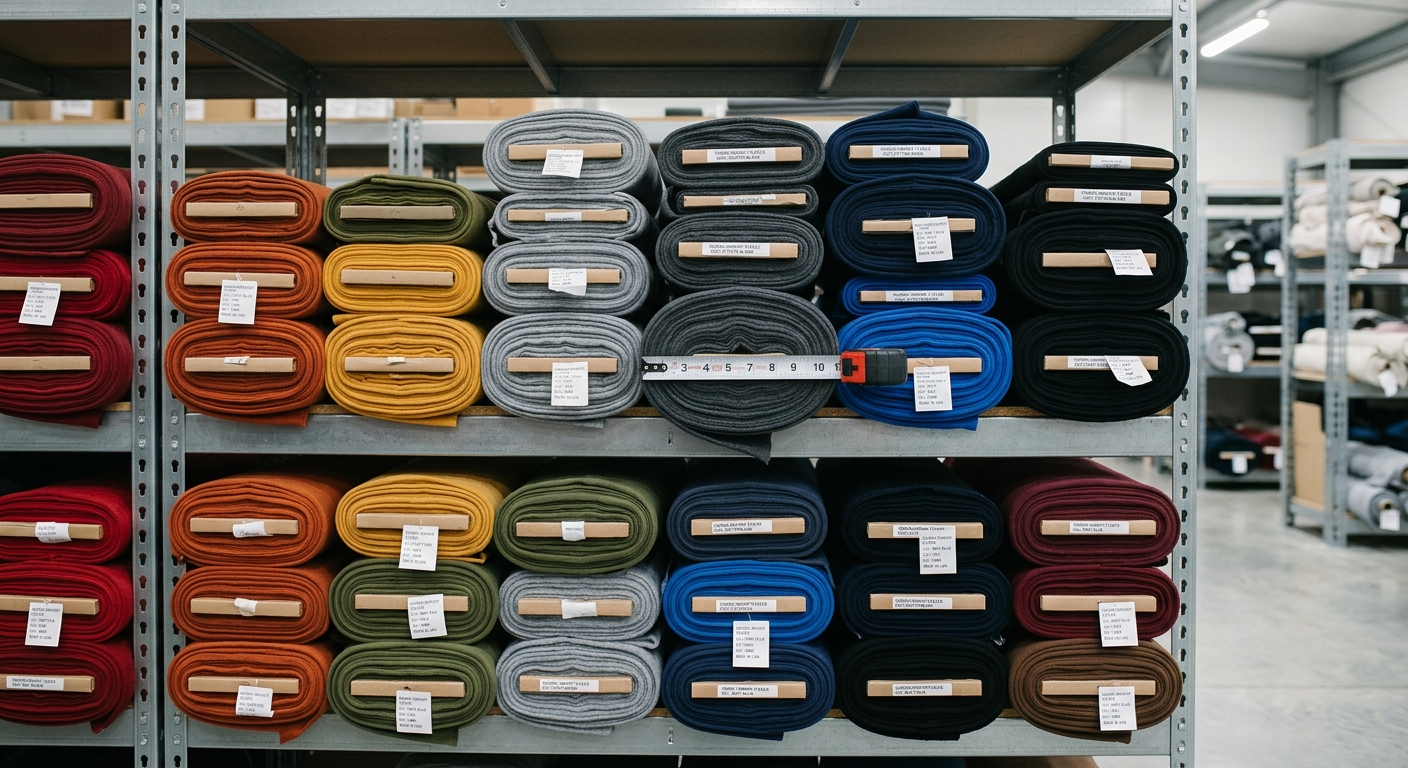
Most reputable online wholesalers offer swatch programs — sometimes free, sometimes for a nominal fee that's credited toward your order. Take advantage of this every single time, especially for new suppliers or unfamiliar fabric types.
What to Check When Your Swatch Arrives
- Color accuracy: Compare the swatch under natural daylight, not just your studio's fluorescent lights. Photograph it next to your Pantone reference or tech pack color chip.
- Hand feel and drape: Hold the swatch between your fingers and let it hang. Does it drape the way your design requires? A fabric that looks right on screen but feels stiff or flimsy will ruin a garment.
- Weight (GSM): If the listing says 180 GSM, weigh a measured section of your swatch to verify. A kitchen scale and a 10cm × 10cm cut is all you need.
- Stretch and recovery: Gently stretch the swatch in both directions. Does it snap back or stay distorted? This matters enormously for fitted garments.
- Wash test: Throw the swatch through a wash-dry cycle. Check for shrinkage, color bleeding, and pilling. Five minutes of testing can save you from a costly return.
If you're evaluating textured fabrics like waffle fabric or chenille fabric, pay extra attention to how the texture holds up after washing — some lose their character, others improve.
Decoding Fabric Listings: What the Product Page is Really Telling You
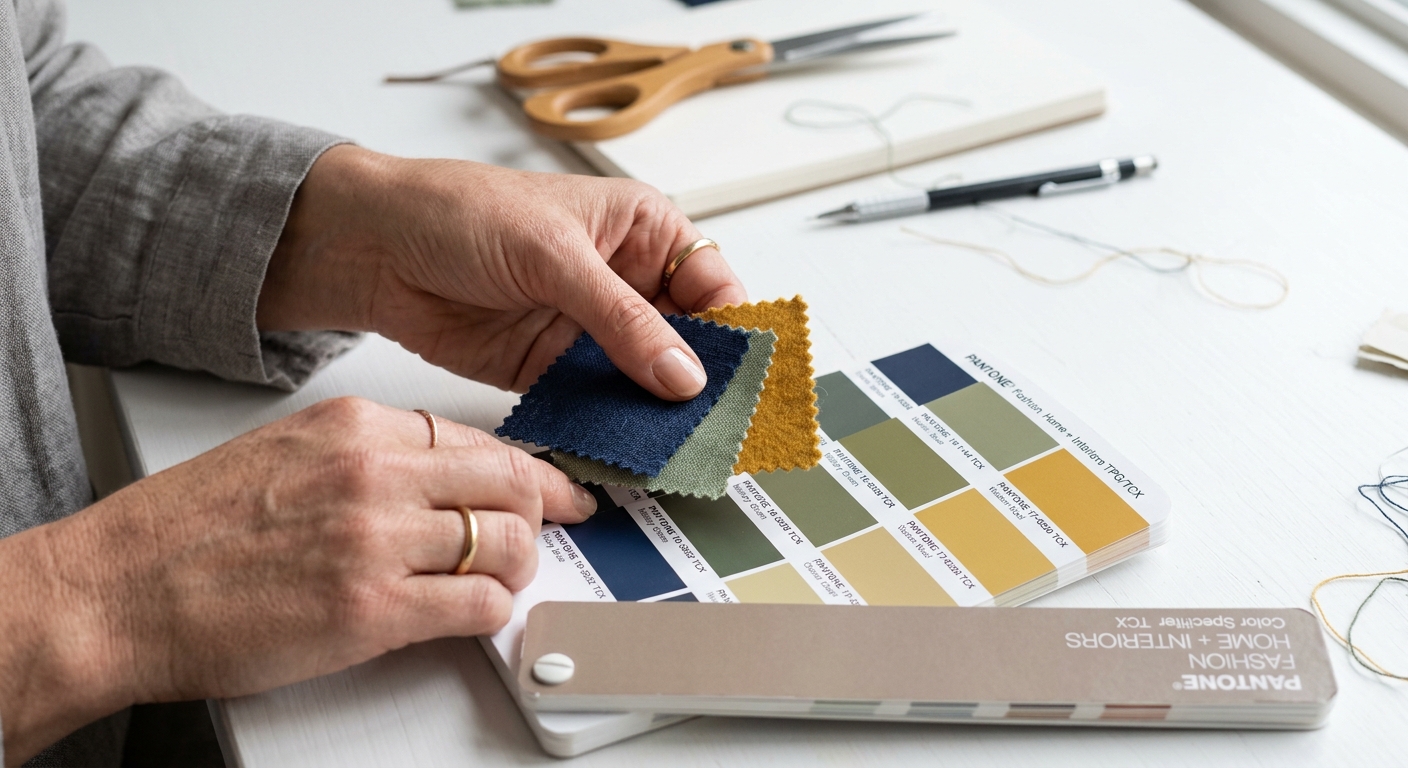
A fabric product page is packed with information — if you know how to read it. Too many first-time buyers fixate on the photo and price while ignoring the specs that actually determine whether the fabric will work for their project.
The Specs That Matter Most
Composition: This tells you what the fabric is made of (e.g., 95% polyester, 5% spandex). Composition drives everything — breathability, care instructions, dye behavior, and cost. A 100% cotton lawn will behave completely differently from a poly-cotton blend, even if they look similar on screen.
Width: Standard fabric widths range from 44” to 60”. Wider fabric means less yardage needed per garment, which directly impacts your cost per unit. Always factor width into your yardage calculations.
Weight (GSM or oz/yd²): Lightweight fabrics (under 150 GSM) suit summer dresses and linings. Mid-weight (150–300 GSM) covers most apparel. Heavyweight (300+ GSM) is outerwear and upholstery territory.
Stretch direction: “4-way stretch” means the fabric stretches both horizontally and vertically. “2-way stretch” means only one direction. This distinction is critical for activewear, swimwear, and bodycon silhouettes.
Red Flags on Product Pages
Watch out for listings with no composition listed, vague descriptions like “soft and comfortable,” or stock photos that look too polished. The best suppliers — the ones worth building a relationship with — give you specific, measurable data.
Shipping, Lead Times, and the Hidden Costs Nobody Warns You About
Here's a number that surprises most first-time buyers: shipping can add 15–30% to your fabric cost if you're not careful. And it's not just the freight charge — it's the cascade of delays and fees that come with poor planning.
Domestic vs International Shipping
Ordering from a domestic warehouse (like a U.S.-based wholesaler shipping within the States) typically means 3–7 business days and predictable flat-rate or weight-based shipping. International orders from overseas mills can take 4–8 weeks by sea or 1–2 weeks by air — but air freight on heavy fabric bolts gets expensive fast.
Hidden Costs to Budget for
- Duties and import taxes: If you're importing, you may owe customs duties ranging from 5–20% depending on the fabric type and country of origin.
- Restocking fees: Some suppliers charge 15–25% to accept returns. Always check the return and refund policy before ordering.
- Rush charges: Need fabric in 48 hours? Expect to pay 2–3x standard shipping rates. Plan your production calendar to avoid this.
- Minimum free-shipping thresholds: Many wholesalers offer free shipping above a certain order value. If you're close to the threshold, it can be cheaper to add a few extra yards than to pay the shipping fee.
The smartest move? Build a production calendar that gives you at least 2–3 weeks of buffer between ordering fabric and your sewing start date. Rushed orders are expensive orders.
How to Build a Fabric Sourcing Strategy That Scales
Ordering fabric for your first collection is one challenge. Ordering consistently as you grow from 50 units to 500 to 5,000 is an entirely different game. The brands that scale smoothly are the ones that build a sourcing strategy early — not the ones scrambling to find fabric two weeks before a launch.
The Three-Supplier Rule
Never rely on a single fabric supplier. Maintain relationships with at least three: your primary go-to, a backup with comparable offerings, and an experimental source for new textures and materials. If your primary supplier runs out of your signature fabric mid-season (it happens more than you'd think), your backup keeps production moving.
Reorder Before You Need to
Track your fabric usage per collection and set reorder triggers. If you know your bestselling dress uses a specific lightweight lawn fabric, don't wait until you're cutting the last 3 yards to reorder. Dye lots can vary between production runs, so ordering larger quantities from the same lot ensures color consistency across your collection.
Case Study: A Bridal Micro-Brand
A small bridal designer based in Atlanta started by ordering 10-yard cuts of bridal dress fabric from an online wholesaler for her made-to-order gowns. After six months, she identified her three most-requested fabric types and began ordering 30–50 yards at a time, locking in better per-yard pricing. By her second year, she had negotiated a standing monthly order with her primary supplier, guaranteeing stock availability and consistent dye lots. That kind of progression — test small, identify winners, scale up — is the playbook every small brand should follow.
Specialty Fabrics: When to Go Niche and How to Source Them
Not every collection calls for basic cotton jersey. If your brand's identity depends on unique textures, finishes, or embellishments, you need a sourcing strategy for specialty fabrics — and that requires a different mindset than buying basics.
Where Specialty Fabrics Shine
Specialty fabrics are your competitive moat. A streetwear brand using crinkled fabric for its signature jacket creates a tactile identity that fast-fashion copycats can't easily replicate. A pet apparel startup sourcing pet clothes fabric with specific durability and washability requirements builds product quality into its brand DNA.
Sourcing Tips for Specialty Materials
- Order more swatches than usual: Specialty fabrics vary more between suppliers than commodity fabrics do. What one seller calls “crinkled organza” might be completely different from another's.
- Buy extra: Specialty fabrics are more likely to go out of stock or be discontinued. If you find one you love, buy enough for at least two production runs.
- Test thoroughly: Beaded, embellished, or heavily textured fabrics can behave unpredictably under a sewing machine. Always sew a full test garment before committing to a production run.
Avoiding the Five Most Expensive Mistakes New Brands Make
Every experienced fashion brand founder has a fabric horror story. Here are the five most common — and most expensive — so you can skip the painful learning curve.
Skipping the Wash Test
You sew 40 garments, ship them to customers, and then the returns flood in because the fabric shrank 8% after the first wash. A single pre-order wash test would have caught this. Non-negotiable.
Ignoring Fabric Width in Costing
A fabric that costs $8/yard at 60” wide is actually cheaper per garment than a $6/yard fabric at 44” wide, because you get more pattern pieces per yard. Always calculate cost per garment, not cost per yard.
Ordering Based on a Photo Alone
Screen colors are unreliable. Period. Order swatches. If a supplier doesn't offer them, that's a red flag.
Not Reading the Return Policy
Some online fabric sellers have strict no-return policies on cut yardage. Others accept returns within a window but charge restocking fees. Know the terms before you click “buy.”
Buying Too Many Fabrics for a First Collection
New designers often get excited and source 15 different fabrics for a debut line. This fragments your budget, complicates production, and confuses your brand identity. Start with 3–5 core fabrics that work together cohesively. You can always expand in season two.
Your 2026 Fabric Ordering Checklist
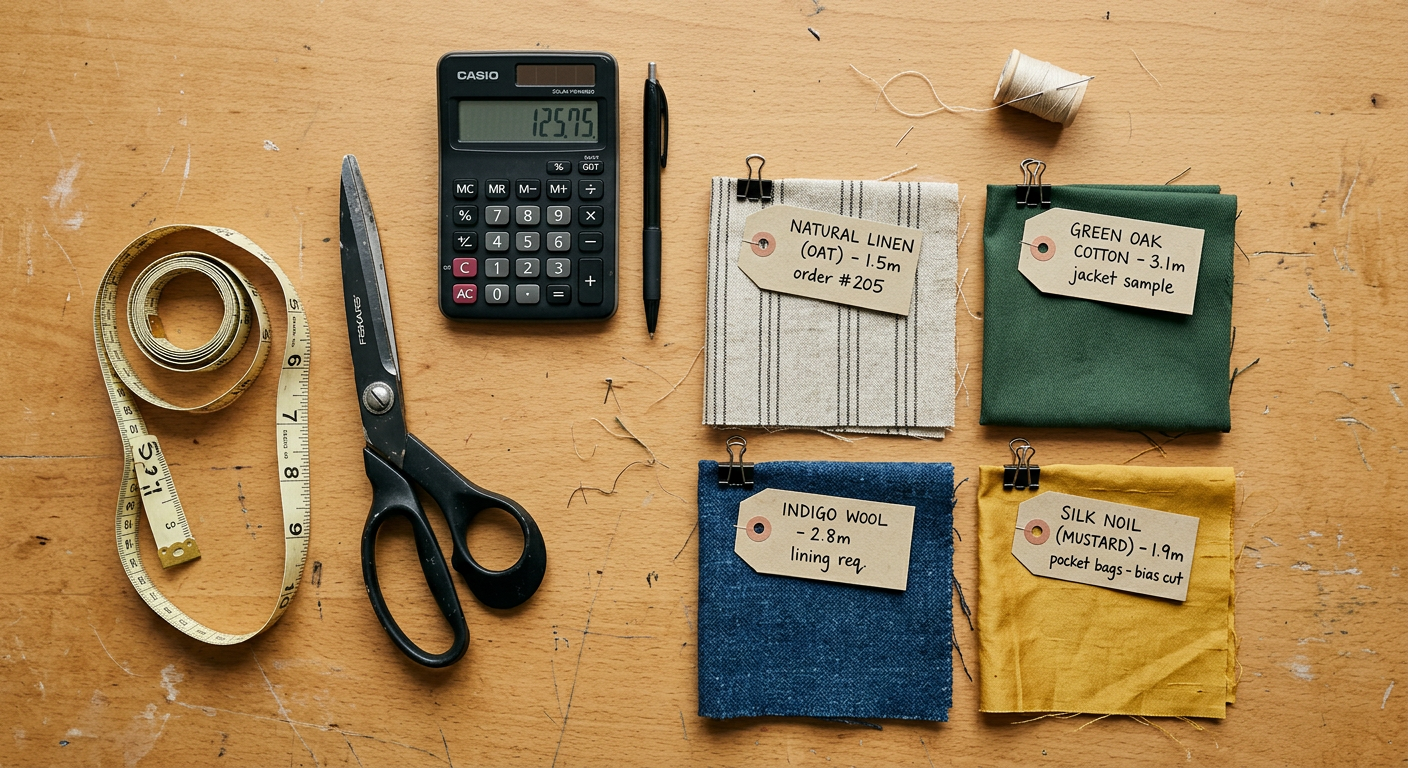
Before you place your next fabric order, run through this checklist. Print it, bookmark it, tattoo it on your forearm — whatever works.
- Calculated exact yardage needed (pattern layout × units + 10–15% waste buffer)
- Verified fabric composition, weight, width, and stretch from the product listing
- Ordered and evaluated swatches (color, drape, hand feel, wash test)
- Compared the per-garment cost (not just per-yard cost) across at least two suppliers
- Checked shipping timeline against your production calendar (with 2–3 week buffer)
- Read the supplier's return/refund policy
- Confirmed dye lot consistency if reordering a previously used fabric
- Budgeted for shipping, potential duties, and any minimum-order thresholds
Following this process won't make fabric sourcing glamorous — but it will make it predictable. And predictability is what separates brands that survive their first year from those that don't.
Start Sourcing Smarter, Not Harder
The fabric you choose is the foundation of every garment you sell. It determines how your clothes feel, how they hold up, and whether customers come back for more. In 2026, small fashion brands have more access to high-quality wholesale fabric than ever before — the challenge isn't finding fabric, it's choosing wisely.
Build a disciplined sourcing process. Test before you commit. Track what works. And partner with suppliers who understand that small brands need flexibility, transparency, and quality — not just low prices.
At Global Fabric Wholesale, we stock hundreds of fabrics by the yard across categories from mesh to wool, with detailed product specs and accessible order sizes built for brands at every stage. Browse our collections and order swatches to see the difference for yourself.




 Login with Google