


Linen vs Cotton: Which Fabric is Best for Hot Weather?

For hot weather, linen is the superior choice — its open weave and hollow flax fibers allow significantly more airflow than cotton, and it releases moisture faster so you stay cooler and drier. That said, cotton is softer from the start, more affordable, and easier to sew, making it the better pick for certain garments and budgets. Understanding the key differences between these two natural fabrics will help you choose exactly the right material for your next summer project.
How Linen and Cotton Handle Heat Differently
The core difference comes down to fiber structure. Linen is made from flax plant stalks, producing long, hollow fibers that create a naturally open weave. This structure allows heat to escape and air to circulate freely against the skin. Cotton fibers are shorter and rounder, resulting in a denser fabric that traps slightly more warmth — still breathable, but noticeably less so in high humidity or direct sun.
Linen also absorbs up to 20% of its own weight in moisture before it starts to feel damp, and it releases that moisture into the air quickly. Cotton absorbs well, too, but holds onto moisture longer, which can feel clammy on a hot day. For anyone spending long hours outdoors in summer heat, that drying speed difference is significant.
If you want to explore breathable fabrics beyond these two, there are other natural and blended options worth considering — but for pure hot-weather performance, linen and cotton remain the most practical and widely sewn choices.
Comfort and Feel: Softness, Drape, and Wearability
Cotton wins on immediate softness. Whether you're working with a lightweight lawn, a crisp poplin, or a jersey knit, cotton fabric feels gentle against skin from the first wear — an important factor for kidswear, underwear, or any garment worn directly against sensitive skin.
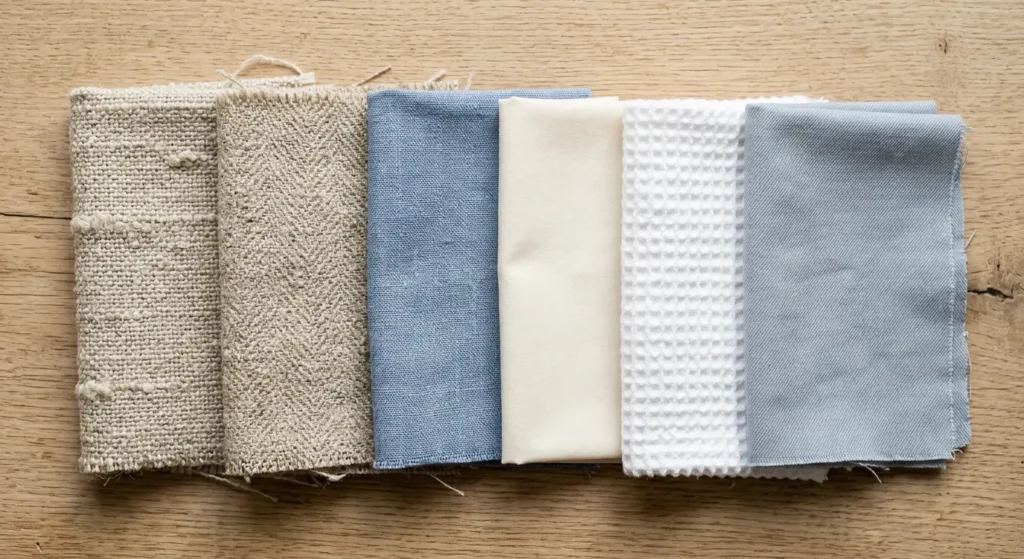
Linen starts stiffer and can feel slightly scratchy until it's been washed several times. However, it softens beautifully with use and washing, eventually developing a relaxed, lived-in drape that many sewers and wearers find preferable. Linen also has a natural texture and subtle sheen that gives finished garments an elevated, artisan look.
Drape and Garment Suitability
- Linen: Structured drape — ideal for wide-leg trousers, shirt dresses, blazers, and tailored summer separates.
- Cotton: Softer drape — better suited to T-shirts, gathered skirts, casual dresses, and children's clothing.
For instance, an independent designer sewing a capsule summer collection might choose linen fabric for tailored trousers and a relaxed shirt, then switch to a lightweight cotton for a casual tank top in the same range — getting the best of both fabrics in one cohesive collection.
Linen vs Cotton: Side-by-Side Comparison
Use this table to compare the two fabrics across the criteria that matter most for hot-weather sewing projects.
| Criteria | Linen | Cotton |
|---|---|---|
| Breathability | Excellent — open weave allows airflow | Very good — slightly denser weave |
| Moisture absorption | Absorbs up to 20% of its weight | Absorbs well, slower to release |
| Drying speed | Dries quickly | Dries more slowly |
| Softness | Stiff initially, softens with washing | Soft from the start |
| Wrinkle resistance | Wrinkles easily | Wrinkles moderately |
| Durability | Very durable, strengthens when wet | Durable, may weaken over time |
| Cost | Generally higher | Generally lower |
| Best use case | Dresses, trousers, shirts, home textiles | T-shirts, casual wear, kidswear, quilting |
Sewing with Linen vs Cotton: What to Expect
Both fabrics are beginner-friendly compared to slippery or stretchy materials, but they have different quirks on the machine.
Sewing with Linen
Linen frays readily, so finish all seams with a serger or zigzag stitch. Pre-wash before cutting — linen shrinks up to 10% on the first wash. Use a sharp needle (size 80/12 or 90/14) and a slightly longer stitch length (2.5–3mm) to avoid perforating the weave. For detailed guidance, our post on how to sew with linen fabric covers cutting, stitching, and finishing in full.
Sewing with Cotton
Cotton is forgiving and consistent under the needle. It presses crisply, holds shape well, and is easy to pin and cut. It's an excellent choice for beginners tackling their first summer garment. If you're deciding between cotton and other natural fibers, our comparison of cotton vs modal is worth reading for a fuller picture of your options.
One practical note: both fabrics benefit from pre-washing before you cut. This prevents post-construction shrinkage and ensures your finished garment holds its size through the season.
Which Should You Choose for Your Summer Project?
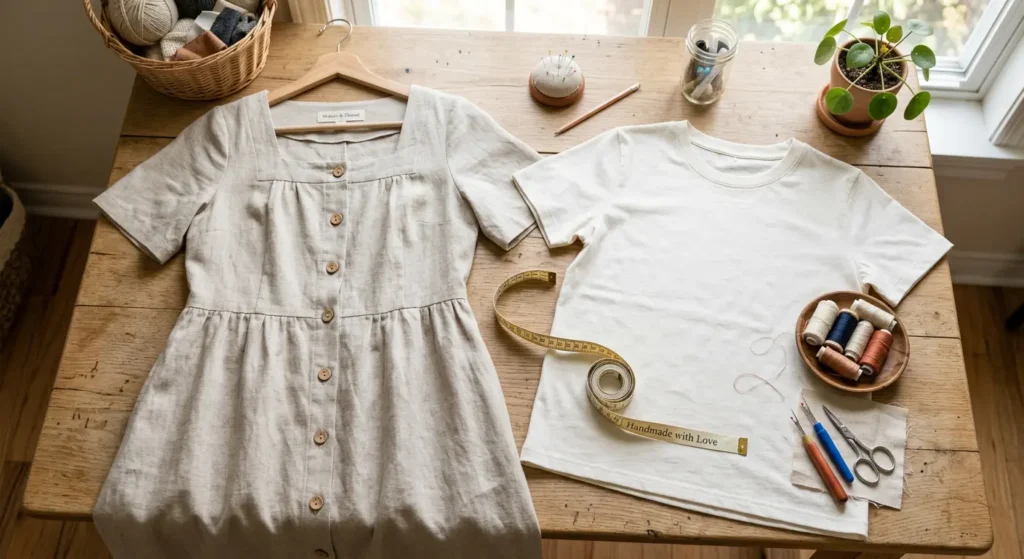
Choose linen when maximum breathability is the priority — structured garments like wide-leg trousers, button-down shirts, midi dresses, and beach cover-ups all perform beautifully in linen. It's also the better choice for home textiles like tablecloths and curtains, where airflow and a relaxed aesthetic matter. If you want inspiration specifically for dresses, our guide to the best linen fabric for summer dresses is a great starting point.
Choose cotton when softness, ease of sewing, and budget are the deciding factors — especially for kidswear, casual T-shirts, gathered skirts, and any garment worn close to sensitive skin. Cotton is also more widely available in prints and patterns, giving you more creative options at a lower price point.
If you're still weighing cotton against other popular fabrics, our breakdown of cotton vs polyester covers the performance trade-offs in detail. And if neither linen nor cotton feels quite right for your project, browse the full range of fabrics by the yard at Global Fabric Wholesale — with over 10,000 options, no minimums, and worldwide shipping, finding your perfect summer fabric has never been easier.




 Login with Google