


Fabric Weight Explained: How to Read GSM Like a Pro and Order the Right Material Every Time

GSM stands for grams per square meter, and it tells you exactly how much a one-meter-by-one-meter piece of fabric weighs — nothing more, nothing less. It is the single most reliable indicator of a fabric’s thickness, opacity, drape, and suitability for a given end use, and if you learn to read it properly, you will virtually eliminate the “this isn’t what I expected” moment that plagues bulk fabric orders. In this guide, we’ll decode the GSM scale from sheer chiffon at 30 GSM all the way up to heavy canvas at 400+ GSM, show you how GSM interacts with fiber type and weave, and give you a practical cheat sheet so you can spec the right material for every project — the first time.
What GSM Actually Measures (And What It Doesn't)
Here’s a misconception that costs buyers money: GSM does not measure thickness. It measures mass per unit area. A 200 GSM cotton jersey and a 200 GSM polyester satin weigh the same per square meter, but they feel completely different in hand, drape differently on the body, and serve different purposes. Why? Because fiber density, yarn construction, and weave structure all affect how that mass is distributed.
Think of it this way. Two suitcases can weigh 20 kg each, but one is packed with down jackets (lofty, thick) and the other with books (flat, dense). Same weight, totally different volume. GSM works the same way with fabric.
What GSM Does Tell You
- Relative heaviness within the same fabric family — a 160 GSM cotton jersey is noticeably lighter than a 220 GSM cotton jersey.
- Opacity — higher GSM generally means less see-through.
- Warmth potential — more mass usually traps more air, especially in knits and fleeces.
- Cost correlation — more grams means more raw material, which usually means a higher price per yard.
What GSM Does Not Tell You
- Fiber content (always check separately).
- Stretch and recovery.
- Surface texture or finish.
- Colorfastness or durability — those depend on dyeing and finishing processes.
Bottom line: GSM is your starting filter, not your only filter. But it’s the most important one.
How GSM is Measured — and Why Your Supplier's Number Might Be Off
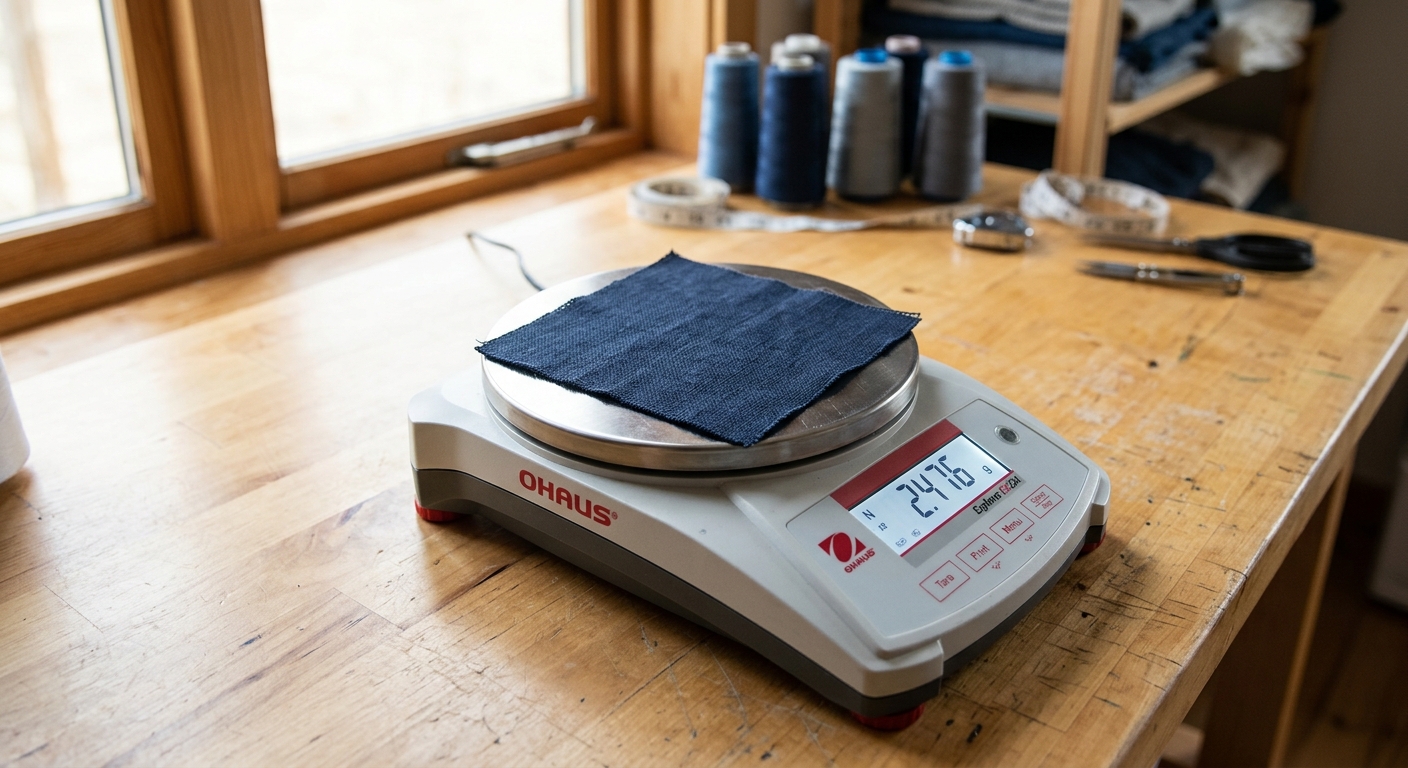
The standard method is straightforward: cut a precise 100 cm × 100 cm swatch, place it on a calibrated scale, and read the weight in grams. That number is the GSM. In practice, most labs use a circular sample cutter (often a 100 cm² die) and then multiply up, because cutting a perfect one-meter square every time is impractical.
Why Numbers Vary Between Suppliers
You request 180 GSM jersey from two different mills. One delivers 172 GSM, the other 188 GSM. Both call it “180 GSM.” What happened?
- Moisture content — cotton absorbs ambient humidity. A swatch measured in a humid Guangzhou warehouse will weigh more than the same swatch measured in a dry Arizona lab. The industry standard (ISO 3801) requires conditioning at 20°C and 65% relative humidity, but not every supplier follows that.
- Finishing treatments — softeners, anti-pilling agents, and water-repellent coatings add mass. If the supplier measures after finishing, the GSM reads higher.
- Tolerance bands — most mills quote ±5% tolerance. On a 200 GSM fabric, that’s 190–210 GSM. Acceptable? Usually. But if you’re right at the edge of a weight class, that swing matters.
Pro Tip: Always Request a Swatch
Before committing to a bulk order, get a physical swatch and weigh it yourself. A basic GSM cutter and a 0.01 g precision scale cost under $50 together. That tiny investment has saved countless small-brand owners from receiving fabric that’s too thin — or too heavy — for their production run.
The GSM Spectrum: A Practical Breakdown by Range
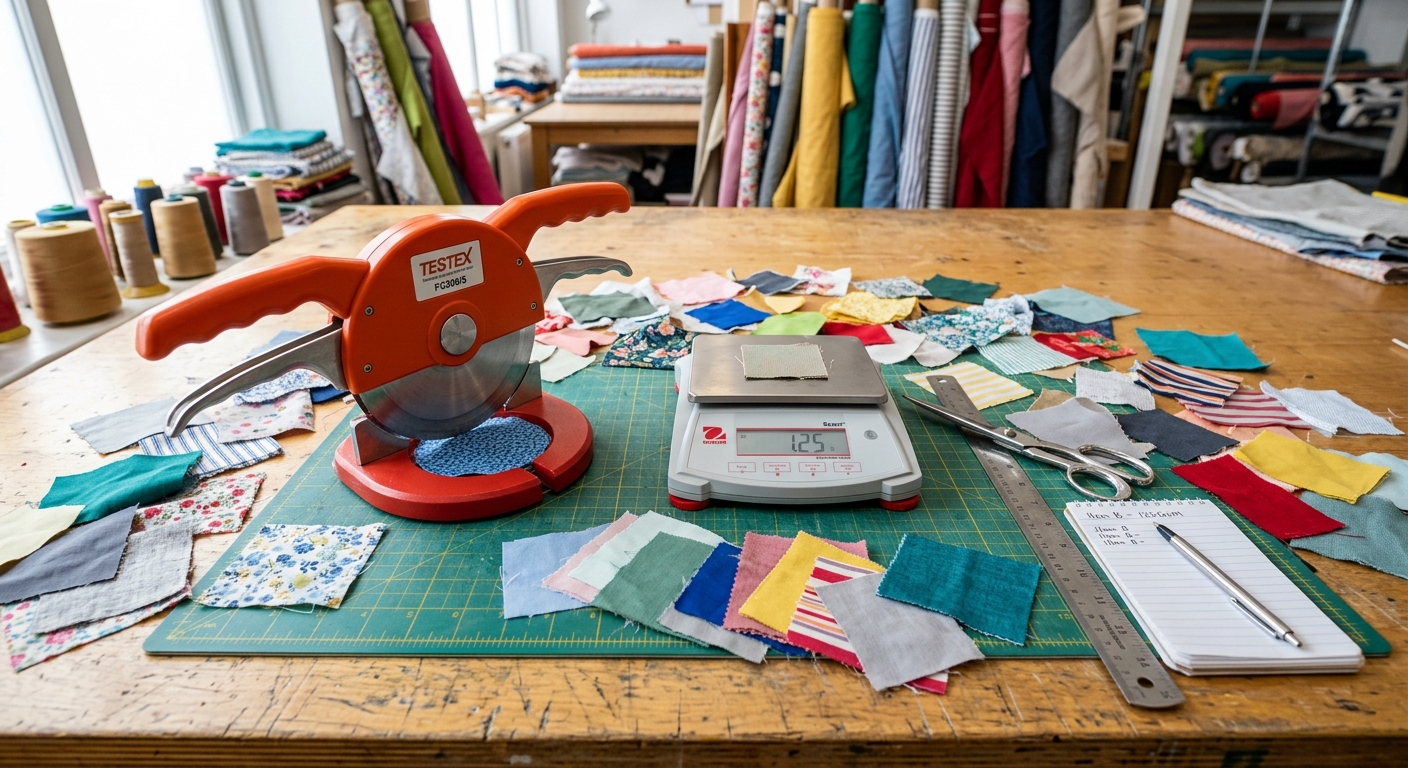
Forget memorizing a massive chart. Instead, burn these three ranges into your brain — they cover about 90% of ordering decisions.
Under 150 GSM — Lightweight
This is the territory of chiffon, voile, lawn, and lightweight linings. Fabrics here are sheer or semi-sheer, drape beautifully, and breathe well. They’re ideal for summer garments, evening wear, and layering pieces. The trade-off: they wrinkle easily, offer little warmth, and can be tricky to sew without puckering.
150–300 GSM — Midweight
The workhorse range. This is where you find most T-shirt jerseys (150–200 GSM), chambray shirting (around 130–180 GSM), ponte knits (250–300 GSM), and lighter French terry for hoodies (typically 240–280 GSM). If you’re launching a basics line — tees, casual dresses, light jackets — you’ll live in this range.
Over 300 GSM — Heavyweight
Canvas, heavy denim, polar fleece, and thick sweatshirt fleece all land here. These fabrics offer structure, warmth, and durability. They’re the go-to for outerwear, bags, upholstery, and cold-weather garments. Expect higher material costs and the need for industrial sewing equipment — a home machine will struggle above 350 GSM on multiple layers.
GSM by Application: What to Order for Common Products
Knowing the ranges is helpful. Knowing exactly what GSM to spec for your specific product is better. Here’s a practical reference.
T-Shirts
The sweet spot for a standard unisex tee is 160–200 GSM in cotton jersey. Below 150 GSM, the shirt feels disposable and shows the wearer’s skin through the fabric. Above 220 GSM, it starts to feel like a sweatshirt. Premium streetwear brands often target 200–220 GSM for that “substantial” hand feel. If you’re sourcing cotton tee fabric, our guide to the best cotton fabric for T-shirts digs deeper into fiber quality and knit structure.
Hoodies and Sweatshirts
French terry at 280–320 GSM is the industry standard for mid-season hoodies. For winter-weight, you’ll want brushed-back fleece in the 340–400 GSM range. Going above 400 GSM creates a very stiff garment — great for structured oversized silhouettes, but not for everyday comfort.
Summer Dresses and Blouses
Target 80–150 GSM. Rayon challis at 110 GSM drapes like a dream. Cotton lawn at 90 GSM is crisp and cool. Breathable fabrics in this range keep the wearer comfortable in warm climates.
Outerwear and Jackets
Shell fabrics for puffer jackets are often surprisingly light — 40–80 GSM nylon ripstop — because the insulation does the heavy lifting. But unlined wool coats? 350–500 GSM is typical.
Bags and Accessories
Canvas at 300–500 GSM. Anything lighter and the bag won’t hold its shape under load. Waxed cotton canvas at 400 GSM is a popular choice for heritage-style tote bags and backpacks.
Why the Same GSM Feels Different Across Fiber Types
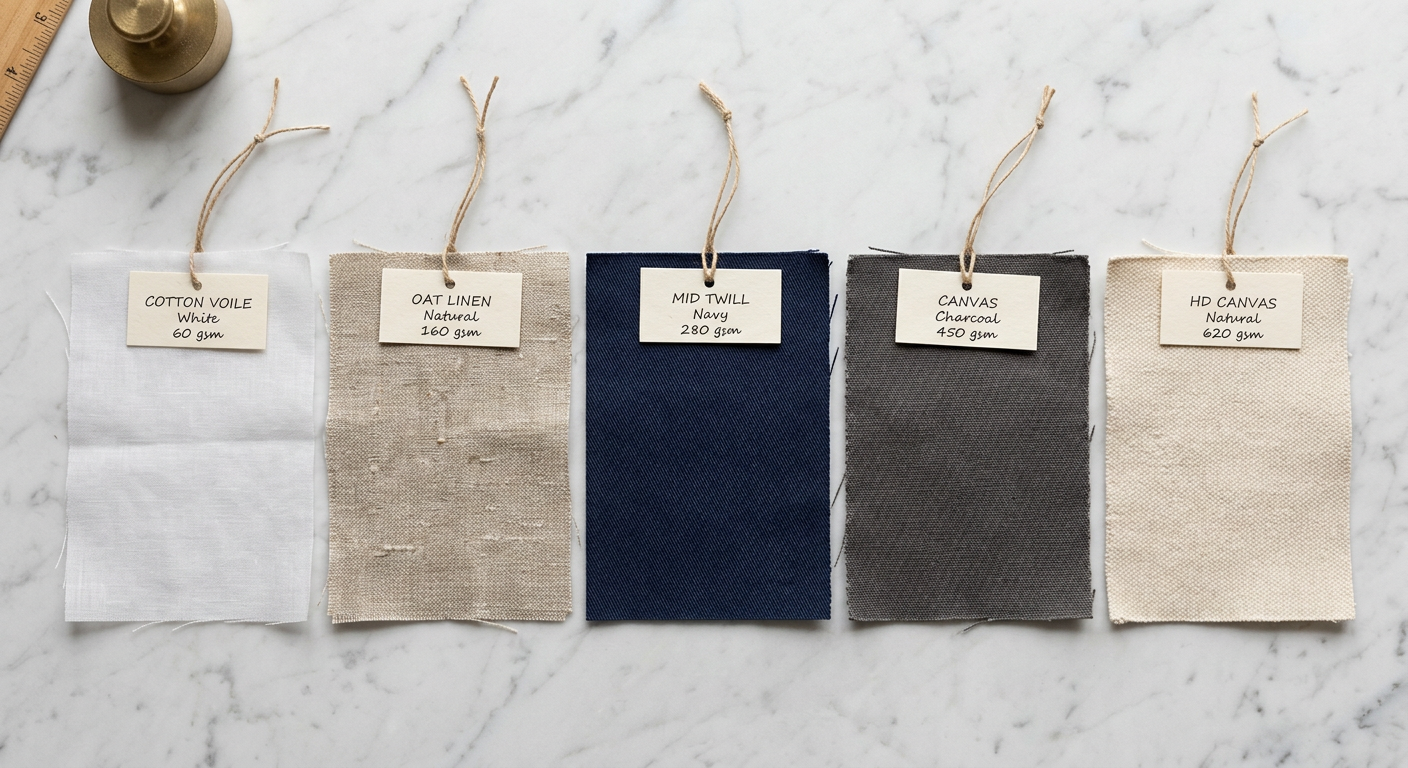
This is where intermediate buyers get tripped up. You order a 200 GSM polyester and a 200 GSM cotton, expecting them to feel similar. They don’t. Not even close.
Polyester fibers are inherently lighter per unit volume than cotton fibers. So to reach 200 GSM, a polyester fabric needs either a tighter weave, a thicker yarn, or more fabric layers — all of which change the hand feel. The result? A 200 GSM polyester often feels thicker and more “plasticky” than a 200 GSM cotton, which feels softer and more relaxed.
Real-World Example
A small activewear brand in Los Angeles ordered 180 GSM polyester interlock for performance tees, expecting a feel similar to their 180 GSM cotton jersey samples. The polyester arrived feeling significantly stiffer and less breathable against the skin. The GSM was correct — the problem was that they hadn’t accounted for fiber density differences. They ended up switching to a 150 GSM polyester-spandex blend, which gave them the lighter, stretchier hand feel they actually wanted — at a lower GSM number.
The lesson: always compare GSM within the same fiber family. A 180 GSM cotton is comparable to another 180 GSM cotton. But cross-fiber GSM comparisons are apples to oranges.
Blends Add Another Variable
A 65/35 polyester-cotton blend at 200 GSM will behave differently from a 50/50 blend at the same GSM. The higher the polyester content, the more “synthetic” the hand feels, the faster the moisture wicking, and the better the wrinkle resistance. GSM alone can’t capture any of that.
GSM vs Oz/yd²: Converting Between Metric and Imperial
If you work with U.S.-based suppliers or source denim, you’ll encounter fabric weight in ounces per square yard (oz/yd²). The conversion is simple:
1 oz/yd² = 33.906 GSM
So a 10 oz denim = roughly 339 GSM. A 5.5 oz shirting = about 186 GSM.
Quick Conversion Table
- 3 oz/yd² ≈ 102 GSM (lightweight shirting)
- 5 oz/yd² ≈ 170 GSM (standard tee weight)
- 7 oz/yd² ≈ 237 GSM (midweight twill)
- 10 oz/yd² ≈ 339 GSM (standard denim)
- 12 oz/yd² ≈ 407 GSM (heavy canvas)
- 14 oz/yd² ≈ 475 GSM (selvedge denim)
Denim Has Its Own Weird Convention
In the denim world, weight is sometimes quoted in ounces per linear yard, not square yard. This assumes a standard fabric width (usually 58–60 inches). A “12 oz denim” quoted per linear yard at 60 inches wide is actually about 7.2 oz/yd², or roughly 244 GSM. Always ask your supplier: “Is that per square yard or per linear yard?” Getting this wrong can mean ordering fabric that’s 40% lighter or heavier than you intended.
How GSM Affects Your Production Costs (Beyond Just Fabric Price)
Most buyers fixate on the per-yard price difference between a 160 GSM and a 200 GSM fabric. That’s only part of the story. GSM ripples through your entire production chain.
Shipping Weight
Fabric is typically shipped by weight, not by yardage. A 200 GSM fabric weighs 25% more than a 160 GSM fabric for the same number of yards. On a 5,000-yard order, that difference can add hundreds of dollars in freight — especially on international shipments where every kilogram counts.
Cutting and Sewing Time
Heavier fabrics are slower to cut (more resistance) and slower to sew (more needle drag, more thread tension adjustments). A CMT factory may quote a higher per-unit cost for garments made from 300+ GSM fabrics simply because throughput drops.
Yield Per Roll
A standard roll might be 50 yards regardless of GSM. But if you’re buying by weight (common in knit fabric sourcing), a heavier GSM means fewer yards per kilogram. Make sure you’re calculating your cost per garment based on yards consumed, not just price per kilo.
Real-World Scenario
A hoodie brand in Toronto switched from 320 GSM French terry to 280 GSM to reduce costs. The per-yard price dropped 12%, but they also saved 8% on shipping and their factory reported a 6% increase in sewing throughput. Total savings: closer to 20% per unit — far more than the fabric price alone suggested. The 280 GSM still felt substantial enough for their target market. Sometimes, a modest GSM reduction delivers outsized savings without sacrificing perceived quality.
Common GSM Mistakes That Lead to Bad Bulk Orders
After years of seeing wholesale fabric orders go sideways, certain patterns emerge. Here are the mistakes we see most often — and how to dodge them.
Mistake 1: Ignoring the Tolerance Range
You spec 180 GSM. The mill delivers 170 GSM, which is within their ±5% tolerance. But your customer expects a premium-weight tee, and 170 GSM feels noticeably thinner. The fix: if you need a minimum of 180 GSM, spec 190 GSM so the low end of the tolerance still meets your floor.
Mistake 2: Comparing GSM Across Different Fabric Types
We covered this above, but it bears repeating because it’s the single most common source of buyer disappointment. A 200 GSM satin is not the same as a 200 GSM fleece. Always request a swatch.
Mistake 3: Forgetting About Shrinkage
A fabric measured at 180 GSM before washing may test at 195–200 GSM after washing because the fabric contracts (same mass, smaller area = higher GSM). If your spec is based on the finished garment, you need the post-wash GSM, not the greige or pre-wash number. Ask your supplier what they’re quoting.
Mistake 4: Over-Specifying GSM for Aesthetic Reasons
Heavier doesn’t always mean better. A 250 GSM cotton tee might look impressive on a spec sheet, but it can feel stiff, trap heat, and cost significantly more to produce. Match the GSM to the end use, not to a perception of “premium.”
How to Communicate GSM Requirements to Your Supplier
Getting the right fabric starts with asking the right questions. Here’s a template you can adapt for any wholesale inquiry.
The Five-Point GSM Spec
- Target GSM: State your ideal number (e.g., 200 GSM).
- Acceptable range: State your floor and ceiling (e.g., 190–210 GSM).
- Measurement condition: Specify pre-wash or post-wash.
- Testing standard: Reference ISO 3801 or ASTM D3776 so both parties use the same method.
- Fiber content: Always pair GSM with fiber composition — “200 GSM, 100% combed cotton, 30s single jersey” is a complete spec. “200 GSM cotton” is not.
When you communicate this clearly, you dramatically reduce the chance of a mismatch. Good suppliers appreciate precise specs — it makes their job easier and builds trust for repeat orders.
Order the Right Weight, Every Time
GSM is your most powerful tool for ensuring the fabric you receive matches the fabric you envisioned. Master the three weight ranges (under 150, 150–300, over 300), always compare GSM within the same fiber type, account for tolerance and shrinkage, and communicate your specs with precision. Do those four things, and you’ll eliminate the vast majority of ordering surprises.
At Global Fabric Wholesale, every product listing includes the GSM alongside fiber content, width, and available colors — because we believe informed buyers make better decisions. Whether you’re sourcing lightweight silk by the yard or heavyweight fleece for winter production, you’ll find the specs you need to order with confidence. Browse our full range of fabric applications to find the right weight for your next project.



 Login with Google