
• Free shipping on orders over $199

Crepe Fabric
by the yard

Crepe fabric by the yard is defined by its fine, crinkled or pebbled surface created through high-twist yarns or special finishing. Ranging from 120gsm to 280gsm, crepe offers fluid movement, a soft matte look, and excellent wrinkle resistance. It can be made from polyester, viscose, silk, or blended fibers, providing makers with options ranging from budget-friendly everyday crepe to premium silk crepe de chine. Its graceful drape and textured surface make it suitable for refined apparel and flowing silhouettes.

  • Fabric Content/Material: Polyester, Viscose, Silk, Spandex Blends
  • Fabric Application: Dresses, Blouses, Wide-Leg Pants, Skirts, Scarves, Eveningwear, and Layered Outfits
  • Color: Black, Ivory, Blush, Navy, Emerald, Wine, Taupe, Pastels, and Printed Variations

Shop By:
Sort By:
Filter :

What Makes Crepe Fabric So Versatile

Signature Pebbled Texture and Fluid Drape

Crepe fabric is instantly recognizable by its subtly crinkled, pebbled surface — a result of highly twisted yarns or specialized weaving techniques that create gentle texture without bulk. This distinctive finish gives garments a refined, polished look that sits beautifully against the body. Whether you're working with lightweight crepe de chine or a heavier suiting weight, the fabric's natural fluid drape makes it a go-to choice for evening dress designs and tailored blouses alike. Unlike flat-woven alternatives, crepe catches light in a way that adds quiet sophistication to any finished piece.

Fiber Options From Polyester to Silk Blends

Crepe is produced in a wide range of fiber compositions, each offering a different hand feel and performance profile. Polyester fabric crepes are the most affordable and wrinkle-resistant option, making them ideal for high-volume production and everyday wearables. Viscose fabric crepes offer a softer, more breathable drape that closely mimics the luxury of silk at a fraction of the cost. For structured suiting or wide-leg trousers, heavier polyester-viscose blends in the 200–280gsm range provide the weight needed to hold a clean silhouette.

Weight Range That Covers Every Garment Type

Our crepe fabric selection spans 120gsm to 280gsm, giving designers and manufacturers the flexibility to source the right weight for any application. Lighter weights in the 120–160gsm range are ideal for floaty blouses, draped tops, and chiffon-adjacent layering pieces where movement is paramount. Mid-weight crepes around 180–220gsm are the workhorses of the range, suited to structured dresses, wide-leg pants, and bridal dress fabric applications where both drape and body are required. Heavier crepes above 220gsm bring the substance needed for tailored jackets and formal eveningwear.
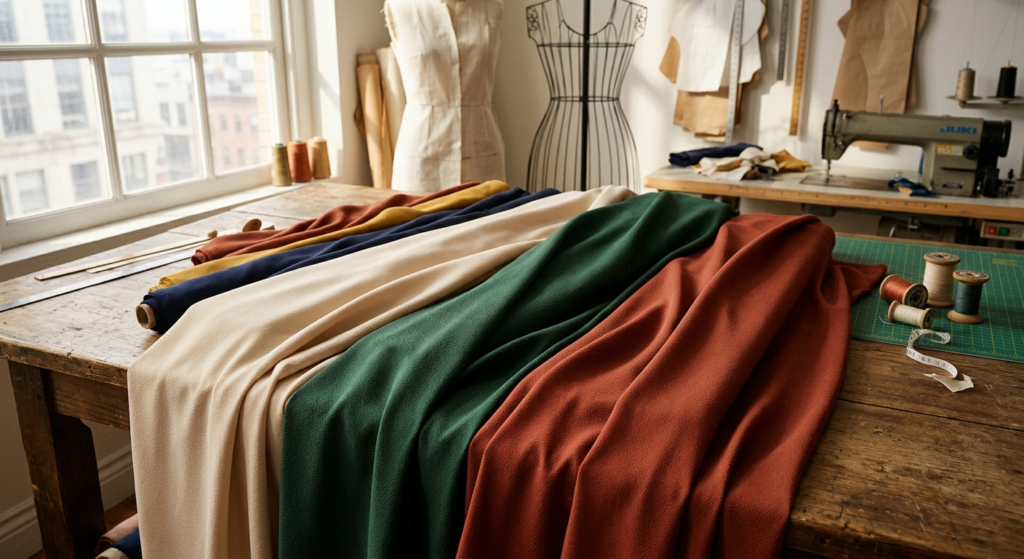
Cascading bolts of terracotta and green crepe textiles with pebbled textures in a sunlit fashion atelier.

Premium Crepe Fabric With Consistent Quality at Wholesale

Crepe fabric has been a cornerstone of apparel manufacturing for decades, and it's easy to see why — the combination of wrinkle resistance, elegant drape, and versatile weight range makes it one of the most reliable choices across a huge spectrum of garments. At Global Fabric Wholesale, we stock crepe in an extensive palette of colors and fiber compositions, from budget-friendly polyester fabric crepes to richer viscose and silk-blend options. Each roll is quality-checked for consistent weight, color, and hand feel so that what you receive matches your expectations whether you're ordering two yards or two hundred. Our per-yard pricing scales with volume, making it straightforward to manage material costs across a full production run.

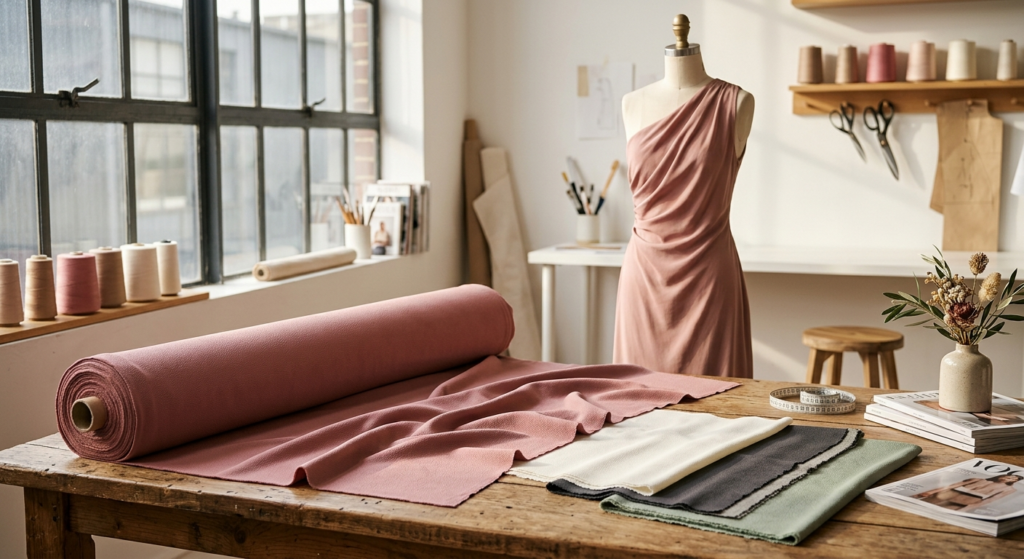
Dusty rose crepe draped over a wooden table with a silk dress on a mannequin in sunlight.

Crepe by the Yard: Endless Garment Applications Await

The appeal of crepe lies in how naturally it adapts to different garment categories. Lightweight crepe de chine is a perennial favorite for blouses, camisoles, and draped midi dresses where a soft, almost liquid fall is the goal. Step up to a mid-weight crepe and you have the ideal material for wide-leg trousers, wrap dresses, and tailored separates — the kind of pieces that look polished in the boardroom and elegant at dinner. For special occasions, heavier crepe provides the body and subtle sheen needed for evening dress construction, and it pairs beautifully with embellishments like beaded fabric trims or lace overlays.

Beyond traditional dressmaking, crepe is increasingly used in costume design, formal suiting, and even structured accessories. Its natural wrinkle resistance means finished garments travel well and require minimal pressing — a practical advantage for both consumers and commercial buyers. If you're exploring complementary fabrics for a collection, consider how crepe coordinates with chiffon fabric for layered looks, or how a crepe base fabric pairs with bridal dress fabric elements for wedding and formalwear lines. Browse our full selection below and filter by weight, fiber, and color to find exactly what your next project demands.

Frequently Asked Questions

What is the difference between crepe and chiffon fabric?
Crepe and chiffon are both lightweight, drapey fabrics, but they differ significantly in texture and structure. Chiffon has a smooth, sheer, and slightly rough hand feel due to alternating S- and Z-twist yarns, while crepe has a more pronounced pebbled or matte surface created by highly twisted fibers or a specific weave structure. Crepe is generally more opaque and has more body, making it better suited for structured garments like wide-leg pants and tailored dresses. Chiffon tends to be the preferred choice for sheer overlays and delicate blouses.
Is crepe fabric stretchy?
Most woven crepe fabrics have minimal stretch — typically only a slight natural give due to their twisted yarn construction rather than any elastane content. If you need a crepe with more flexibility, look for crepe blends that include a small percentage of spandex or elastane, which adds comfortable two- or four-way stretch without sacrificing the characteristic pebbled texture. Pure polyester or viscose crepes are best treated as non-stretch fabrics when cutting and fitting patterns.
What GSM of crepe fabric should I use for dresses versus pants?
For flowy wrap dresses and draped blouses, a lighter crepe in the 120–160gsm range delivers the fluid movement you want without adding unnecessary weight. For structured dresses with defined seams or wide-leg trousers that need to hold their shape, aim for a mid-weight crepe between 180–220gsm. Heavier crepes above 220gsm are best reserved for formal eveningwear, tailored jackets, or any garment where a more substantial, luxurious hand is desired.
How do I sew crepe fabric without it slipping?
Crepe's smooth surface can shift during cutting and sewing, so a few preparation steps make a big difference. Use sharp fabric scissors or a rotary cutter, and pin generously or use pattern weights to keep layers stable. Placing tissue paper or a stabilizer underneath the fabric while cutting helps prevent slipping on the cutting table. When sewing, a fine needle (size 70/10 or 75/11) and a slightly shorter stitch length will give you cleaner seams with less puckering on lighter-weight crepes.
Can crepe fabric be used for wholesale or bulk garment production?
Absolutely — crepe is one of the most commercially popular fabrics in the apparel industry, and our wholesale pricing is structured to support production at scale. Polyester crepe in particular offers excellent consistency across bulk rolls, with strong colorfastness and low shrinkage rates that simplify quality control in a manufacturing environment. We supply crepe fabric by the yard with minimum order quantities designed to suit both small independent designers and large-scale garment manufacturers.