-

Free Samples!



Swimwear Fabric Explained: Chlorine Resistance, Four-Way Stretch, and Lining Choices for Bulk Buyers

Table of Contents
Buying swimwear fabric is one coupled decision, not three: pick a fibre and knit that survive chlorine (polyester or PBT outlasts nylon, and chlorine-resistant elastane grades outlast standard ones), confirm four-way stretch by asking for elongation, growth and recovery numbers rather than the marketing phrase, and specify a lining that stretches at least as much as the shell and passes a wet-opacity test on the finished pair. Get the fibre wrong and the suit sags by mid-season; get the lining wrong and it fails even faster, out of sight. What follows is that decision chain in the order a buyer actually faces it, plus the five checks worth running before you commit yards.
Key takeaways
- Fibre sets your chlorine clock: nylon is the softest and the fastest to degrade, polyester holds strength longest, and PBT sits between them with a lower stretch ceiling than elastane.
- Four-way stretch comes from knit architecture, so ask for elongation at a stated load, growth and recovery after a stated number of cycles, plus the test method, rather than accepting the phrase itself.
- More elastane is a cost and durability cost, not a quality badge; a well-built warp knit reaches the recovery you need at a lower elastane percentage than a circular knit.
- The lining must stretch at least as much as the shell in both directions, and it is usually the component that fails first because it is thin, elastane-dependent and hidden from inspection.
- Approve shell and lining together, wet, on a sewn mock-up, and keep the tested swatch plus the test report as the standard for every repeat order.
Chlorine Kills Swimwear in a Predictable Order: Fibre, Then Elastane, Then Seams
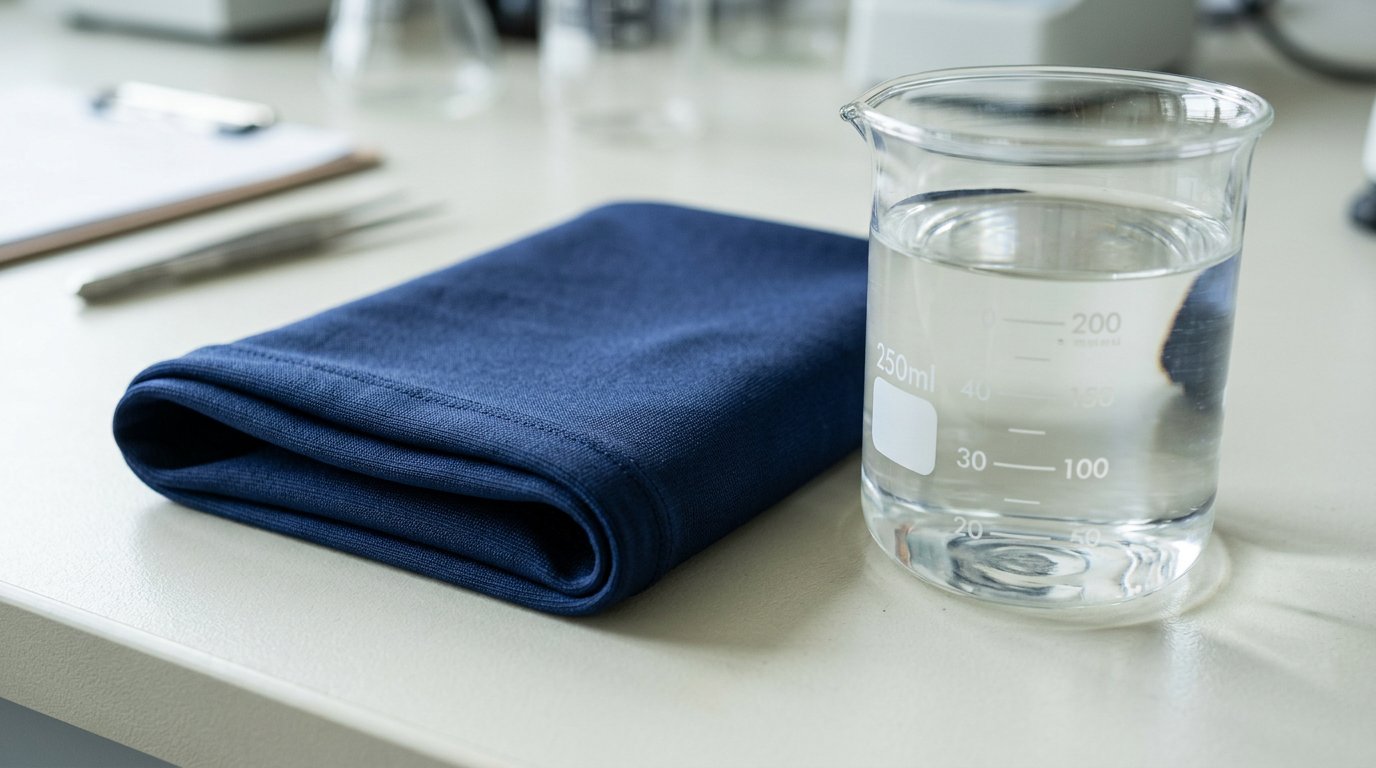
Chlorine is an oxidiser. It attacks polymer chains, and each of the three common swim fibres loses something different when it does. Polyamide (nylon) loses tensile strength, and the first visible evidence is usually greying or yellowing rather than a tear. Elastane loses elastic recovery and goes limp. Polyester holds its strength longest, which is why it dominates training, school and frequent-pool programmes.
That order explains the complaint you will actually hear from the customer. The first symptom is rarely a hole. It is bagging: a seat that sags, a strap that has crept, a bust that no longer holds anything. The elastane has failed at molecular level long before the knit structure gives way, so a suit can look intact and still be finished.
The nylon trade-off is real
Nylon earns its place. Softer hand, better drape, deeper and brighter dyeability, and a smoothness that reads as expensive on the hanger. It is also the fibre most quickly degraded by pool water. That is a legitimate trade for a resort range sold to people who swim a few times a holiday, and a bad one for a swim school.
Polyester lasts longer in chlorine and pays for it elsewhere: stiffer, drier in the hand, harder to dye to the bright saturated shades buyers photograph on holiday. There is a reason cheap swim ranges cluster in black, navy and prints. The fibre is doing the choosing.
Not all water is the same water
Salt water, hot tubs and sunscreen attack differently from a cool indoor pool. Heat plus chlorine plus a shifting pH accelerates elastane breakdown, so a hot tub is harder on a suit than a cool lap pool by a margin that has little to do with how long anyone stays in the water. Sunscreen and body oils add their own staining and degradation route, and that route never shows up in a chlorine test.
PBT (polybutylene terephthalate) is the middle path. Its stretch and recovery come from the fibre itself rather than from a wrapped elastane, so chlorine resistance is good and recovery is honest, but the stretch ceiling is lower than elastane. It suits some garments and not others, and a supplier who quotes it as a universal upgrade has not understood the question.
Chlorine-resistant elastane needs evidence
Chlorine-resistant elastane exists as modified polyurethane chemistry sold under various trade names. Ask for the specific grade and the test data behind the claim, because chlorine resistant is not a regulated term and any mill can print it on a spec sheet. Browse fabric by material to see how the fibre families sit alongside each other before you shortlist.
Recycled nylon and recycled polyester do not change the chemistry. The polymer is identical, so a recycled story is not a durability answer.
The practical rule: resort and holiday wear with low pool exposure can defend nylon plus standard elastane on hand-feel grounds. Training, frequent-pool and school programmes should default to polyester or PBT with a chlorine-resistant elastane grade.
Four-Way Stretch Is a Knit Structure Claim, Not a Fibre Claim
Two-way versus four-way is decided by knit architecture before it is decided by elastane content, and that single fact resolves most of the confusion in a fabric meeting. Weft and circular knits stretch mainly across the course direction. A warp-knit tricot stretches in both directions because its loops run diagonally through the structure rather than across it.
Why tricot became the swimwear structure
Warp-knit tricot is thin, dense, high in recovery, gives good opacity per gram and has a smooth surface that resists snagging on poolside concrete. Circular single jersey is cheaper and softer, but it grows more, curls at the cut edge and needs a higher elastane load to reach the same recovery. That extra elastane quietly raises both your cost per yard and the share of the roll that chlorine can attack.
Take a buyer who compares two fabrics at 20% elastane, one tricot and one circular knit, and chooses the cheaper one because the stretch figures match on the spec sheet. The spec sheet is telling the truth and still leading them wrong: stretch is matched, recovery under a day of wear is not, and the sagging seat turns up inside a normal wear cycle while the numbers still read the same.
The numbers worth asking for
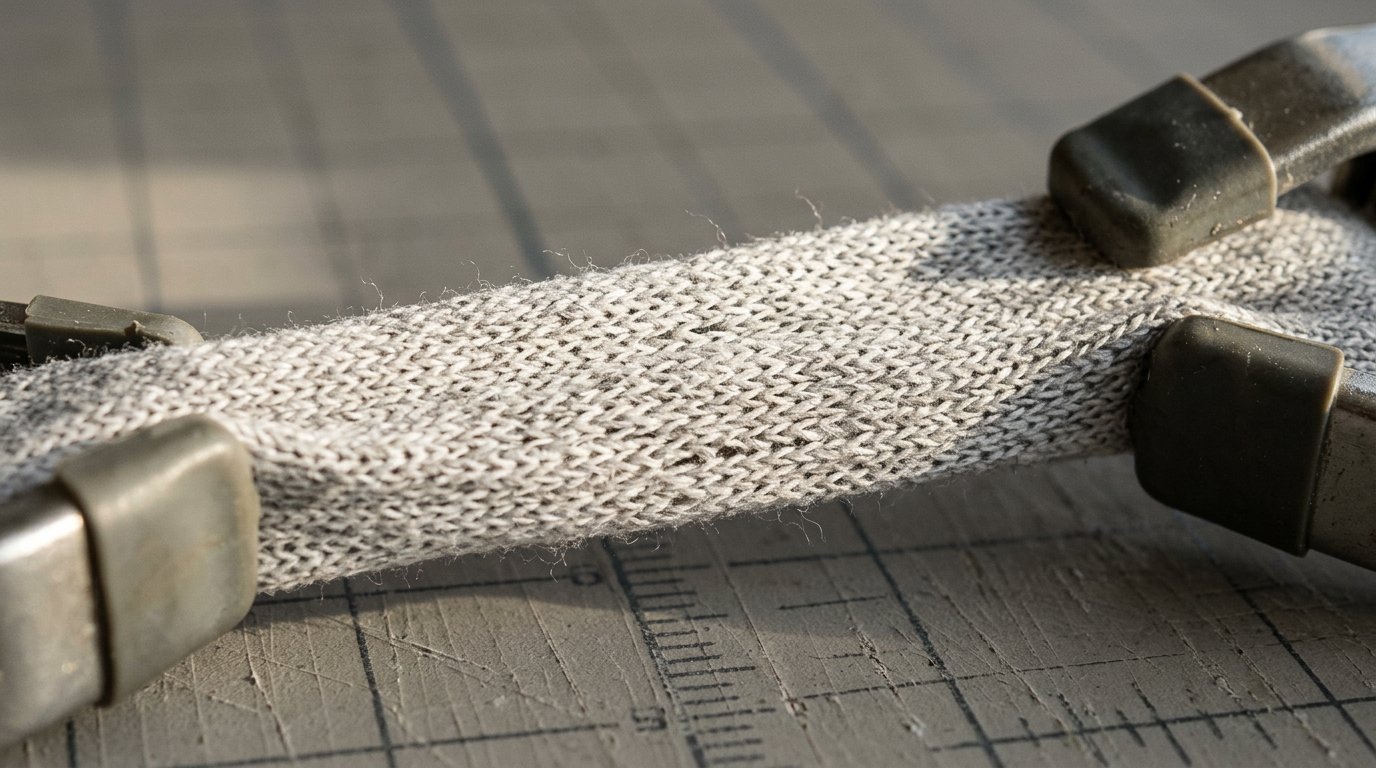
Elongation alone tells you nothing useful. Ask for elongation percentage at a stated load, growth percentage and recovery percentage after a stated number of stretch cycles, plus the method used to derive all three. A mill that can answer in those terms is a mill that tests. One that replies with a percentage and no method is selling a marketing phrase.
The swatch-room creep test
Cut a measured square, mark a fixed gauge length, stretch it to its comfortable limit, hold, release, and measure the return after a minute. Repeat many times and watch whether the number drifts. That drift is creep, and creep is exactly what your customer experiences as a saggy seat, not as a torn seam.
Two more things get missed. Directional cutting still applies on four-way goods, because there is a direction of maximum stretch and pieces cut at inconsistent orientations recover differently and twist after the first wash. And power is not the same as elongation: two fabrics can quote identical stretch and feel completely different because modulus differs. A compression training suit and a resort bikini top want opposite ends of that scale.
Add-on properties such as anti-UV, cool touch and jacquard effects come from structure and finish, not fibre, so they need re-testing after chlorine exposure rather than sign-off on a dry lab swatch. A useful reference point is the 160gsm (5.64 oz) 77% nylon 23% spandex tricot jacquard with anti-UV, four-way stretch and cool touch properties described in a customer review on the site. Those four claims sit on one base cloth, and each of them has to survive the pool independently.
Elastane Percentage, Heat Setting, and the Recovery Number Nobody Asks For
Elastane is the most expensive component in a swim fabric, so the percentage drives your price per yard more than almost any other variable. It also sets how much chlorine-vulnerable polymer is sitting in the roll. Spandex, Lycra and elastane are three names for the same fibre, and none of them is a quality grade.
A higher elastane fabric has more to lose. When the elastane degrades, there is simply more of it degrading, which is why high-elastane fabrics can sag faster in a pool than leaner constructions that were built properly. More elastane is a cost and durability decision before it is a performance badge.
Ask how little, not how much
Reframe the question from how much elastane to how little elastane plus which knit gets me the recovery I need. A well-built warp knit reaches good recovery at a lower elastane content than a circular knit, because the structure is doing part of the work. That is where the money is saved without giving up shape retention.
Heat setting rarely appears in a quote
Swim fabrics are usually thermally pre-set by the mill to stabilise the elastane and lock width and hand. Ask whether the roll is pre-set. Unset fabric creeps in storage, moves on the cutting table and relaxes in the first wash, and every one of those failures lands on your production floor rather than the mill's.
Three numbers buyers confuse
- Growth: permanent deformation left after stretching. Maps to bagging.
- Recovery: elastic return to the original dimension. Maps to support and shape.
- Shrinkage: dimensional change on washing. Maps to hem twist and length loss.
Each one predicts a different complaint, so a single stretch percentage cannot stand in for all three.
Elastane life is consumed by heat, and that includes tumble drying, hot washes, hot tubs and ironing. You can specify and test for the fabric's half of that equation. The customer's laundry decides the rest, which is why care labelling belongs in the spec conversation from the first sample and not in the packer's inbox three weeks before delivery.
Weight and Opacity: Choosing GSM for the Suit You Are Actually Selling
Weight does four jobs at once: opacity, support and compression, seam bulk, and dry time. Push one up and another moves, so there is no universally correct number. Anyone who quotes you a single ideal GSM for swimwear is answering a different question than the one you asked.
A heavier shell buys opacity and lets you skip or lighten the lining. A lighter shell usually needs a lining or a double layer, and that cut-and-sew cost frequently exceeds the per-yard saving that made the lighter fabric look attractive in the first place. Do that arithmetic before the counter-sample meeting, not after.
Wet opacity is the test almost nobody runs
Stretch the fabric over a form or your hand, soak it, and look at it over a skin tone and over a contrasting colour, in the light your customer will actually be in. Then do it again on a sewn sample with the lining in place. Dry-swatch approval is precisely how white and pale swim gets shipped and then returned, and the return reason will read as fit even when the cause was a wet shoulder seam you could have seen in ten minutes. Light colours and pastels carry nearly all of this risk.
Weight follows intent
Competition and training suits want compression, low drag and shape retention under load. Resort and fashion swim wants drape, hand-feel and print clarity, and will accept faster degradation in exchange. Specifying a resort weight for a training programme gets you a suit that photographs badly and performs worse; the reverse gets you a stiff bikini nobody wants to wear on holiday.
The sewing floor sees weight first
Heavier, denser knits react badly to the wrong needle and stitch combination: needle damage, grin-through at seams, slipped stitches. The weight needs to reach production before the first sample is sewn, because a specification that only works at the sample room's slower speed is not a specification.
Lining Choices: Opacity, Stretch Match, and What Fails First
A swim lining has three jobs, in priority order: opacity in the wet state, structure and support where the garment needs it, and next-to-skin comfort at the gusset, waist and underband. Most lining problems trace back to a buyer optimising for the third and forgetting the first two.
The stretch-match rule
The lining must stretch at least as much as the shell in both directions. If it does not, the shell bags around the lining, seams pull, and the hem ripples. Measure both rather than assuming the lining is stretchier because it is thinner. Thinner usually means less structure, not more stretch, and that assumption is how a matched pair ends up mismatched.
The main options and where each belongs
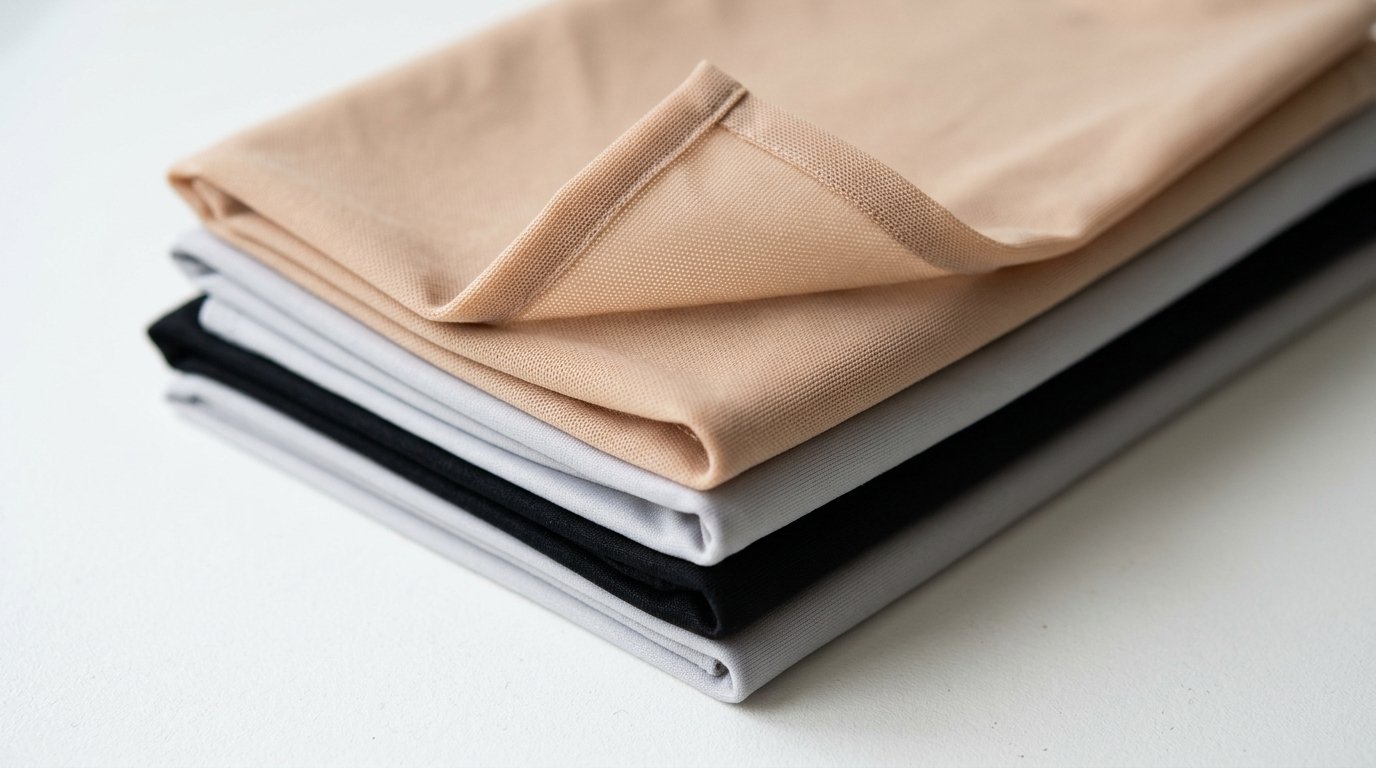
- Warp-knit nylon and spandex lining: thin, high stretch, soft handed. The default for body panels.
- Polyester mesh: cheaper and more chlorine-tolerant, but rougher. Common in gussets and power zones, where it will not sit against delicate skin for long.
- Power mesh: control panels and bust support, where compression is the entire point rather than a side effect.
- Self-fabric lining: tonal pieces and print-matched sets, where continuity of colour matters more than weight saving.
The guide to lining fabrics and where each type belongs covers the wider family; swim is the case where elastane behaviour matters more than drape.
Why the lining usually dies first
The lining is thin, heavily elastane-dependent and hidden from inspection. Nobody notices it failing until the shell starts to look baggy from the inside out, and by then the whole garment is being blamed. A lining that has gone limp will drag a perfectly good shell out of shape, so the cheapest component in the suit decides its reputation.
Shade, bleed and the sewn mock-up
A dark lining under a pale shell makes the shell read grey or muddy, especially when wet. Shell and lining from different dye lots read as two different garments. Approve them together, wet, on a sewn mock-up, not separately on a bench under office lighting.
Weight pairing matters as much as colour pairing. A very thin lining under a heavy shell makes a structured suit feel flimsy and cheap, because the hand the customer feels is a composite. The gusset deserves its own decision too: it sits closest to skin for the longest and most chlorine-exposed hours, so it needs its own colour-fastness and skin-contact thinking rather than whatever was left on the roll.
And sometimes the answer is no lining at all. Bonded double-layer constructions, or shells that already clear your wet-opacity target, do not need one. An unnecessary lining adds cost, adds seam bulk and slows drying, which is a real customer complaint in a humid hotel room.
The Pre-Order Test Protocol: Five Checks That Predict Field Failure
Every test in this protocol exists to predict one specific complaint. Run them in this order, on shell and lining as an assembled pair, and you will catch most of what returns are made of before the bulk order leaves the mill.
1. Chlorine soak predicts sag
Use chlorinated water at a stated concentration, run repeated cycles with drying in between, and measure length and width before and after each cycle. Keep an identical control swatch in plain water throughout. Without the control you cannot separate chlorine damage from the plain-water and drying effects, and you will end up blaming the fabric for something your own wash cycle did.
2. Stretch-and-recovery cycling predicts bagging
Cycle the swatch to a stated elongation repeatedly, then measure growth and recovery against the original dimensions. This is the test that catches a lean, cheap knit that quotes impressive stretch and refuses to come back.
3. Wet opacity predicts see-through returns
Wet the sewn pair, view it over skin tone and over a contrast layer, and photograph it in daylight. If the photo shows a shadow of what is underneath, so will a changing room in Portugal.
4. Colour fastness to chlorinated water and to sunscreen predicts fading and staining
Colour fastness to chlorinated pool water is tested under AATCC 162 in the US and ISO 105-E03 elsewhere. Perspiration fastness has its own methods, ISO 105-E04 among them. Sunscreen staining and oil-driven elastane degradation are the complaints that never appear in a chlorine test, so ask specifically for a sunscreen fastness protocol and the method behind it.
5. Seam strength and burst predict strap and side-seam blowouts
Test the seam, not just the fabric, because a strong knit on a weak stitch is a garment that fails at the point of highest load. If the seam is the weak link, the fix is in production and it needs to be found at sample stage.
Name the standards, and ask for the method
Knit stretch and recovery have published methods of their own, and low-power stretch knits are covered by named standards such as ASTM D2594. Light fastness belongs in the protocol for resort and beachwear, where UV exposure combined with chlorine is a different stress from an indoor pool. Ask for the method rather than a pass or fail, because a pass with no method behind it is a sentence, not a result.
A usable mill test report contains the standard, the method, the specimen direction, the result and the date. Anything less is marketing. Test the pair rather than the rolls, since pucker, bleed and relative shrinkage only appear once shell and lining are sewn together and washed.
Commercial Traps: Dye Lots, Shade Matching, and Yield on Stretch Goods
Swim orders rarely lose money on fabric that failed inspection. They lose it after the fabric passed, in the gap between what the roll is and what the purchase order assumed. These are the four places that gap opens.
Two suppliers, two dye lots
Order shell and lining together, and from the same dye run wherever possible. Two suppliers means two dye lots, and the mismatch only becomes visible once the garment is assembled and wet, at which point every unit is already cut. Different shrinkage between the two shows up as pucker and a twisted hem after the first wash, which is why the pair gets washed together in testing rather than separately.
Yield on four-way stretch is optimistic by default
Stretchy fabric moves and relaxes at the cutting table, so a marker calculated from flat goods will under-order. Cut a test marker, measure actual consumption, then commit the full quantity. On a large programme the gap between theoretical and real yield is the difference between a clean margin and a rushed top-up order in a shade that no longer exists.
Swim colour ranges are narrower than apparel ranges
The catalogue reflects this. The Apparel application category carries 4123 fabrics across 915 colours, while the Beachwear application category carries 294 fabrics across 206 colours. That is plenty of choice and far less redundancy per base cloth, so a colour story chosen late runs straight into the wall of what actually exists. Check colour availability per fabric before design signs off, and read the colour direction for upcoming collections alongside what the base cloths can physically deliver.
The cheap-fabric comparison is usually wrong
A suit that sags after one season produces returns, one-star reviews and no reorder. Those cost more than the per-yard difference that made the cheaper fabric attractive. The number that matters is cost per month in market, not cost per yard at the dock.
Two more things to lock into the purchase order. Small multi-colour programmes need two MOQ numbers, one per fabric and one per colour, plus a clear answer on whether shades can be consolidated across base cloths. And repeat orders need protection: an elastane-heavy fabric that passed last season may arrive as a different lot this season, so keep a retained sample, the original spec and the test report. At reorder, check the incoming lot against the retained sample for hand, shade and stretch, quote the spec values that cannot move, and re-run the same test so the comparison is like for like.
Build the Swatch Shortlist Before You Build the PO
The order of decisions matters more than the speed of them, because changing a later decision forces you back up the chain. Work in this sequence: chlorine exposure and fibre first, then knit structure and recovery, then weight and wet opacity, then lining, then testing, then commercial terms. Skip to lining before you have settled the fibre and you will re-specify the lining twice.
The one-page spec to send before you request price
- Fibre blend, with tolerances
- Knit type (warp-knit tricot, circular knit, jacquard)
- Weight in gsm, with a tolerance band
- Elongation, growth and recovery targets, each with the test method
- The chlorine resistance claim and the elastane grade behind it
- Lining construction, weight and stretch match to the shell
- Colour fastness targets, including chlorinated water, perspiration and light
- Usable width and roll length
- MOQ per fabric and per colour
Send it before the price request, not after. Suppliers price what they are asked for, and a vague enquiry gets a vague quote that is cheap for reasons nobody can later trace.
Then order swatches, not samples
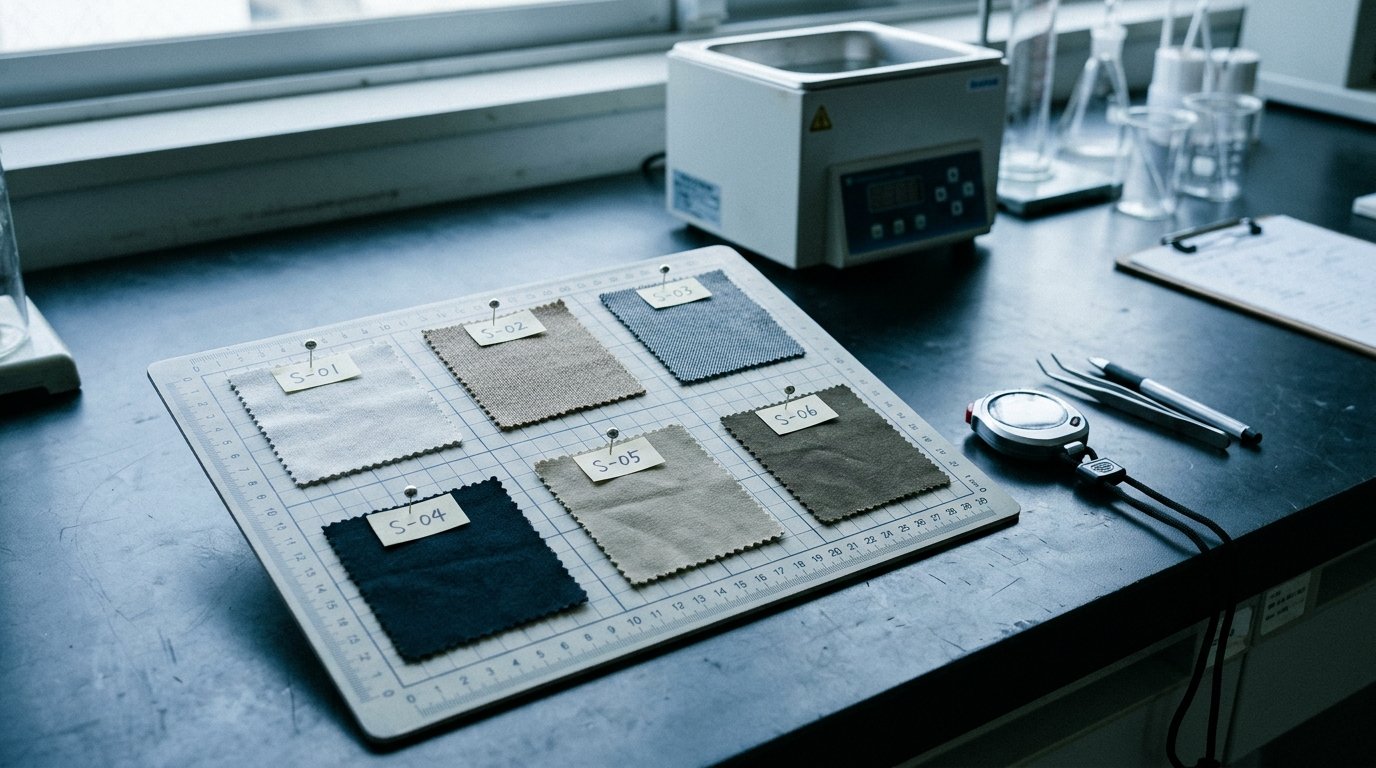
Order shell and lining swatches together, run the wet-opacity check on the pair, wash the sewn mock-up, and keep the tested swatch as your approval standard for the repeat order. That retained piece is what turns a subjective argument about shade into a documented one.
Global Fabric Whole Sale lists over 10,000 fabrics sold by the yard, which is a useful place to build the longlist. Request swatches from any supplier you are seriously considering before you start comparing prices. The pair test is what actually decides the order, and it costs a fraction of a bulk mistake.




 Login with Google