


Viscose vs Cotton: What Every Sewist Should Know Before Buying

Viscose and cotton are two of the most popular fabric choices for garment sewing — and they're easy to confuse at first glance. Both feel soft, both work well for warm-weather clothing, and both come in an enormous range of colors and prints. But the way they behave when you sew them, wash them, and wear them is quite different.
This guide breaks down exactly how they compare, so you can pick the right one for your next project without second-guessing yourself.
Key Takeaway: Choose viscose when you need fluid drape and a smooth, skin-friendly feel — it's the better pick for wrap dresses, blouses, and flowy skirts. Choose cotton when you want structure, easy care, and a fabric that's forgiving to sew — ideal for T-shirts, casual wear, quilts, and kids' clothing. If you're a beginner, start with cotton. If you're making something that needs to move beautifully, reach for viscose.
Quick Comparison
| Feature | Viscose | Cotton |
|---|---|---|
| Hand Feel | Silky, smooth | Soft, familiar texture |
| Drape | Fluid, flowing | Structured, holds shape |
| Breathability | Medium–High | High |
| Moisture | Absorbs | Absorbs |
| Care | Delicate wash | Machine wash |
| Sewing Ease | Moderate (can be slippery) | Beginner-friendly |
| Best For | Dresses, blouses, skirts | T-shirts, quilts, casual wear |
Viscose wins on drape and feel; cotton wins on durability and washability. The right choice depends almost entirely on what you're making and how much care you're willing to put into it.
How Each Fabric Feels Against the Skin
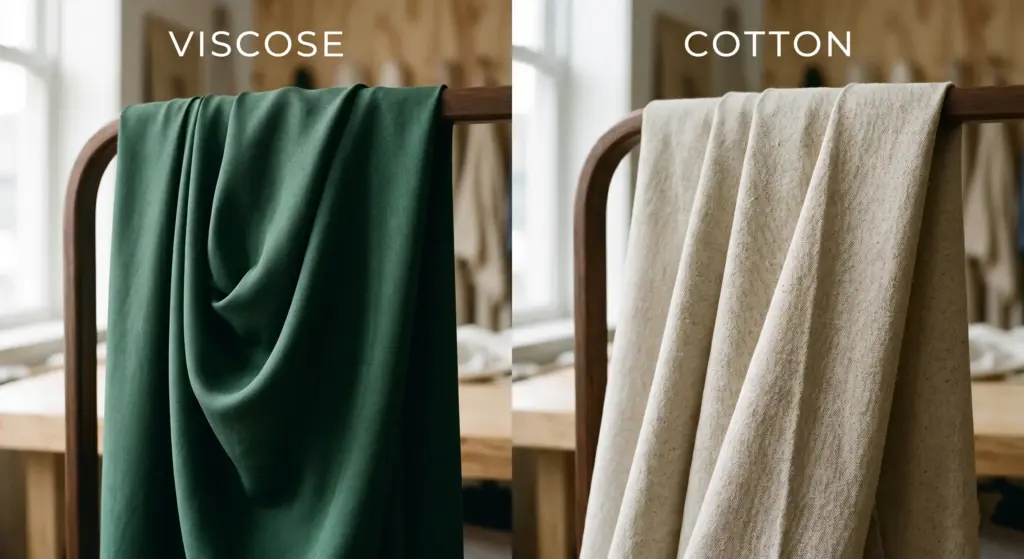
Viscose has a silky, smooth surface that feels lightweight and cool against the skin. It's one of the reasons it's so popular for blouses, sleepwear, and anything worn close to the body — there's very little friction, and it doesn't cling uncomfortably when you move.
Cotton has a softer, more textured feel that most people find immediately familiar and comfortable. It's slightly more substantial against the skin, which many sewists and wearers prefer for casual everyday garments.
For skin-contact garments like sleepwear, underwear, or summer dresses, viscose's smooth surface gives it an edge. For everyday T-shirts, children's wear, or anything that goes through frequent washing, cotton's familiar feel and durability make it the more practical choice.
Which One Drapes Better?
Viscose drapes significantly better than cotton. Its fiber structure gives it a fluid, flowing quality that allows fabric to fall and move naturally — making it ideal for wrap dresses, flowy midi skirts, and relaxed blouses where movement matters.
Cotton, by contrast, holds its shape. It has more body and structure, which is exactly what you want for quilts, structured shirts, and garments that need to keep their form after washing.
If your pattern calls for flowing fabric that skims the body, viscose is almost always the better choice. If your pattern needs structure — think a button-down shirt with clean lines or a stiff waistband — cotton will give you more control. Browse our dress fabric by the yard collection to see how viscose performs across different dress styles.
Which Is Easier to Sew?
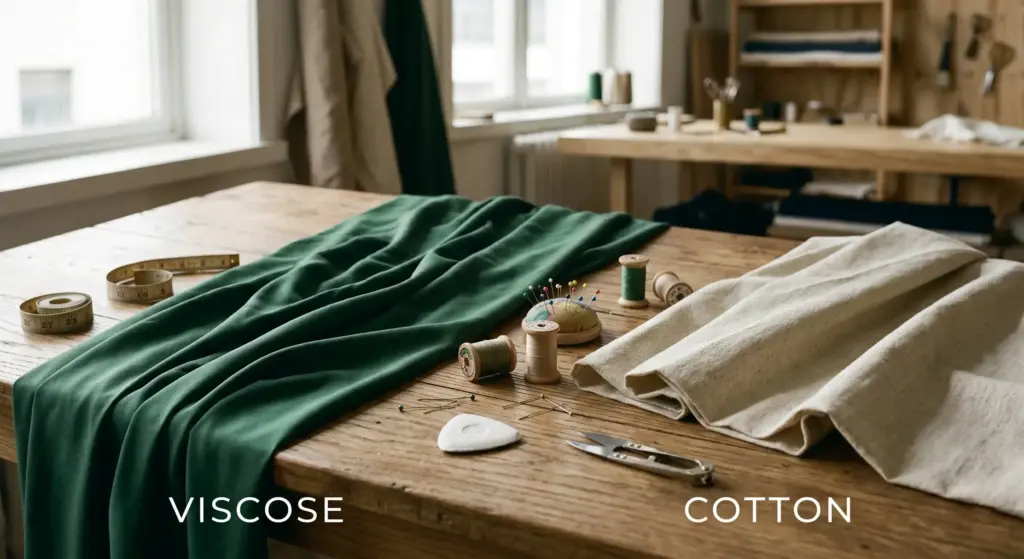
Cotton is significantly more beginner-friendly. It stays where you put it, cuts cleanly, and feeds through a sewing machine without much fuss. It also responds well to pinning, pressing, and basic finishing techniques — which is why most sewing teachers recommend it for first projects.
Viscose requires a bit more patience. Its smooth, slightly slippery surface can shift while cutting and feeding through the machine. A few techniques that help:
- Use sharp scissors or a rotary cutter
- Place tissue paper or a cutting mat underneath while cutting
- Switch to a smaller needle (size 70/10 or 75/11) to reduce skipped stitches
Neither fabric is difficult once you know what to expect — but if you're newer to sewing, cotton will give you a more predictable experience. If you've sewn a few projects and want to work with something that produces more elegant results, viscose is worth the extra preparation.
How Do They Handle Washing and Care?
Cotton is one of the easiest fabrics to care for. It's machine washable, tolerates higher temperatures, and gets softer with every wash. It's also durable — good cotton garments hold up well to regular wear and repeated laundering, which makes it a practical choice for children's clothing, activewear, and anything worn daily.
Viscose needs more attention. It should be hand-washed or machine-washed on a delicate cycle in cold water, and laid flat to dry rather than tumble-dried. It's also prone to shrinking if exposed to heat, so pre-washing your fabric before cutting is essential. Viscose wrinkles more easily than cotton, and pressing it requires a low-temperature iron on the reverse side.
If you're making something that needs to survive frequent, careless washing — think kids' clothes, gym wear, or everyday basics — cotton is the more practical choice. Viscose is better suited for garments you'll care for a little more deliberately.
Which Fabric Works Better for Dresses and Blouses?
For dresses and blouses, viscose is the stronger choice. Its fluid drape allows garment pieces to fall naturally and move with the body, which is exactly what makes a wrap dress look elegant or a blouse feel effortless. It also takes color and print beautifully, so floral and abstract patterns tend to look more vibrant on viscose than on heavier fabrics.
Explore our full viscose fabric collection to find weights and prints suited to your next dress or blouse project — available by the yard in the color you actually want.
Which Fabric Works Better for Casual Wear and Home Projects?
For T-shirts, casual shirts, quilts, tote bags, and home sewing projects, cotton is the better fit. It's stable enough to quilt with, structured enough to make a clean-looking shirt, and durable enough to handle the wear and washing that casual garments go through.
Cotton's wide range of weights — from lightweight jersey to heavier canvas — also makes it versatile across project types in a way that viscose isn't. Browse our cotton fabric collection if you're working on an everyday project that needs to hold up over time.
Our Verdict — When to Choose Each?
Choose viscose if you're making: Wrap dresses, flowy midi skirts, relaxed blouses, sleepwear, or any garment where soft drape and a smooth hand feel matter more than structure or easy care.
Choose cotton if you're making: T-shirts, casual shirts, quilts, children's clothing, everyday wear, or any project where machine washability, structure, and sewing ease are priorities.
One more practical note: If a sewing pattern specifies "fluid fabric" or "drape required," that's viscose territory. If it says "woven fabric" or "stable knit," cotton is the safer bet.
Frequently Asked Questions About Viscose and Cotton
Is viscose cooler than cotton to wear?
They're closer than most people expect. Cotton is technically more breathable because it absorbs moisture directly into the fiber. Viscose absorbs moisture too but tends to feel lighter and less clingy against the skin, which many people find more comfortable in heat. For a full breakdown of how viscose handles warm weather, see our guide on whether viscose is breathable.
Does viscose shrink more than cotton?
Yes, viscose is more prone to shrinking than cotton, especially when exposed to heat or agitation. Always pre-wash viscose fabric before cutting. Cotton can also shrink — particularly 100% natural cotton — but it's generally more stable and more predictable after the first wash.
Can I substitute viscose for cotton in a sewing pattern?
It depends on the pattern. If the pattern calls for a woven fabric with drape — like a dress or blouse — viscose is often a direct substitute or even an upgrade. If the pattern calls for a structured fabric, stable knit, or quilting cotton, viscose won't behave the same way and the substitution is likely to affect the finished shape.
Which is better for sensitive skin — viscose or cotton?
Both are generally considered skin-friendly. Viscose's smooth surface causes less friction, which some people with sensitive skin prefer. Cotton is naturally hypoallergenic and widely recommended for eczema-prone or sensitive skin. If skin sensitivity is a concern, look for fabrics without added chemical finishes — this applies to both viscose and cotton.
Ready to Find Your Fabric
Both viscose and cotton are worth having in your sewing room — they just serve different purposes. Once you know which one fits your project, the next step is finding the right weight and color.
Browse viscose and cotton fabrics by the yard in our full collection — order exactly what you need, in the colors you actually want. Shop our knit and woven fabric collection.



 Login with Google