


Viscose vs Polyester: The Real Differences That Help You Choose
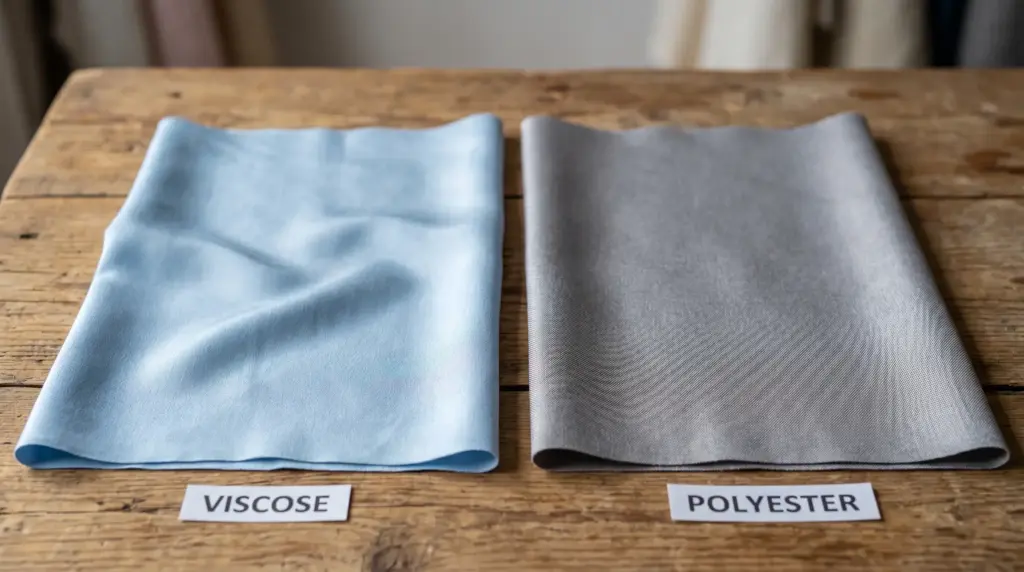
Viscose and polyester can look surprisingly similar on a hanger — both come in fluid prints, both are widely used for dresses and blouses, and both are available in an enormous range of colors. But they behave very differently once you start sewing with them, wearing them, and washing them.
This guide breaks down the real differences between the two fabrics, so you can make a confident choice for whatever you're making next.
Key Takeaway: Choose viscose when drape, softness, and a natural feel matter most — it's ideal for dresses, blouses, and fluid garments. Choose polyester when durability, easy care, and shape retention are the priority — better suited for activewear, structured pieces, and garments that need to hold up over time.
Quick Comparison
| Feature | Viscose | Polyester |
|---|---|---|
| Origin | Plant-based (wood pulp) | Synthetic (petroleum-based) |
| Hand Feel | Soft, silky | Varies (smooth to slightly waxy) |
| Drape | Fluid, flowing | Less fluid, more structured |
| Breathability | Medium–High | Low–Medium |
| Durability | Moderate | High |
| Care | Delicate wash | Machine wash |
| Sewing Ease | Moderate (slippery) | Easy to moderate |
| Best For | Dresses, blouses, skirts | Activewear, linings, structured wear |
Viscose wins on feel and drape; polyester wins on durability and practicality. Neither is universally better — the right choice comes down to what your project actually needs.
How Each Fabric Feels to Wear
Viscose has a soft, silky surface that feels lightweight and smooth directly against the skin. It has a natural quality to it — closer to the feel of silk or fine cotton than anything synthetic — which is why it's a popular choice for blouses, sleepwear, and warm-weather dresses.
Polyester varies more depending on its construction and finish. Finer polyester weaves can feel smooth and even silky, while heavier or lower-quality versions can feel slightly waxy or synthetic against the skin. In general, polyester doesn't breathe as readily as viscose, which can make it feel warmer in hot weather.
For garments worn directly against the skin — dresses, blouses, sleepwear, or summer tops — viscose typically feels more comfortable. For outerwear, linings, activewear, or structured pieces where breathability matters less than performance, polyester is the stronger choice.
Which One Drapes Better
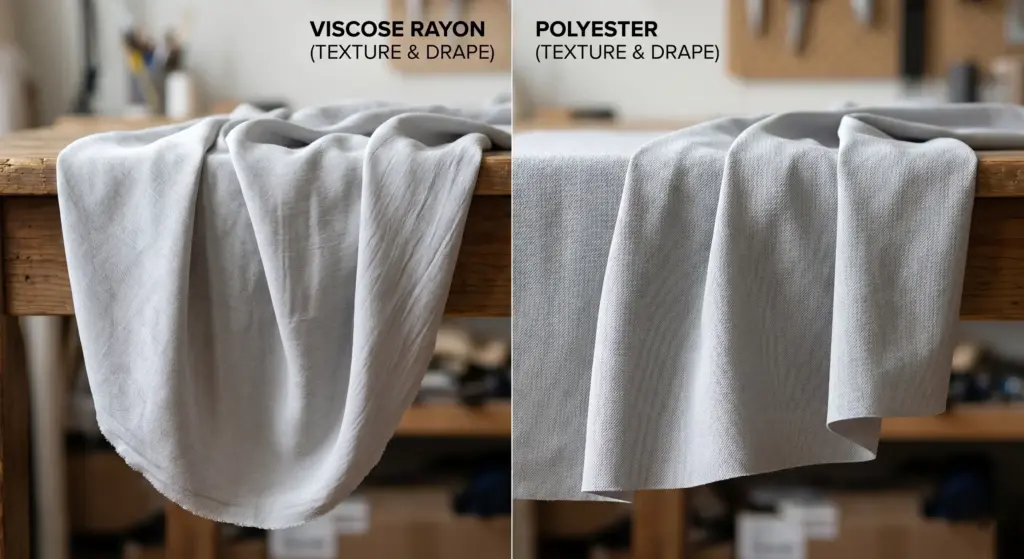
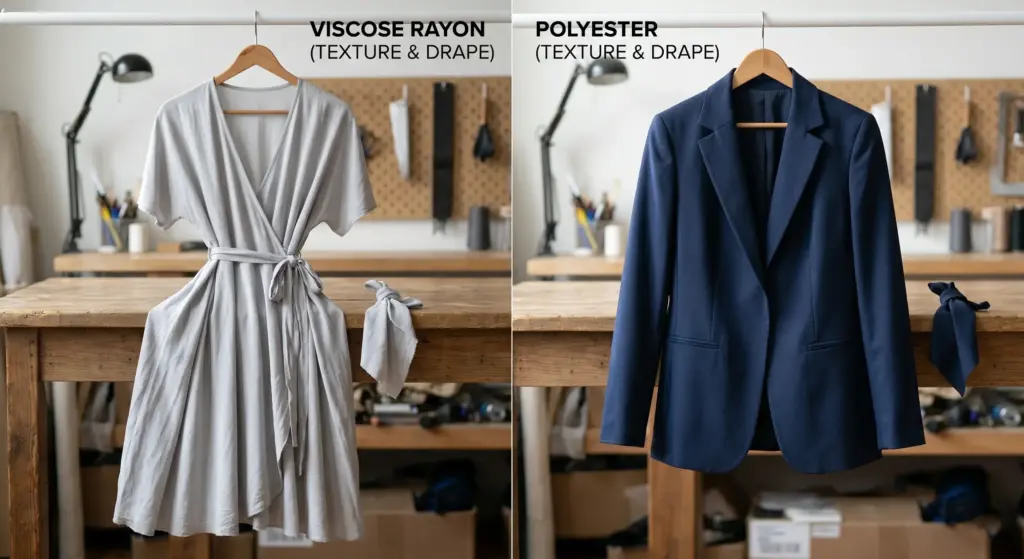
Viscose drapes significantly better than polyester. Its fiber structure allows it to fall in fluid, flowing lines that follow the body's movement — which is exactly what gives wrap dresses and flowy skirts their effortless look.
Polyester has more memory and structure. It holds its shape more firmly, which works well for pleated skirts, tailored pieces, and garments where you want the fabric to maintain a specific form rather than drape loosely.
If your pattern calls for fluid movement — a bias-cut dress, a relaxed blouse, or a flowy midi skirt — viscose is the better choice. If your pattern needs to hold a shape or keep structured seams clean, polyester will give you more control. See our full range of dress fabric by the yard to compare how different fabric types perform across dress styles.
Durability and Long-Term Wear
Polyester is significantly more durable than viscose. It resists pilling, holds its color well after repeated washing, and maintains its shape over time. Polyester garments can handle the kind of regular wear and machine washing that would wear out a viscose piece much faster.
Viscose is more delicate. It can weaken when wet, is prone to shrinking with heat or agitation, and tends to wear faster with frequent use. It's not a fabric for your most-reached-for everyday basics — it's better suited for pieces you'll wear thoughtfully and care for carefully.
For anything that needs to hold up to frequent use — workwear, children's clothing, activewear, or garments you'll wash weekly — polyester's durability gives it a clear advantage.
How Do They Handle Washing and Care
Polyester is one of the easiest fabrics to care for. It's machine washable, dries quickly, resists wrinkles, and doesn't shrink. It's forgiving in a way that makes it practical for garments you don't want to think too much about.
Viscose requires more attention. It should be hand-washed or machine-washed on a delicate cycle in cold water, then laid flat to dry — tumble drying will cause it to shrink and distort. It wrinkles easily and needs a low-temperature iron on the reverse side to press. Pre-washing viscose fabric before cutting is essential, since it can shrink significantly on the first wash.
If low-maintenance care is important to you — or if you're making something for a child or for daily use — polyester is the practical choice. Viscose rewards a little extra care with a better feel and more beautiful drape.
Which Is Better for Dresses and Fluid Garments
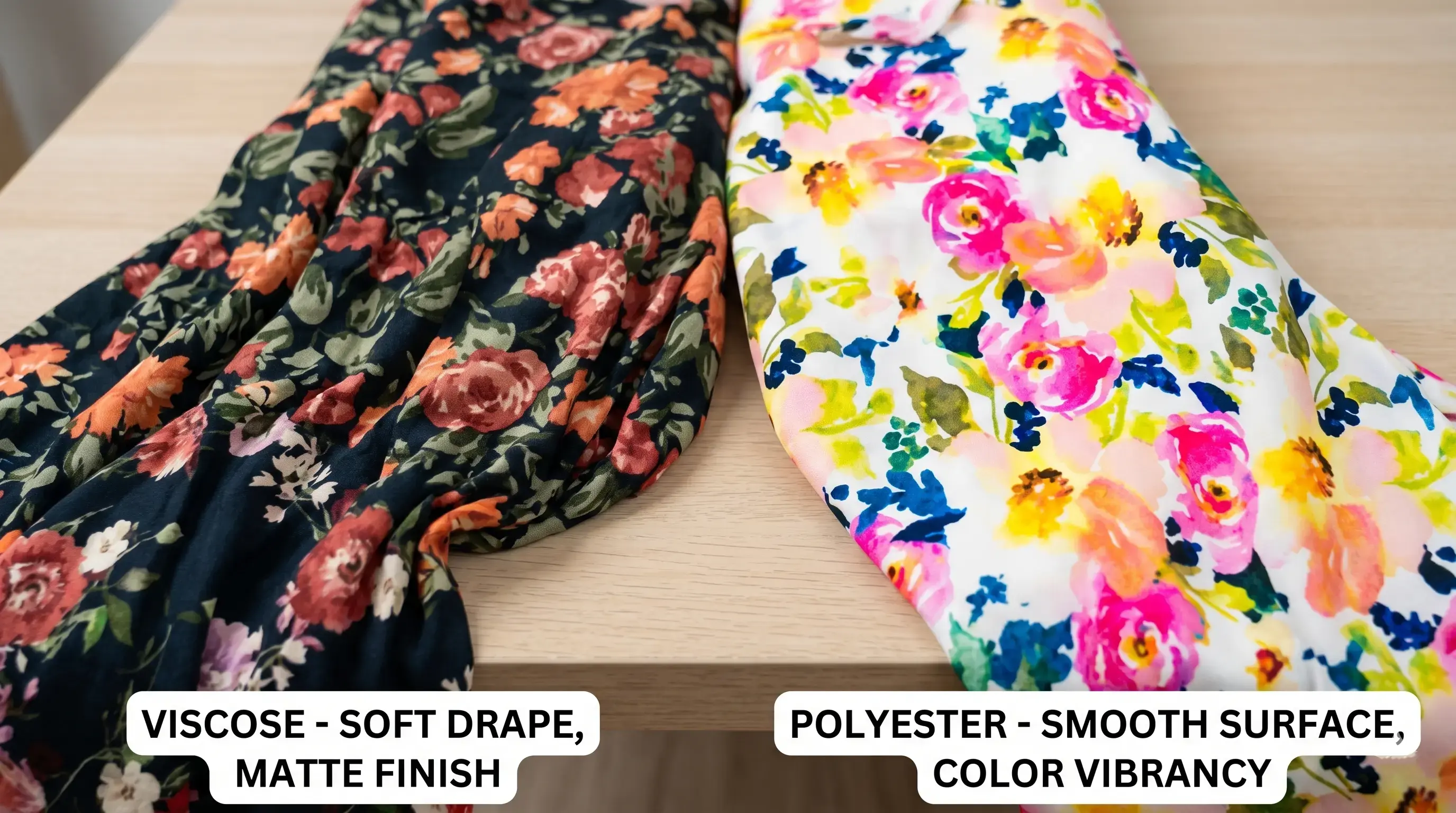
For dresses, blouses, and anything that benefits from movement, viscose is the stronger pick. Its fluid drape makes wrap dresses fall elegantly, gives flowy skirts their movement, and allows blouses to sit softly rather than stiffly. It also takes color and print exceptionally well — florals and abstract prints tend to look particularly vibrant on viscose.
Explore our viscose fabric collection — available by the yard in a wide range of weights, colors, and prints suited to dresses, blouses, and everything in between.
Which Is Better for Activewear and Structured Pieces
For activewear, linings, structured garments, and anything that needs to perform over time, polyester is the better fit. It holds its shape through movement and washing, manages moisture reasonably well in performance-specific constructions, and keeps its color and form far longer than viscose.
It's also the more practical choice for lined garments, outerwear, and structured pieces where the fabric needs to support the construction rather than drape freely. Browse our polyester fabric collection for options suited to activewear, structured garments, and performance sewing.
A Note on Sustainability
Viscose is derived from plant cellulose — most commonly wood pulp — which makes it feel more natural than polyester. However, the production process involves significant chemical processing, which has environmental implications that vary by manufacturer and certification.
Polyester is petroleum-based and not biodegradable, though recycled polyester options are increasingly available. Neither fabric has a straightforward sustainability story — the better choice depends on which factors matter most to you and which certifications you look for when buying.
Our Verdict — When to Choose Each
Choose viscose if you're making: wrap dresses, flowy skirts, relaxed blouses, sleepwear, or any garment where a smooth, natural feel and fluid drape matter more than durability or easy care.
Choose polyester if you're making: activewear, linings, structured garments, children's clothing, or anything that needs to survive frequent machine washing and hold its shape over time.
One practical shortcut: if your sewing pattern specifies "fluid woven" or "drapey fabric," reach for viscose. If it calls for "stable woven," "performance fabric," or "lining," polyester is the safer bet.
Frequently Asked Questions About Viscose and Polyester
Is viscose more breathable than polyester?
Generally yes — viscose allows more airflow and absorbs moisture more readily than standard polyester, which tends to trap heat. For a full breakdown of how viscose performs in warm weather, see our guide on whether viscose is breathable.
Does viscose look cheaper than polyester?
Not typically — if anything, it's the other way around. Viscose has a natural sheen and fluid drape that can make garments look more considered and less synthetic. Lower-quality polyester can sometimes appear flat or slightly plasticky, though high-quality polyester weaves are hard to distinguish from viscose at a glance.
Can I use viscose instead of polyester in a sewing pattern?
It depends on what the pattern needs. If it calls for a fluid woven fabric — a dress or blouse — viscose is often a direct substitute or even an improvement. If the pattern calls for a stable woven, a lining fabric, or a performance fabric, viscose won't behave the same way and may affect the finished structure.
Which is better for hot weather — viscose or polyester?
Viscose is the better choice for hot weather. It absorbs moisture and allows more airflow than most polyester fabrics, which tend to trap heat against the body. The exception is performance polyester specifically engineered for moisture management — but for everyday warm-weather garments, viscose is more comfortable.
Ready to Choose Your Fabric
Viscose and polyester each have a clear place in a well-stocked sewing room — the key is matching the right one to the right project. Once you know what you're making, finding the right weight and color is the easy part.
Browse viscose and polyester fabrics by the yard — order only what you need, in the colors you want. Explore our full fabric collection.





 Login with Google