


French Terry vs Fleece: Which Fabric Should You Choose for Your Next Project?

French terry is the better choice for breathable, year-round comfort — think hoodies, joggers, and kidswear — while fleece wins when maximum warmth and insulation are the priority. Both are knitted, soft, and beginner-friendly to sew, but they serve distinctly different end uses. Understanding the key differences in weight, breathability, and structure will help you pick the right fabric before you cut a single piece.
What Makes French Terry and Fleece Different?
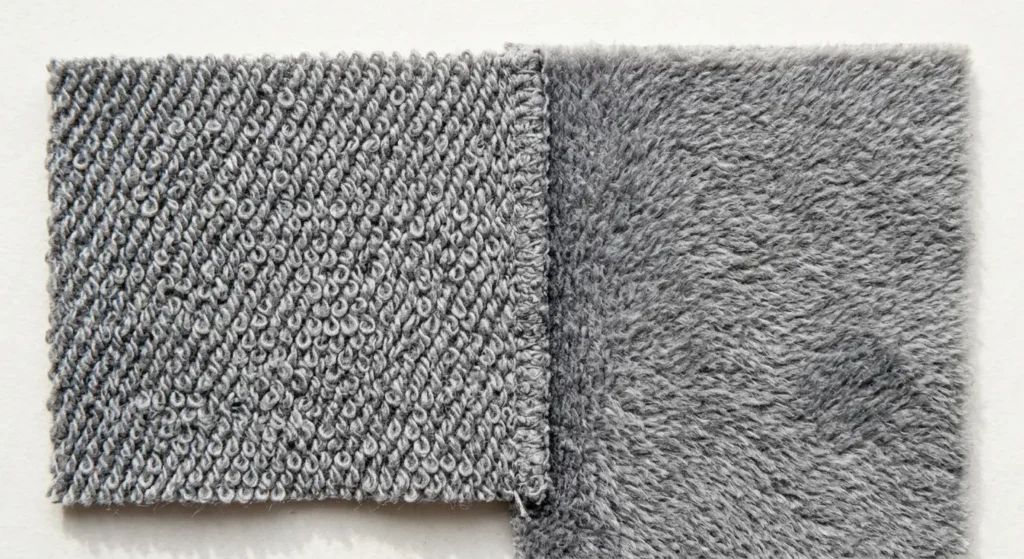
French terry fabric is a knitted fabric with a smooth face and looped pile on the reverse side. Those uncut loops trap a small amount of air for warmth while allowing the fabric to breathe — making it comfortable across a wide temperature range. It typically weighs between 200 and 350 gsm and has a good two-way stretch.
Fleece fabric, by contrast, features a brushed or napped surface on one or both sides, creating a dense, insulating pile. It is most commonly made from polyester, which gives it moisture-wicking properties but reduces breathability compared to cotton-based French terry. Fleece ranges from lightweight microfleece (around 150 gsm) all the way to heavy polar fleece exceeding 400 gsm.
In short, French terry breathes, fleece insulates. That single distinction drives almost every project decision between the two.
Warmth, Breathability, and Comfort: Head-to-Head
For warmth, fleece has a clear edge. Its dense pile traps body heat efficiently, which is why it dominates cold-weather jackets, blankets, and winter accessories. Polyester fleece also dries quickly and resists moisture absorption — useful for outdoor layering.
French terry, however, offers a more balanced comfort profile. Because the looped back absorbs moisture rather than repelling it, it feels soft against the skin during light activity. It regulates temperature better in mild conditions, making it the go-to for transitional-season garments.
Quick Comparison at a Glance
| Criteria | French Terry | Fleece |
|---|---|---|
| Weight | Light to medium (200–350 gsm) | Medium to heavy (200–500 gsm) |
| Warmth | Moderate | High |
| Breathability | Good | Moderate |
| Stretch | Good (2-way) | Moderate (varies) |
| Moisture absorption | Absorbs well | Wicks away (synthetic) |
| Best use case | Loungewear, kidswear, light layers | Outerwear, blankets, cold-weather gear |
| Ease of sewing | Easy | Easy — no fraying |
| Typical cost | Moderate | Low to moderate |
Best Projects for Each Fabric
Choosing between these two fabrics often comes down to the garment's intended season and function.
When to Choose French Terry
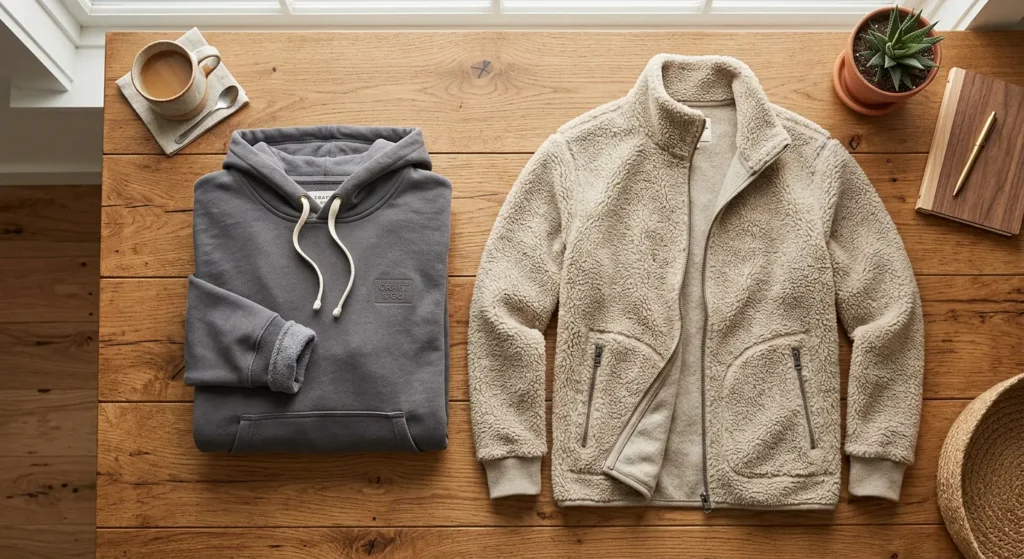
- Pullover hoodies and zip-up sweatshirts are worn indoors or in mild weather
- Joggers and lounge pants where comfort and breathability matter
- Kidswear — French terry's soft loops are gentle on sensitive skin (see our guide on Why Parents Prefer French Terry for Kidswear)
- Lightweight summer layers and beach cover-ups
When to Choose Fleece
- Winter jackets, vests, and mid-layer insulation pieces
- Blankets, throws, and pet accessories
- Cold-weather hats, scarves, and mittens
- Outdoor gear where warmth-to-weight ratio matters
For example, an independent children's wear designer making a capsule autumn collection might use French terry for daytime jogger sets — breathable enough for active play — and switch to polar fleece for a coordinating zip-up jacket worn on the school run. Both fabrics share a similar ease of construction, so the workflow stays consistent across the range.
Sewing with French Terry vs Fleece: What to Expect
Both fabrics are forgiving for sewers of all skill levels — neither frays, and both respond well to a stretch stitch or serger. That said, there are practical differences worth knowing before you start cutting.
French Terry Tips
- Use a ballpoint or stretch needle (75/11 or 90/14) to avoid skipped stitches.
- Cut with the loops on the inside of the garment for a smooth exterior finish.
- A lightning stitch or narrow zigzag works well if you don't have a serger.
Fleece Tips
- Fleece has a nap — always cut pieces in the same direction to avoid shading differences.
- Use a walking foot to prevent layers from shifting during stitching.
- Seam allowances can be trimmed close and left unfinished since fleece does not fray.
- Avoid high iron heat — polyester fleece can melt. Use a pressing cloth and low steam.
For a deeper dive into working with fleece, the Beginner's Guide to Sewing with Fleece covers cutting, stitching, and finishing in detail.
Make Your Choice and Start Sewing
If your project calls for breathable, skin-friendly comfort across three seasons, French terry is your fabric. If warmth, insulation, and cold-weather performance are the priority, reach for fleece — or step up to polar fleece for maximum loft and heat retention.
Still unsure which direction to go? The Ultimate French Terry Vs Fleece Comparison Guide on our blog goes even deeper into fiber content and seasonal use cases. You can also explore our full range of stretchy fabrics if you need options beyond these two knit staples.
At Global Fabric Wholesale, both French terry and fleece are available by the yard with no minimum order — so you can order a sample length, test your pattern, and scale up when you're ready. Browse the full selection and find the right weight and colour for your next make.



 Login with Google