


Best Fabrics for Winter Hoodies and Jackets

For winter hoodies and jackets, the best fabric choices are French terry, fleece, polar fleece, double knit, and twill — each offering a different balance of warmth, stretch, and structure. French terry and fleece are the go-to options for pullover hoodies, while polar fleece and twill suit outer jackets that need to block wind and retain heat. Choosing the right fabric comes down to your garment's intended weight, whether it needs stretch, and how cold it needs to handle.
French Terry and Fleece: The Classic Hoodie Fabrics
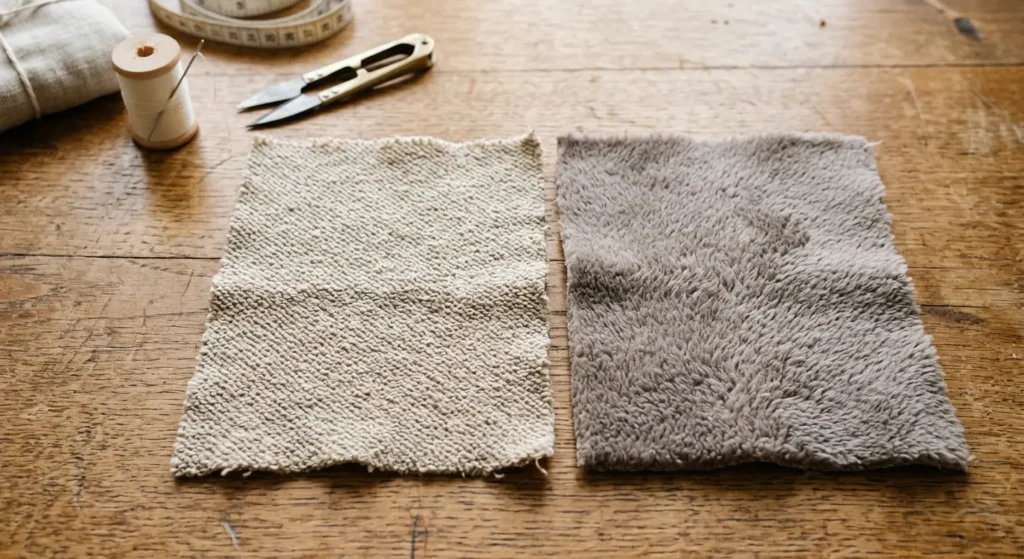
French terry fabric and fleece fabric are the two most popular choices for pullover hoodies, and for good reason. French terry has a smooth face and looped interior that traps warmth without adding bulk — ideal for hoodies worn as a mid-layer or in mild winter conditions. It typically weighs between 180 and 300 gsm, giving it enough body to hold a hood and kangaroo pocket without feeling stiff.
Fleece sits a step warmer, with a brushed pile on both sides that provides excellent insulation relative to its weight. It's forgiving to sew, doesn't fray, and comes in a wide range of weights from lightweight 200 gsm options to heavier 350 gsm versions suited to standalone winter hoodies.
For instance, an independent kidswear maker might use a 240 gsm cotton-modal French terry for a child's everyday hoodie — soft against skin, easy to wash, and warm enough for school-run weather without overheating. For a heavier adult zip-up, the same maker might switch to a 300 gsm fleece for the body and use French terry for the hood lining.
If you're comparing the two in detail, the French terry vs fleece comparison guide breaks down the differences by warmth, drape, and project type.
Polar Fleece for Outer Jackets and Cold-Weather Shells
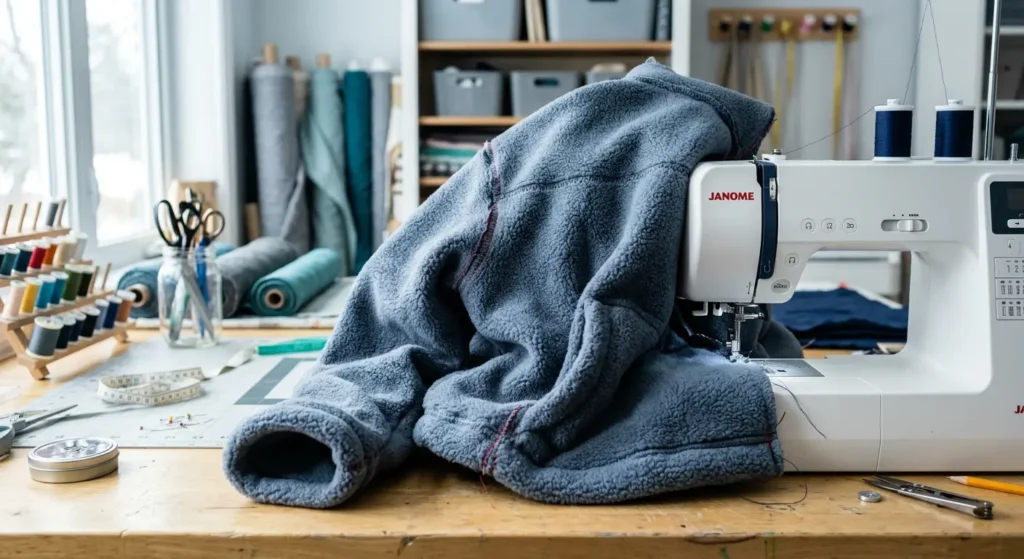
When the temperature drops below freezing, polar fleece fabric becomes the standout choice for outer jackets and cold-weather layers. Heavier than standard fleece — typically 300 to 450 gsm — polar fleece provides serious insulation while remaining lightweight and quick-drying, making it practical for active outdoor use.
Its low-pill, high-loft surface retains heat even when damp, which is why it's widely used in hiking jackets, ski layers, and winter outerwear. Polar fleece doesn't fray, so raw edges can be left unfinished or bound with rib trim for a clean, sporty look.
Sewing Tips for Polar Fleece Jackets
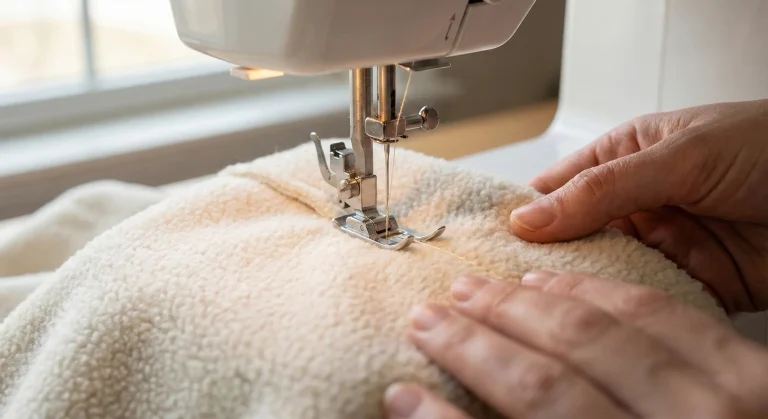
- Use a walking foot to prevent the thick pile from shifting during stitching.
- Choose a size 90/14 needle and a longer stitch length (3.0–3.5 mm) to avoid perforating the fabric.
- Press seams open with a cool iron — never apply direct heat to the pile surface.
The polar fleece fabric guide covers weight selection, care, and construction techniques in full detail.
Double Knit and Interlock for Structured, Heavyweight Hoodies
If you want a hoodie with more body and structure than standard French terry provides, double knit fabric is worth serious consideration. Double knit is constructed from two interlocked knit layers, giving it a firm hand, excellent shape retention, and a smooth face on both sides — no wrong side, which simplifies construction.
At 200–350 gsm, double knit is heavy enough to create a hoodie that holds its shape through repeated wear and washing, making it a favourite among small-batch garment makers producing premium loungewear and streetwear. It has a controlled stretch — enough for comfort, but less than French terry — which suits fitted hoodie silhouettes with set-in sleeves.
Interlock fabric is a lighter cousin of double knit, with a finer gauge and softer drape. It works well for hoodie linings or lightweight inner layers when you want a smooth, non-irritating surface against the skin.
When to Choose Double Knit Over French Terry
- You want a hoodie that holds a structured silhouette rather than a relaxed, draped fit.
- The garment will be worn as outerwear rather than a mid-layer.
- You're sewing for adults and want a premium, substantial fabric hand.
Twill and Woven Shells for Wind-Resistant Jackets
Not every winter jacket needs stretch. For structured outer shells — think bomber jackets, coach jackets, and utility outerwear — twill fabric is a reliable woven option that provides wind resistance, durability, and a clean tailored finish. Twill's diagonal weave structure makes it denser and more abrasion-resistant than a plain weave at the same weight, which is why it's used in workwear and outerwear alike.
Cotton-polyester twill blends in the 280–400 gsm range are the sweet spot for winter jacket shells: heavy enough to block wind, structured enough to hold patch pockets and zip plackets neatly, and easy to sew with standard woven techniques.
For a fully waterproof outer layer, pairing a twill shell with a waterproof fabric lining or using a coated twill gives you weather protection without sacrificing the clean drape of a woven construction.
Twill Jacket Construction Notes
- Use a sharp 80/12 or 90/14 needle and reinforce stress points at pockets and cuffs.
- Flat-fell seams or bound seam allowances give a professional finish inside unlined jackets.
- Pre-wash fabric before cutting to account for any shrinkage in cotton-blend twills.
Choosing the Right Fabric for Your Winter Project
| Criteria | French Terry | Fleece | Polar Fleece | Double Knit | Twill |
|---|---|---|---|---|---|
| Warmth | Medium | Medium-High | High | Medium | Low-Medium |
| Stretch | Good | Moderate | Moderate | Excellent | Minimal |
| Weight | 180–300 gsm | 200–350 gsm | 300–450 gsm | 200–350 gsm | 200–400 gsm |
| Best Use | Pullover hoodies | Zip hoodies, lining | Outer jackets | Structured hoodies | Jacket shells |
| Care | Machine wash | Machine wash | Machine wash | Machine wash | Machine wash |
| Skill Level | Beginner | Beginner | Beginner | Intermediate | Intermediate |
The comparison table above gives a quick reference, but the practical decision comes down to three questions: How cold does it need to be? Does the garment need to stretch? And is it a layer or a shell?
- Mild winter hoodies and loungewear: French terry (180–240 gsm) in cotton or cotton-modal blends.
- Everyday winter hoodies: Fleece or double knit (250–320 gsm) for warmth with structure.
- Outdoor and active jackets: Polar fleece (300–450 gsm) for insulation, or twill for a wind-resistant shell.
- Lined jackets: Combine a twill or woven shell with a fleece or interlock lining for warmth and comfort.
All of these fabrics are available by the yard with no minimum order at Global Fabric Wholesale, so you can order exactly what you need for a single jacket or a small production run. Browse the full range in the all fabrics shop and filter by weight, material, and function to find your match. If you need guidance on quantities or fabric suitability, the customer support team is happy to help.





 Login with Google