


What Is French Terry Fabric? A Practical Guide to GSM, Blends, and Uses
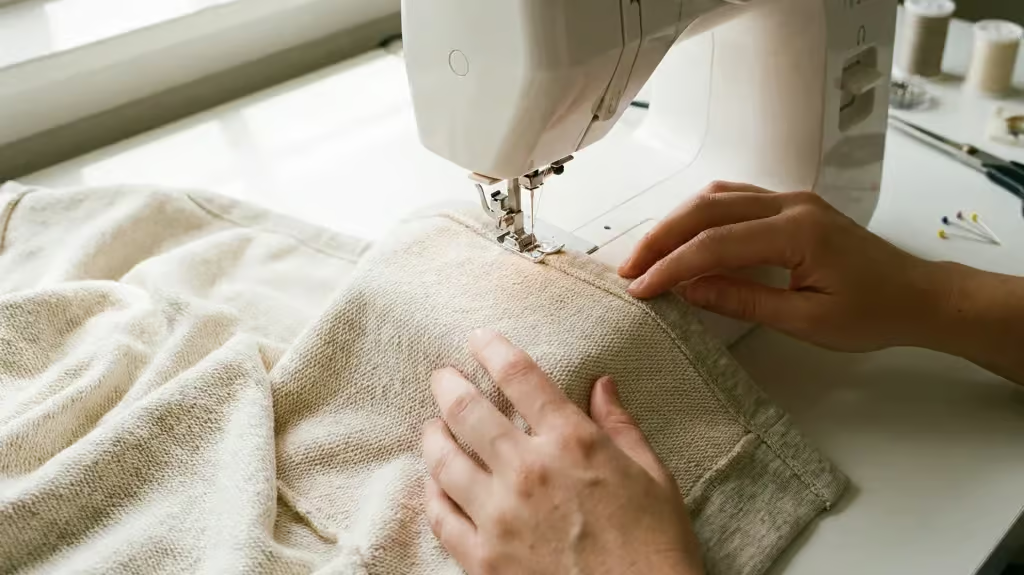
French terry fabric is smooth on the outside, looped on the inside, and sits in the mid-weight range — typically 200 to 350 GSM. That construction is what makes it work for streetwear pieces, hoodies, and joggers: enough structure to hold shape, without the bulk of fleece.
It often gets confused with fleece or terry cloth — both look and feel similar at a glance. The difference comes down to construction. French terry has loops on one side only, which is why it breathes better than fleece and drapes better than terry cloth.
Fabric weight, fiber content, and loop structure all affect how a finished piece drapes, stretches, and holds up after washing. This guide covers the key differences to help you choose the right French terry for your project.
What Exactly is French Terry Fabric?
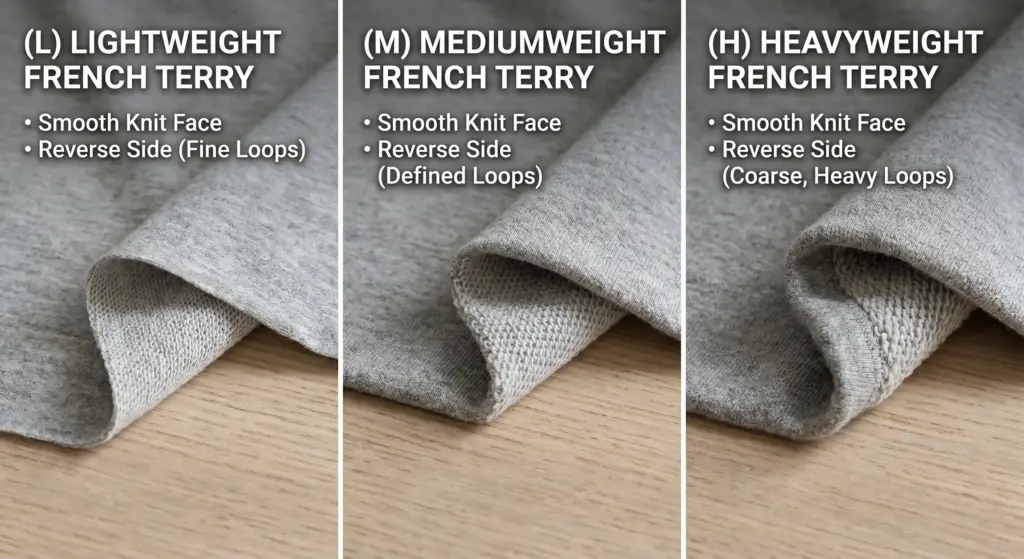
French Terry is defined by a specific knit construction that creates two distinct surfaces. It is a weft-inserted jersey: yarn knitted horizontally across the fabric, producing a smooth, flat face on the outside and small loops on the inside. Those loops increase surface area, drawing moisture away from the skin more effectively than flat-knit fabrics — and because they sit on the interior, they don't affect the outer appearance, making French terry a reliable choice for printed garments too.
Think of French Terry as the "middle child" of the knit family. It typically sits in the range of 200 GSM to 350 GSM (Grams per Square Meter). It is significantly more substantial than a T-shirt jersey but lacks the heavy, suffocating bulk of winter fleece. This medium weight allows it to drape naturally over the body, providing structure to a garment like a hoodie or joggers without making them look stiff or boxy.
Most French terry fabrics are made from cotton or cotton blends — some also include modal, polyester, or elastane. Many buyers still prefer 100% cotton French terry for its soft, natural feel and breathability. That said, blending is often necessary for garments that need more stretch or shape retention. The next section covers how to choose the right blend for your specific use case.
Understanding French Terry GSM by Garment Type
Weight determines warmth and structure. In the fabric world, we use GSM to measure density. French Terry covers a wide spectrum, so checking this number is crucial before you buy.
| Weight Class | GSM Range | Best For | Seasonality |
|---|---|---|---|
| Lightweight | 180 – 220 GSM | Light tops, soft layering pieces, and summer sets | Summer / Spring |
| Mid-Weight | 230 – 280 GSM | Joggers, zip-up hoodies, and lightweight streetwear vests | Year-Round |
| Heavyweight | 300 – 400+ GSM | Structured streetwear vests, oversized hoodies, and heavier casual silhouettes | Autumn / Winter |
Browse our french terry fabric wholesale collection sorted by weight, from 220 to 500 gsm.
Typical GSM for French Terry Streetwear Vest: What Weight Works Best?
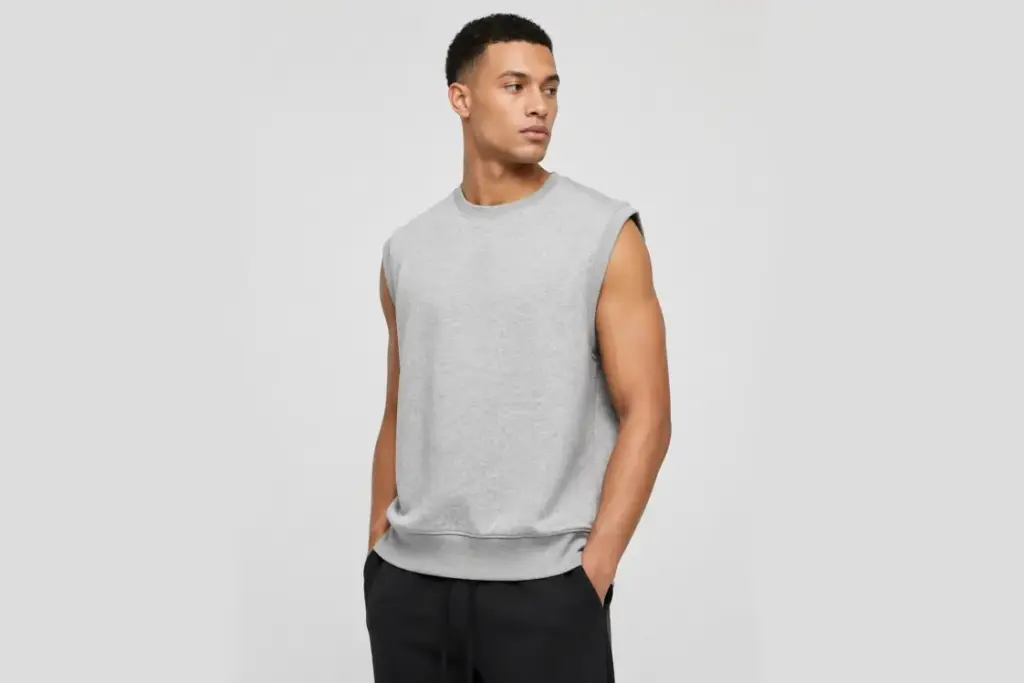
For a streetwear vest, french terry in the 280–320 GSM range is the most common choice. This weight gives the garment enough structure to hold its shape without becoming too stiff or heavy for layering. Lighter options (220–260 GSM) suit warmer climates or slim-fit cuts, while anything above 340 GSM tends to feel closer to a sweatshirt than a vest.
Is French Terry 100% Cotton?
French Terry refers to the knit structure (the loops), not the fiber content. Actually, not all French terry fabrics are made entirely from cotton. While 100% cotton French terry fabric is common and prized for its softness, breathability, and natural absorbency, many options on the market are cotton blends. These blends often include polyester, rayon, or modal to enhance stretch, durability, and wrinkle resistance. Our studio arranges tests and has compiled guidelines to help you select the optimal weight and blend ratio for French terry fabric that best suits your needs.
Choosing the Suitable Blend Based on Intended Use
Comfortable Choice: First, we focus on comfort. For everyday comfort and a natural feel, a high cotton content is usually the best place to start. French terry made from 100% cotton or 95–100% cotton with a small amount of elastane feels soft against the skin and allows good airflow. These fabrics typically fall in the 220–280 GSM range, making them ideal for lightweight sweatshirts, joggers, and loungewear. Cotton offers comfort and breathability, while spandex provides sufficient elasticity to ensure the fabric returns to its original shape after being stretched.
Structured Choice: If you want to make a hoodie with a structured silhouette, you need rigidity. Blends like 70–85% cotton with 15–30% polyester are more resistant to stretching out and tend to dry faster. These fabrics are commonly found in the 240–320 GSM range and work well for hoodies, casual athleisure pieces, or other streetwear styles that need a cleaner outline and a more structured drape. This weight range is also a practical choice for French terry streetwear vests, especially when you want better shape retention without making the garment feel overly heavy.
You can also choose 100% Cotton French Terry (Heavyweight 300gsm+). Opting for a spandex-free composition helps maintain the stable loop structure of French terry, resulting in a crisp, structured silhouette.
Flowy Choice: A cotton–modal French terry (often around 50–70% cotton and 30–50% modal) feels smoother and more fluid, with less stiffness than traditional cotton. In addition to modal, rayon and bamboo are also viable options for blended fabrics. French terry made from these materials is well-suited for creating loose-fitting cardigans or pajamas.
The Difference Between French Terry, Fleece, and Terry Fabric
At first glance, French terry, fleece, and terry cloth can look similar—especially when you’re shopping online. All three are soft fabrics commonly associated with comfort, yet they are designed for very different purposes. Understanding how they differ can help you avoid buying something that feels too warm, too heavy, or simply wrong for what you had in mind.
Here is the Quick Verdict:
- French Terry: Loops on one side, smooth on the other. Breathable. Best for year-round layering.
- Fleece: Fuzzy and brushed on the inside. Insulating. Best for cold-weather heat retention.
- Terry Cloth: Loops on both sides. Highly absorbent but heavy. Best for towels and bathrobes.
French Terry vs. Fleece
Most people find it challenging to compare the two fabrics. In reality, the key difference between French terry fabric and fleece fabric lies in warmth retention and breathability. French terry acts more like a regulator—its looped pile helps regulate temperature by wicking sweat away from the skin (moisture-wicking) and promoting airflow to prevent the wearer from overheating. The surface of fleece fabric, treated with a brushing process, becomes exceptionally fluffy and thick, effectively trapping heat. This is precisely why it is more frequently used in winter thermal clothing.
So, if you want something cozy but not overly warm, French terry fabric is usually the better choice. Fleece works best when warmth is the top priority, such as for winter hoodies or outdoor use.
Still torn between the two? Read our full comparison: French terry vs fleece — which fabric should you choose for your next project? We break down warmth, weight, cost, and best uses side by side.
French Terry vs. Terry Cloth
These two fabrics are very similar in their terminology. If you are buying french terry fabric by the yard online, be careful not to accidentally purchase "Terry Cloth" (often labeled as Toweling). While they share a linguistic root, they are structurally distinct. Terry cloth has wide loops on both sides, which is why it’s commonly used for bath towels and robes. This structure provides it with excellent absorbency. French Terry is almost always a knit construction with natural stretch. It is much finer and softer, making the fabric suitable for clothing rather than drying off after a shower.
For daily wear, French terry fabric provides a smooth appearance, good stretch, and a soft, comfortable feel against the skin. Terry fabric remains a functional fabric, but it’s rarely used for modern casual clothing.
| Feature | French Terry Fabric | Fleece Fabric | Terry Cloth |
|---|---|---|---|
| Fabric Type | Knit | Knit | Woven or knit |
| Inner Surface | Small loops | Brushed, fluffy | Large loops |
| Warmth Level | Medium | High | Low to medium |
| Breathability | High | Low to medium | High |
| Weight Range (GSM) | 200–320 GSM | 250–400+ GSM | 300–500+ GSM |
| Typical Feel | Soft, flexible, breathable | Plush, thick, insulating | Textured, absorbent |
| Common Uses | Sweatshirts, joggers, loungewear | Hoodies, winter wear, blankets | Towels, robes, bath items |
Sewing French Terry Fabric: Beginner-Friendly Tips That Actually Help
French terry fabric is soft, stable, and stretchy, making it an ideal introductory fabric for sewing. Drawing on our studio's accumulated sewing expertise, we've compiled a practical beginner's guide to working with French terry.
Step 1: Prepare Your Fabric
Even French terry blends with other materials have a relatively high cotton content. Therefore, before cutting out patterns, wash the fabric in a washing machine (cold/warm water) and tumble dry it. This ensures your finished sweatshirt will maintain its fit long-term, not just for a week.
Step 2: The Right Tools
Since not every household has a serger, we've also prepared tutorials that don't require one.
If you don’t have a serger: You can easily sew a perfect French terry garment using just a standard sewing machine. But please simply remove the universal "sharp" needle. Install a ballpoint needle (also known as a knitting needle, size 80/12 or 90/14). When sewing elastic fabrics like French terry, use a zigzag stitch. Straight stitching is prone to thread breakage. This is because a sharp needle cuts through the yarn fibers, causing small holes that grow over time. A ballpoint needle has a rounded tip that gently pushes the loops aside, preserving the fabric structure.
If you have a serger: Always run a scrap piece through first. If the seam looks puckered, lower the differential feed. When it seems wavy, increase it. Then, use a 4-Thread Overlock stitch. This provides the strongest seam for activewear that needs to hold up against movement. Locate your Differential Feed dial (usually marked with numbers like 0.7, N, 1.5, 2.0). Crank it up slightly to 1.1 or 1.5. This tells the machine to feed the fabric faster than it stitches, essentially "pushing" the fabric together slightly to counteract the stretch. This way, the hoodie you sew will be almost indistinguishable from those in stores. They're both equally clean and crisp.
Step 3: The Easy Hem Hack
Sewing the edges might be a bit tricky, but we have ways to work around these challenges. You can opt to fold the fabric strip in half and sew it on as a binding. This approach prevents the folded edge from looking too bulky or even distorted.
When it comes to cuffs and collars, we've included some shopping tips here: When browsing for French terry fabric by the yard, prioritize shops that offer "Matching Ribbing". When purchasing French terry fabric, obtaining matching ribbing eliminates the hassle of searching for ribbing in the same color. This directly prevents color discrepancies between the neckline and cuffs and the main body of the hoodie.
Final Thoughts
French terry combines the crisp structure of woven fabrics with the comfort of pajamas. When sewing with it, understanding details like fiber composition, weight, and construction helps you avoid blind choices and disappointment. Alternatively, choose a reliable, affordable fabric store(like Global Fabric Wholesale) where you can access ready-made fabric information and knowledge to help you take your first steps in sewing.




 Login with Google