


Cotton vs Polyester: Pros, Cons and When to Use Each
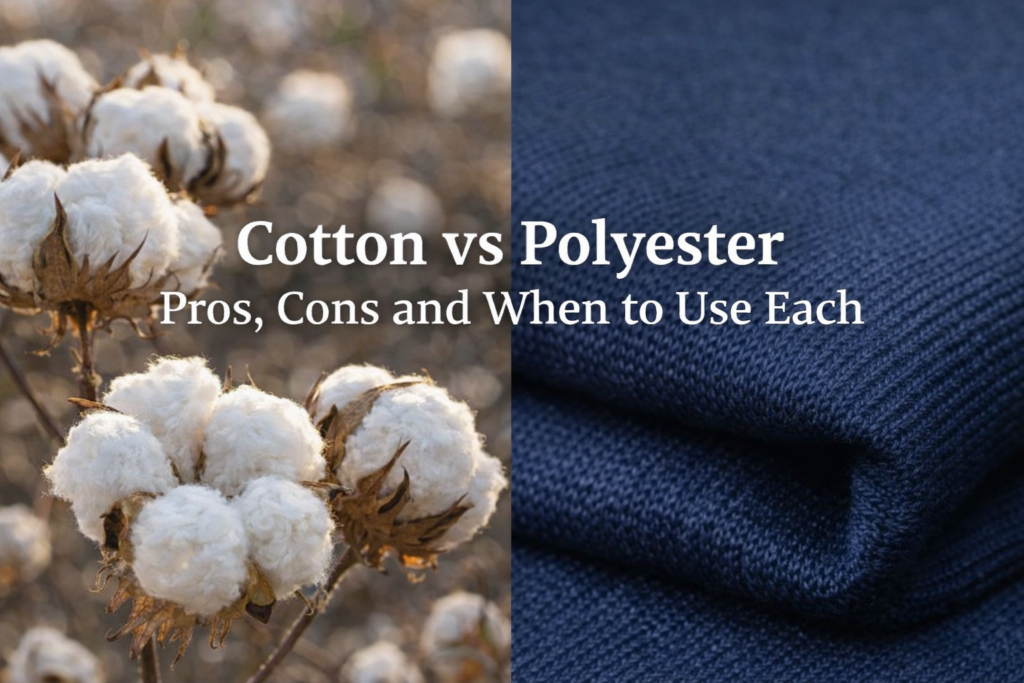
If you've ever grabbed a shirt off the rack and flipped the label trying to decode "60% cotton, 40% polyester" — you're not alone. Cotton and polyester are the two most-used fabrics on the planet, and they show up in everything from T-shirts to bed sheets to athletic gear. But they're built completely differently, and that matters a lot depending on what you're making or buying.
Here's the honest breakdown — no fluff, no jargon.
What Are They, Actually?
Cotton is a natural fiber. It grows in a boll around the seeds of the cotton plant, gets harvested, cleaned, spun into yarn, and woven into fabric. Humans have been doing this for over 7,000 years. There's nothing synthetic about it — it's as natural as linen or wool.
Polyester is synthetic. It was invented in the 1940s and is made from petroleum-based chemicals — specifically, it's a type of plastic. The process involves melting plastic pellets and extruding them into fine fibers. It's incredibly versatile and cheap to produce, which is why it took over the textile industry.
Same end product (fabric), wildly different origins. And that origin story explains most of the differences you'll notice when you actually wear or use them.
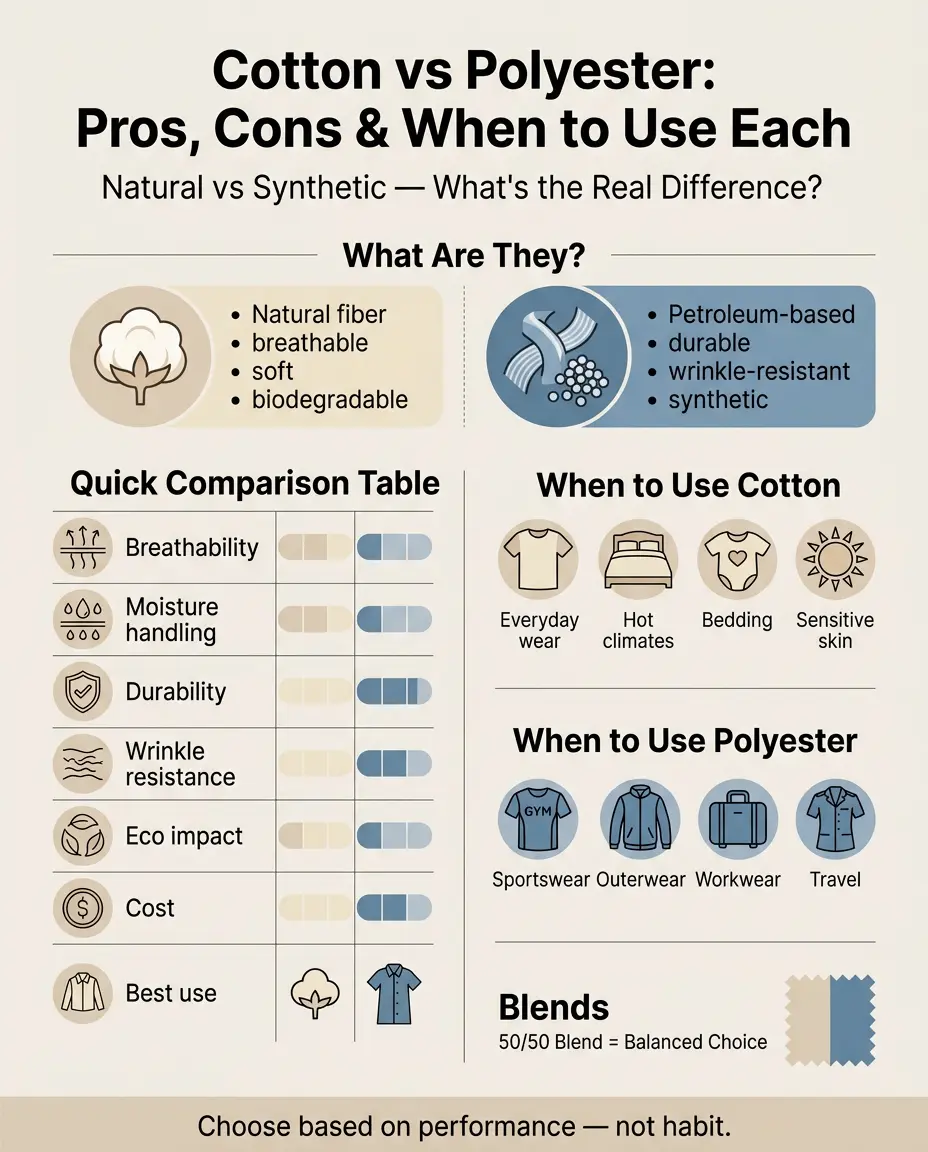
Quick Comparison: Cotton vs Polyester
| Factor | Cotton | Polyester |
| Origin | Natural plant fiber | Synthetic petroleum-based |
| Feel | Soft, warm, natural | Smooth, sometimes slick |
| Breathability | Excellent | Poor |
| Moisture | Absorbs moisture | Wicks moisture away |
| Durability | Moderate | High |
| Shrinkage | Yes, especially first wash | Minimal |
| Wrinkle resistance | Low | High |
| Colorfastness | Good (can fade over time) | Excellent |
| Eco-friendliness | Better (natural, biodegradable) | Lower (plastic-based) |
| Cost | Moderate to high | Low to moderate |
| Best for | Everyday wear, bedding, hot climates | Sportswear, outerwear, workwear |

The Pros and Cons of Cotton
What Cotton Gets Right
- It breathes. This is cotton's superpower. The natural fiber structure allows air to circulate, which means your body heat escapes and you stay comfortable. On a hot summer day, there's nothing better than a loose 100% cotton shirt.
- It's soft against skin. Especially after a few washes, cotton softens up nicely. It's the go-to for anything that touches sensitive skin — baby clothes, underwear, bed sheets. There's a reason hospital gowns are cotton.
- It absorbs moisture. Cotton soaks up sweat and keeps it away from your skin — at least initially. Great for everyday use and hot climates.
- It's natural and biodegradable. Unlike polyester, cotton will break down over time. For eco-conscious buyers, this matters. Organic cotton takes it even further by cutting out pesticides.
- It's hypoallergenic. Synthetic fibers can irritate sensitive skin. Cotton generally doesn't.
Where Cotton Falls Short
- It wrinkles like crazy. Pack a 100% cotton shirt in a suitcase and pull it out looking like a crumpled paper bag. Cotton hates being compressed.
- It shrinks. Throw a new cotton garment in a hot dryer and you might end up with a shirt that fits your little sibling. Always check the care label.
- It takes forever to dry. Cotton absorbs moisture well, but it also holds onto it. Wet cotton stays wet for a while — bad news if you're working out.
- It's not the most durable. Cotton fibers break down faster than polyester, especially with frequent washing. High-quality cotton lasts, but budget cotton? Not so much.
The Pros and Cons of Polyester
What Polyester Gets Right
- It's incredibly durable. Polyester fibers are strong and resist abrasion, tearing, and general wear and tear. A polyester jacket will outlast a cotton one in rough conditions, no question.
- It dries fast. Because polyester doesn't absorb water the way cotton does, it dries much faster. This makes it ideal for activewear, swimwear, and outdoor gear.
- It resists wrinkles. Stuff a polyester shirt in your bag, pull it out, and it looks basically fine. This is a huge practical advantage for travel, workwear, and anything you need to look presentable in.
- It holds color well. Polyester has excellent colorfastness — colors stay vibrant wash after wash. That's why sports jerseys and performance gear are almost always polyester.
- It's cheap. Manufacturing polyester is fast and inexpensive, which is why fast fashion loves it.
Where Polyester Falls Short
- It doesn't breathe. Polyester traps heat and moisture. Wear a polyester shirt on a hot day and you'll know exactly what we mean. You'll feel clammy and uncomfortable fast.
- It can feel synthetic. Not everyone loves the feel of polyester against skin. It can feel slick, scratchy at lower qualities, or just... fake.
- It's not eco-friendly. Polyester is plastic. It doesn't biodegrade, and washing it releases microplastics into the water supply. This is a growing concern in the textile industry.
- It can hold odors. Because polyester doesn't absorb sweat, bacteria can build up on the surface. This is why some cheap polyester clothes smell even after washing.
When to Use Cotton
Browse our full cotton fabric collection: https://globalfabricwholesale.com/cotton-fabric/
- Everyday clothing: T-shirts and casual shirts made from cotton jersey fabric, jeans (with some stretch), underwear, socks. Cotton is the default for good reason — it's comfortable all day long.
- Hot climates and summer wear: If you're designing clothing for warm weather or tropical regions, cotton's breathability is essential. Linen is even better, but cotton is more versatile.
- Bed sheets and bedding: Cotton sheets are the gold standard. They're breathable, soft, and comfortable for sleeping. Thread counts between 200-400 hit the sweet spot of softness without getting too hot.
- Baby clothes and sensitive skin: The hypoallergenic, soft nature of cotton makes it the clear choice for anyone with skin sensitivities or for children's clothing.
- Home textiles: Kitchen towels, bath towels, napkins, tablecloths — these all work best in cotton because absorbency matters here.
When to Use Polyester
Browse our full polyester fabric collection: https://globalfabricwholesale.com/polyester-fabric/
- Sportswear and activewear: This is polyester's home turf. Moisture-wicking polyester keeps sweat off your skin during workouts, dries fast, and holds its shape. Leggings, gym shirts, cycling gear — polyester dominates here.
- Outerwear and jackets: Polyester's durability and water resistance make it great for outer layers. Fleece? That's polyester. Most windbreakers? Polyester.
- Workwear and uniforms: If you need something that stays presentable through long shifts, resists stains, and holds up to washing — polyester canvas fabric is often the practical choice. It's why so many chef coats, hotel uniforms, and corporate polos are poly.
- Travel clothing: Wrinkle resistance and fast drying make polyester practical for travelers who are living out of a suitcase.
- Budget projects and bulk production: If cost is the primary concern and breathability isn't critical, polyester is the economical choice.
The Best of Both Worlds: Cotton-Polyester Blends
Here's something the cotton vs polyester debate often misses: you don't always have to choose.
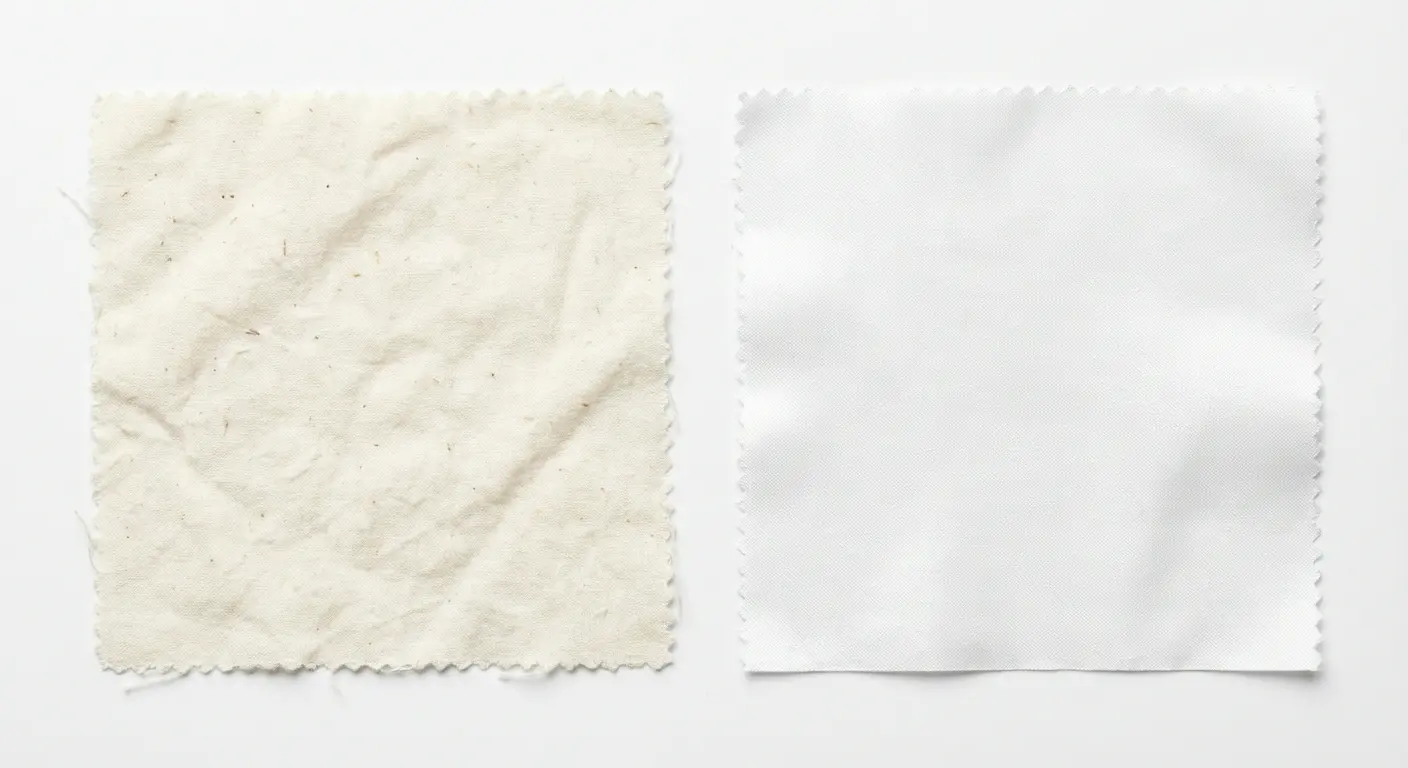
Cotton-polyester blends — usually 50/50, 60/40, or 65/35 — are extremely common for good reason. They aim to combine the comfort and breathability of cotton with the durability and wrinkle resistance of polyester.
50/50 blend: The most balanced option. Softer than pure polyester, more durable than pure cotton, easier to care for. The most common blend for T-shirts, sweatshirts, and casual wear.
60/40 (cotton-heavy): Feels closer to cotton, with a bit more durability. Good for casual shirts and everyday wear where comfort is the priority.
65/35 (polyester-heavy): More durable and wrinkle-resistant, slightly less soft. Common in workwear, school uniforms, and hospitality uniforms.
The tradeoff? Blends don't breathe as well as pure cotton, and they're not as eco-friendly. But for practicality in everyday clothing and workwear, blends are often the smartest choice.
Sustainability: The Elephant in the Room
Let's be honest here. Neither fabric is perfect from an environmental standpoint.
Cotton uses enormous amounts of water to grow — it takes roughly 2,700 liters of water to produce a single cotton T-shirt. Conventional cotton farming also relies heavily on pesticides. Organic cotton is better, but still water-intensive.
Polyester is plastic, full stop. It doesn't biodegrade, and every time you wash polyester fabric, it sheds microplastics into the water. These end up in oceans and eventually in our food chain.
The verdict? Cotton is generally considered the more sustainable option — especially organic cotton — but it's not without its own environmental costs. If sustainability is a priority for your brand or project, look for certified organic cotton, recycled polyester, or blends made with eco-conscious materials.
Cotton vs Polyester: The Final Verdict
There's no universal winner here. The right fabric depends entirely on what you're making and who's wearing it.
- Choose cotton if comfort, breathability, and natural feel are your priorities — think everyday clothing, bedding, and anything worn in warm weather.
- Choose polyester if durability, performance, and wrinkle resistance matter more — think activewear, workwear, and outdoor gear.
- Choose a blend if you want a practical middle ground for casual clothing, uniforms, or budget-conscious projects.
The best fabric buyers understand both materials deeply and choose based on the job, not habit. That's true whether you're designing a clothing line, sourcing materials for manufacturing, or just trying to figure out what to put on your bed.
Ready to Source Cotton or Polyester Fabric?
At Global Fabric Wholesale, we carry a wide range of both cotton and polyester fabrics in bulk — from lightweight cotton jersey to heavy-duty polyester canvas.
Shop Cotton Fabrics: https://globalfabricwholesale.com/cotton-fabric/
Shop Polyester Fabrics: https://globalfabricwholesale.com/polyester-fabric/
Have questions about which fabric is right for your project? Browse our collections or get in touch — we're here to help you find exactly what you need.







 Login with Google