


How to Sew with Fleece Fabric: Cutting, Stitching and Finishing Tips for Beginners
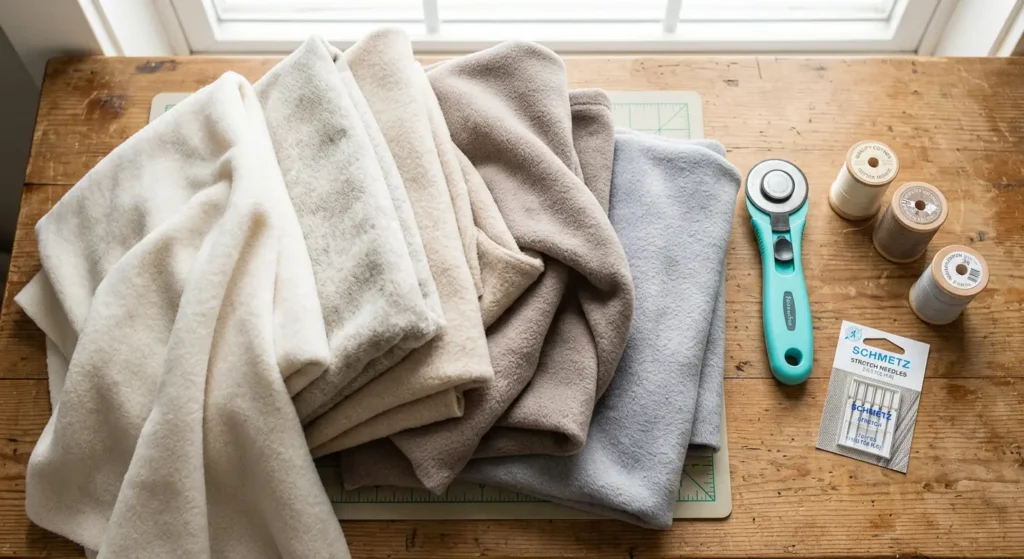
Fleece is one of the most beginner-friendly fabrics you can sew — it doesn't fray, it's forgiving of minor cutting imperfections, and it produces warm, cosy results fast. The key to success is using the right needle, managing the nap direction, and choosing a stitch that accommodates stretch. Master those three things and fleece projects like jackets, blankets, and kids' pullovers come together quickly and cleanly.
Understanding Fleece Before You Cut
Before picking up your scissors, it helps to understand what you're working with. Fleece fabric is a knitted textile — typically made from polyester — with a brushed surface that creates its signature soft, insulating pile. Because it's knitted, it has stretch in both directions, though usually more across the grain than along it.
Check the nap direction
Fleece has a nap — the pile lies in one direction. Run your hand along the fabric: one way feels smooth, the other slightly resistant. For garments, always cut all pieces with the nap running in the same direction (usually downward) to ensure consistent colour and texture across the finished item. Ignoring nap direction is the most common beginner mistake and results in panels that look different shades under light.
Know your fleece weight
Lightweight fleece (around 180–200 gsm) suits baby items and linings. Mid-weight (250–300 gsm) is ideal for pullovers and joggers. Heavyweight polar fleece (300 gsm+) works best for outerwear and blankets. Choosing the right weight for your project prevents issues like excessive bulk at seams or insufficient warmth.
Cutting Fleece Accurately
Fleece is thick and can shift easily on a cutting table, so preparation matters more than with woven fabrics.
Use the right tools
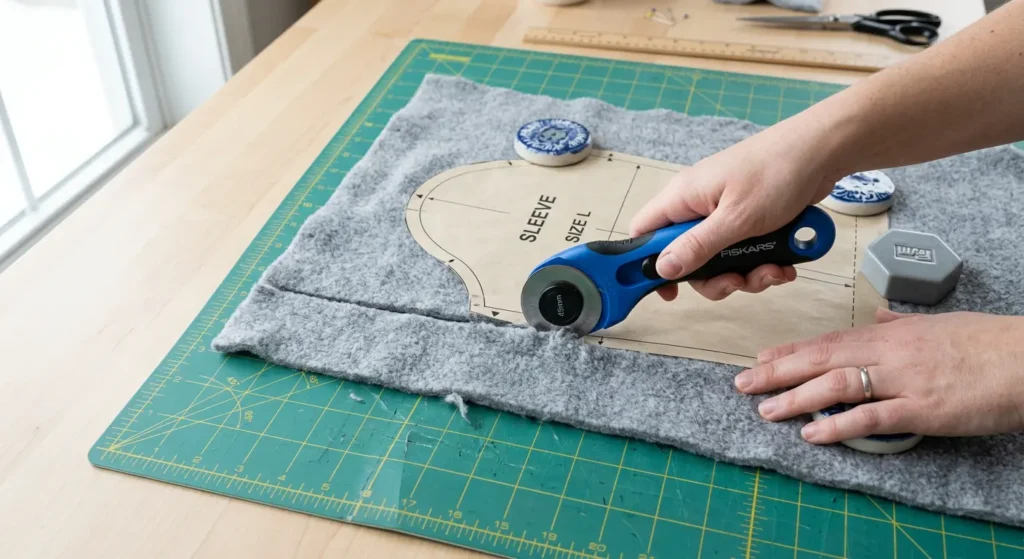
- Rotary cutter and mat: The fastest and most accurate method for straight edges and curves. A 45mm blade handles most fleece weights cleanly.
- Sharp fabric scissors: Fine for smaller pieces, but keep them dedicated to fabric only — fleece fibres dull blades quickly.
- Pattern weights: Skip the pins where possible. Fleece is thick enough that pins distort the surface and leave visible holes. Weights hold pattern pieces flat without damage.
Lay flat, cut single layers
Fold-and-cut works with woven fabrics, but fleece can stretch and misalign when doubled. For precise results — especially on shaped pieces like hoods or sleeves — cut single layers and flip pattern pieces to cut mirror images. This adds a few minutes but significantly improves accuracy.
For instance, a home sewer making a child's fleece zip-up found that cutting double layers caused the front panels to sit unevenly — switching to single-layer cutting solved the problem immediately.
Stitching Fleece: Needle, Thread and Stitch Settings
Getting your machine settings right before you sew a single seam will save you from skipped stitches, puckering, and broken thread.
Needle choice
Use a stretch needle (size 75/11 or 90/14, depending on fleece weight) or a ballpoint needle. Both are designed to slip between knit fibres rather than pierce them, which prevents skipped stitches — the number one complaint when sewing fleece on a standard needle.
Thread
All-purpose polyester thread is the best match for polyester fleece. It has a slight give that complements the fabric's stretch. Avoid cotton thread, which can snap under tension when the seam is pulled.
Stitch type and length
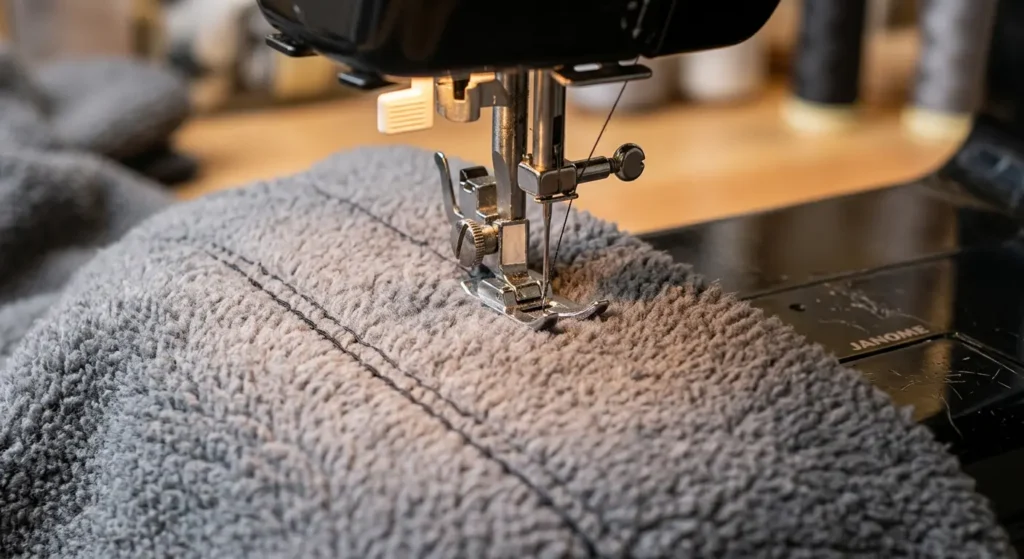
Refer to the comparison table above for a quick overview. A zigzag stitch (width 2.5mm, length 2.5mm) is the most versatile choice for beginners — it handles stretch well and is available on every domestic machine. If your machine has a lightning bolt or triple stretch stitch, use that for high-stress seams like underarms and crotch seams. Reduce presser foot pressure slightly if the fabric is feeding unevenly.
Walking foot attachment is highly recommended — it feeds both layers of fleece at the same rate, preventing the top layer from creeping forward and creating misaligned seams.
| Straight Stitch | Zigzag Stitch | Serger/Overlock | |
|---|---|---|---|
| Best for | Seams on low-stretch fleece | Stretchy seams and hems | Clean professional finish |
| Stretch retention | Low | Medium | High |
| Beginner-friendly | Yes | Yes | Moderate |
| Fraying risk | Low (fleece doesn't fray) | Low | Minimal |
| Edge finish needed? | Optional | Optional | Built-in |
Finishing Fleece Edges Without a Serger
One of fleece's biggest advantages is that it doesn't fray — the cut edge is stable and won't unravel in the wash. This opens up finishing options that aren't available with woven fabrics.
Leave edges raw
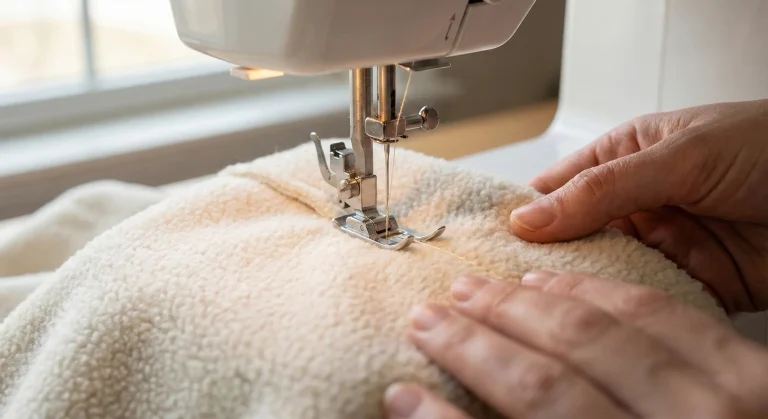
For casual items like blankets, scarves, and fleece throws, raw edges are entirely acceptable and even desirable. A simple straight or zigzag stitch 6–10mm from the edge gives a clean, intentional look without any additional finishing.
Topstitched hems
Rather than turning up and hand-stitching a hem, fold the fleece once (no need for a double fold) and topstitch with a zigzag or twin needle for a professional finish. A 1.5–2cm hem allowance is sufficient. This technique works particularly well on fleece fabric hoodies and jogger hems.
Binding and trim
For a more polished look on children's garments or outerwear, apply knit binding or use rib fabric at cuffs, necklines, and waistbands. Rib knit stretches and recovers well, creating a neat, functional edge that complements fleece's texture. Sew rib trim with a zigzag stitch, stretching the rib slightly as you sew to ensure it lies flat when relaxed.
A small independent kidswear maker used rib cuffs on fleece jackets to reduce bulk at the wrist — the result was cleaner and more durable than a folded fleece hem at the same spot.
Quick Tips for a Better Finished Result
A few final details separate a polished fleece project from a rough one:
- Press carefully: Fleece is heat-sensitive. Never iron directly on the pile — use a pressing cloth and low heat, or simply finger-press seams open. Steam from a distance can help set seams without crushing the surface.
- Reduce bulk at seams: On heavier fleece, trim seam allowances to 6mm after sewing, or clip curves generously. Grading seam allowances (trimming each layer to a different width) also reduces the ridge lines visible on the right side.
- Test before you cut: Always sew a test seam on a scrap piece first to confirm stitch length, tension, and needle performance before working on your actual fabric.
- Pair with the right pattern: Look for patterns specifically drafted for knit fabrics with minimal seam finishing requirements. Our guide on Choosing the Right Fabric for Digital Sewing Patterns can help you match fleece to the correct pattern type.
If you're exploring similar cosy knit fabrics, French terry fabric is a lighter-weight alternative worth considering for transitional-season projects — and our French terry vs fleece comparison breaks down exactly when to use each one.
Ready to start your next fleece project? Browse the full range of fleece fabrics by the yard at Global Fabric Wholesale — no minimum order, worldwide shipping, and over 10,000 fabrics to explore.




 Login with Google