


What is Fleece Fabric? A Comprehensive Material Analysis
For DIY enthusiasts, fleece is often the fabric of choice when seeking immediate warmth without the bulk of traditional wool. Understanding what fleece fabric is is crucial for anyone looking to strike the perfect balance between warmth, weight, and durability in their sewing projects. In the realm of cold-weather apparel and cozy home décor, few materials are as versatile and widely used as fleece. Known for its softness and insulating properties, fleece comes in a variety of types, each suited to different needs and activities.
But...What is fleece fabric? At its core, it is a synthetic insulating material made from polyester (PET), designed to replicate the warmth and texture of wool without the weight. Unlike natural fibers, this material is engineered for specific performance metrics: it is hydrophobic, lightweight, and highly breathable. However, for DIY enthusiasts and sewers, the distinction often lies in the finish and durability. Working with high-quality fleece fabric is essential for ensuring that your finished garments or blankets remain soft, retain their shape, and resist pilling even after years of use and washing.
The Science Behind the Softness: How is Fleece Made?
Fleece is not a naturally occurring fabric, but rather a synthetic one created through a detailed manufacturing process. It starts with polyester, a versatile and durable synthetic fiber derived from petroleum-based products. The production of fleece involves several steps that contribute to its signature softness and warmth.
Polyester Production: The journey begins with polyester fibers, which are created by polymerizing a mixture of chemicals. These fibers are then spun into threads, which are woven or knitted to form the base fabric.
Brushing for Softness: Once the fabric is woven, it undergoes a key process known as brushing. The fleece fabric is passed through brushes or rollers that raise the fibers on the surface, giving it that plush, soft texture. The brushing process also helps trap air between the fibers, enhancing the fabric’s insulating properties, making fleece not only soft but also lightweight yet warm.
Dyeing and Finishing: After the fabric is brushed and its texture is perfected, it goes through dyeing and finishing stages. Fleece can be dyed in a wide array of colors, making it a popular choice for clothing, home décor, and accessories. The finishing process may also involve additional treatments to make the fabric water-resistant, stain-resistant, or even more breathable, depending on its intended use.
Final Touches: Some types of fleece are further enhanced with features like anti-pill treatments to prevent the formation of those annoying little balls of fabric on the surface after multiple washes. This makes fleece a highly durable material, capable of maintaining its smooth and soft texture for longer periods of use.
Its raised pile structure is not merely aesthetic; it is a functional engineering design. By increasing the volume of the fabric without adding significant weight, the brushed fibers create thousands of tiny air pockets. These pockets effectively trap body heat, giving fleece its high warmth-to-weight ratio (thermal insulation), while allowing moisture to evaporate through the breathable knit base.
Types and Characteristics of Fleece Fabric
After learning about the manufacturing process of fleece fabric, let's explore its various types and characteristics. Fleece is far from one-size-fits-all. In fact, one of the reasons it’s so popular in both fashion and home décor is its variety. There are several different types of fleece, each designed to suit specific needs—whether you're looking for lightweight warmth or a thicker, more insulating option for extreme conditions. Understanding the characteristics of these different types can help you choose the right fleece for your next project, whether it’s a cozy blanket or a stylish jacket.
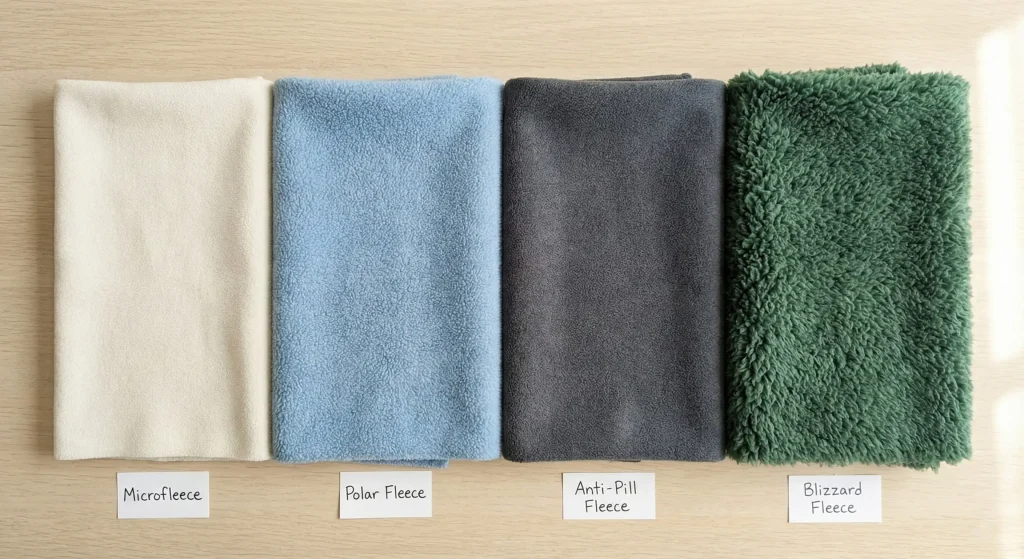
The most common confusion among buyers lies in the distinction between polar fleece vs microfleece. The primary differentiator here is thickness and thermal capacity.
Microfleece
Microfleece is a finer, lighter version of polar fleece. As the name suggests, microfleece features smaller fibers, making it softer and lighter, though slightly less warm than polar fleece. This is the thinnest variety, typically weighing less than 200 GSM. It is lightweight, extremely soft, and flexible. Microfleece is ideal for lining garments, creating lightweight pajamas, or sewing baby clothes because it does not add bulk.
Characteristics:
- Very soft and smooth texture
- Highly breathable
- Thin and lightweight
- Quick-drying
- Suitable for activewear and layering
Polar Fleece
Polar fleece is one of the most commonly recognized types of fleece. It’s known for its softness, lightweight feel, and excellent warmth-to-weight ratio. Polar fleece is typically made from 100% polyester, though some blends may include other fibers for added durability or softness. Its weight is generally around 200–300 GSM, which is considered medium weight. You can choose to use it to make jackets, or easier-to-sew blankets and shawls.
Characteristics:
- Not overly thick but incredibly warm
- Soft, brushed texture
- Quick-drying
- Available in a wide range of colors
- Durable and resistant to pilling
Anti-Pill Fleece
This fabric undergoes a specialized chemical or mechanical treatment during manufacturing to shear the surface fibers closer to the knit. This prevents the formation of "pills" (small balls of fiber) that typically appear after washing. It is the superior choice for garments that will be washed frequently.
Characteristics:
- Resistant to pilling
- Maintains a clean, smooth surface
- Durable and long-lasting
- Available in both lightweight and heavyweight versions
- Great for projects that will endure regular washing
Blizzard Fleece
Blizzard fleece is a heavier, thicker version of fleece designed to provide extra warmth in cold climates. While it is incredibly warm, it may not always carry an anti-pill rating. For projects requiring maximum insulation, such as winter throws or cold-weather ponchos, selecting premium heavyweight fleece ensures you get the necessary density to block drafts effectively.
- Characteristics:
- Thick and insulating
- Extremely warm, ideal for cold weather
- Soft and cozy texture
- Slightly bulkier than other types of fleece
- Durable, but can be prone to pilling with wear
| Fleece Variety | Weight / Texture | Key Characteristics | Best Applications |
| Microfleece | Lightweight (<200 GSM) | High breathability; lowest bulk; soft and flexible. | Base layers, linings, baby clothes, lightweight pajamas. |
| Polar Fleece | Mid-weight (200-300 GSM) | Excellent warmth-to-weight ratio; water-resistant; standard insulation. | Zip-up jackets, vests, hats, mittens. |
| Anti-Pill Fleece | Varied (usually Mid-weight) | Treated to resist pilling; stays smooth after washing. | High-use garments, hoodies, sweatpants. |
| Blizzard Fleece | Heavyweight / Plush | Dense and thick; smoother surface than polar; superior heat retention. | No-sew tie blankets, winter scarves, heavy robes. |
Essential Tips for Sewing with Fleece
It turns out there are several types of fleece fabric. The previous section covered how different types of fleece suit different projects. Now, let's explore the techniques for sewing it. Sewing with fleece can be an incredibly rewarding experience, especially if you’re making cozy garments or fun DIY projects. But its thickness and elasticity can present challenges for beginners. With a few tips and tricks, you can easily master sewing with fleece and create projects that are both durable and comfortable. Here are some essential tips to help you get started:
Choose the Right Needle and Thread
When sewing with fleece, it’s important to select the right needle and thread to prevent issues like skipped stitches or fabric bunching. The best needle for fleece is a Ballpoint (Jersey) or Stretch needle (size 90/14). These have rounded tips that slide between the knit loops rather than piercing them, preventing holes.
For the thread, choose a polyester thread, which is strong, durable, and has a bit of stretch—perfect for fleece’s flexible nature. Avoid using cotton thread, as it’s more likely to break or fray under the stretch of fleece.
Use a Walking Foot or Teflon Foot
Fleece can be a bit slippery or thick, making it prone to shifting while sewing. A walking foot can help feed the fabric evenly through your sewing machine, preventing uneven stitching. Alternatively, a Teflon foot is ideal for working with fleece, as it glides over the fabric smoothly, reducing friction and helping the material move easily.
Don’t Stretch the Fabric
Unlike some other stretchy fabrics, fleece doesn’t require stretching as you sew. In fact, pulling or stretching the fabric while stitching can lead to puckering or uneven seams. Allow the fabric to feed naturally through your sewing machine, and avoid pulling it taut.
Use Proper Seam Allowances
When sewing fleece, it’s often best to use a slightly wider seam allowance than usual. A seam allowance of 1/2 inch to 5/8 inch is typically recommended, as fleece tends to shift and may not be as stable as other fabrics. Also, consider trimming the seam allowance after sewing, as fleece can bulk up and become too thick if you don’t manage the excess fabric.
Don’t Skip the Ironing
Fleece doesn’t require much ironing, but occasionally you may want to press seams or smooth out wrinkles before stitching. Use an iron on low heat with a pressing cloth to avoid damaging the fabric. Fleece is a synthetic material, and high heat can cause it to melt or become misshapen. Steaming the fabric with a steamer can also help smooth out wrinkles without direct contact from the iron.
Finish Seams to Prevent Fraying
While fleece is generally less prone to fraying compared to other fabrics, it’s still a good idea to finish your seams to ensure durability. You can use a zigzag stitch or serger to finish raw edges, which will prevent any potential unraveling as the fabric is worn or washed. This is especially important if you plan on making garments or items that will undergo regular use and laundering.
Consider the Stretch and Grain of the Fabric
Fleece can stretch in different directions, so it’s essential to consider the grain of the fabric when cutting your pattern pieces. Most fleece fabrics have a bit of stretch along the width (the cross-grain), which is the direction in which you should align the pattern pieces for a better fit and comfort. Cutting with the grain can help prevent distortion or sagging, especially in fitted garments.
How to Wash and Protect the Fleece Fabric
Fleece is a durable and low-maintenance fabric, but to ensure it retains its softness, warmth, and longevity, it’s important to follow the correct care instructions. Improper washing and handling can lead to pilling, loss of softness, or even damage to the fabric. Whether you’ve made a cozy fleece blanket or purchased a new fleece jacket, knowing how to properly wash and protect fleece is key to keeping it looking its best.
- Wash in Cold Water: Wash fleece in cold water to prevent shrinking or warping. Use a gentle cycle to minimize agitation and protect the fabric.
- Avoid Fabric Softener: Fabric softeners can reduce fleece's breathability and softness. Skip it to maintain the fabric’s natural qualities.
- Turn Items Inside Out: Turn fleece items inside out before washing to prevent pilling and protect the soft exterior.
- Wash Separately: Wash fleece separately from other fabrics to prevent lint buildup and avoid wear from rougher materials.
- Dry on Low Heat or Air Dry: If using a dryer, set it to a low heat or air fluff setting. Air drying is the gentlest option to avoid damage and maintain softness.
- Remove Pilling: If pilling occurs, use a fleece fabric shaver or a pumice stone to gently remove the pills.
Final Thoughts
Fleece is more than just a soft, fuzzy material. It is a marvel of modern textile engineering that balances insulation, breathability, and weight. Whether you are crafting a technical mid-layer for hiking or a plush throw for your living room, the key to a successful project lies in understanding the science behind the fabric. For dedicated creators, sourcing from a specialized Global Fabric Wholesale provider ensures you get consistent quality in both GSM and finish. By selecting the correct specifications for your specific needs—and adhering to proper care protocols—you ensure that your creations provide warmth and comfort for years to come.




 Login with Google